Mexico Cloud ERP Market Size & Growth Rate (2026-2032)
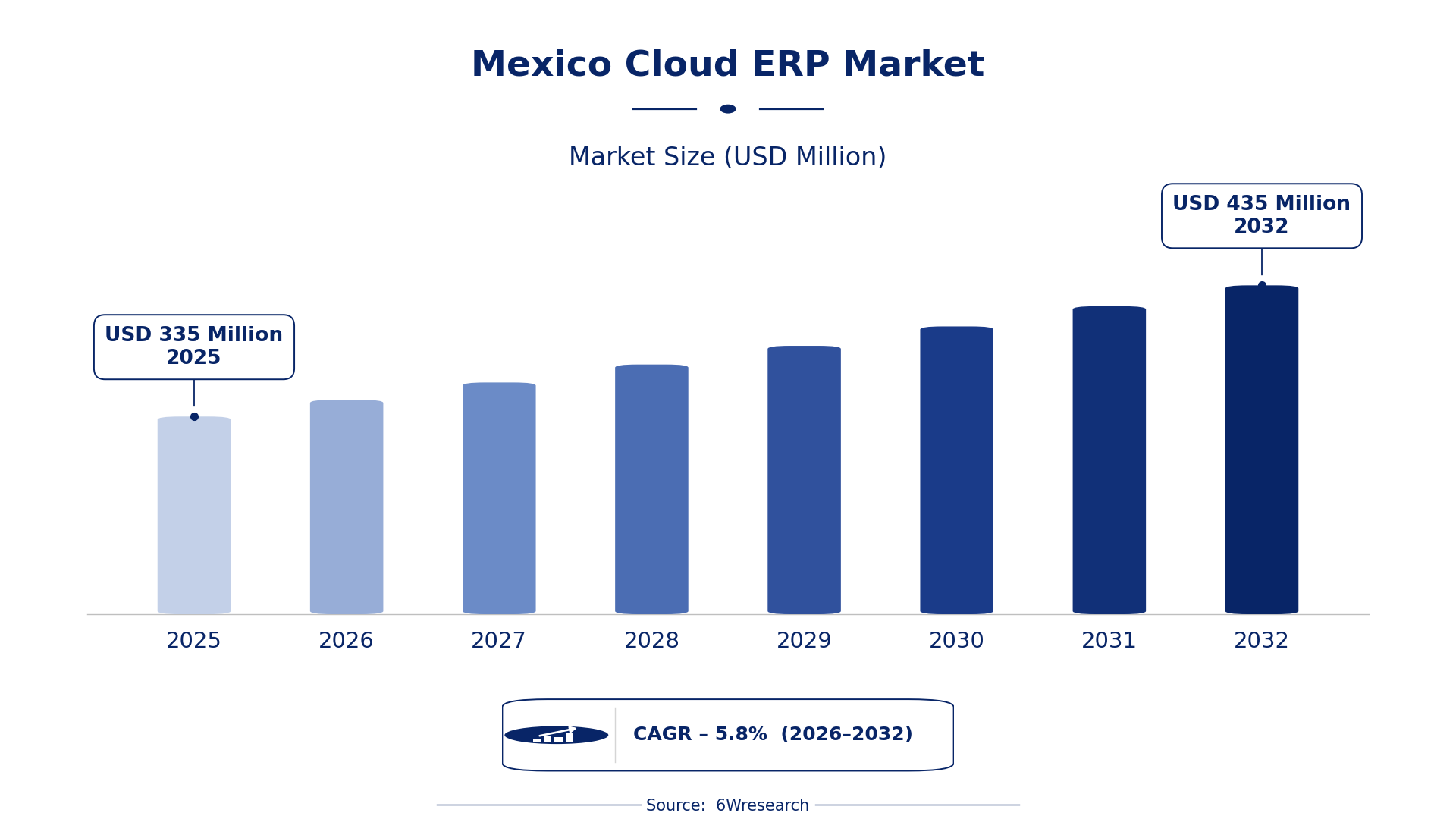
The Mexico Cloud ERP Market was estimated at USD 335 Million in 2025 and is projected to reach USD 435 Million by 2032, growing at a CAGR of 5.8% from 2026 to 2032.
Mexico Cloud ERP Market Synopsis
The escalating demand for scalable and adaptable enterprise resource planning solutions is the most influential factor currently shaping the Mexico Cloud ERP Market. Organizations are increasingly seeking cloud-based systems to improve operational efficiencies and respond swiftly to market changes.
Cloud ERP systems provide businesses with the flexibility to scale their operations without the hefty costs associated with traditional on-premises solutions. This shift is coupled with a growing necessity for real-time insights and integrated management capabilities, pushing enterprises to adopt more sophisticated cloud solutions.
Mexico Cloud ERP Market Year-wise Growth Rate and Key Drivers
This graph illustrates the annual growth rates of the Mexico Cloud ERP Market from 2021 to 2032, highlighting a steady upward trajectory and projected expansion over the forecast period.
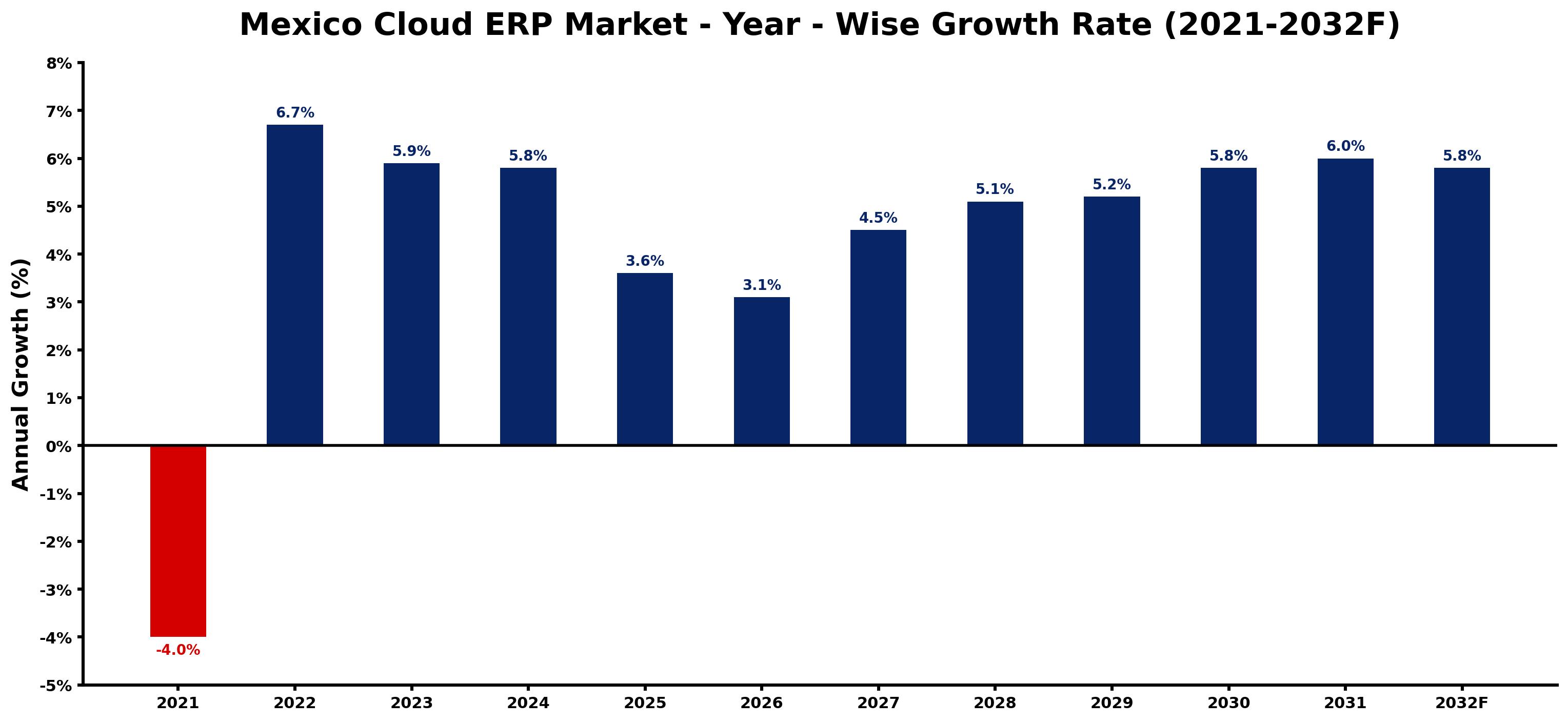
The table below presents the year‑wise growth rates along with the key drivers influencing the market
| Year | Growth Rate | Major Drivers |
| 2021 | -4.0% | Decreased public sector spending on digital transformation initiatives. |
| 2022 | 6.7% | INAI push for data privacy compliance solutions. |
| 2023 | 5.9% | Rise in SMEs adopting cloud solutions for scalability. |
| 2024 | 5.8% | Increase in remote work fostering demand for ERP tools. |
| 2025 | 3.6% | Government tax incentives for cloud-based services uptake. |
| 2026 | 3.1% | Growing e-commerce sector needing integrated business management. |
| 2027 | 4.5% | Emerging tech hubs in Guadalajara driving ERP awareness. |
| 2028 | 5.1% | Increased digital literacy improving cloud ERP adaptability. |
| 2029 | 5.2% | Surge in localized customer service expectations from firms. |
| 2030 | 5.8% | Adoption of Industry 4.0 principles among manufacturing companies. |
| 2031 | 6.0% | Focus on cybersecurity needs driving ERP system upgrades. |
| 2032 | 5.8% | Continued investment by banks in cloud-based operational systems. |
Note: Market size estimations and growth projections presented in this report are based on 6Wresearch's proprietary forecasting methodology, utilizing the latest available industry data, government publications, and primary research inputs.
Mexico Cloud ERP Market Key Takeaways
Below are some of the specific key takeaways from the market, including:
- The market is driven by the need for cost-effective and flexible business management solutions.
- Real-time visibility into business operations is becoming a primary requirement for organizations.
- Integration of advanced technologies such as AI and analytics is enhancing cloud ERP functionalities.
- Data migration and organizational change management remain critical challenges for implementation.
- Compliance with regulatory standards is becoming increasingly complex, impacting deployment strategies.
Evaluation of Restraints in Mexico Cloud ERP Market
The Mexico Cloud ERP market faces notable constraints that impede growth. One significant issue is the complexity associated with data migration from legacy systems to cloud platforms. This process requires meticulous planning to ensure data integrity and accuracy, which can delay implementation timelines. on top of that, organizations often struggle with customizing cloud ERP solutions to fit their unique workflows, complicating integration with existing IT infrastructure. Resistance to change within organizations can also pose challenges, as employees may be hesitant to adopt new systems without adequate training and support. This resistance can lead to underutilization of the ERP systems, negating their intended benefits.
Mexico Cloud ERP Market Trends
Several trends are currently influencing the Mexico Cloud ERP market. The shift towards subscription-based pricing models is gaining traction, allowing businesses to manage costs more effectively. Companies are also increasingly prioritizing cybersecurity features within ERP solutions, given the rising concerns about data breaches. on top of that, the integration of artificial intelligence and machine learning capabilities into cloud ERP systems is on the rise, enabling enhanced data analytics and decision-making processes. This trend is fostering a more proactive approach to business management.
Mexico Cloud ERP Market Opportunities
Opportunities for growth in the Mexico Cloud ERP market are abundant. As businesses continue to embrace digital transformation, the demand for tailored cloud solutions is set to rise. The increasing adoption of remote work arrangements is prompting organizations to seek ERP systems that facilitate collaboration and real-time data sharing. on top of that, industries such as manufacturing and retail are particularly ripe for ERP enhancements, as they look to streamline operations and optimize supply chain management. Investments in training and support services for users can also create a competitive edge in this market.
Government Initiatives in the Mexico Cloud ERP Market
Government policies in Mexico are playing a crucial role in shaping the Cloud ERP market by promoting efficiency and automation in business processes. The regulatory framework emphasizes data privacy and interoperability, which are essential for the successful implementation of cloud-based solutions. This environment is becoming increasingly favorable for organizations looking to integrate advanced ERP systems.
- A regulatory framework introduced in 2025 mandating data privacy standards for ERP systems to enhance security.
- An ongoing initiative aimed at promoting digital transformation within the public sector, encouraging the adoption of cloud technologies.
- A planned public-private partnership expected to roll out by 2026, focusing on enhancing digital infrastructure across industries.
- Recent policies enacted to facilitate smoother data migration processes for businesses transitioning to cloud ERP solutions.
- Current efforts by regulatory agencies to provide guidelines for the interoperability of various ERP systems to enhance efficiency.
Future Insights of the Mexico Cloud ERP Market
Looking ahead to 2026-2032, the Mexico Cloud ERP market is set for continued growth as organizations prioritize agility and scalability in their operations. As more businesses recognize the advantages of cloud ERP, we can expect a surge in investments aimed at enhancing capabilities and integration of advanced technologies. The demand for real-time analytics and insights will be paramount, driving the development of more sophisticated ERP solutions. Additionally, the focus on regulatory compliance will shape the strategies of both providers and users, ensuring that cloud systems meet evolving industry standards.
Mexico Cloud ERP Market Latest Developments
In the past year, the Mexico Cloud ERP market has witnessed a flurry of activity, characterized by advancements in technology and increased adoption across various sectors. Companies are rapidly adapting their strategies to meet the growing demand for cloud-based solutions that enhance operational efficiencies.
- A major technology vendor launched a new cloud ERP solution in early 2025, focusing on small to medium-sized enterprises and their unique needs.
- Currently ongoing initiatives include partnerships between local firms and cloud providers aimed at increasing cloud adoption in the manufacturing sector.
- A recent upgrade to an existing cloud ERP platform was completed in late 2025, introducing enhanced analytics capabilities and user interface improvements.
- An upcoming rollout expected in the second half of 2026 will introduce a suite of AI-driven features to existing cloud ERP solutions, enhancing predictive analytics.
- A strategic collaboration between educational institutions and ERP vendors is underway to develop training programs that facilitate better user adoption.
Mexico Cloud ERP Market - Key Attractiveness of the Report
- 10 Years of Market Numbers
- Historical Data Starting from 2022 to 2025
- Base Year: 2025
- Forecast Data until 2032
- Key Performance Indicators Impacting the Market
- Major Upcoming Developments and Projects
Key Highlights of the Report:
- Mexico Cloud ERP Market Outlook
- Market Size of Mexico Cloud ERP Market, 2025
- Forecast of Mexico Cloud ERP Market, 2032
- Historical Data and Forecast of Mexico Cloud ERP Revenues & Volume for the Period 2022-2032F
- Mexico Cloud ERP Market Trend Evolution
- Mexico Cloud ERP Market Drivers and Challenges
- Mexico Cloud ERP Price Trends
- Mexico Cloud ERP Porter's Five Forces
- Mexico Cloud ERP Industry Life Cycle
- Historical Data and Forecast of Mexico Cloud ERP Market Revenues & Volume By Component for the Period 2022-2032F
- Historical Data and Forecast of Mexico Cloud ERP Market Revenues & Volume By Solution for the Period 2022-2032F
- Historical Data and Forecast of Mexico Cloud ERP Market Revenues & Volume By Services for the Period 2022-2032F
- Historical Data and Forecast of Mexico Cloud ERP Market Revenues & Volume By Vertical for the Period 2022-2032F
- Historical Data and Forecast of Mexico Cloud ERP Market Revenues & Volume By BFSI for the Period 2022-2032F
- Historical Data and Forecast of Mexico Cloud ERP Market Revenues & Volume By Manufacturing for the Period 2022-2032F
- Historical Data and Forecast of Mexico Cloud ERP Market Revenues & Volume By IT and Telecom for the Period 2022-2032F
- Historical Data and Forecast of Mexico Cloud ERP Market Revenues & Volume By Business Function for the Period 2022-2032F
- Historical Data and Forecast of Mexico Cloud ERP Market Revenues & Volume By Accounting and Finance for the Period 2022-2032F
- Historical Data and Forecast of Mexico Cloud ERP Market Revenues & Volume By Sales and Marketing for the Period 2022-2032F
- Historical Data and Forecast of Mexico Cloud ERP Market Revenues & Volume By Inventory and Order Management for the Period 2022-2032F
- Historical Data and Forecast of Mexico Cloud ERP Market Revenues & Volume By Organization Size for the Period 2022-2032F
- Historical Data and Forecast of Mexico Cloud ERP Market Revenues & Volume By SMEs for the Period 2022-2032F
- Historical Data and Forecast of Mexico Cloud ERP Market Revenues & Volume By Large Enterprises for the Period 2022-2032F
- Mexico Cloud ERP Import Export Trade Statistics
- Market Opportunity Assessment By Component
- Market Opportunity Assessment By Vertical
- Market Opportunity Assessment By Business Function
- Market Opportunity Assessment By Organization Size
- Mexico Cloud ERP Top Companies Market Share
- Mexico Cloud ERP Competitive Benchmarking By Technical and Operational Parameters
- Mexico Cloud ERP Company Profiles
- Mexico Cloud ERP Key Strategic Recommendations






































