Morocco Edible Oil Market Size Growth Rate
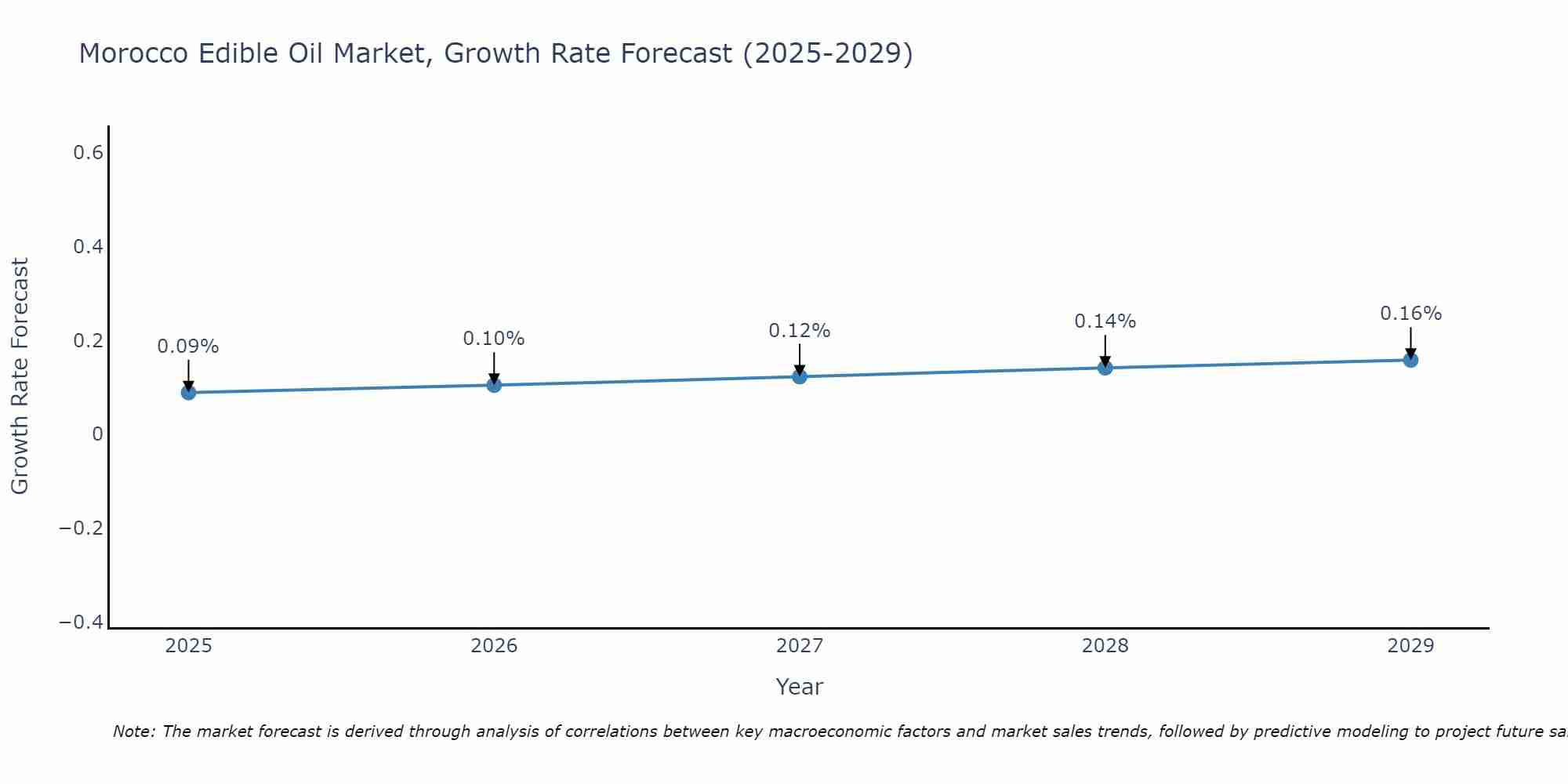
The Morocco Edible Oil Market is poised for steady growth rate improvements from 2025 to 2029. The growth rate starts at 0.09% in 2025 and reaches 0.16% by 2029.
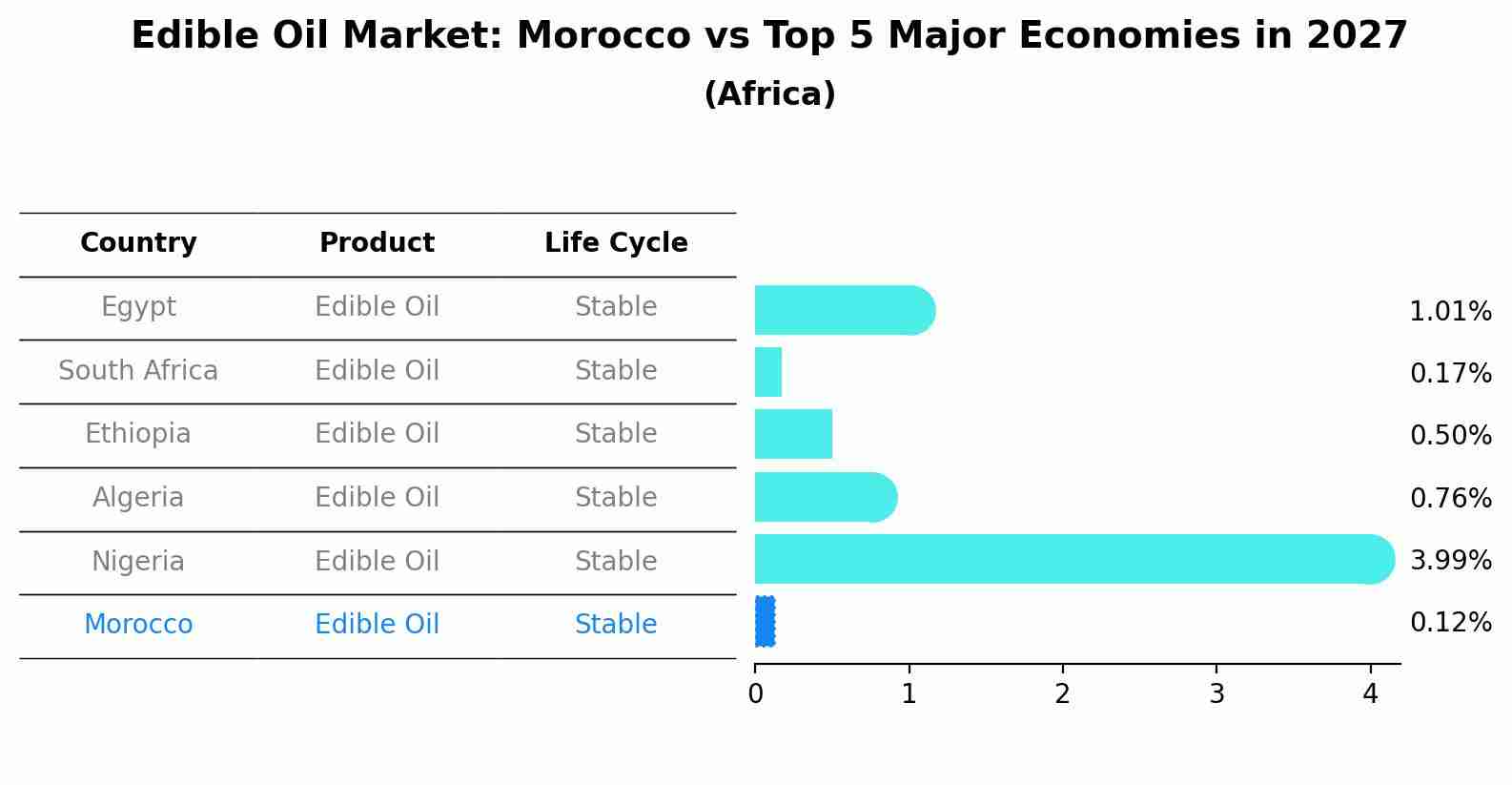
Edible Oil Market: Morocco vs Top 5 Major Economies in 2027 (Africa)
The Edible Oil market in Morocco is projected to grow at a stable growth rate of 0.12% by 2027, highlighting the country's increasing focus on advanced technologies within the Africa region, where Egypt holds the dominant position, followed closely by South Africa, Ethiopia, Algeria and Nigeria, shaping overall regional demand.
Morocco Edible Oil Market Overview
The Morocco Edible Oil Market is experiencing steady growth driven by factors such as increasing health consciousness among consumers, rising disposable incomes, and the popularity of traditional Moroccan cuisine worldwide. Olive oil holds a dominant position in the market due to Morocco`s status as one of the largest olive oil producers globally. The market also offers a variety of other edible oils such as sunflower oil, soybean oil, and palm oil to cater to diverse consumer preferences. Key players in the market include Lesieur Cristal, Huilor, and other local and international brands. The market is witnessing a shift towards healthier cooking oils and organic options as consumers become more health-conscious, presenting opportunities for market expansion and product innovation in the coming years.
Morocco Edible Oil Market Trends
In the Morocco Edible Oil Market, there is a growing preference for healthier oil options such as olive oil, sunflower oil, and argan oil due to increasing health consciousness among consumers. The demand for organic and cold-pressed oils is also on the rise as consumers seek products that are perceived as more natural and nutritious. Additionally, there is a trend towards premium and gourmet oils, driven by a growing foodie culture and a desire for unique and high-quality culinary experiences. The market is also witnessing innovation in packaging formats and marketing strategies to appeal to a younger demographic and enhance product visibility. Overall, the Morocco Edible Oil Market is experiencing a shift towards healthier, premium, and innovative products to meet the evolving preferences of consumers.
Morocco Edible Oil Market Challenges
In the Morocco Edible Oil Market, some key challenges include intense competition among domestic and international brands, fluctuating prices of raw materials such as soybeans and palm oil, increasing consumer demand for healthier and more sustainable products, and regulatory hurdles related to import tariffs and quality standards. Additionally, the market is facing pressure to adapt to changing consumer preferences, such as a shift towards organic and non-GMO products, which requires significant investment in research and development. Furthermore, logistical challenges in distribution and storage infrastructure can also impact the efficiency of the supply chain, leading to potential delays and increased costs for manufacturers and distributors operating in the market.
Morocco Edible Oil Market Investment Opportunities
Investment opportunities in the Morocco Edible Oil Market include expanding production capacity to meet the growing domestic demand for edible oils, particularly healthy options like olive oil. With Morocco being a significant producer of olive oil, there is potential for investment in modernizing production techniques and increasing efficiency to enhance competitiveness in the global market. Additionally, investing in marketing and distribution channels to reach a wider consumer base, both domestically and internationally, can also be lucrative. Leveraging technological advancements for sustainable and organic production practices could attract environmentally conscious consumers. Overall, the Morocco Edible Oil Market offers opportunities for investors to capitalize on the country`s strong agricultural sector and increasing consumer demand for quality edible oils.
Morocco Edible Oil Market Government Policy
The Morocco Edible Oil Market is influenced by government policies aimed at promoting domestic production and reducing import dependency. The government has implemented measures such as import tariffs and quotas to protect local producers, while also providing subsidies and incentives to encourage investment in the sector. Additionally, there are regulations in place to ensure food safety and quality standards are met, including labeling requirements and inspections. The government`s focus on increasing self-sufficiency in edible oil production has led to initiatives to support the cultivation of oilseeds like sunflower and soybean, as well as promoting research and development to enhance productivity and efficiency in the industry.
Morocco Edible Oil Market Future Outlook
The future outlook for the Morocco Edible Oil Market appears promising with steady growth expected in the coming years. Factors such as increasing health consciousness among consumers, rising disposable incomes, and the growing popularity of healthier cooking oils are likely to drive market expansion. Additionally, the government`s initiatives to promote domestic production of edible oils to reduce reliance on imports and boost agricultural sector growth are anticipated to further propel market development. With a growing demand for quality edible oils in both domestic and export markets, key players in the industry are expected to focus on product innovation, sustainable sourcing practices, and expanding distribution networks to capitalize on the evolving consumer preferences and market opportunities in Morocco.
Key Highlights of the Report:
- Morocco Edible Oil Market Outlook
- Market Size of Morocco Edible Oil Market, 2021
- Forecast of Morocco Edible Oil Market, 2031
- Historical Data and Forecast of Morocco Edible Oil Revenues & Volume for the Period 2018 - 2031
- Morocco Edible Oil Market Trend Evolution
- Morocco Edible Oil Market Drivers and Challenges
- Morocco Edible Oil Price Trends
- Morocco Edible Oil Porter's Five Forces
- Morocco Edible Oil Industry Life Cycle
- Historical Data and Forecast of Morocco Edible Oil Market Revenues & Volume By Type for the Period 2018 - 2031
- Historical Data and Forecast of Morocco Edible Oil Market Revenues & Volume By Palm Oil for the Period 2018 - 2031
- Historical Data and Forecast of Morocco Edible Oil Market Revenues & Volume By Soybean Oil for the Period 2018 - 2031
- Historical Data and Forecast of Morocco Edible Oil Market Revenues & Volume By Mustard Oil for the Period 2018 - 2031
- Historical Data and Forecast of Morocco Edible Oil Market Revenues & Volume By Sunflower Oil for the Period 2018 - 2031
- Historical Data and Forecast of Morocco Edible Oil Market Revenues & Volume By Others for the Period 2018 - 2031
- Historical Data and Forecast of Morocco Edible Oil Market Revenues & Volume By for the Period 2018 - 2031
- Historical Data and Forecast of Morocco Edible Oil Market Revenues & Volume By Packaging Type for the Period 2018 - 2031
- Historical Data and Forecast of Morocco Edible Oil Market Revenues & Volume By Pouches for the Period 2018 - 2031
- Historical Data and Forecast of Morocco Edible Oil Market Revenues & Volume By Jars for the Period 2018 - 2031
- Historical Data and Forecast of Morocco Edible Oil Market Revenues & Volume By Cans for the Period 2018 - 2031
- Historical Data and Forecast of Morocco Edible Oil Market Revenues & Volume By Bottles for the Period 2018 - 2031
- Historical Data and Forecast of Morocco Edible Oil Market Revenues & Volume By for the Period 2018 - 2031
- Historical Data and Forecast of Morocco Edible Oil Market Revenues & Volume By Pack Size for the Period 2018 - 2031
- Historical Data and Forecast of Morocco Edible Oil Market Revenues & Volume By Less than 1 Litres for the Period 2018 - 2031
- Historical Data and Forecast of Morocco Edible Oil Market Revenues & Volume By 1 Litres for the Period 2018 - 2031
- Historical Data and Forecast of Morocco Edible Oil Market Revenues & Volume By 1 Litres - 5 litres for the Period 2018 - 2031
- Historical Data and Forecast of Morocco Edible Oil Market Revenues & Volume By 5 Litres - 10 Litres for the Period 2018 - 2031
- Historical Data and Forecast of Morocco Edible Oil Market Revenues & Volume By 10 Litres and Above for the Period 2018 - 2031
- Historical Data and Forecast of Morocco Edible Oil Market Revenues & Volume By for the Period 2018 - 2031
- Historical Data and Forecast of Morocco Edible Oil Market Revenues & Volume By Packaging Material for the Period 2018 - 2031
- Historical Data and Forecast of Morocco Edible Oil Market Revenues & Volume By Metal for the Period 2018 - 2031
- Historical Data and Forecast of Morocco Edible Oil Market Revenues & Volume By Plastic for the Period 2018 - 2031
- Historical Data and Forecast of Morocco Edible Oil Market Revenues & Volume By Paper for the Period 2018 - 2031
- Historical Data and Forecast of Morocco Edible Oil Market Revenues & Volume By Others for the Period 2018 - 2031
- Historical Data and Forecast of Morocco Edible Oil Market Revenues & Volume By Application for the Period 2018 - 2031
- Historical Data and Forecast of Morocco Edible Oil Market Revenues & Volume By HoReCa for the Period 2018 - 2031
- Historical Data and Forecast of Morocco Edible Oil Market Revenues & Volume By Home Users for the Period 2018 - 2031
- Historical Data and Forecast of Morocco Edible Oil Market Revenues & Volume By Food Processing Industry for the Period 2018 - 2031
- Historical Data and Forecast of Morocco Edible Oil Market Revenues & Volume By for the Period 2018 - 2031
- Historical Data and Forecast of Morocco Edible Oil Market Revenues & Volume By Distribution Channel for the Period 2018 - 2031
- Historical Data and Forecast of Morocco Edible Oil Market Revenues & Volume By Direct/Institutional Sales for the Period 2018 - 2031
- Historical Data and Forecast of Morocco Edible Oil Market Revenues & Volume By Supermarkets and Hypermarkets for the Period 2018 - 2031
- Historical Data and Forecast of Morocco Edible Oil Market Revenues & Volume By Convenience Stores for the Period 2018 - 2031
- Historical Data and Forecast of Morocco Edible Oil Market Revenues & Volume By Online for the Period 2018 - 2031
- Historical Data and Forecast of Morocco Edible Oil Market Revenues & Volume By Others for the Period 2018 - 2031
- Morocco Edible Oil Import Export Trade Statistics
- Market Opportunity Assessment By Type
- Market Opportunity Assessment By Packaging Type
- Market Opportunity Assessment By Pack Size
- Market Opportunity Assessment By Packaging Material
- Market Opportunity Assessment By Application
- Market Opportunity Assessment By Distribution Channel
- Morocco Edible Oil Top Companies Market Share
- Morocco Edible Oil Competitive Benchmarking By Technical and Operational Parameters
- Morocco Edible Oil Company Profiles
- Morocco Edible Oil Key Strategic Recommendations






































