Morocco Fuel Pumps Market Growth Rate Analysis (2021 - 2031)
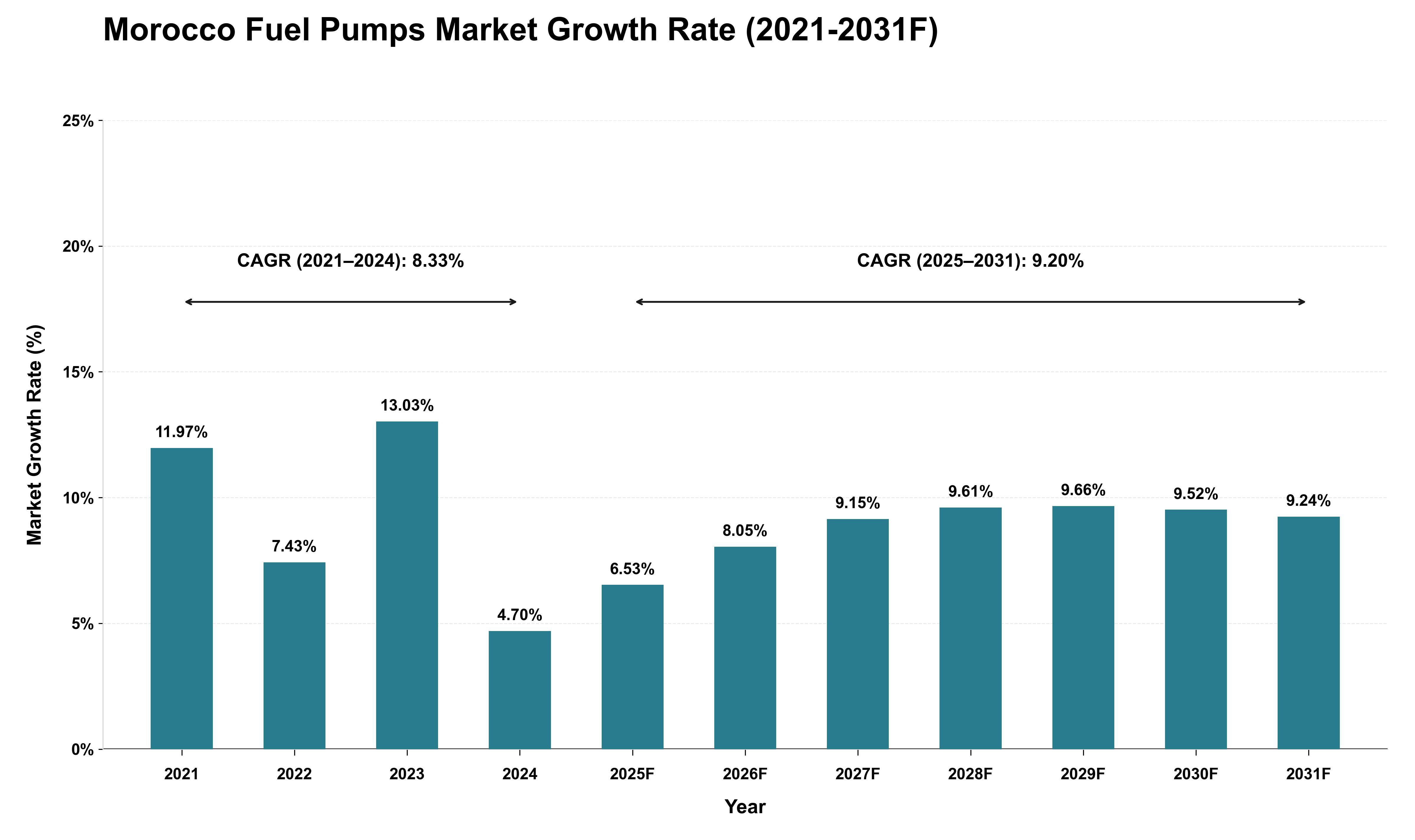
The Morocco fuel pumps market experienced a robust historical CAGR of 8.33% from 2021 to 2024, driven by significant end-use demand shifts influenced by global energy trends and post-pandemic recovery in transportation sectors. The annual growth rates fluctuated, peaking at 13.03% in 2023 as the economy rebounded and consumer mobility increased, while a dip to 4.70% in 2024 reflected supply chain disruptions and inflationary pressures affecting import reliance. Looking ahead, the forecasted CAGR of 9.20% from 2025 to 2031 suggests sustained growth as Morocco continues to modernize its infrastructure and enhance fuel efficiency amid rising global energy prices and environmental regulations. This trajectory will likely be supported by increasing investments in renewable energy sources and a gradual shift towards more efficient fuel pump technologies, aligning with broader global trends toward sustainability and energy transition initiatives.
Key Highlights of the Report:
- Morocco Fuel Pumps Market Outlook
- Market Size of Morocco Fuel Pumps Market, 2024
- Forecast of Morocco Fuel Pumps Market, 2031
- Historical Data and Forecast of Morocco Fuel Pumps Revenues & Volume for the Period 2021- 2031
- Morocco Fuel Pumps Market Trend Evolution
- Morocco Fuel Pumps Market Drivers and Challenges
- Morocco Fuel Pumps Price Trends
- Morocco Fuel Pumps Porter's Five Forces
- Morocco Fuel Pumps Industry Life Cycle
- Historical Data and Forecast of Morocco Fuel Pumps Market Revenues & Volume By Technology for the Period 2021- 2031
- Historical Data and Forecast of Morocco Fuel Pumps Market Revenues & Volume By Mechanical for the Period 2021- 2031
- Historical Data and Forecast of Morocco Fuel Pumps Market Revenues & Volume By Electric for the Period 2021- 2031
- Historical Data and Forecast of Morocco Fuel Pumps Market Revenues & Volume By Application for the Period 2021- 2031
- Historical Data and Forecast of Morocco Fuel Pumps Market Revenues & Volume By Passenger Cars for the Period 2021- 2031
- Historical Data and Forecast of Morocco Fuel Pumps Market Revenues & Volume By Light Commercial Vehicles for the Period 2021- 2031
- Historical Data and Forecast of Morocco Fuel Pumps Market Revenues & Volume By Heavy Commercial Vehicles for the Period 2021- 2031
- Historical Data and Forecast of Morocco Fuel Pumps Market Revenues & Volume By Off High-Way Vehicles for the Period 2021- 2031
- Morocco Fuel Pumps Import Export Trade Statistics
- Market Opportunity Assessment By Technology
- Market Opportunity Assessment By Application
- Morocco Fuel Pumps Top Companies Market Share
- Morocco Fuel Pumps Competitive Benchmarking By Technical and Operational Parameters
- Morocco Fuel Pumps Company Profiles
- Morocco Fuel Pumps Key Strategic Recommendations






































