Morocco Oats Market Size, Share & Growth Rate
The Morocco Oats Market was estimated at USD 636 Million in 2025 and is projected to reach USD 922 Million by 2032, growing at a CAGR of 5.4% from 2026 to 2032. This growth trajectory is significantly fueled by rising consumer awareness surrounding health benefits associated with oat consumption, particularly its high fiber content. Moreover, the urban population's increasing disposable incomes are driving demand for convenient oat-based products like oatmeal and oat milk.
Morocco Oats Market Year-wise Growth Rate and Key Drivers
This graph highlights how the Morocco Oats Market has steadily grown over the years, supported by major growth factors.
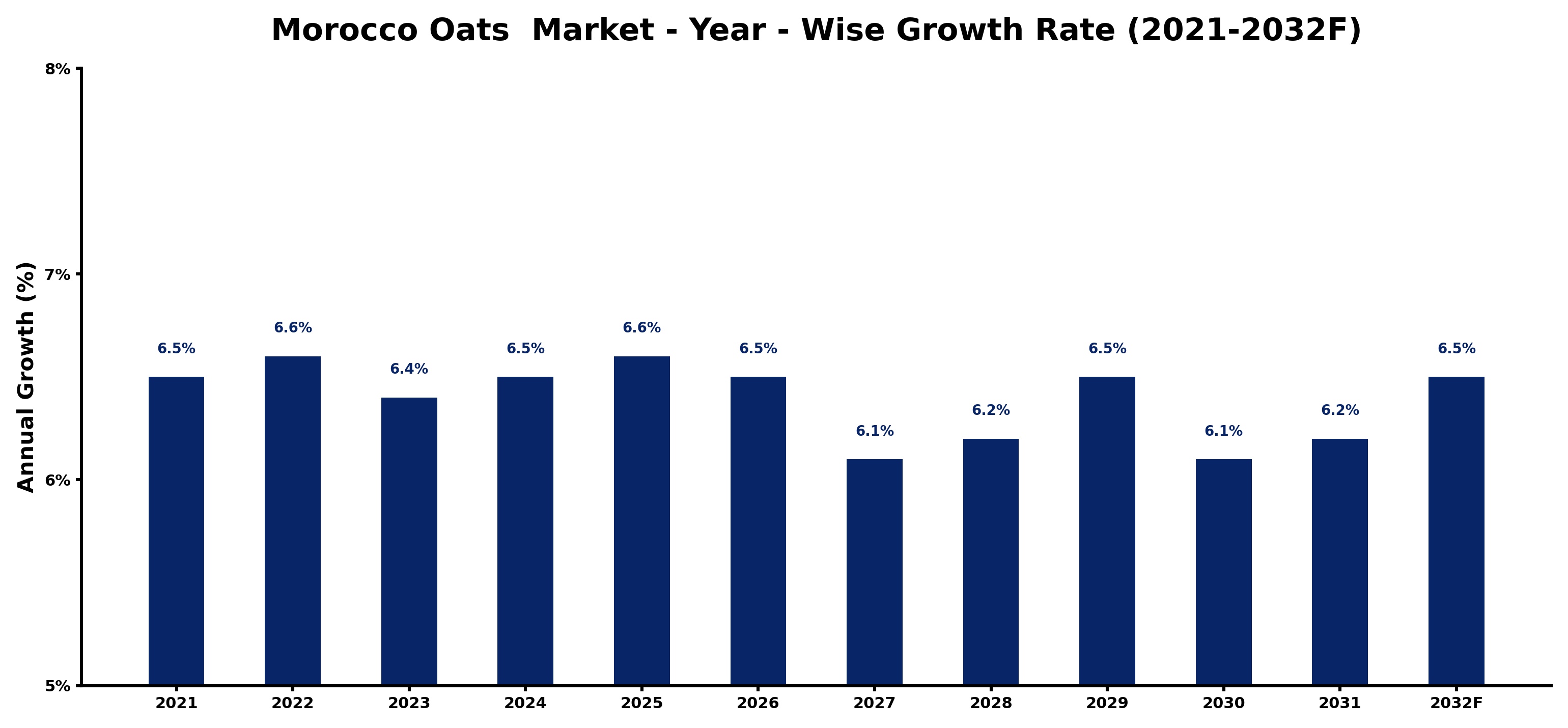
The table below presents the year‑wise growth rates along with the key drivers influencing the market
| Year | Growth Rate | Major Drivers |
| 2021 | 6.5% | Health trends increased oat consumption |
| 2022 | 6.6% | Consumer awareness of nutrition benefits |
| 2023 | 6.4% | New product launches attracted interest |
| 2024 | 6.5% | Increased demand for gluten-free options |
| 2025 | 6.6% | Sustainability initiatives gained traction |
| 2026 | 6.5% | Rising popularity of breakfast cereals |
| 2027 | 6.1% | Growing interest in plant-based diets |
| 2028 | 6.2% | Innovative marketing strategies engaged consumers |
| 2029 | 6.5% | Expansion of health food stores |
| 2030 | 6.1% | Collaborations with fitness influencers |
| 2031 | 6.2% | Increased focus on local sourcing |
| 2032 | 6.5% | Enhanced packaging attracted new buyers |
Note - Market size estimations and growth projections presented in this report are based on 6Wresearch's advanced forecasting approach, validated with industry datasets as of June 2026.
Morocco Oats Market Synopsis
Consumer health consciousness is the strongest force currently shaping the Morocco oats market. As Moroccans become more attuned to the benefits of nutritious eating, oats are emerging as a popular choice, especially among urban dwellers.
Additionally, the versatility of oats allows for their integration into various meal types, from breakfast cereals to granola bars, further enhancing their appeal in a shifting dietary landscape. This trend aligns well with the government's initiatives aimed at promoting healthier eating habits.
Morocco Oats Market Key Takeaways
- The market is fueled by a shift towards health-focused diets, emphasizing the demand for fiber-rich foods.
- Consumer interest in convenient oat-based products continues to rise, offering lucrative opportunities for manufacturers.
- Government policies are increasingly supportive of local agriculture, aimed at reducing import dependency.
- Urbanization and rising disposable incomes are pivotal factors in market expansion.
- Innovative product development is essential for catering to evolving consumer preferences.
Evaluation of Restraints in Morocco Oats Market
Despite its promising outlook, the Morocco oats market faces several restraints that can hinder its growth. A significant challenge is the entrenched preference for traditional breakfast options, which include bread and pastries, often overshadowing oats. Furthermore, the higher price point of oats relative to other staple grains may limit their adoption among the broader population. Distribution challenges, especially in rural areas, complicate market penetration, while reliance on imports exposes the market to price volatility and supply chain issues.
Morocco Oats Market Trends
A notable trend shaping the Morocco oats market is the increasing emphasis on functional foods that support heart health and digestion. Products like oatmeal and oat milk are becoming staples among health-conscious consumers. Furthermore, the growing versatility of oats is sparking innovation in product development, enabling the introduction of diverse offerings that cater to local tastes and preferences.
Morocco Oats Market Opportunities
Investors are presented with a wealth of opportunities in the Morocco oats market as consumer interest in healthy eating habits continues to rise. The demand for oat-based products, such as granola bars and oat milk, is particularly noteworthy, suggesting avenues for product innovation. Collaborating with local farmers to establish oat cultivation could further bolster local supply chains and mitigate import challenges, enhancing overall market stability.
Government Initiatives in the Morocco Oats Market
Moroccan government policies are increasingly geared towards fostering domestic oat production and ensuring food security. Recent initiatives include subsidies for local farmers to enhance agricultural productivity, alongside protective tariffs designed to shield domestic markets from excessive import competition. Furthermore, the government actively promotes sustainable farming practices, which are crucial for improving the quality of locally produced oats.
Future Insights of the Morocco Oats Market
Looking ahead to 2026-2032, the Morocco oats market is set to witness substantial growth driven by health-centric consumer trends and the increasing introduction of innovative oat-based products. The ongoing efforts of both domestic producers and international entrants to diversify their offerings in response to evolving consumer preferences will be pivotal. As awareness of oats' nutritional benefits continues to spread, a more significant market uptake is anticipated, ensuring a vibrant future for this segment.
Morocco Oats Market Latest Developments (May 2025 - June 2026)
In the latest industry developments, there is a notable uptick in marketing campaigns aimed at educating consumers about the health benefits of oats. Additionally, manufacturers are beginning to explore partnerships with local farmers to enhance the supply of locally sourced oats. These initiatives are critical in reducing dependency on imports while also aligning with the government's push for sustainable agricultural practices. As the market evolves, product launches focusing on innovative flavors and health-focused formulations are anticipated to gain traction.
Morocco Oats Market - Key Attractiveness of the Report
- 10 Years of Market Numbers
- Historical Data Starting from 2022 to 2025
- Base Year: 2025
- Forecast Data until 2032
- Key Performance Indicators Impacting the Market
- Major Upcoming Developments and Projects
Key Highlights of the Report:
- Morocco Oats Market Outlook
- Market Size of Morocco Oats Market, 2025
- Forecast of Morocco Oats Market, 2032
- Historical Data and Forecast of Morocco Oats Revenues & Volume for the Period 2022-2032F
- Morocco Oats Market Trend Evolution
- Morocco Oats Market Drivers and Challenges
- Morocco Oats Price Trends
- Morocco Oats Porter's Five Forces
- Morocco Oats Industry Life Cycle
- Historical Data and Forecast of Morocco Oats Market Revenues & Volume By Form for the Period 2022-2032F
- Historical Data and Forecast of Morocco Oats Market Revenues & Volume By Flavoured Oats for the Period 2022-2032F
- Historical Data and Forecast of Morocco Oats Market Revenues & Volume By Base Oats for the Period 2022-2032F
- Historical Data and Forecast of Morocco Oats Market Revenues & Volume By Distribution Channel for the Period 2022-2032F
- Historical Data and Forecast of Morocco Oats Market Revenues & Volume By Supermarket/Hypermarket for the Period 2022-2032F
- Historical Data and Forecast of Morocco Oats Market Revenues & Volume By Convenience Stores for the Period 2022-2032F
- Historical Data and Forecast of Morocco Oats Market Revenues & Volume By Online Channels for the Period 2022-2032F
- Historical Data and Forecast of Morocco Oats Market Revenues & Volume By Others for the Period 2022-2032F
- Morocco Oats Import Export Trade Statistics
- Market Opportunity Assessment By Form
- Market Opportunity Assessment By Distribution Channel
- Morocco Oats Top Companies Market Share
- Morocco Oats Competitive Benchmarking By Technical and Operational Parameters
- Morocco Oats Company Profiles
- Morocco Oats Key Strategic Recommendations






































