Morocco Propylene Glycol Market Year-wise Growth Rate (2021-2031F)
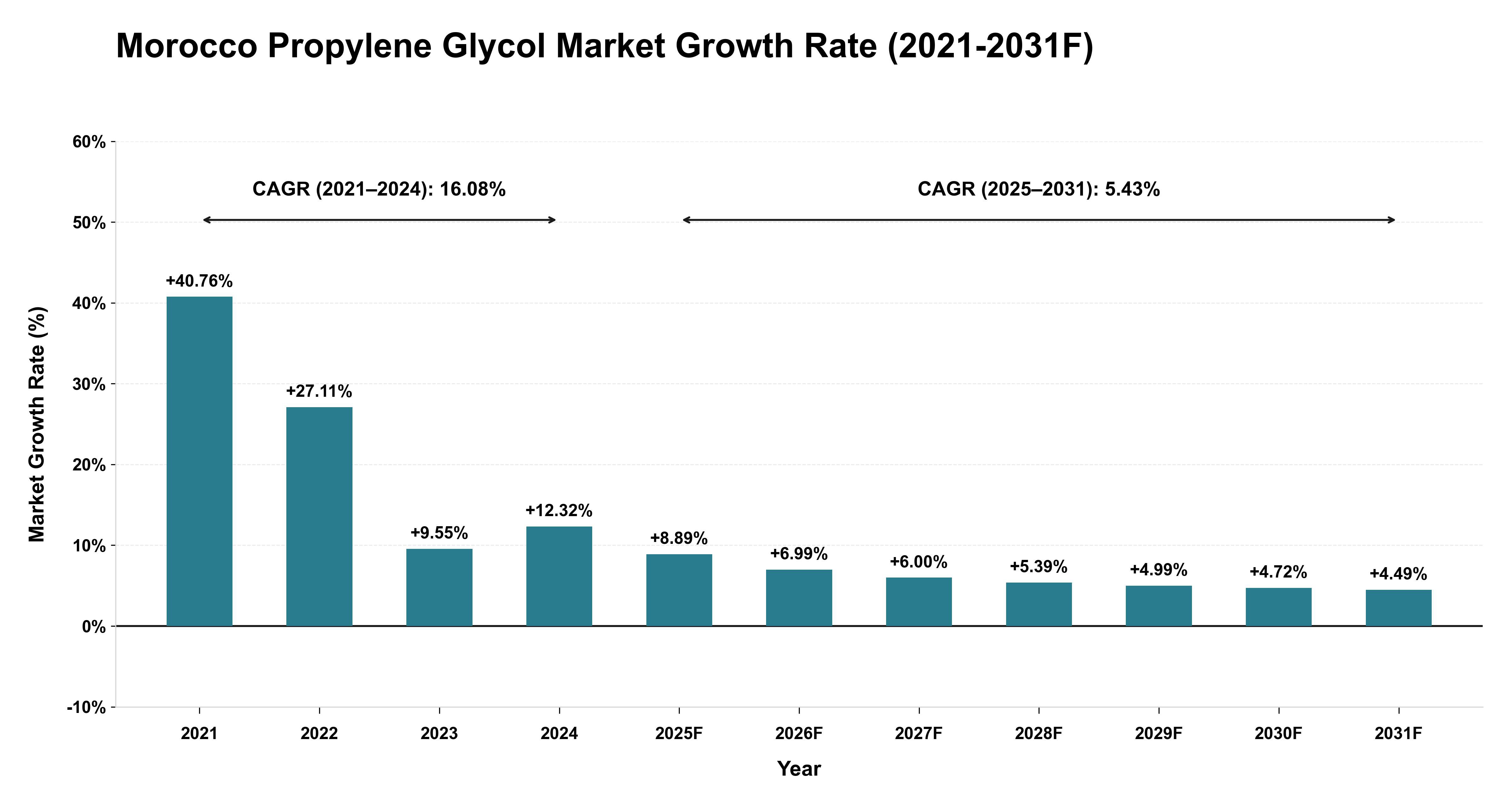
The Morocco Propylene Glycol Market experienced robust growth from 2021 to 2024, with a significant historical CAGR of 16.08%. This period saw accelerating demand driven by expanding end-use industries like pharmaceuticals, cosmetics, and food processing. Technological advancements and regulatory support further fueled market dynamics. However, from 2025 to 2031, the forecast CAGR of 5.43% indicates a deceleration compared to the previous period. This slowdown can be attributed to stabilizing consumption patterns, supply chain optimizations, and market adjustments post-intense growth. Despite the tapering growth rates, the market is expected to maintain a steady trajectory supported by established applications and evolving regulatory frameworks promoting sustainable practices in the industry.
Morocco Propylene Glycol Market Synopsis
The propylene glycol market in Morocco is witnessing growth with increasing demand from industries such as food and beverage, pharmaceuticals, and cosmetics. Propylene glycol is used as a humectant, solvent, and preservative in various products and applications. The market is characterized by the adoption of propylene glycol as a safe and versatile ingredient that enhances product performance and quality.
Drivers of the market
The propylene glycol market in Morocco is growing due to increasing applications in pharmaceuticals, food and beverage, and cosmetics industries. As consumer preferences shift towards sustainable and safe ingredients, propylene glycol is in demand for its versatility and safety profile, driving market expansion.
Challenges of the market
The propylene glycol market in Morocco faces various challenges. Firstly, there is dependency on imported propylene glycol due to limited domestic production capabilities, exposing the market to price volatility and supply chain disruptions. Secondly, regulatory barriers and licensing requirements can delay the construction of new propylene glycol production facilities. Moreover, there are concerns about the environmental impact of propylene glycol production and disposal, necessitating sustainable practices and regulatory compliance. Lastly, fluctuations in global chemical markets and supply chain disruptions can affect the availability and pricing of propylene glycol imports.
Government Policy of the market
Recognizing the diverse applications of propylene glycol, the Morocco government has implemented policies to regulate and promote growth in the propylene glycol market. These policies focus on ensuring product quality and safety, supporting sustainable production practices, and encouraging research and development in propylene glycol technologies. Additionally, the government supports initiatives that enhance supply chain reliability, improve market access for local producers, and promote Morocco competitiveness in the global propylene glycol market.
Key Highlights of the Report:
- Morocco Propylene Glycol Market Outlook
- Market Size of Morocco Propylene Glycol Market, 2024
- Forecast of Morocco Propylene Glycol Market, 2031
- Historical Data and Forecast of Morocco Propylene Glycol Revenues & Volume for the Period 2018 - 2031
- Morocco Propylene Glycol Market Trend Evolution
- Morocco Propylene Glycol Market Drivers and Challenges
- Morocco Propylene Glycol Price Trends
- Morocco Propylene Glycol Porter's Five Forces
- Morocco Propylene Glycol Industry Life Cycle
- Historical Data and Forecast of Morocco Propylene Glycol Market Revenues & Volume By Application for the Period 2018 - 2031
- Historical Data and Forecast of Morocco Propylene Glycol Market Revenues & Volume By Unsaturated Polyester Resins,Functional Fluids,Food, Drug, and Cosmetics,Liquid Detergent,Paints and Coating,Others for the Period 2018 - 2031
- Morocco Propylene Glycol Import Export Trade Statistics
- Market Opportunity Assessment By Application
- Morocco Propylene Glycol Top Companies Market Share
- Morocco Propylene Glycol Competitive Benchmarking By Technical and Operational Parameters
- Morocco Propylene Glycol Company Profiles
- Morocco Propylene Glycol Key Strategic Recommendations






































