Myanmar Musical Instrument Market Size Growth Rate
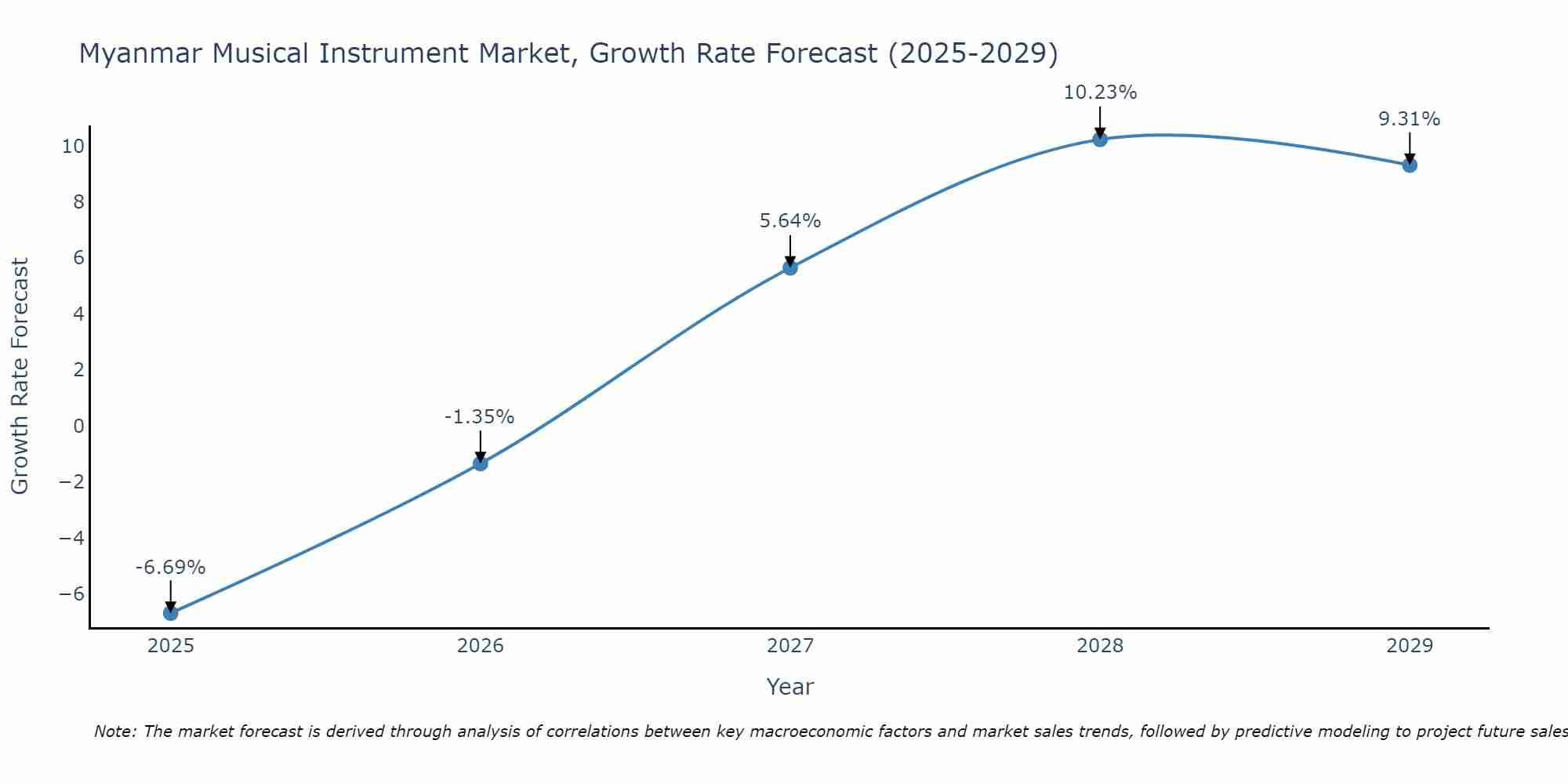
The Myanmar Musical Instrument Market is projected to witness mixed growth rate patterns during 2025 to 2029. Growth accelerates to 10.23% in 2028, following an initial rate of -6.69%, before easing to 9.31% at the end of the period.
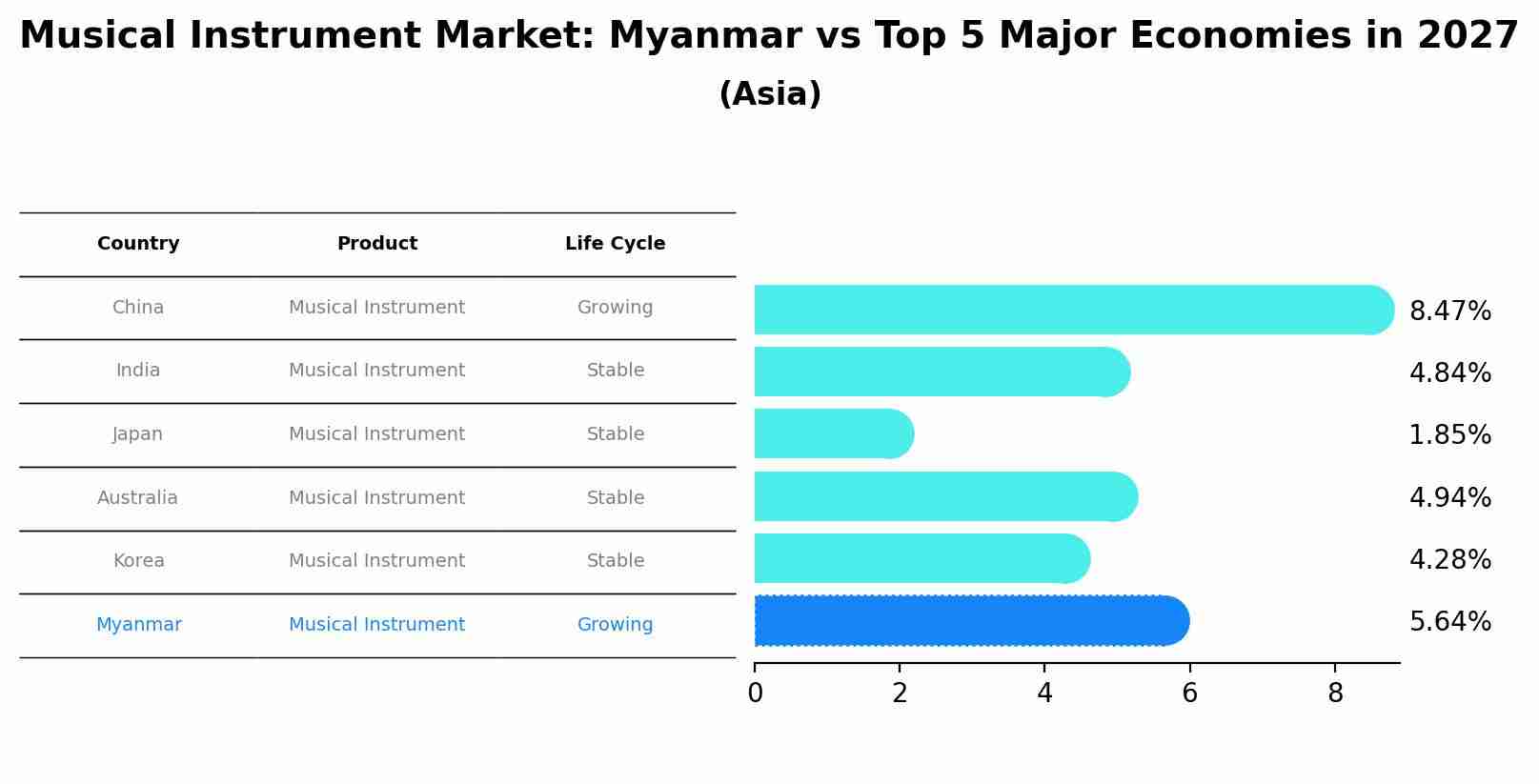
Musical Instrument Market: Myanmar vs Top 5 Major Economies in 2027 (Asia)
By 2027, Myanmar's Musical Instrument market is forecasted to achieve a growing growth rate of 5.64%, with China leading the Asia region, followed by India, Japan, Australia and South Korea.
Myanmar Musical Instrument Market Overview
The market for musical instruments in Myanmar is expanding as interest in music education and performance grows. The demand for traditional and modern musical instruments is rising, supported by cultural initiatives and the popularity of music in education and entertainment.
Drivers of the market
The cultural significance of music in Myanmar, coupled with the rising interest in music education and performance, drives the demand for musical instruments in the country. Traditional instruments such as the saung gauk (Burmese harp), hne (double reed pipe), and pat waing (circular drum) hold cultural value and are widely used in traditional music ensembles and performances. Moreover, the growing popularity of Western music genres and the influence of global music trends stimulate demand for a variety of musical instruments, including guitars, pianos, and keyboards, driving market growth.
Challenges of the market
Limited access to quality instruments and technical expertise may hinder the growth of this market in Myanmar. Moreover, educating consumers about the value of musical instruments and overcoming cultural barriers to music education is essential for market development.
Government Policy of the market
Myanmar promotes the production and use of musical instruments to enhance cultural heritage and education. Policies ensure product quality and safety, support local manufacturing, and encourage research and development to improve instrument design and performance.
Key Highlights of the Report:
- Myanmar Musical Instrument Market Outlook
- Market Size of Myanmar Musical Instrument Market, 2024
- Forecast of Myanmar Musical Instrument Market, 2031
- Historical Data and Forecast of Myanmar Musical Instrument Revenues & Volume for the Period 2021-2031
- Myanmar Musical Instrument Market Trend Evolution
- Myanmar Musical Instrument Market Drivers and Challenges
- Myanmar Musical Instrument Price Trends
- Myanmar Musical Instrument Porter's Five Forces
- Myanmar Musical Instrument Industry Life Cycle
- Historical Data and Forecast of Myanmar Musical Instrument Market Revenues & Volume By Product for the Period 2021-2031
- Historical Data and Forecast of Myanmar Musical Instrument Market Revenues & Volume By String Instruments for the Period 2021-2031
- Historical Data and Forecast of Myanmar Musical Instrument Market Revenues & Volume By Pianos And Keyboards for the Period 2021-2031
- Historical Data and Forecast of Myanmar Musical Instrument Market Revenues & Volume By Drums And Percussion Instruments for the Period 2021-2031
- Historical Data and Forecast of Myanmar Musical Instrument Market Revenues & Volume By Others for the Period 2021-2031
- Myanmar Musical Instrument Import Export Trade Statistics
- Market Opportunity Assessment By Product
- Myanmar Musical Instrument Top Companies Market Share
- Myanmar Musical Instrument Competitive Benchmarking By Technical and Operational Parameters
- Myanmar Musical Instrument Company Profiles
- Myanmar Musical Instrument Key Strategic Recommendations






































