Nepal Musical Instrument Market Size Growth Rate
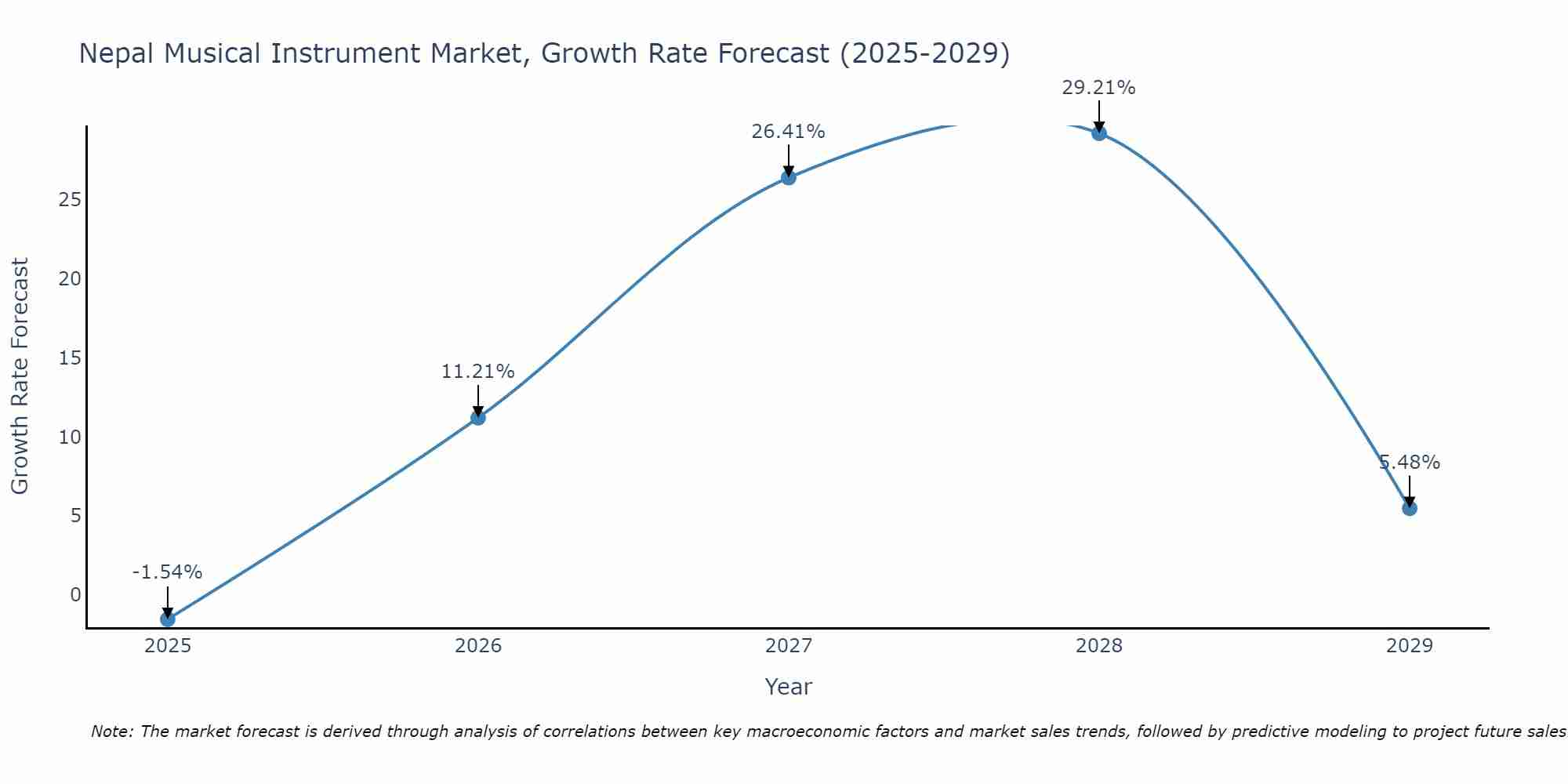
The Nepal Musical Instrument Market is projected to witness mixed growth rate patterns during 2025 to 2029. Starting at -1.54% in 2025, the market peaks at 29.21% in 2028, and settles at 5.48% by 2029.
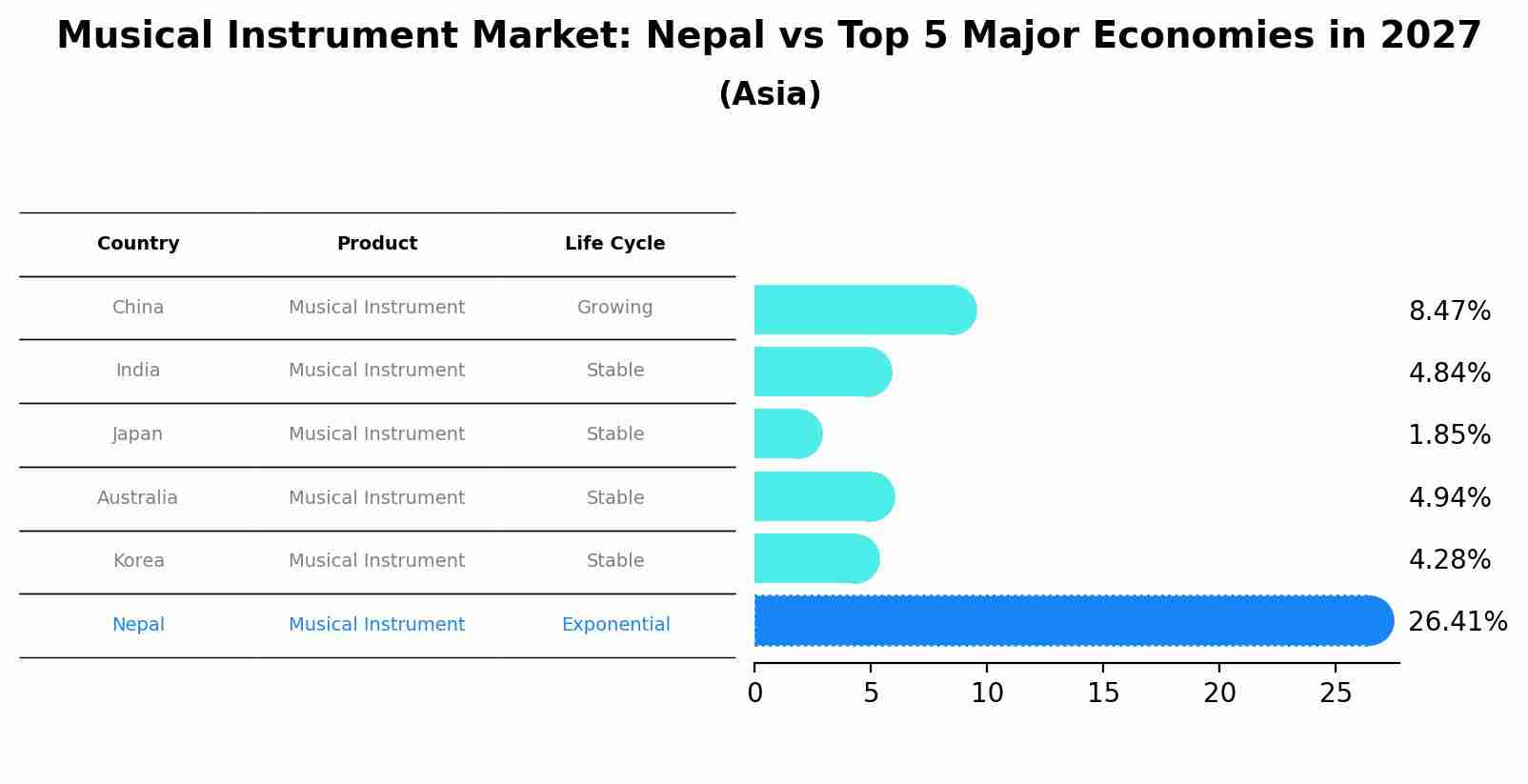
Musical Instrument Market: Nepal vs Top 5 Major Economies in 2027 (Asia)
The Musical Instrument market in Nepal is projected to grow at a exponential growth rate of 26.41% by 2027, within the Asia region led by China, along with other countries like India, Japan, Australia and South Korea, collectively shaping a dynamic and evolving market environment driven by innovation and increasing adoption of emerging technologies.
Nepal Musical Instrument Market Synopsis
The Nepal musical instrument market is characterized by a rich diversity of traditional instruments such as the sarangi, madal, and bansuri, as well as a growing demand for modern instruments like guitars, keyboards, and drums. The market is driven by a combination of cultural heritage and increasing interest in music education and performance. Local artisans play a significant role in crafting traditional instruments, adding to their unique appeal. Additionally, the market is influenced by global trends in music genres and instrument preferences, leading to a fusion of traditional and contemporary musical styles. With a focus on quality craftsmanship and authenticity, the Nepal musical instrument market offers a wide range of choices for musicians, collectors, and enthusiasts alike.
Nepal Musical Instrument Market Trends
The Nepal Musical Instrument Market is experiencing a growing trend towards traditional instruments such as the madal, sarangi, and bansuri, fueled by a rising interest in preserving cultural heritage. At the same time, there is a demand for modern musical instruments like guitars, keyboards, and electronic music equipment among the younger generation influenced by global music trends. The market is also witnessing a surge in online sales platforms and digital marketing strategies by retailers to reach a wider audience. Additionally, sustainable and ethically sourced materials are becoming increasingly important to consumers, leading to a preference for instruments made from locally sourced wood and eco-friendly materials. Overall, the Nepal Musical Instrument Market is a dynamic and diverse landscape catering to both traditional and contemporary music preferences.
Nepal Musical Instrument Market Challenges
The Nepal Musical Instrument Market faces several challenges, including limited access to high-quality instruments due to the country`s geographical location and lack of infrastructure for importing goods. Additionally, the market is highly fragmented, with numerous small-scale producers and retailers competing with limited resources. The lack of standardized quality control measures and regulatory frameworks further hinders the market`s growth potential. Furthermore, the relatively low purchasing power of the general population in Nepal limits the demand for expensive musical instruments, leading to a preference for lower-cost options. Overall, addressing these challenges would require investment in infrastructure, improved regulation, and efforts to enhance the quality and affordability of musical instruments available in the market.
Nepal Musical Instrument Market Investment Opportunities
The Nepal Musical Instrument Market offers various investment opportunities for both local and international investors. With a rich cultural heritage and a growing interest in music, there is a demand for traditional Nepali musical instruments such as the madal, sarangi, and bansuri. Investing in the production and distribution of these instruments can be lucrative, especially with the increasing popularity of Nepali folk and classical music globally. Additionally, there is a rising trend of incorporating Western musical instruments into Nepali music, presenting opportunities for importing and selling guitars, keyboards, and drums. Furthermore, investing in music education and training centers can cater to the growing number of aspiring musicians in Nepal, providing a platform for skill development and talent promotion in the local music industry.
Jordan Agar Market Government Policies
The Nepalese government does not have specific policies directly targeting the musical instrument market. However, the general trade and taxation policies apply to the import and sale of musical instruments in Nepal. Import duties and taxes are applicable to musical instruments brought into the country, and businesses operating in the sector are subject to standard regulations governing commerce. Additionally, there may be certain cultural preservation efforts that indirectly impact the market for traditional Nepali musical instruments. Overall, the government`s focus on promoting tourism and cultural heritage could potentially create opportunities for the growth of the musical instrument market in Nepal through increased demand for traditional instruments.
Nepal Musical Instrument Market Future Outlook
The future outlook for the Nepal Musical Instrument Market appears promising due to several factors. The growing popularity of Nepali traditional music and cultural performances both locally and internationally is expected to drive the demand for authentic Nepali musical instruments. Additionally, the increasing interest in music education and the emergence of new artists and bands in the country are likely to fuel market growth. The rise of online platforms and e-commerce channels also provides a significant opportunity for market expansion by reaching a wider customer base. Furthermore, with advancements in technology, there is potential for the development of innovative musical instruments that blend traditional Nepali craftsmanship with modern features, appealing to a broader audience. Overall, the Nepal Musical Instrument Market is poised for growth and innovation in the coming years.
Key Highlights of the Report:
- Nepal Musical Instrument Market Outlook
- Market Size of Nepal Musical Instrument Market, 2024
- Forecast of Nepal Musical Instrument Market, 2031
- Historical Data and Forecast of Nepal Musical Instrument Revenues & Volume for the Period 2021 - 2031
- Nepal Musical Instrument Market Trend Evolution
- Nepal Musical Instrument Market Drivers and Challenges
- Nepal Musical Instrument Price Trends
- Nepal Musical Instrument Porter's Five Forces
- Nepal Musical Instrument Industry Life Cycle
- Historical Data and Forecast of Nepal Musical Instrument Market Revenues & Volume By Product for the Period 2021 - 2031
- Historical Data and Forecast of Nepal Musical Instrument Market Revenues & Volume By String Instruments for the Period 2021 - 2031
- Historical Data and Forecast of Nepal Musical Instrument Market Revenues & Volume By Pianos And Keyboards for the Period 2021 - 2031
- Historical Data and Forecast of Nepal Musical Instrument Market Revenues & Volume By Drums And Percussion Instruments for the Period 2021 - 2031
- Historical Data and Forecast of Nepal Musical Instrument Market Revenues & Volume By Others for the Period 2021 - 2031
- Nepal Musical Instrument Import Export Trade Statistics
- Market Opportunity Assessment By Product
- Nepal Musical Instrument Top Companies Market Share
- Nepal Musical Instrument Competitive Benchmarking By Technical and Operational Parameters
- Nepal Musical Instrument Company Profiles
- Nepal Musical Instrument Key Strategic Recommendations






































