Nepal Electrical Testing Equipment Market Size, Share & Growth Rate
The Nepal Electrical Testing Equipment Market was estimated at USD 1251 Million in 2025 and is projected to reach USD 1798 Million by 2032, growing at a CAGR of 5.3% from 2026 to 2032. This growth trajectory is primarily fueled by the increasing investments in infrastructure development and rising demand for electrical safety and efficiency. As Nepal's electrical infrastructure modernizes, the demand for advanced and reliable testing equipment is expected to surge, catalyzing market expansion.
Nepal Electrical Testing Equipment Market Year-wise Growth Rate and Key Drivers
This graph highlights how the Nepal Electrical Testing Equipment Market has steadily grown over the years, supported by major growth factors.
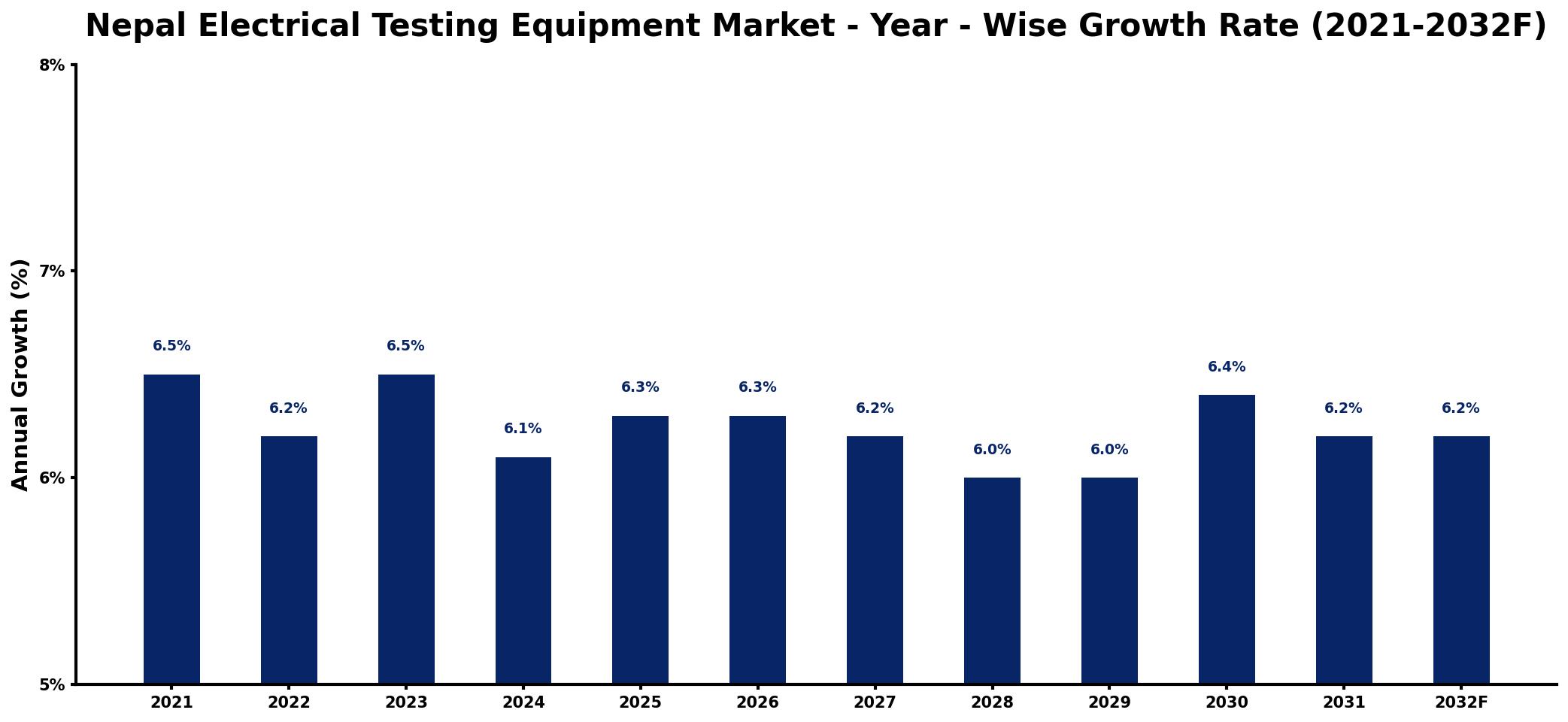
The table below presents the year‑wise growth rates along with the key drivers influencing the market
| Year | Growth Rate | Major Drivers |
| 2021 | 6.5% | Rising demand for safety standards |
| 2022 | 6.2% | Increased investments in infrastructure |
| 2023 | 6.5% | Expansion of renewable energy projects |
| 2024 | 6.1% | Growth in industrial automation sectors |
| 2025 | 6.3% | Surge in construction activities nationwide |
| 2026 | 6.3% | Technological advancements in monitoring |
| 2027 | 6.2% | Emergence of smart grid initiatives |
| 2028 | 6.0% | Focus on energy efficiency regulations |
| 2029 | 6.0% | Demand for regulatory compliance solutions |
| 2030 | 6.4% | Investment in urban development projects |
| 2031 | 6.2% | Growth of telecommunication networks |
| 2032 | 6.2% | Adoption of sustainable energy practices |
Note: Market size estimations and growth projections presented in this report are based on 6Wresearch's proprietary forecasting methodology, utilizing the latest available industry data, government publications, and primary research inputs.
Nepal Electrical Testing Equipment Market Synopsis
The Nepal Electrical Testing Equipment Market is currently experiencing significant momentum, driven by heightened awareness of electrical safety among businesses and regulatory bodies. The convergence of infrastructure development and technological advancement is shaping a robust environment for electrical testing solutions.
Companies are increasingly focusing on providing a diverse array of testing equipment that caters to various sectors, including industrial, commercial, and utility services. This response to market demands not only meets regulatory standards but also enhances the operational efficiency of electrical systems.
Nepal Electrical Testing Equipment Market Key Takeaways
- The market is poised for steady growth, driven by infrastructure investments and regulatory compliance.
- Demand for portable and multifunctional testing devices is on the rise, reflecting user preferences for convenience and efficiency.
- Advanced digital testing technologies are gaining traction, providing more accurate results than traditional methods.
- The government is supportive of local manufacturing and product quality initiatives, enhancing market competitiveness.
- Increased awareness of electrical safety among end-users is fostering the adoption of regular testing practices.
Evaluation of Restraints in Nepal Electrical Testing Equipment Market
Despite promising growth, the Nepal Electrical Testing Equipment Market is not without its challenges. Limited access to advanced testing equipment, particularly in remote regions, poses significant barriers to widespread adoption. Moreover, a lack of awareness about the necessity of regular electrical testing among some businesses and consumers inhibits the potential for market expansion. The proliferation of counterfeit or substandard equipment further complicates the landscape, undermining confidence in testing practices. Additionally, the high initial costs associated with quality equipment and a shortage of skilled technicians proficient in modern testing methodologies create further obstacles that need to be addressed for sustainable growth.
Nepal Electrical Testing Equipment Market Trends
The market is increasingly witnessing a shift towards portable and handheld testing devices that enhance ease of use for technicians in the field. The demand for digital testing equipment is also rising, as it significantly improves accuracy and reliability in measurement compared to older analog options. Furthermore, compliance with international safety and quality standards is becoming essential, especially as Nepal's infrastructure projects align more closely with global practices. The integration of IoT technology into testing equipment represents another transformative trend, enhancing data collection and analysis capabilities for better decision-making.
Nepal Electrical Testing Equipment Market Opportunities
As the quest for reliable electrical infrastructure continues, the Nepal Electrical Testing Equipment Market presents numerous investment opportunities. Suppliers of high-quality testing instruments like multimeters, circuit testers, and insulation testers stand to benefit from the growing demand from utility companies and industrial facilities. Additionally, the provision of calibration and maintenance services for these instruments is a lucrative area for investment. Collaborating with local distributors and building a strong distribution network can help stakeholders maximize their reach and cater to the evolving needs of this burgeoning market.
Government Initiatives in the Nepal Electrical Testing Equipment Market
The Nepalese government has instituted various policies aimed at fostering the growth of the Electrical Testing Equipment Market. These initiatives emphasize the importance of product quality and safety standards, ensuring that equipment adheres to regulatory requirements. The Nepal Bureau of Standards and Metrology (NBSM) plays a vital role in this landscape, working to enforce standards that protect consumer interests and promote fair trade practices. Furthermore, the government is encouraging local manufacturing through support programs and incentives, aiming to strengthen domestic production capabilities and enhance the availability of reliable testing equipment.
Future Insights of the Nepal Electrical Testing Equipment Market
Looking ahead to the period from 2026 to 2032, the Nepal Electrical Testing Equipment Market is set for sustained growth. Continued investments in infrastructure projects and industrial expansion will drive the demand for sophisticated testing equipment. The growing emphasis on safety, coupled with the integration of renewable energy sources and smart grid technologies, is likely to shape the future landscape of the market. As Nepal moves towards modernizing its electrical infrastructure, opportunities for both domestic and international manufacturers will continue to emerge, making the market an attractive prospect for stakeholders.
Nepal Electrical Testing Equipment Market Latest Developments (2025 - 2026)
In the most recent months, the market has seen several initiatives focusing on advancing testing technology and enhancing service delivery. New collaborative efforts among industry stakeholders aim to improve the availability of quality testing equipment across various sectors. Additionally, a noticeable push toward digitalization is taking place, with companies investing in digital platforms to streamline operations and improve customer engagement. These developments reflect a collective effort to respond to the evolving demands of the Nepal Electrical Testing Equipment Market.
Nepal Electrical Testing Equipment Market - Key Attractiveness of the Report
- 10 Years of Market Numbers
- Historical Data Starting from 2022 to 2025
- Base Year: 2025
- Forecast Data until 2032
- Key Performance Indicators Impacting the Market
- Major Upcoming Developments and Projects
Key Highlights of the Report:
- Nepal Electrical Testing Equipment Market Outlook
- Market Size of Nepal Electrical Testing Equipment Market, 2025
- Forecast of Nepal Electrical Testing Equipment Market, 2032
- Historical Data and Forecast of Nepal Electrical Testing Equipment Revenues & Volume for the Period 2022-2032F
- Nepal Electrical Testing Equipment Market Trend Evolution
- Nepal Electrical Testing Equipment Market Drivers and Challenges
- Nepal Electrical Testing Equipment Price Trends
- Nepal Electrical Testing Equipment Porter's Five Forces
- Nepal Electrical Testing Equipment Industry Life Cycle
- Historical Data and Forecast of Nepal Electrical Testing Equipment Market Revenues & Volume By Service Type for the Period 2022-2032F
- Historical Data and Forecast of Nepal Electrical Testing Equipment Market Revenues & Volume By Electrical Testing Equipment Calibration Services for the Period 2022-2032F
- Historical Data and Forecast of Nepal Electrical Testing Equipment Market Revenues & Volume By Electrical Testing Equipment Repair Services or After Sales Services for the Period 2022-2032F
- Historical Data and Forecast of Nepal Electrical Testing Equipment Market Revenues & Volume By Product Type for the Period 2022-2032F
- Historical Data and Forecast of Nepal Electrical Testing Equipment Market Revenues & Volume By General Purpose Electrical Testing Equipment for the Period 2022-2032F
- Historical Data and Forecast of Nepal Electrical Testing Equipment Market Revenues & Volume By Mechanical Electrical Test Equipment for the Period 2022-2032F
- Historical Data and Forecast of Nepal Electrical Testing Equipment Market Revenues & Volume By End User for the Period 2022-2032F
- Historical Data and Forecast of Nepal Electrical Testing Equipment Market Revenues & Volume By Aerospace and Defense for the Period 2022-2032F
- Historical Data and Forecast of Nepal Electrical Testing Equipment Market Revenues & Volume By Telecommunications for the Period 2022-2032F
- Historical Data and Forecast of Nepal Electrical Testing Equipment Market Revenues & Volume By Semiconductor and Electronics for the Period 2022-2032F
- Nepal Electrical Testing Equipment Import Export Trade Statistics
- Market Opportunity Assessment By Service Type
- Market Opportunity Assessment By Product Type
- Market Opportunity Assessment By End User
- Nepal Electrical Testing Equipment Top Companies Market Share
- Nepal Electrical Testing Equipment Competitive Benchmarking By Technical and Operational Parameters
- Nepal Electrical Testing Equipment Company Profiles
- Nepal Electrical Testing Equipment Key Strategic Recommendations






































