Nepal Gallium Market Size Growth Rate
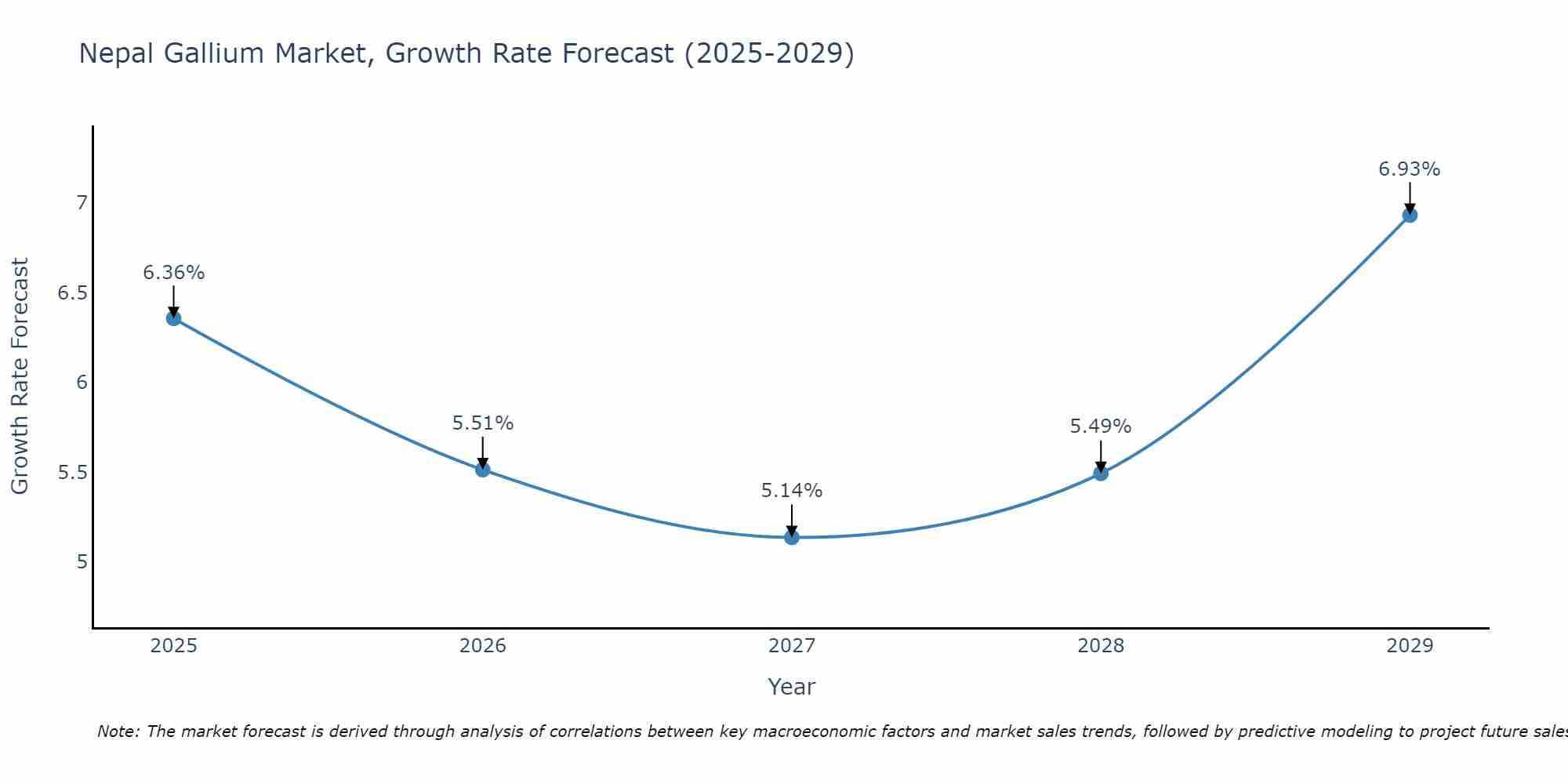
The Nepal Gallium Market is projected to witness mixed growth rate patterns during 2025 to 2029. Commencing at 6.36% in 2025, growth builds up to 6.93% by 2029.
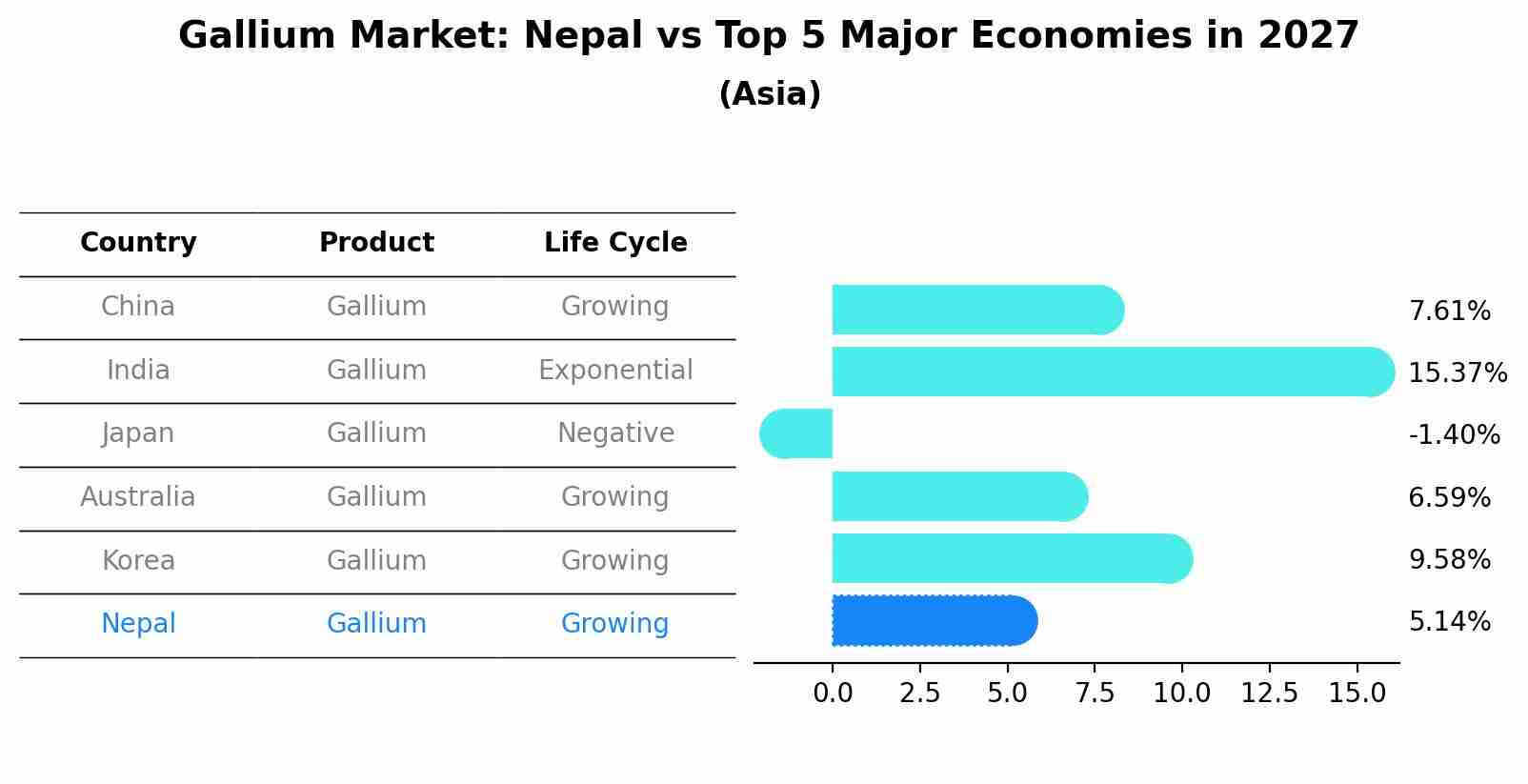
Gallium Market: Nepal vs Top 5 Major Economies in 2027 (Asia)
The Gallium market in Nepal is projected to grow at a growing growth rate of 5.14% by 2027, within the Asia region led by China, along with other countries like India, Japan, Australia and South Korea, collectively shaping a dynamic and evolving market environment driven by innovation and increasing adoption of emerging technologies.
Nepal Gallium Market Overview
The Nepal Gallium market is relatively small but growing steadily due to increasing demand in the electronics and semiconductor industries. Gallium, a rare metal with unique properties such as low melting point and high thermal conductivity, is primarily used in the production of LEDs, solar panels, and electronic devices. The market is driven by the expanding electronics manufacturing sector in Nepal, coupled with the rising adoption of advanced technologies. While the market is currently dominated by imports, there is potential for domestic production to cater to the growing demand. However, challenges such as limited availability of raw materials and infrastructure constraints need to be addressed to fully capitalize on the opportunities in the Nepal Gallium market.
Nepal Gallium Market Trends
As of recent data, the Nepal Gallium market is witnessing a steady growth trend driven by increasing demand from the electronics industry. Gallium, a key component in semiconductors and LEDs, is experiencing rising popularity due to its unique properties that enhance the performance of these devices. The market is also benefiting from the growing investments in research and development activities related to advanced technologies like 5G networks and electric vehicles, where gallium-based products play a crucial role. Additionally, the focus on sustainable practices and environmentally friendly solutions is prompting manufacturers to explore gallium as a viable alternative in various applications. Overall, the Nepal Gallium market is poised for further expansion as industries continue to adopt innovative technologies and seek high-performance materials.
Nepal Gallium Market Challenges
In the Nepal Gallium market, some of the key challenges include limited availability of raw materials, high production costs, lack of infrastructure for efficient production and distribution, and limited awareness among potential users about the benefits and applications of Gallium. Additionally, the market faces competition from established Gallium suppliers in other countries, which can make it difficult for Nepali producers to penetrate global markets. Moreover, the fluctuations in international Gallium prices and regulatory barriers can also impact the growth and stability of the Nepal Gallium market. To overcome these challenges, stakeholders in the Nepal Gallium market need to focus on enhancing production efficiency, investing in research and development, improving infrastructure, and increasing awareness about the potential of Gallium in various industries.
Nepal Gallium Market Investment Opportunities
The Nepal Gallium market presents promising investment opportunities due to the increasing demand for gallium-based technologies in sectors such as electronics, semiconductors, and solar panels. With a growing focus on renewable energy and technological advancements, the need for gallium, a key component in producing LEDs, photovoltaic cells, and integrated circuits, is expected to rise. Investing in gallium production or mining companies in Nepal could yield significant returns as the global demand for gallium continues to grow. Additionally, exploring opportunities in research and development for gallium-based applications could also be a lucrative investment avenue in the Nepal Gallium market. Conducting a thorough market analysis and understanding the supply chain dynamics would be essential for making informed investment decisions in this sector.
Nepal Gallium Market Government Policy
The Nepal government does not have specific policies directly targeting the Gallium market. However, the overall industrial policy and regulations set by the government may have an indirect impact on the Gallium market in Nepal. The government aims to promote foreign investment and industrial growth through various incentives and measures to attract businesses. It also focuses on promoting research and innovation in the industrial sector, which could potentially benefit the Gallium market by encouraging technological advancements and collaborations. Additionally, the government`s policies on environmental protection and sustainable development may influence the production and usage of Gallium in Nepal, ensuring that any activities related to Gallium mining or processing adhere to strict environmental standards.
Nepal Gallium Market Future Outlook
The future outlook for the Nepal Gallium Market appears positive, with potential growth opportunities driven by the increasing demand for gallium in the electronics and semiconductor industries. As technology advances and the need for high-performance electronic devices rises, the use of gallium in applications such as LEDs, solar panels, and advanced semiconductors is expected to grow. Additionally, the growing focus on renewable energy sources and the development of new technologies like 5G networks are likely to further boost the demand for gallium in the coming years. However, challenges such as supply chain disruptions and price volatility could impact market growth. Overall, the Nepal Gallium Market is poised for expansion, driven by technological advancements and evolving industry trends.
Key Highlights of the Report:
- Nepal Gallium Market Outlook
- Market Size of Nepal Gallium Market, 2024
- Forecast of Nepal Gallium Market, 2031
- Historical Data and Forecast of Nepal Gallium Revenues & Volume for the Period 2021 - 2031
- Nepal Gallium Market Trend Evolution
- Nepal Gallium Market Drivers and Challenges
- Nepal Gallium Price Trends
- Nepal Gallium Porter's Five Forces
- Nepal Gallium Industry Life Cycle
- Historical Data and Forecast of Nepal Gallium Market Revenues & Volume By Applications for the Period 2021 - 2031
- Historical Data and Forecast of Nepal Gallium Market Revenues & Volume By LED for the Period 2021 - 2031
- Historical Data and Forecast of Nepal Gallium Market Revenues & Volume By Laser Diodes for the Period 2021 - 2031
- Historical Data and Forecast of Nepal Gallium Market Revenues & Volume By Integrated Circuits for the Period 2021 - 2031
- Historical Data and Forecast of Nepal Gallium Market Revenues & Volume By Solar Cells for the Period 2021 - 2031
- Nepal Gallium Import Export Trade Statistics
- Market Opportunity Assessment By Applications
- Nepal Gallium Top Companies Market Share
- Nepal Gallium Competitive Benchmarking By Technical and Operational Parameters
- Nepal Gallium Company Profiles
- Nepal Gallium Key Strategic Recommendations






































