Nepal Garden Furniture Market Summary
The nepal garden furniture market was estimated at USD 203 Million in 2025 and is projected to reach USD 277 Million by 2032, growing at a CAGR of 5.4% from 2026 to 2032.
Nepal Garden Furniture Market Year-wise Growth Rate and Key Drivers
This graph highlights how the Nepal Garden Furniture Market has steadily grown over the past five years, supported by major growth factors.
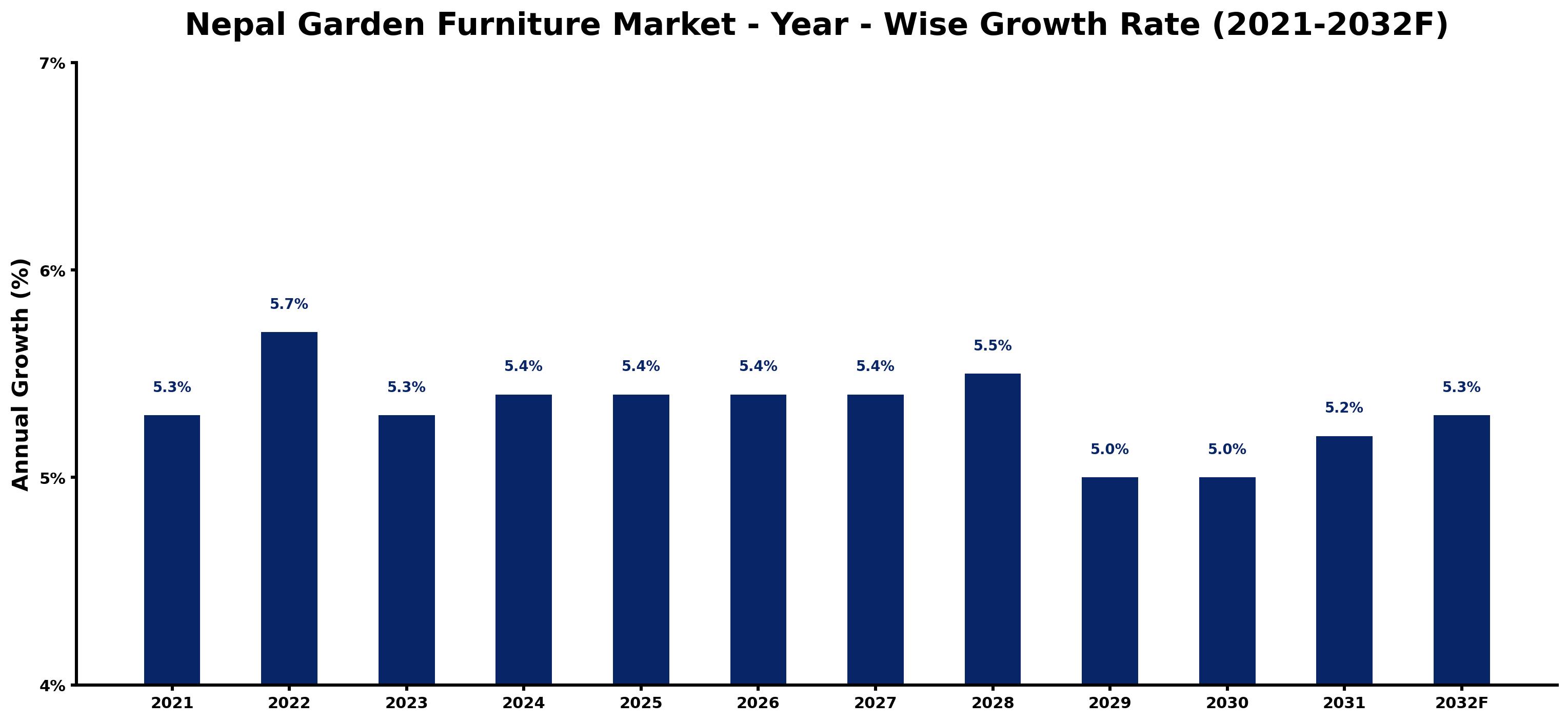
The table below presents the year wise growth rates along with the key drivers influencing the market
| Year | Growth Rate | Major Drivers |
| 2021 | 5.3% | Nepal's expanding tourism sector fuels interest in outdoor living spaces and furnishings. |
| 2022 | 5.7% | Urban migration leads to increased demand for functional yet stylish garden furniture options. |
| 2023 | 5.3% | Local artisans gain recognition, offering unique craftsmanship in outdoor furniture designs. |
| 2024 | 5.4% | Home improvement trends inspire homeowners to invest in durable garden furniture solutions. |
| 2025 | 5.4% | Environmental awareness prompts consumers to seek sustainable materials for outdoor furnishings. |
| 2026 | 5.4% | E-commerce platforms simplify access to various garden furniture styles, broadening market reach. |
| 2027 | 5.4% | Increasing disposable income encourages affluent consumers to purchase luxury outdoor furniture. |
| 2028 | 5.5% | Regional climate shifts create a preference for weather-resistant garden furniture materials. |
| 2029 | 5.0% | Collaborative projects between local brands and international designers enhance product offerings. |
| 2030 | 5.0% | Promotions and sales events drive seasonal spikes in garden furniture purchases annually. |
| 2031 | 5.2% | Integration of smart technology into furniture trends appeals to tech-savvy consumers. |
| 2032 | 5.3% | Sustainable tourism initiatives promote outdoor spaces, driving demand for garden furniture growth. |
Note - Market size estimations and growth projections presented in this report are based on 6Wresearch's advanced forecasting approach, validated with industry datasets as of June 2026.
Nepal Garden Furniture Market Synopsis
The Nepal Garden Furniture Market is projected to reach 5.4% and witness significant growth during the forecast period (2026-2032). This steady growth is underpinned by a variety of factors including an increase in disposable income, a burgeoning trend towards outdoor living, and heightened consumer interest in enhancing home aesthetics. The market's diverse offerings encompass wooden, rattan, metal, and plastic furniture options, effectively catering to a wide array of consumer preferences.
Nepal Garden Furniture Market Growth Drivers
A number of critical drivers are propelling the expansion of the Nepal Garden Furniture Market.
- Rising disposable incomes among the population are enhancing consumers' purchasing power, enabling them to invest in quality outdoor furniture.
- The trend towards outdoor living spaces has gained momentum, as more households seek to utilize their outdoor areas for relaxation and entertainment.
- Increased participation in gardening and related outdoor activities is leading to a heightened demand for functional garden furniture.
- Shifts in consumer preferences are favoring eco-friendly products, fostering a burgeoning market for furniture made from sustainable materials.
- As the hospitality and tourism industries in Nepal continue to advance, the need for durable and aesthetically pleasing garden furniture in commercial settings is growing significantly.
Nepal Garden Furniture Market Trends and Opportunities
The Nepal Garden Furniture Market is witnessing several pivotal trends that are reshaping its landscape.
- A marked shift towards eco-friendly materials such as bamboo and recycled plastic is evident, reflecting a growing consumer consciousness regarding environmental sustainability.
- There is an increasing demand for multifunctional and space-saving furniture designs that cater to the limited outdoor spaces prevalent in urban areas.
- Consumers show a preference for outdoor furniture equipped with weather-resistant properties, which minimizes maintenance and enhances durability.
- The market also sees a trend towards customization and personalization, allowing consumers to tailor products to fit their specific aesthetic and functional needs.
- Engagement with local artisans to produce unique, handcrafted garden furniture represents a lucrative opportunity for differentiation in a competitive market.
Nepal Garden Furniture Market Challenges and Restraints
Despite its growth potential, the Nepal Garden Furniture Market faces notable challenges.
- The local industry grapples with a limited availability of high-quality raw materials, which can impede production and product quality.
- Importation of materials incurs high costs, affecting the pricing strategies for locally manufactured garden furniture.
- Inconsistent governmental policies present uncertainties that can impact market stability and business operations.
- Competition from lower-priced imported products poses a significant threat to local manufacturers trying to maintain market share.
- The seasonality of demand complicates inventory management, as customer interest in garden furniture fluctuates throughout the year.
Nepal Garden Furniture Market Investment Opportunities
The growing trend towards outdoor living presents several investment opportunities within the Nepal Garden Furniture Market.
- Investing in high-quality, aesthetically pleasing garden furniture that resonates with local styles can be highly profitable as consumer preferences evolve.
- There is an opportunity to innovate with sustainable materials in furniture design, aligning product offerings with the rising environmentally conscious consumer base.
- Targeting the hospitality sector for bulk demand can prove beneficial, as hotels and restaurants seek to elevate their outdoor dining experiences.
- Collaboration with local artisans can result in the creation of unique products, building brand loyalty and market differentiation.
- Engaging in strategic marketing initiatives to promote the benefits of locally produced garden furniture can enhance consumer awareness and appreciation.
Nepal Garden Furniture Market Government Investment and Initiatives
Government policies play a crucial role in shaping the Nepal Garden Furniture Market.
- Regulations promoting the use of sustainable materials are instrumental in fostering an environmentally conscious production landscape.
- Import and export regulations impact the availability of both raw materials and finished garden furniture products in the market.
- Taxation policies, including import duties and value-added taxes, influence the cost structure and competitiveness of garden furniture locally and internationally.
- The government may introduce incentives or subsidies aimed at encouraging local manufacturing, thereby enhancing the support structure for domestic businesses.
- Overall, policies are designed to strike a balance between stimulating economic growth while prioritizing environmental sustainability, essential for the market's evolution.
Nepal Garden Furniture Market Latest Developments (May 2025 - June 2026)
In recent months, the Nepal Garden Furniture Market has seen a variety of developments indicating a positive direction.
- The ongoing expansion of urban residential projects has led to increased demand for both residential and commercial outdoor furniture.
- There has been a noticeable rise in consumer interest in eco-friendly products, leading manufacturers to adapt their offerings accordingly.
- Local artisans are increasingly gaining recognition for their craftsmanship, resulting in a surge of unique, handmade products entering the market.
- Marketing campaigns focusing on the durability and aesthetic appeal of locally produced garden furniture have been initiated to enhance brand visibility.
- Collaborative efforts among industry stakeholders to address common challenges are fostering a more resilient and innovative market landscape.
Nepal Garden Furniture Market - Key Attractiveness of the Report
- 10 Years of Market Numbers
- Historical Data Starting from 2022 to 2025
- Base Year: 2025
- Forecast Data until 2032
- Key Performance Indicators Impacting the Market
- Major Upcoming Developments and Projects
Key Highlights of the Report:
- Nepal Garden Furniture Market Outlook
- Market Size of Nepal Garden Furniture Market, 2025
- Forecast of Nepal Garden Furniture Market, 2032F
- Historical Data and Forecast of Nepal Garden Furniture Revenues & Volume for the Period 2022-2032F
- Nepal Garden Furniture Market Trend Evolution
- Nepal Garden Furniture Market Drivers and Challenges
- Nepal Garden Furniture Price Trends
- Nepal Garden Furniture Porter's Five Forces
- Nepal Garden Furniture Industry Life Cycle
- Historical Data and Forecast of Nepal Garden Furniture Market Revenues & Volume By Type for the Period 2022-2032F
- Historical Data and Forecast of Nepal Garden Furniture Market Revenues & Volume By Tables for the Period 2022-2032F
- Historical Data and Forecast of Nepal Garden Furniture Market Revenues & Volume By Chairs for the Period 2022-2032F
- Historical Data and Forecast of Nepal Garden Furniture Market Revenues & Volume By Dining Sets for the Period 2022-2032F
- Historical Data and Forecast of Nepal Garden Furniture Market Revenues & Volume By Seating Sets for the Period 2022-2032F
- Historical Data and Forecast of Nepal Garden Furniture Market Revenues & Volume By Others for the Period 2022-2032F
- Historical Data and Forecast of Nepal Garden Furniture Market Revenues & Volume By Application for the Period 2022-2032F
- Historical Data and Forecast of Nepal Garden Furniture Market Revenues & Volume By Brand Outlets for the Period 2022-2032F
- Historical Data and Forecast of Nepal Garden Furniture Market Revenues & Volume By Franchised Furniture Store for the Period 2022-2032F
- Historical Data and Forecast of Nepal Garden Furniture Market Revenues & Volume By E-Commerce for the Period 2022-2032F
- Historical Data and Forecast of Nepal Garden Furniture Market Revenues & Volume By Others for the Period 2022-2032F
- Nepal Garden Furniture Import Export Trade Statistics
- Market Opportunity Assessment By Type
- Market Opportunity Assessment By Application
- Nepal Garden Furniture Top Companies Market Share
- Nepal Garden Furniture Competitive Benchmarking By Technical and Operational Parameters
- Nepal Garden Furniture Company Profiles
- Nepal Garden Furniture Key Strategic Recommendations






































