Nepal Maternity Wear Market Summary
The nepal maternity wear market was estimated at USD 396 Million in 2025 and is projected to reach USD 527 Million by 2032, growing at a CAGR of 4.9% from 2026 to 2032.
Nepal Maternity Wear Market Year-wise Growth Rate and Key Drivers
This graph highlights how the Nepal Maternity Wear Market has steadily grown over the past five years, supported by major growth factors.
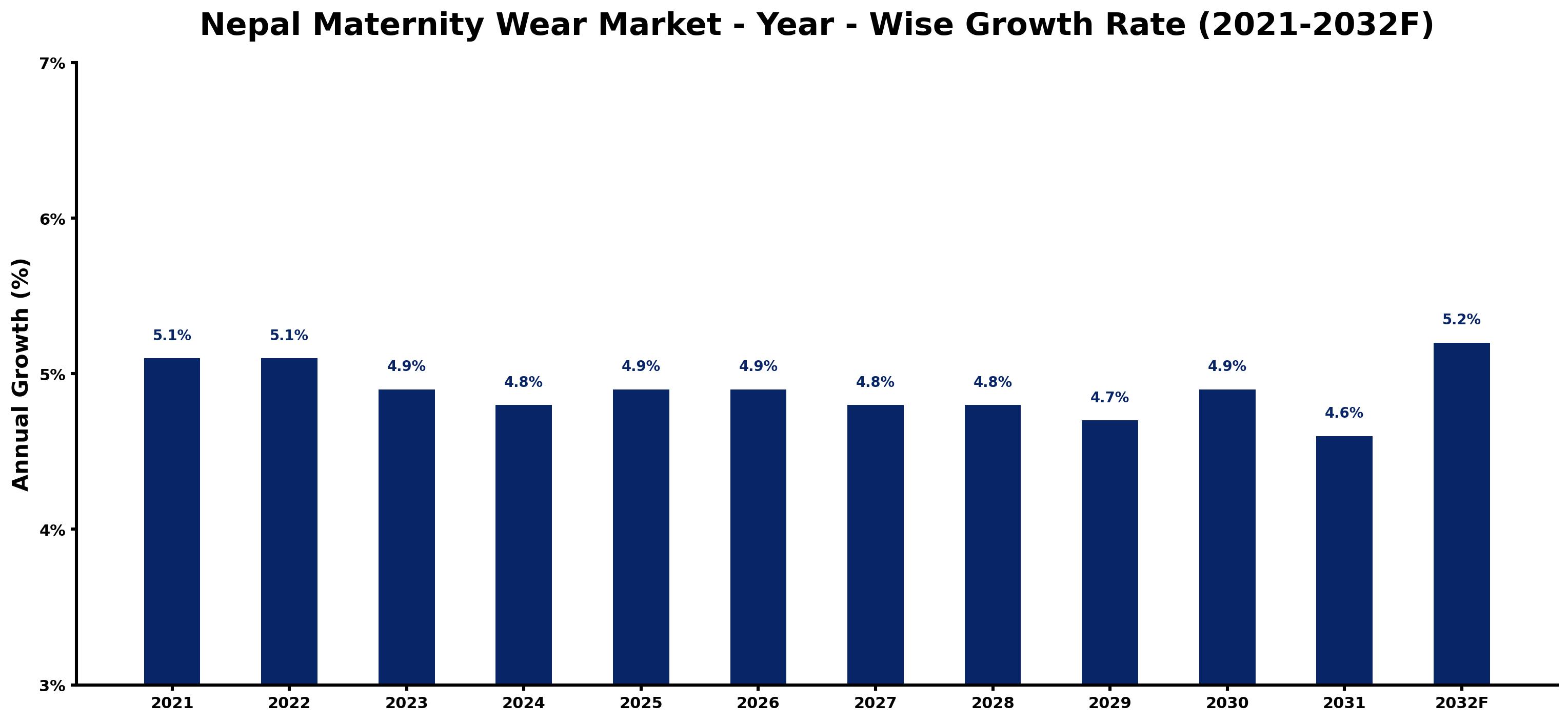
The table below presents the year wise growth rates along with the key drivers influencing the market
| Year | Growth Rate | Major Drivers |
| 2021 | 5.1% | Maternity wear sales began to bounce back as retail reopened post-lockdown. |
| 2022 | 5.1% | Increased awareness surrounding maternal health fueled demand for comfortable clothing options. |
| 2023 | 4.9% | Local artisans gained traction, incorporating traditional designs into modern maternity wear. |
| 2024 | 4.8% | E-commerce platforms expanded, making maternity wear more accessible in rural areas. |
| 2025 | 4.9% | Consumer preferences shifted toward sustainable fabrics, influencing product development strategies. |
| 2026 | 4.9% | Maternity clothing brands focused on inclusivity, targeting diverse body shapes and sizes. |
| 2027 | 4.8% | Social media influencers played a significant role in promoting maternity fashion trends. |
| 2028 | 4.8% | Partnerships with local health organizations highlighted the importance of quality maternity wear. |
| 2029 | 4.7% | Emerging designers introduced innovative designs, capturing the attention of expectant mothers. |
| 2030 | 4.9% | Rising disposable incomes allowed families to invest in higher-quality maternity clothing. |
| 2031 | 4.6% | Cultural events celebrated motherhood, increasing visibility and demand for maternity products. |
| 2032 | 5.2% | Technological advancements in fabric production led to the emergence of smart clothing options. |
Note - Market size estimations and growth projections presented in this report are based on 6Wresearch's advanced forecasting approach, validated with industry datasets as of June 2026.
Nepal Maternity Wear Market Synopsis
The Nepal Maternity Wear Market is projected to reach 4.9% and witness significant growth during the forecast period (2026-2032). This upward trend is primarily driven by the increasing demand for stylish, comfortable, and functional maternity clothing among expectant mothers. As societal norms evolve, a growing number of women are seeking apparel that not only caters to their physical needs during pregnancy but also aligns with contemporary fashion trends. Health awareness regarding the benefits of specialized maternity apparel is another significant factor propelling market expansion. Alongside this, rising disposable income levels and shifts in lifestyle are further facilitating the growth of the Nepal Maternity Wear Market.
Nepal Maternity Wear Market Growth Drivers
The growth of the Nepal Maternity Wear Market can be attributed to several interlinked drivers, including:
- The increasing awareness among women about the health benefits related to wearing maternity-specific clothing is fostering market demand. This has prompted expectant mothers to prioritise comfort and support in their clothing choices.
- Improving economic conditions and rising disposable income levels in Nepal are contributing to higher spending on personal care products, including maternity wear. This trend allows mothers-to-be to invest in quality clothing that caters to their needs.
- The growing number of working women in Nepal has resulted in a rising demand for professional yet comfortable maternity wear, reflecting the need for versatility in this segment.
- The influence of global fashion trends has introduced new styles and designs in the Nepal Maternity Wear Market, prompting young mothers to seek fashionable options.
- The proliferation of online retail platforms offering discounts and promotional offers is making maternity clothing more accessible, encouraging consumers to make purchases.
Nepal Maternity Wear Market Trends and Opportunities
The Nepal Maternity Wear Market is witnessing a variety of trends that indicate substantial growth opportunities. Key trends include:
- Innovation in design is creating a buzz in the market, with brands focusing on functionality while integrating contemporary style that appeals to modern mothers.
- An emphasis on sustainable and organic fabrics is gaining traction in the maternity wear segment, as consumers are increasingly seeking environmentally friendly options.
- Customized maternity wear solutions are emerging as a popular trend, allowing expectant mothers to choose styles that suit their personal needs and preferences.
- Collaborations with maternity health professionals are leading to the development of clothing that addresses specific health concerns during pregnancy, thus adding value to the products offered.
- Digital marketing strategies are becoming more prevalent, with brands leveraging social media platforms to reach their target audience effectively.
Nepal Maternity Wear Market Challenges and Restraints
Despite the promising outlook, the Nepal Maternity Wear Market faces certain challenges that could impede growth:
- Economic fluctuations can restrict consumer spending, affecting the overall market demand for maternity apparel.
- Limited awareness among some demographics about the importance of specialized maternity wear might hinder potential growth avenues.
- Competition from unorganised players who offer cheaper alternatives could impact market pricing and brand positioning.
- The logistics of supply chain management pose a challenge for online and offline retailers, especially in rural areas where access to high-quality maternity wear might be limited.
- Consumer preferences can be highly dynamic, necessitating constant adaptation by brands to meet the evolving demands of mothers.
Nepal Maternity Wear Market Government Investment and Initiatives
The Nepalese government has undertaken various initiatives to bolster sectors related to maternal health and women's wellness, which indirectly influence the maternity wear market. Policies aimed at improving women's health and well-being are encouraging more companies to invest in maternity-specific products. Moreover, public campaigns focused on educating women about health care during pregnancy may also promote the adoption of specialized clothing. By implementing development plans that support local manufacturing and the creation of job opportunities, the government is paving the way for a more robust maternity wear industry. Public-private partnerships may further enhance the availability of maternity wear through targeted investment in local enterprises, fostering growth within this market segment.
Nepal Maternity Wear Market Latest Developments (May 2025 - June 2026)
In the period between May 2025 and June 2026, the Nepal Maternity Wear Market has seen notable shifts with an increase in the launch of innovative maternity products that cater to the evolving needs of pregnant women. The introduction of versatile clothing that can be worn throughout different stages of pregnancy has gained popularity, enabling better functionality for users. Additionally, a trend towards enhancing digital presence has been observed, with numerous retailers seeking to expand their online platforms to capitalize on e-commerce growth. Changes in consumer purchasing behavior have also been recorded, highlighting a preference for personalized shopping experiences. Sustainable practices are increasingly becoming a focal point for brands aiming to resonate with environmentally conscious consumers.
Nepal Maternity Wear Market - Key Attractiveness of the Report
- 10 Years of Market Numbers
- Historical Data Starting from 2022 to 2025
- Base Year: 2025
- Forecast Data until 2032
- Key Performance Indicators Impacting the Market
- Major Upcoming Developments and Projects
Key Highlights of the Report:
- Nepal Maternity Wear Market Outlook
- Market Size of Nepal Maternity Wear Market, 2025
- Forecast of Nepal Maternity Wear Market, 2032F
- Historical Data and Forecast of Nepal Maternity Wear Revenues & Volume for the Period 2022-2032F
- Nepal Maternity Wear Market Trend Evolution
- Nepal Maternity Wear Market Drivers and Challenges
- Nepal Maternity Wear Price Trends
- Nepal Maternity Wear Porter's Five Forces
- Nepal Maternity Wear Industry Life Cycle
- Historical Data and Forecast of Nepal Maternity Wear Market Revenues & Volume By Product for the Period 2022-2032F
- Historical Data and Forecast of Nepal Maternity Wear Market Revenues & Volume By Outerwear for the Period 2022-2032F
- Historical Data and Forecast of Nepal Maternity Wear Market Revenues & Volume By Innerwear for the Period 2022-2032F
- Historical Data and Forecast of Nepal Maternity Wear Market Revenues & Volume By Nightwear for the Period 2022-2032F
- Historical Data and Forecast of Nepal Maternity Wear Market Revenues & Volume By Distribution Channel for the Period 2022-2032F
- Historical Data and Forecast of Nepal Maternity Wear Market Revenues & Volume By Store-based for the Period 2022-2032F
- Historical Data and Forecast of Nepal Maternity Wear Market Revenues & Volume By Online for the Period 2022-2032F
- Nepal Maternity Wear Import Export Trade Statistics
- Market Opportunity Assessment By Product
- Market Opportunity Assessment By Distribution Channel
- Nepal Maternity Wear Top Companies Market Share
- Nepal Maternity Wear Competitive Benchmarking By Technical and Operational Parameters
- Nepal Maternity Wear Company Profiles
- Nepal Maternity Wear Key Strategic Recommendations






































