Nepal Perchloroethylene Market Size, Share & Growth Rate
The Nepal Perchloroethylene Market was estimated at USD 447 Million in 2025 and is projected to reach USD 589 Million by 2032, growing at a CAGR of 4.0% from 2026 to 2032. The steady growth of the textile and dry cleaning sectors in Nepal is the primary driver behind this trajectory. As consumer demand for efficient dry cleaning solutions rises, the market is poised to benefit from the expansion of local businesses and increased disposable income.
Nepal Perchloroethylene Market Year-wise Growth Rate and Key Drivers
This graph highlights how the Nepal Perchloroethylene Market has steadily grown over the years, supported by major growth factors.
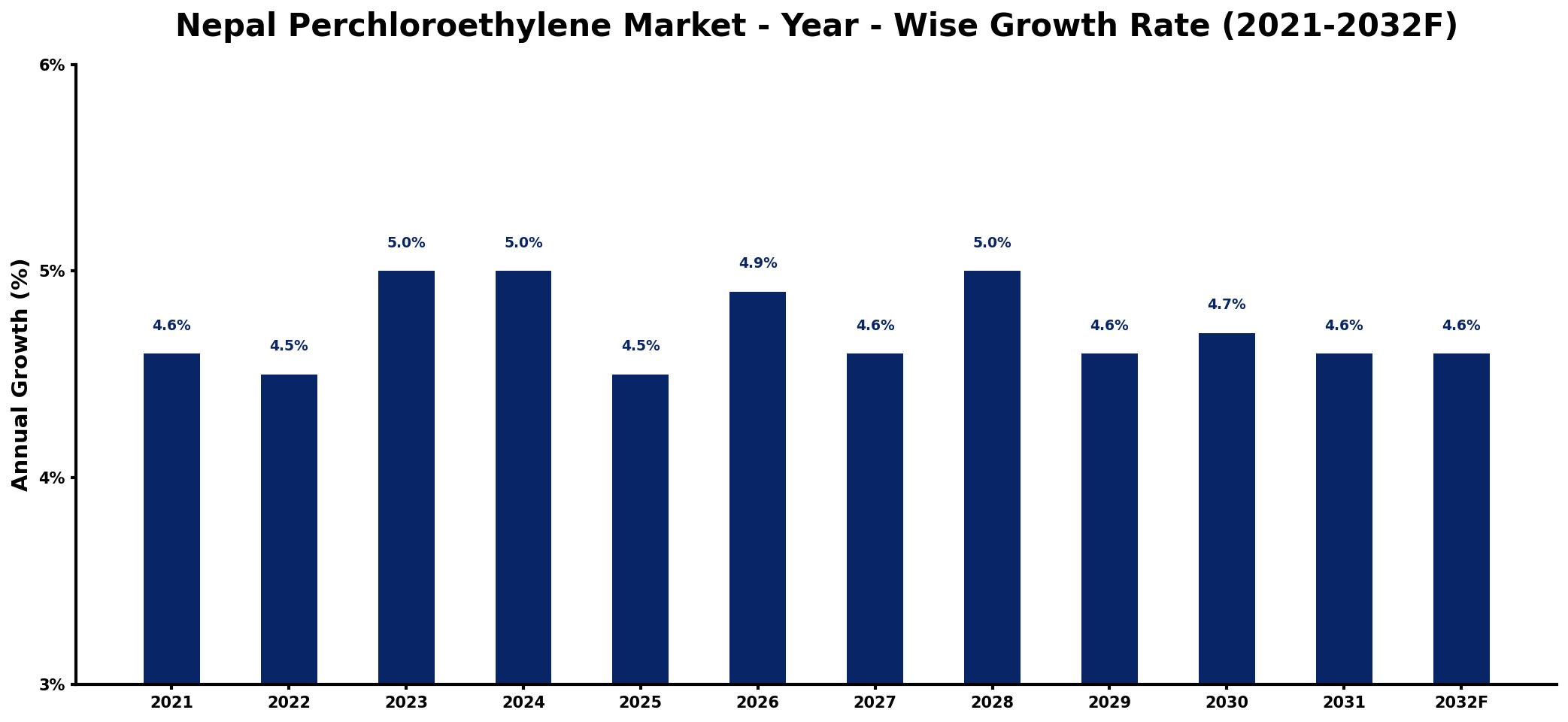
The table below presents the year‑wise growth rates along with the key drivers influencing the market
| Year | Growth Rate | Major Drivers |
| 2021 | 4.6% | Increased industrial cleaning applications |
| 2022 | 4.5% | Growing demand from textile industry |
| 2023 | 5.0% | Expansion in dry cleaning services |
| 2024 | 5.0% | Rising investments in manufacturing |
| 2025 | 4.5% | Increased regulatory support for safety |
| 2026 | 4.9% | Growth in automotive maintenance sector |
| 2027 | 4.6% | Surge in electronics cleaning needs |
| 2028 | 5.0% | Higher demand from healthcare facilities |
| 2029 | 4.6% | Expansion of chemical processing plants |
| 2030 | 4.7% | Increased focus on environmental compliance |
| 2031 | 4.6% | stronger distribution network expansion |
| 2032 | 4.6% | Rising applications in aerospace industry |
Note: Market size estimations and growth projections presented in this report are based on 6Wresearch's proprietary forecasting methodology, utilizing the latest available industry data, government publications, and primary research inputs.
Nepal Perchloroethylene Market Synopsis
In recent years, the Nepal Perchloroethylene market has gained momentum, largely fueled by the proliferation of dry cleaning services and the growing textile industry. This solvent, recognized for its effectiveness in removing stains and cleaning delicate fabrics, has become a staple in these sectors.
However, the market is also facing increasing scrutiny due to environmental concerns. Stricter regulations and a rising awareness of health issues associated with perchloroethylene usage are pushing industry players to explore greener alternatives, creating both challenges and opportunities within this evolving landscape.
Nepal Perchloroethylene Market Key Takeaways
- The market is projected to grow steadily, driven by increased demand from the textile and dry cleaning sectors.
- Environmental regulations are shaping the industry, leading to a shift towards more sustainable cleaning solutions.
- The rising cost and limited availability of raw materials pose significant challenges for market participants.
- Investment opportunities exist in the development of eco-friendly production methods and alternative solvents.
- The government's push for greener practices may create additional incentives for innovation within the market.
Evaluation of Restraints in Nepal Perchloroethylene Market
Despite its growth potential, the Nepal Perchloroethylene market is hindered by several factors. The limited availability of raw materials, coupled with fluctuating prices, creates a challenging environment for suppliers. Additionally, the stringent regulations surrounding the use and disposal of perchloroethylene can impose operational constraints on businesses. Companies must navigate these challenges while remaining cost-effective, which can be a complex balancing act. To overcome these restraints, the market may need to focus on developing sustainable practices and exploring alternative solvents that comply with regulatory standards.
Nepal Perchloroethylene Market Trends
There is a notable trend in the Nepal Perchloroethylene market towards sustainability and environmental responsibility. Increased awareness regarding the adverse health and environmental effects of traditional solvents has propelled the demand for eco-friendly alternatives. This shift is further supported by technological advancements aimed at developing solutions that can effectively replace perchloroethylene while maintaining performance standards. Companies are investing significantly in research and development to align their offerings with evolving consumer preferences and regulatory requirements.
Nepal Perchloroethylene Market Opportunities
The Nepal Perchloroethylene market is ripe with investment opportunities, particularly in light of the burgeoning demand from the textile and dry cleaning sectors. As businesses seek to comply with environmental regulations, opportunities arise for suppliers of high-quality perchloroethylene and innovative eco-friendly solutions. Additionally, investments aimed at research and development for sustainable practices can yield substantial returns, especially as the industry continues to evolve towards greener alternatives. Consultancy services guiding businesses through the transition to safer practices also present lucrative avenues for growth.
Government Initiatives in the Nepal Perchloroethylene Market
The Nepalese government has recognized the need to regulate perchloroethylene usage in the dry cleaning industry, implementing measures to safeguard public health and the environment. Regulatory bodies, such as the Department of Environment, are establishing emission limits and requiring regular monitoring for compliance. Furthermore, the government is actively encouraging businesses to adopt eco-friendly cleaning technologies, offering incentives and support for those transitioning to safer practices. These initiatives aim to foster a more sustainable and responsible industry landscape.
Future Insights of the Nepal Perchloroethylene Market
Looking ahead to the period from 2026 to 2032, the Nepal Perchloroethylene market is anticipated to experience consistent growth. The increasing disposable income of the population and evolving lifestyle trends are likely to propel demand for dry cleaning services. Simultaneously, the ongoing focus on environmental protection and sustainable practices will encourage the adoption of alternative solutions. While challenges such as raw material volatility remain, the market is expected to continue adapting, presenting opportunities for innovation and diversification in product offerings.
Nepal Perchloroethylene Market Latest Developments (2025 - 2026)
Recent developments in the Nepal Perchloroethylene market indicate a heightened focus on sustainability. Various stakeholders are actively exploring new technologies aimed at minimizing environmental impacts while enhancing operational efficiency. Additionally, several initiatives are being launched to facilitate the transition to eco-friendly alternatives, encouraging collaboration between businesses and regulatory bodies. This collaborative approach is expected to drive further advancements in the market, ensuring a balance between business growth and environmental stewardship.
Nepal Perchloroethylene Market - Key Attractiveness of the Report
- 10 Years of Market Numbers
- Historical Data Starting from 2022 to 2025
- Base Year: 2025
- Forecast Data until 2032
- Key Performance Indicators Impacting the Market
- Major Upcoming Developments and Projects
Key Highlights of the Report:
- Nepal Perchloroethylene Market Outlook
- Market Size of Nepal Perchloroethylene Market, 2025
- Forecast of Nepal Perchloroethylene Market, 2032
- Historical Data and Forecast of Nepal Perchloroethylene Revenues & Volume for the Period 2022-2032F
- Nepal Perchloroethylene Market Trend Evolution
- Nepal Perchloroethylene Market Drivers and Challenges
- Nepal Perchloroethylene Price Trends
- Nepal Perchloroethylene Porter's Five Forces
- Nepal Perchloroethylene Industry Life Cycle
- Historical Data and Forecast of Nepal Perchloroethylene Market Revenues & Volume By Type for the Period 2022-2032F
- Historical Data and Forecast of Nepal Perchloroethylene Market Revenues & Volume By Ethylene Oxychlorination for the Period 2022-2032F
- Historical Data and Forecast of Nepal Perchloroethylene Market Revenues & Volume By Acetylene Method for the Period 2022-2032F
- Historical Data and Forecast of Nepal Perchloroethylene Market Revenues & Volume By Ethylene Direct Chlorination for the Period 2022-2032F
- Historical Data and Forecast of Nepal Perchloroethylene Market Revenues & Volume By End-use for the Period 2022-2032F
- Historical Data and Forecast of Nepal Perchloroethylene Market Revenues & Volume By Dry Cleaning Agent for the Period 2022-2032F
- Historical Data and Forecast of Nepal Perchloroethylene Market Revenues & Volume By Solvent for the Period 2022-2032F
- Historical Data and Forecast of Nepal Perchloroethylene Market Revenues & Volume By Others for the Period 2022-2032F
- Nepal Perchloroethylene Import Export Trade Statistics
- Market Opportunity Assessment By Type
- Market Opportunity Assessment By End-use
- Nepal Perchloroethylene Top Companies Market Share
- Nepal Perchloroethylene Competitive Benchmarking By Technical and Operational Parameters
- Nepal Perchloroethylene Company Profiles
- Nepal Perchloroethylene Key Strategic Recommendations






































