Nepal Sports Nutrition Market Size, Share & Growth Rate
The Nepal Sports Nutrition Market was estimated at USD 353 Million in 2025 and is projected to reach USD 469 Million by 2032, growing at a CAGR of 4.1% from 2026 to 2032. This growth trajectory is primarily fueled by an increasing number of health-conscious individuals and fitness enthusiasts who are actively seeking high-quality nutritional supplements. The rising awareness of the benefits of nutrition in enhancing athletic performance and overall well-being is further propelling market demand.
Nepal Sports Nutrition Market Year-wise Growth Rate and Key Drivers
This graph highlights how the Nepal Sports Nutrition Market has steadily grown over the years, supported by major growth factors.
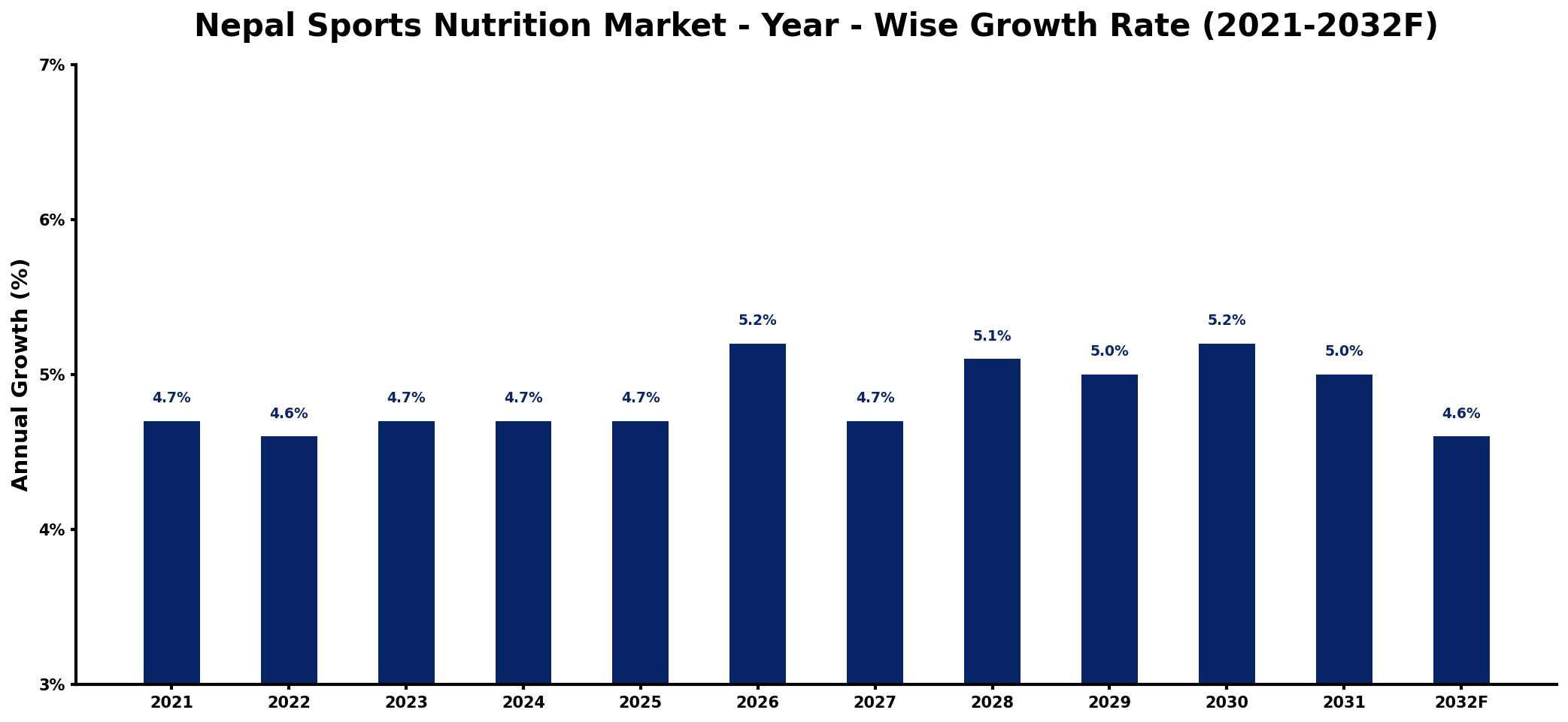
The table below presents the year‑wise growth rates along with the key drivers influencing the market
| Year | Growth Rate | Major Drivers |
| 2021 | 4.7% | Rising health consciousness among consumers |
| 2022 | 4.6% | Increased fitness club memberships |
| 2023 | 4.7% | Growth of online retail platforms |
| 2024 | 4.7% | Expansion of health food outlets |
| 2025 | 4.7% | Surge in fitness influencer marketing |
| 2026 | 5.2% | Emergence of new product categories |
| 2027 | 4.7% | Growing interest in wellness trends |
| 2028 | 5.1% | Increased investment in local brands |
| 2029 | 5.0% | Adoption of personalized health solutions |
| 2030 | 5.2% | expanding healthcare application demand |
| 2031 | 5.0% | Development of innovative ingredient technology |
| 2032 | 4.6% | Strengthening community fitness initiatives |
Note: Market size estimations and growth projections presented in this report are based on 6Wresearch's proprietary forecasting methodology, utilizing the latest available industry data, government publications, and primary research inputs.
Nepal Sports Nutrition Market Synopsis
The growing fitness culture in Nepal is driving a notable surge in demand for sports nutrition products, particularly among younger consumers. As awareness about health and fitness increases, more individuals are seeking effective supplements to support their active lifestyles.
Moreover, the influence of social media and celebrity endorsements plays a pivotal role in shaping consumer preferences and boosting interest in sports nutrition. This trend offers a substantial opportunity for both domestic and international brands to cater to an evolving consumer base.
Nepal Sports Nutrition Market Key Takeaways
- The market is benefiting from a growing number of fitness enthusiasts and athletes.
- There is a significant trend towards plant-based and organic products among consumers.
- Education on sports nutrition is crucial for overcoming existing consumer awareness gaps.
- Investment in local production could tap into the unmet demand for quality sports nutrition products.
- The evolving landscape presents opportunities for personalized nutrition solutions tailored to individual needs.
Evaluation of Restraints in Nepal Sports Nutrition Market
Despite its promising growth, the Nepal Sports Nutrition Market faces significant challenges that may hinder progress. Limited awareness and understanding of sports nutrition among consumers pose a major barrier, as many remain unaware of the benefits of these products. Additionally, the market is characterized by a lack of diverse, high-quality offerings, which, combined with the high prices of imported supplements, restricts accessibility. Furthermore, regulatory challenges can lead to concerns about product safety and authenticity, while distribution issues in rural areas limit availability. Addressing these hurdles requires concerted efforts in consumer education, enhanced product regulation, and strategic marketing approaches.
Nepal Sports Nutrition Market Trends
A notable trend in the Nepal Sports Nutrition Market is the shift towards cleaner and more natural offerings. Consumers are increasingly inclined towards products that are free from artificial ingredients, catering to health-conscious values. The demand for vegan and gluten-free options is rising as part of a broader trend towards holistic health. Furthermore, the market is witnessing a growing interest in personalized nutrition solutions, as individuals seek products that align with their specific fitness goals and dietary preferences. This evolution reflects a significant transition towards a more sustainable approach to sports nutrition, resonating with the global emphasis on wellness.
Nepal Sports Nutrition Market Opportunities
With the burgeoning interest in health and fitness, the Nepal Sports Nutrition Market is ripe for investment. Opportunities abound in establishing local manufacturing facilities to produce nutritional supplements tailored to the unique preferences of the Nepali population. Additionally, forging partnerships with local gyms, fitness centers, and sports teams can significantly enhance visibility and brand loyalty among consumers. The increasing demand for innovative, high-quality products designed to meet the evolving needs of health-conscious consumers offers a promising avenue for growth and profitability.
Government Initiatives in the Nepal Sports Nutrition Market
Government policies surrounding the Nepal Sports Nutrition Market primarily aim to ensure the safety, efficacy, and quality of nutrition products. These regulations include monitoring labeling, advertising, and the importation of sports nutrition items to safeguard consumer interests. Additionally, initiatives may be in place to promote domestic production, encouraging local manufacturers to develop and distribute high-quality supplements. Overall, government efforts seek to create a supportive environment that fosters the growth of the sports nutrition sector while prioritizing public health.
Future Insights of the Nepal Sports Nutrition Market
Looking ahead to 2026-2032, the future of the Nepal Sports Nutrition Market is optimistic, driven by heightened health consciousness and increasing disposable incomes among consumers. As the fitness culture continues to expand, a broader range of nutritional products is expected to enter the market, further stimulating growth. The demand for personalized and innovative solutions will also likely rise, as more consumers become aware of the importance of tailored nutrition. In summary, the Nepal Sports Nutrition Market is poised for substantial expansion, offering valuable opportunities for stakeholders eager to capitalize on the ongoing health and wellness trends.
Nepal Sports Nutrition Market Latest Developments (2025 - 2026)
In recent months, the Nepal Sports Nutrition Market has seen increased activities aimed at enhancing product accessibility and consumer education. Local distributors have begun expanding their outreach programs, partnering with fitness influencers to raise awareness of the benefits of sports nutrition. Additionally, product launches focusing on organic and plant-based options have gained traction, reflecting a shift in consumer preferences. The overall market direction indicates a commitment to meeting the evolving demands of health-conscious consumers while emphasizing safety and quality.
Nepal Sports Nutrition Market - Key Attractiveness of the Report
- 10 Years of Market Numbers
- Historical Data Starting from 2022 to 2025
- Base Year: 2025
- Forecast Data until 2032
- Key Performance Indicators Impacting the Market
- Major Upcoming Developments and Projects
Key Highlights of the Report:
- Nepal Sports Nutrition Market Outlook
- Market Size of Nepal Sports Nutrition Market, 2025
- Forecast of Nepal Sports Nutrition Market, 2032
- Historical Data and Forecast of Nepal Sports Nutrition Revenues & Volume for the Period 2022-2032F
- Nepal Sports Nutrition Market Trend Evolution
- Nepal Sports Nutrition Market Drivers and Challenges
- Nepal Sports Nutrition Price Trends
- Nepal Sports Nutrition Porter's Five Forces
- Nepal Sports Nutrition Industry Life Cycle
- Historical Data and Forecast of Nepal Sports Nutrition Market Revenues & Volume By Type for the Period 2022-2032F
- Historical Data and Forecast of Nepal Sports Nutrition Market Revenues & Volume By Sports Food for the Period 2022-2032F
- Historical Data and Forecast of Nepal Sports Nutrition Market Revenues & Volume By Sports Drinks for the Period 2022-2032F
- Historical Data and Forecast of Nepal Sports Nutrition Market Revenues & Volume By Sports Supplements for the Period 2022-2032F
- Historical Data and Forecast of Nepal Sports Nutrition Market Revenues & Volume By Distribution Channel for the Period 2022-2032F
- Historical Data and Forecast of Nepal Sports Nutrition Market Revenues & Volume By Supermarkets/Hypermarkets for the Period 2022-2032F
- Historical Data and Forecast of Nepal Sports Nutrition Market Revenues & Volume By Specialty Stores for the Period 2022-2032F
- Historical Data and Forecast of Nepal Sports Nutrition Market Revenues & Volume By Convenience Stores for the Period 2022-2032F
- Historical Data and Forecast of Nepal Sports Nutrition Market Revenues & Volume By Online Stores for the Period 2022-2032F
- Historical Data and Forecast of Nepal Sports Nutrition Market Revenues & Volume By Other Distribution Channels for the Period 2022-2032F
- Nepal Sports Nutrition Import Export Trade Statistics
- Market Opportunity Assessment By Type
- Market Opportunity Assessment By Distribution Channel
- Nepal Sports Nutrition Top Companies Market Share
- Nepal Sports Nutrition Competitive Benchmarking By Technical and Operational Parameters
- Nepal Sports Nutrition Company Profiles
- Nepal Sports Nutrition Key Strategic Recommendations






































