Nepal Synthetic Leather Market Size, Share & Growth Rate
The Nepal Synthetic Leather Market was estimated at USD 281 Million in 2025 and is projected to reach USD 383 Million by 2032, growing at a CAGR of 4.5% from 2026 to 2032. This growth trajectory is fueled by a notable shift in consumer preferences towards affordable and eco-friendly alternatives to genuine leather, especially within the footwear and accessories sectors. The increasing focus on animal welfare and sustainability is further propelling the adoption of synthetic leather products, creating a favorable environment for market expansion.
Nepal Synthetic Leather Market Year-wise Growth Rate and Key Drivers
This graph highlights how the Nepal Synthetic Leather Market has steadily grown over the years, supported by major growth factors.
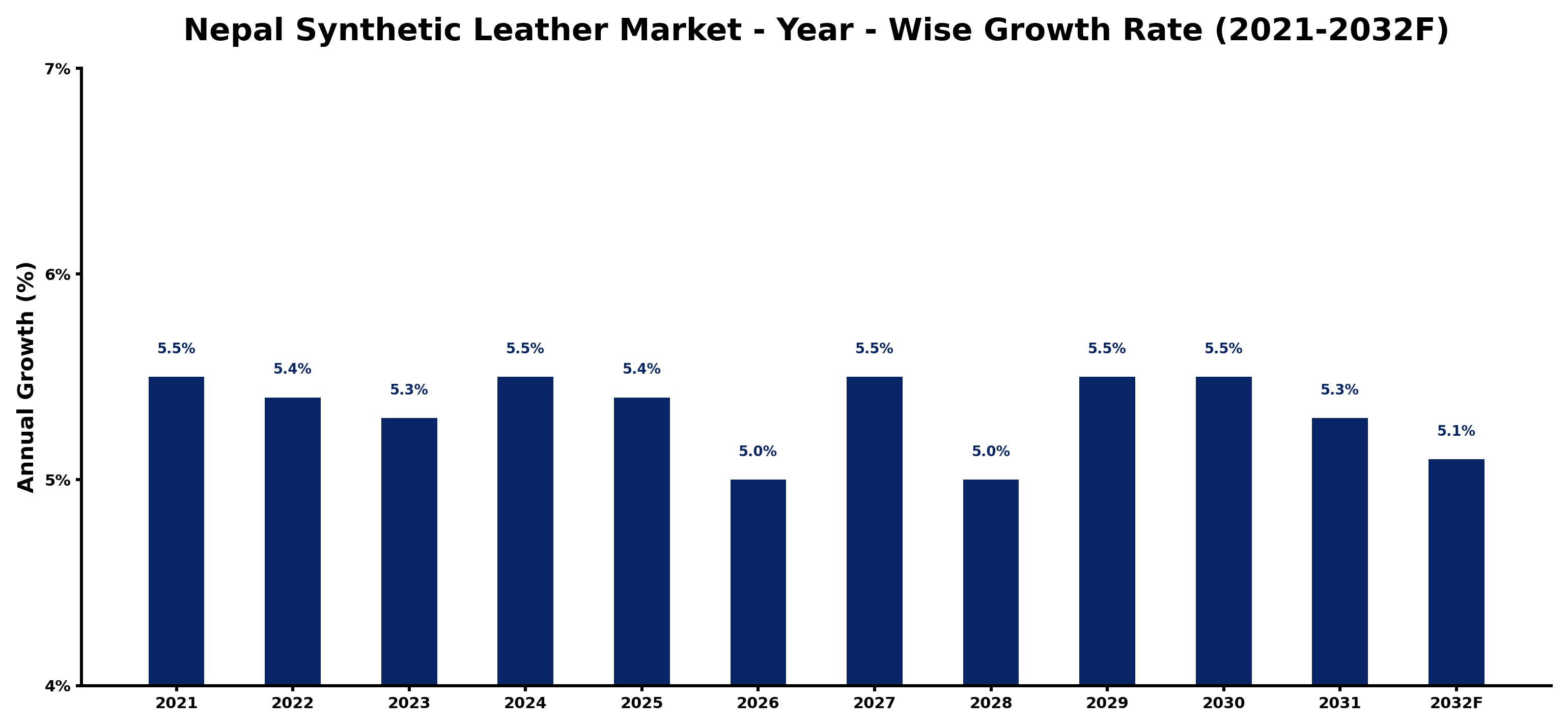
The table below presents the year‑wise growth rates along with the key drivers influencing the market
| Year | Growth Rate | Major Drivers |
| 2021 | 5.5% | Government infrastructure modernization initiatives |
| 2022 | 5.4% | Increasing adoption of advanced technologies |
| 2023 | 5.3% | Expansion of transportation and logistics networks |
| 2024 | 5.5% | Increasing industrial infrastructure investments |
| 2025 | 5.4% | Rising electricity demand across industries |
| 2026 | 5.0% | Growing urbanization and commercial development |
| 2027 | 5.5% | Government infrastructure modernization initiatives |
| 2028 | 5.0% | Increasing industrial infrastructure investments |
| 2029 | 5.5% | Expansion of commercial construction activities |
| 2030 | 5.5% | Expansion of transportation and logistics networks |
| 2031 | 5.3% | Expansion of transportation and logistics networks |
| 2032 | 5.1% | Growing urbanization and commercial development |
Note - Market size estimations and growth projections presented in this report are based on 6Wresearch's advanced forecasting approach, validated with industry datasets as of June 2026.
Nepal Synthetic Leather Market Synopsis
In Nepal, the demand for synthetic leather is surging, particularly in the footwear and fashion accessories industries. As local consumers become more aware of the environmental impact of traditional leather production, they are gravitating towards synthetic options that offer both style and sustainability.
Furthermore, the market is characterized by innovative product development, with manufacturers focusing on high-quality synthetic alternatives that mimic the aesthetics and durability of genuine leather. Collaborations between producers and fashion brands are driving the creation of exclusive products designed to meet the evolving tastes of consumers.
Nepal Synthetic Leather Market Key Takeaways
- The market is primarily driven by increasing consumer awareness surrounding sustainability and animal welfare.
- Key industries such as footwear and fashion accessories are leading the demand for synthetic leather products.
- There is a significant trend towards high-quality synthetic materials that mimic genuine leather.
- Product innovation, particularly through the use of recycled materials, is on the rise among manufacturers.
- Government incentives and policies are fostering a supportive environment for local production and investment.
Evaluation of Restraints in Nepal Synthetic Leather Market
Despite its promising growth, the Nepal Synthetic Leather Market faces several notable constraints. One of the primary challenges is the intense competition posed by low-cost imports, which can undermine local manufacturers. Additionally, fluctuating raw material prices create instability for producers, making it difficult to maintain consistent pricing. The absence of standardized quality control measures hampers consumer confidence, while limited awareness of the advantages of synthetic over traditional leather further complicates market penetration. Moreover, the stigma associated with synthetic materials regarding luxury and durability could hinder broader acceptance. Addressing these restraints will be crucial for sustainable growth.
Nepal Synthetic Leather Market Trends
Emerging trends in the Nepal Synthetic Leather Market highlight a growing consumer preference for eco-friendly products. As more brands integrate sustainable practices into their manufacturing processes, there's an increased emphasis on recycled and organic materials. Additionally, advancements in technology have led to the development of higher-quality synthetic leathers that offer improved durability and aesthetic appeal. Collaboration between manufacturers and fashion brands is also becoming commonplace, allowing for the creation of exclusive designs that resonate with contemporary consumer values.
Nepal Synthetic Leather Market Opportunities
The Nepal Synthetic Leather Market presents substantial investment opportunities across various sectors, particularly in fashion, automotive, and furniture. As consumer demand for cruelty-free and sustainable options escalates, there is a ripe landscape for companies that prioritize eco-conscious manufacturing practices. Moreover, the Nepalese government's commitment to bolstering the manufacturing sector enhances the potential for growth. Investors have the chance to explore opportunities in both the production and distribution of synthetic leather, as well as the establishment of retail networks that align with evolving consumer trends.
Government Initiatives in the Nepal Synthetic Leather Market
The Nepalese government has implemented several initiatives aimed at promoting the synthetic leather industry. These include import restrictions on raw materials to stimulate local production and reduce dependence on international sources. Regulatory measures are also in place to ensure product quality and consumer safety. Additionally, the government provides various incentives, such as tax breaks and subsidies, to encourage investments in the synthetic leather sector, fostering a conducive environment for economic growth and job creation.
Future Insights of the Nepal Synthetic Leather Market
The outlook for the Nepal Synthetic Leather Market from 2026 to 2032 is optimistic, buoyed by increasing demand across diverse industries including footwear and automotive. As consumers become more environmentally conscious, the demand for cost-effective, durable alternatives to genuine leather is expected to rise significantly. Technological advancements will likely enhance the quality and design versatility of synthetic leather products. However, sustained market growth will depend on navigating competition from other synthetic materials and managing fluctuations in raw material costs effectively.
Nepal Synthetic Leather Market Latest Developments (May 2025 - June 2026)
Recent developments in the Nepal Synthetic Leather Market indicate a strong trend towards increased collaboration between manufacturers and designers to create innovative product lines. Companies are actively engaging in research and development to enhance the performance attributes of synthetic materials. Moreover, consumer education campaigns are being introduced to raise awareness of the benefits of synthetic leather, aiming to shift perceptions and encourage wider adoption across various sectors.
Nepal Synthetic Leather Market - Key Attractiveness of the Report
- 10 Years of Market Numbers
- Historical Data Starting from 2022 to 2025
- Base Year: 2025
- Forecast Data until 2032
- Key Performance Indicators Impacting the Market
- Major Upcoming Developments and Projects
Key Highlights of the Report:
- Nepal Synthetic Leather Market Outlook
- Market Size of Nepal Synthetic Leather Market, 2025
- Forecast of Nepal Synthetic Leather Market, 2032
- Historical Data and Forecast of Nepal Synthetic Leather Revenues & Volume for the Period 2022-2032F
- Nepal Synthetic Leather Market Trend Evolution
- Nepal Synthetic Leather Market Drivers and Challenges
- Nepal Synthetic Leather Price Trends
- Nepal Synthetic Leather Porter's Five Forces
- Nepal Synthetic Leather Industry Life Cycle
- Historical Data and Forecast of Nepal Synthetic Leather Market Revenues & Volume By Product for the Period 2022-2032F
- Historical Data and Forecast of Nepal Synthetic Leather Market Revenues & Volume By PU for the Period 2022-2032F
- Historical Data and Forecast of Nepal Synthetic Leather Market Revenues & Volume By PVC for the Period 2022-2032F
- Historical Data and Forecast of Nepal Synthetic Leather Market Revenues & Volume By Bio-based for the Period 2022-2032F
- Historical Data and Forecast of Nepal Synthetic Leather Market Revenues & Volume By Application for the Period 2022-2032F
- Historical Data and Forecast of Nepal Synthetic Leather Market Revenues & Volume By Furnishing for the Period 2022-2032F
- Historical Data and Forecast of Nepal Synthetic Leather Market Revenues & Volume By Automotive for the Period 2022-2032F
- Historical Data and Forecast of Nepal Synthetic Leather Market Revenues & Volume By Footwear for the Period 2022-2032F
- Historical Data and Forecast of Nepal Synthetic Leather Market Revenues & Volume By Bags & Wallets for the Period 2022-2032F
- Historical Data and Forecast of Nepal Synthetic Leather Market Revenues & Volume By Clothing for the Period 2022-2032F
- Historical Data and Forecast of Nepal Synthetic Leather Market Revenues & Volume By Others for the Period 2022-2032F
- Nepal Synthetic Leather Import Export Trade Statistics
- Market Opportunity Assessment By Product
- Market Opportunity Assessment By Application
- Nepal Synthetic Leather Top Companies Market Share
- Nepal Synthetic Leather Competitive Benchmarking By Technical and Operational Parameters
- Nepal Synthetic Leather Company Profiles
- Nepal Synthetic Leather Key Strategic Recommendations






































