Netherlands Gym Apparel Market Top 5 Importing Countries and Market Competition (HHI) Analysis
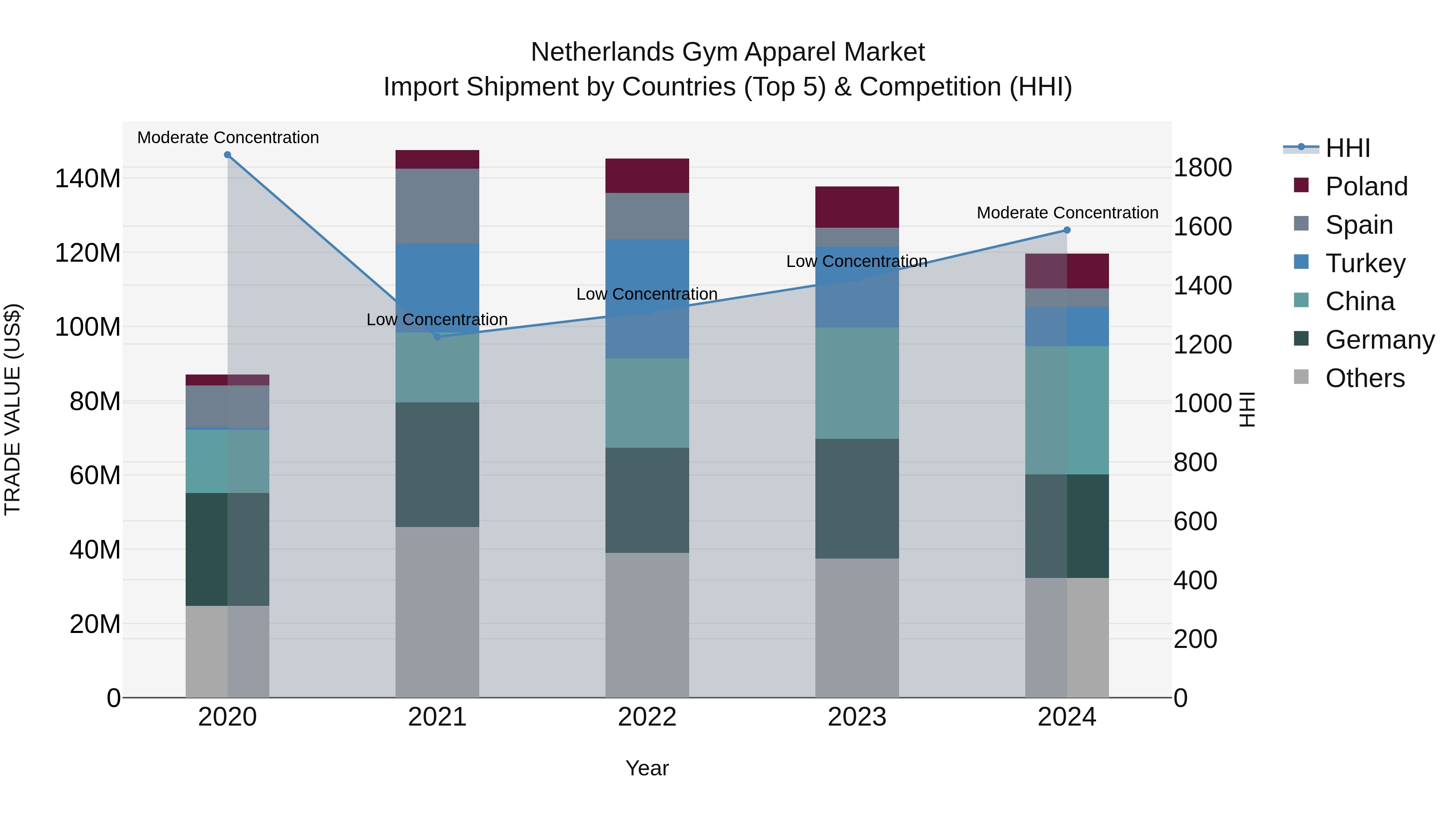
The Netherlands witnessed a shift in gym apparel import trends in 2024, with key suppliers being China, Germany, Turkey, Poland, and Spain. The market concentration increased from low to moderate, indicating a more balanced distribution among these countries. Despite a slight decline in growth rate from 2023 to 2024, the compound annual growth rate (CAGR) of 8.29% over the period of 2020-2024 highlights a steady expansion in the market. This data suggests a dynamic landscape for gym apparel imports in the Netherlands, with diverse sources contributing to its growth trajectory.
Netherlands Gym Apparel Market Market Overview
The Netherlands gym apparel market is characterized by a growing trend towards athleisure wear, with a focus on both functionality and style. The market is driven by an increasing awareness of health and fitness among the population, leading to a higher demand for activewear that can be worn both inside and outside the gym. Major players in the market offer a wide range of products including leggings, sports bras, tank tops, and sneakers, with an emphasis on quality materials and innovative designs. Sustainable and eco-friendly gym apparel options are also gaining popularity among conscious consumers. E-commerce platforms and specialty fitness stores are key distribution channels for gym apparel in the Netherlands, providing a convenient shopping experience for customers looking to update their workout wardrobe.
Netherlands Gym Apparel Market Trends
In the Netherlands gym apparel market, there is a growing preference for athleisure wear that seamlessly transitions from the gym to everyday activities. Consumers are looking for stylish yet functional pieces that offer both performance benefits and aesthetic appeal. Sustainable and eco-friendly materials are also gaining popularity, reflecting a broader trend towards conscious consumption. Major brands are incorporating innovative technologies such as moisture-wicking fabrics and seamless construction to enhance comfort and performance. Customization and personalization options are becoming more prevalent as consumers seek unique pieces that reflect their individual style. Additionally, collaborations between fitness influencers and apparel brands are on the rise, driving interest and visibility within the market. Overall, the Netherlands gym apparel market is evolving to meet the demands of a diverse and fashion-forward consumer base.
Netherlands Gym Apparel Market Challenges
In the Netherlands gym apparel market, one of the key challenges faced is the increasing competition from both domestic and international brands. This competition leads to a constant pressure on prices and margins, making it challenging for smaller or newer players to establish themselves. Another challenge is the growing trend of sustainability and ethical practices among consumers, which requires gym apparel brands to adapt their manufacturing processes and materials to meet these demands. Additionally, the market is highly influenced by changing fashion trends and consumer preferences, making it essential for companies to stay agile and innovative in their product offerings to stay relevant in the ever-evolving market landscape.
Netherlands Gym Apparel Market Investment Opportunities
The gym apparel market in the Netherlands presents promising investment opportunities due to the increasing health and fitness trends among the population. With a growing emphasis on active lifestyles and athleisure wear, there is a rising demand for high-quality, fashionable gym apparel. Investing in innovative, sustainable, and ethically produced gym wear brands could be lucrative in this market. Additionally, leveraging e-commerce platforms and social media marketing strategies can help reach a wider audience and drive sales. Collaborations with fitness influencers and gyms can also enhance brand visibility and credibility. Overall, the Netherlands gym apparel market offers potential for growth and success for investors who can tap into the evolving preferences of health-conscious consumers.
Netherlands Gym Apparel Market Government Policy
In the Netherlands, government policies related to the gym apparel market focus on consumer protection, sustainability, and fair trade practices. There are regulations in place to ensure that gym apparel sold in the country meets safety standards and does not contain harmful substances. Additionally, the government encourages businesses to adopt sustainable practices in their manufacturing processes and supply chains to reduce environmental impact. Fair trade policies aim to promote ethical sourcing of materials and ensure fair wages for workers in the gym apparel industry. Overall, the government`s policies in the Netherlands seek to create a transparent and ethical marketplace for gym apparel that prioritizes the well-being of consumers, workers, and the environment.
Netherlands Gym Apparel Market Future Outlook
The gym apparel market in the Netherlands is poised for steady growth in the coming years. Factors such as increasing health and fitness awareness among the population, rising disposable incomes, and a growing trend towards athleisure clothing are driving the demand for gym apparel. Additionally, the popularity of fitness activities such as yoga, cycling, and HIIT workouts is fueling the demand for stylish and functional workout wear. With a focus on sustainable and eco-friendly materials gaining traction, brands that offer ethical and environmentally conscious gym apparel are likely to see success in the market. Overall, the Netherlands gym apparel market is expected to expand further as consumers prioritize health and wellness, creating opportunities for both established brands and new entrants to capitalize on this growing trend.
Key Highlights of the Report:
- Netherlands Gym Apparel Market Outlook
- Market Size of Netherlands Gym Apparel Market,2024
- Forecast of Netherlands Gym Apparel Market, 2031
- Historical Data and Forecast of Netherlands Gym Apparel Revenues & Volume for the Period 2021-2031
- Netherlands Gym Apparel Market Trend Evolution
- Netherlands Gym Apparel Market Drivers and Challenges
- Netherlands Gym Apparel Price Trends
- Netherlands Gym Apparel Porter's Five Forces
- Netherlands Gym Apparel Industry Life Cycle
- Historical Data and Forecast of Netherlands Gym Apparel Market Revenues & Volume By Type for the Period 2021-2031
- Historical Data and Forecast of Netherlands Gym Apparel Market Revenues & Volume By Compression Wear for the Period 2021-2031
- Historical Data and Forecast of Netherlands Gym Apparel Market Revenues & Volume By Moisture-Wicking Clothes for the Period 2021-2031
- Historical Data and Forecast of Netherlands Gym Apparel Market Revenues & Volume By Eco-Friendly Gym Wear for the Period 2021-2031
- Historical Data and Forecast of Netherlands Gym Apparel Market Revenues & Volume By Material for the Period 2021-2031
- Historical Data and Forecast of Netherlands Gym Apparel Market Revenues & Volume By Spandex for the Period 2021-2031
- Historical Data and Forecast of Netherlands Gym Apparel Market Revenues & Volume By Polyester Blend for the Period 2021-2031
- Historical Data and Forecast of Netherlands Gym Apparel Market Revenues & Volume By Bamboo Fiber for the Period 2021-2031
- Historical Data and Forecast of Netherlands Gym Apparel Market Revenues & Volume By End User for the Period 2021-2031
- Historical Data and Forecast of Netherlands Gym Apparel Market Revenues & Volume By Athletes for the Period 2021-2031
- Historical Data and Forecast of Netherlands Gym Apparel Market Revenues & Volume By General Users for the Period 2021-2031
- Historical Data and Forecast of Netherlands Gym Apparel Market Revenues & Volume By Eco-Conscious Buyers for the Period 2021-2031
- Historical Data and Forecast of Netherlands Gym Apparel Market Revenues & Volume By Distribution Channel for the Period 2021-2031
- Historical Data and Forecast of Netherlands Gym Apparel Market Revenues & Volume By Sports Stores for the Period 2021-2031
- Historical Data and Forecast of Netherlands Gym Apparel Market Revenues & Volume By Online Stores for the Period 2021-2031
- Historical Data and Forecast of Netherlands Gym Apparel Market Revenues & Volume By Department Stores for the Period 2021-2031
- Historical Data and Forecast of Netherlands Gym Apparel Market Revenues & Volume By Certification for the Period 2021-2031
- Historical Data and Forecast of Netherlands Gym Apparel Market Revenues & Volume By OEKO-TEX Certified for the Period 2021-2031
- Historical Data and Forecast of Netherlands Gym Apparel Market Revenues & Volume By REACH Certified for the Period 2021-2031
- Historical Data and Forecast of Netherlands Gym Apparel Market Revenues & Volume By Fair Trade Certified for the Period 2021-2031
- Netherlands Gym Apparel Import Export Trade Statistics
- Market Opportunity Assessment By Type
- Market Opportunity Assessment By Material
- Market Opportunity Assessment By End User
- Market Opportunity Assessment By Distribution Channel
- Market Opportunity Assessment By Certification
- Netherlands Gym Apparel Top Companies Market Share
- Netherlands Gym Apparel Competitive Benchmarking By Technical and Operational Parameters
- Netherlands Gym Apparel Company Profiles
- Netherlands Gym Apparel Key Strategic Recommendations






































