New Zealand Adhesives Market Growth Rate Analysis (2025 - 2031)
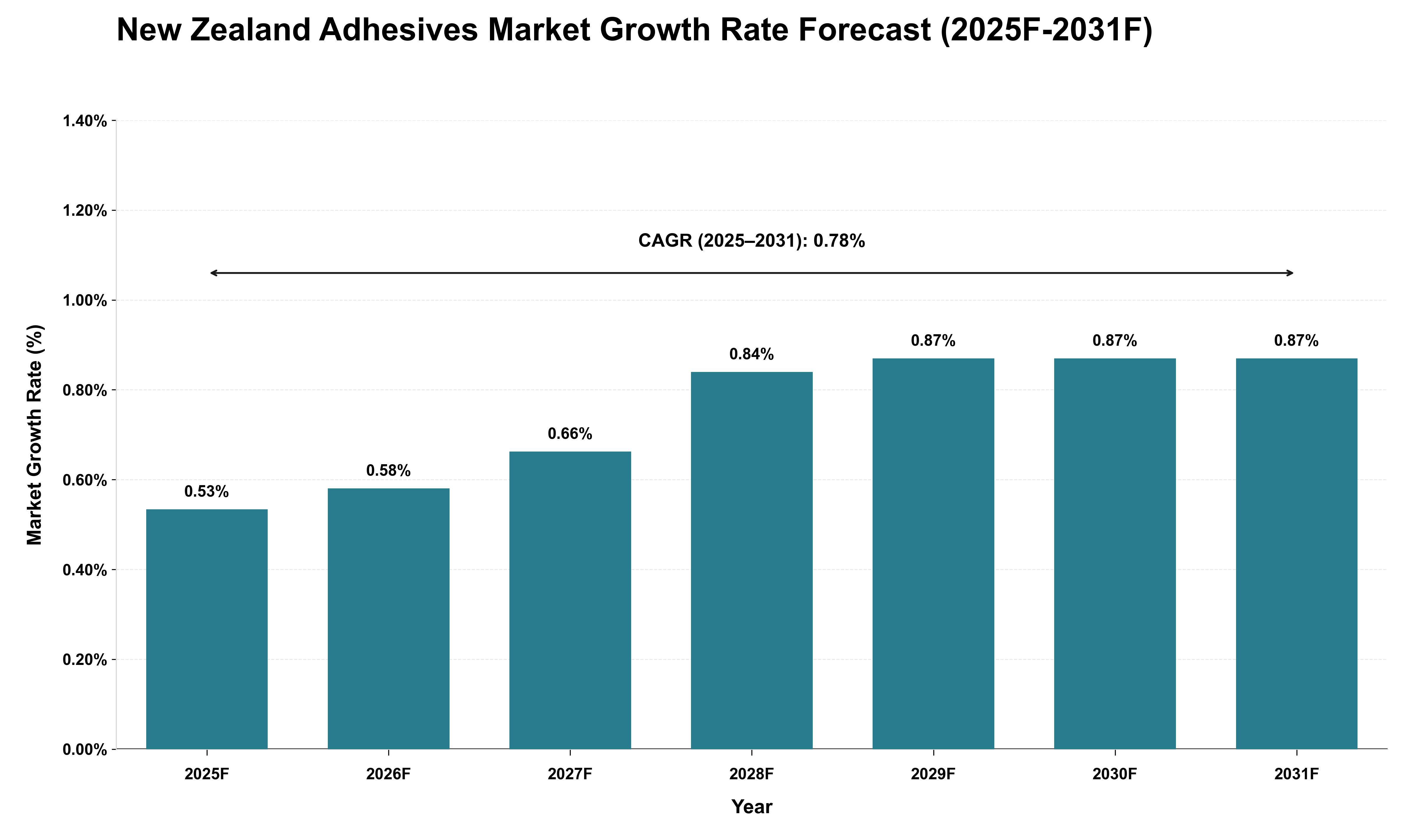
The New Zealand adhesives market will experience a modest growth trajectory, driven primarily by fluctuations in supply chain dynamics and input costs. As global supply chains stabilize post-pandemic, the anticipated CAGR of 0.78% reflects a gradual recovery in demand across various sectors, including construction and manufacturing. Input costs are expected to remain volatile due to geopolitical tensions and raw material availability, influencing pricing strategies and profit margins. The annual growth rates will likely reflect this complexity, with an initial increase from 0.53% in 2025 to a peak of 0.87% by 2029 through 2031, indicating a slow but steady adaptation to changing market conditions. Import dependencies on key adhesive components may further complicate the landscape, as shifts in international trade policies could impact cost structures and availability, ultimately shaping the competitive environment within this sector.
Key Highlights of the Report:
- New Zealand Adhesives Market Outlook
- Market Size of New Zealand Adhesives Market, 2025
- Forecast of New Zealand Adhesives Market, 2032
- Historical Data and Forecast of New Zealand Adhesives Revenues & Volume for the Period 2022 - 2032F
- New Zealand Adhesives Market Trend Evolution
- New Zealand Adhesives Market Drivers and Challenges
- New Zealand Adhesives Price Trends
- New Zealand Adhesives Porter`s Five Forces
- New Zealand Adhesives Industry Life Cycle
- Historical Data and Forecast of New Zealand Adhesives Market Revenues & Volume By Types for the Period 2022 - 2032F
- Historical Data and Forecast of New Zealand Adhesives Market Revenues & Volume By Acrylicfor the Period 2022 - 2032F
- Historical Data and Forecast of New Zealand Adhesives Market Revenues & Volume By Epoxy for the Period 2022 - 2032F
- Historical Data and Forecast of New Zealand Adhesives Market Revenues & Volume By Polyvinyl Acetate (PVA) for the Period 2022 - 2032F
- Historical Data and Forecast of New Zealand Adhesives Market Revenues & Volume By Polyurethane (PU) for the Period 2022 - 2032F
- Historical Data and Forecast of New Zealand Adhesives Market Revenues & Volume By Styrenic Block for the Period 2022 - 2032F
- Historical Data and Forecast of New Zealand Adhesives Market Revenues & Volume By Ethyl Vinyl Acetate (EVA) for the Period 2022 - 2032F
- Historical Data and Forecast of New Zealand Adhesives Market Revenues & Volume By Silicone & Others for the Period 2022 - 2032F
- Historical Data and Forecast of New Zealand Adhesives Market Revenues & Volume By Technology for the Period 2022 - 2032F
- Historical Data and Forecast of New Zealand Adhesives Market Revenues & Volume By Water-based for the Period 2022 - 2032F
- Historical Data and Forecast of New Zealand Adhesives Market Revenues & Volume By Solvent-based for the Period 2022 - 2032F
- Historical Data and Forecast of New Zealand Adhesives Market Revenues & Volume By Hot Melt for the Period 2022 - 2032F
- Historical Data and Forecast of New Zealand Adhesives Market Revenues & Volume By Pressure Sensitive for the Period 2022 - 2032F
- Historical Data and Forecast of New Zealand Adhesives Market Revenues & Volume By Reactive and Others for the Period 2022 - 2032F
- New Zealand Adhesives Import Export Trade Statistics
- Market Opportunity Assessment By Types
- Market Opportunity Assessment By Technology
- New Zealand Adhesives Top Companies Market Share
- New Zealand Adhesives Competitive Benchmarking By Technical and Operational Parameters
- New Zealand Adhesives Company Profiles
- New Zealand Adhesives Key Strategic Recommendations






































