New Zealand Biscuits and Crackers Market Growth Rate Analysis (2025 - 2031)
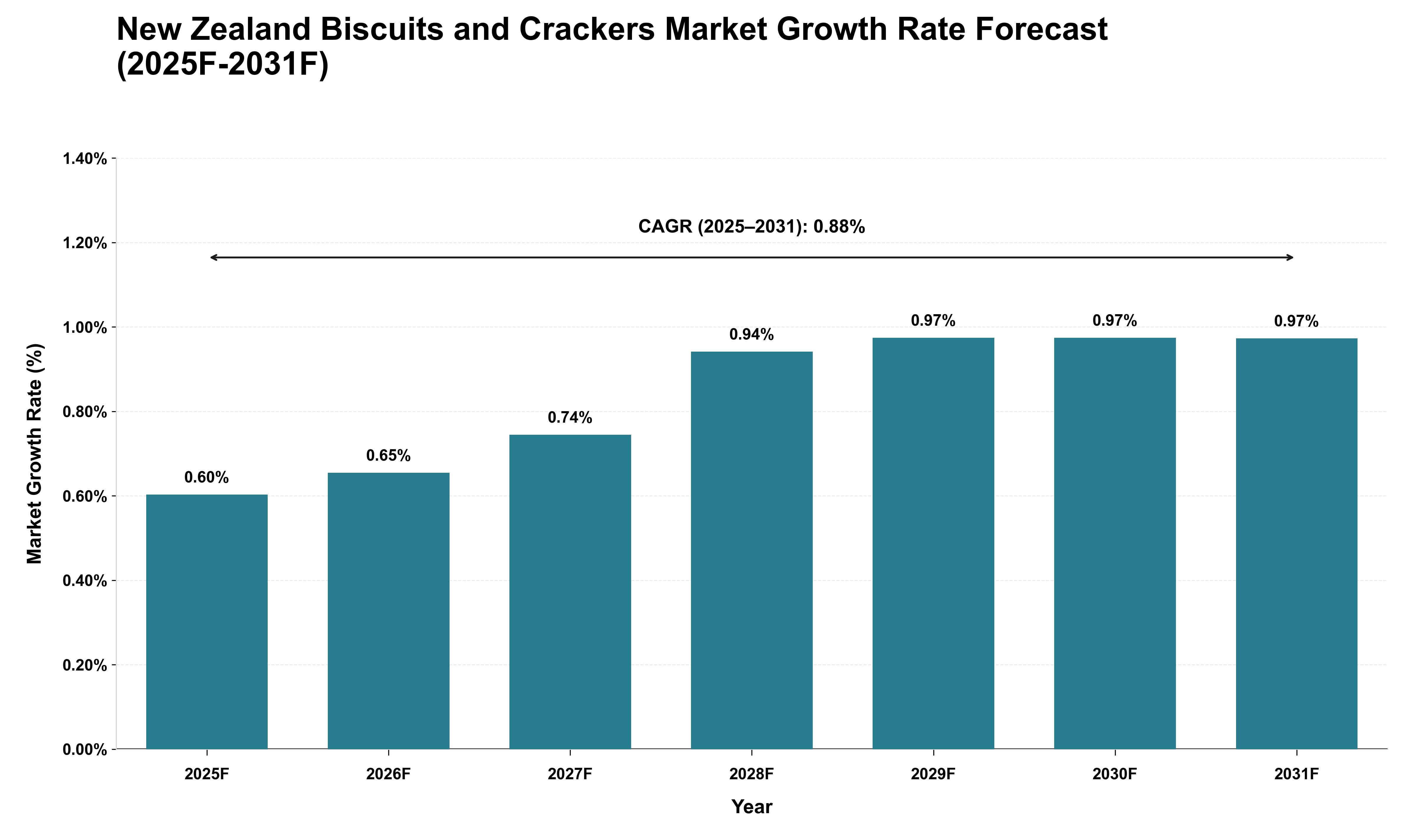
The New Zealand biscuits and crackers market will experience a gradual growth trajectory from 2025 to 2031, reflecting broader macroeconomic cycles and consumer behavior shifts. The projected CAGR of 0.88% indicates a steady demand, driven by evolving dietary preferences and an increasing inclination towards convenience foods. As disposable incomes rise, consumers will likely prioritize premium products, influencing the annual growth rates to increase from 0.60% in 2025 to a peak of 0.97% by 2031. Import dependencies may also play a crucial role; fluctuations in global supply chains could impact pricing and availability, thereby affecting local consumption patterns. Additionally, cyclical trends in the economy will shape purchasing decisions, with potential rebounds in consumer confidence leading to increased spending on snacks during favorable economic conditions. Overall, the market's performance will hinge on these interconnected macroeconomic factors throughout the forecast period.
Key Highlights of the Report:
- New Zealand Biscuits and Crackers Market Outlook
- Market Size of New Zealand Biscuits and Crackers Market, 2025
- Forecast of New Zealand Biscuits and Crackers Market, 2032
- Historical Data and Forecast of New Zealand Biscuits and Crackers Revenues & Volume for the Period 2022 - 2032F
- New Zealand Biscuits and Crackers Market Trend Evolution
- New Zealand Biscuits and Crackers Market Drivers and Challenges
- New Zealand Biscuits and Crackers Price Trends
- New Zealand Biscuits and Crackers Porter`s Five Forces
- New Zealand Biscuits and Crackers Industry Life Cycle
- Historical Data and Forecast of New Zealand Biscuits and Crackers Market Revenues & Volume By Product for the Period 2022 - 2032F
- Historical Data and Forecast of New Zealand Biscuits and Crackers Market Revenues & Volume By Biscuits for the Period 2022 - 2032F
- Historical Data and Forecast of New Zealand Biscuits and Crackers Market Revenues & Volume By Crackers for the Period 2022 - 2032F
- Historical Data and Forecast of New Zealand Biscuits and Crackers Market Revenues & Volume By Applications for the Period 2022 - 2032F
- Historical Data and Forecast of New Zealand Biscuits and Crackers Market Revenues & Volume By Online for the Period 2022 - 2032F
- Historical Data and Forecast of New Zealand Biscuits and Crackers Market Revenues & Volume By Supermarket for the Period 2022 - 2032F
- Historical Data and Forecast of New Zealand Biscuits and Crackers Market Revenues & Volume By Food Store for the Period 2022 - 2032F
- New Zealand Biscuits and Crackers Import Export Trade Statistics
- Market Opportunity Assessment By Product
- Market Opportunity Assessment By Applications
- New Zealand Biscuits and Crackers Top Companies Market Share
- New Zealand Biscuits and Crackers Competitive Benchmarking By Technical and Operational Parameters
- New Zealand Biscuits and Crackers Company Profiles
- New Zealand Biscuits and Crackers Key Strategic Recommendations






































