Nigeria Antioxidants Market Top 5 Importing Countries and Market Competition (HHI) Analysis
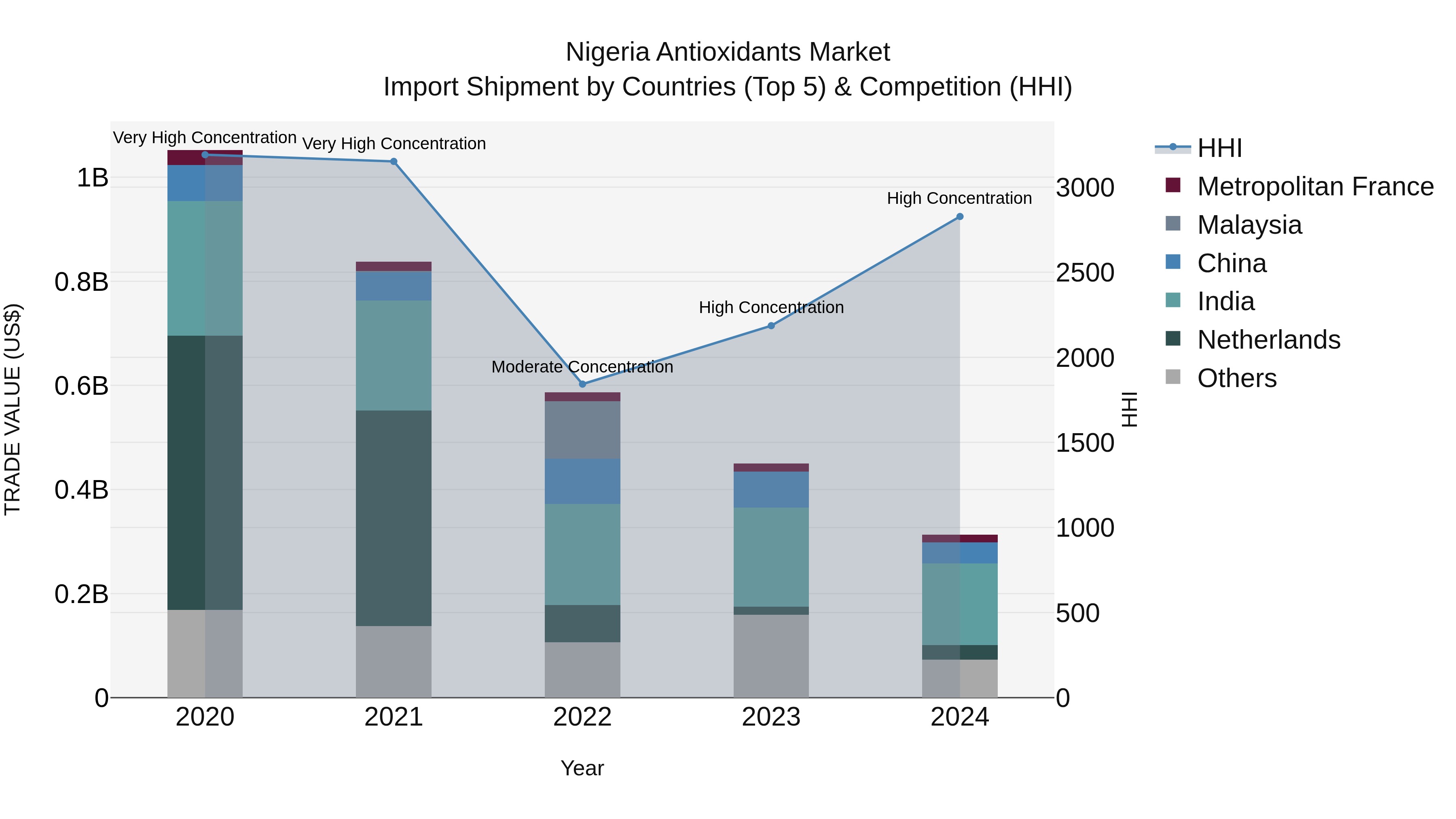
Despite the high concentration of antioxidants import shipments in Nigeria in 2024, the market saw a significant decline with a CAGR of -26.13% from 2020 to 2024. The top exporting countries to Nigeria, including India, China, Netherlands, Metropolitan France, and the USA, maintained their positions. However, the growth rate from 2023 to 2024 further decreased by -30.33%. This data suggests a challenging market environment for antioxidants imports in Nigeria, indicating potential shifts in supplier preferences or market demand dynamics.
Nigeria Antioxidants Market Synopsis
The Nigeria antioxidants market is experiencing steady growth driven by increasing awareness about the health benefits of antioxidants in preventing chronic diseases. The market is primarily driven by the food and beverage industry, as antioxidants are widely used as food additives to enhance shelf life and nutritional value. Rising disposable income and changing dietary patterns are also fueling the demand for antioxidant-rich products in the country. Key players in the Nigeria antioxidants market include local manufacturers as well as multinational companies. However, challenges such as lack of awareness among consumers and the presence of counterfeit products are hindering market growth. Overall, the Nigeria antioxidants market is expected to continue expanding due to the growing focus on health and wellness among the population.
Nigeria Antioxidants Market Trends
The Nigeria antioxidants market is experiencing a growth trend driven by increasing awareness of health and wellness benefits among consumers. Demand for antioxidants is rising due to their perceived role in combating various health issues such as aging, cardiovascular diseases, and cancer. Natural antioxidants sourced from fruits, vegetables, and herbs are particularly popular as consumers seek clean-label and organic products. Manufacturers are introducing innovative antioxidant-rich formulations in various products including supplements, functional foods, and beverages to meet the growing demand. The market is also witnessing a shift towards sustainable and ethically sourced antioxidants, reflecting the increasing emphasis on environmental responsibility among consumers. Overall, the Nigeria antioxidants market is poised for further growth as consumers prioritize preventive healthcare and seek products that support their overall well-being.
Nigeria Antioxidants Market Challenges
In the Nigeria Antioxidants Market, some key challenges include a lack of awareness among consumers about the benefits of antioxidants, limited availability of high-quality antioxidant products, and the presence of counterfeit or low-quality products in the market. Additionally, regulatory issues and inconsistent enforcement of quality standards pose challenges for both manufacturers and consumers. Economic factors such as fluctuating exchange rates and high import duties on raw materials also impact the cost-effectiveness of producing antioxidants in Nigeria. Addressing these challenges will require increased education efforts, collaboration between industry stakeholders and government bodies to enforce quality standards, and investment in local production capabilities to improve product availability and affordability in the market.
Nigeria Antioxidants Market Investment Opportunities
The Nigeria antioxidants market presents lucrative investment opportunities due to increasing consumer awareness about the health benefits of antioxidants in preventing diseases and promoting overall well-being. The market is poised for growth as the population becomes more health-conscious and adopts healthier lifestyles. Key investment opportunities include the production and distribution of antioxidant-rich foods and supplements, as well as the development of innovative antioxidant formulations for various industries such as food and beverage, cosmetics, and pharmaceuticals. Additionally, investing in research and development to discover new sources of antioxidants or improve existing extraction methods can provide a competitive edge in this growing market. Overall, the Nigeria antioxidants market offers promising prospects for investors looking to capitalize on the rising demand for health-promoting products.
Jordan Agar Market Government Policies
In Nigeria, the government has not implemented specific policies targeting the antioxidants market. However, there are general regulations in place that impact the importation, manufacturing, and sale of antioxidants. These include the National Agency for Food and Drug Administration and Control (NAFDAC), which oversees the registration and approval of food supplements and additives. Additionally, the Standards Organization of Nigeria (SON) sets standards for the quality of products, including antioxidants, to ensure consumer safety and promote industry best practices. While there is no direct government intervention in the antioxidants market, adherence to these regulatory bodies` guidelines is essential for market players to operate legally and maintain product quality standards in Nigeria.
Nigeria Antioxidants Market Future Outlook
The Nigeria Antioxidants Market is poised for steady growth in the coming years due to increasing consumer awareness about the health benefits of antioxidants in preventing chronic diseases. Factors such as rising disposable income, changing dietary patterns, and a growing focus on wellness and preventive healthcare are driving the demand for antioxidant-rich food and supplements. Additionally, the expanding food and beverage industry in Nigeria is likely to create more opportunities for antioxidant ingredient suppliers. The market is expected to witness a surge in product innovation and development to cater to the evolving consumer preferences for natural, clean-label, and functional ingredients. However, challenges such as lack of regulatory framework and quality control measures may hinder market growth to some extent. Overall, the Nigeria Antioxidants Market presents promising prospects for both domestic and international players.
Key Highlights of the Report:
- Nigeria Antioxidants Market Outlook
- Market Size of Nigeria Antioxidants Market, 2024
- Forecast of Nigeria Antioxidants Market, 2031
- Historical Data and Forecast of Nigeria Antioxidants Revenues & Volume for the Period 2021 - 2031
- Nigeria Antioxidants Market Trend Evolution
- Nigeria Antioxidants Market Drivers and Challenges
- Nigeria Antioxidants Price Trends
- Nigeria Antioxidants Porter's Five Forces
- Nigeria Antioxidants Industry Life Cycle
- Historical Data and Forecast of Nigeria Antioxidants Market Revenues & Volume By Type for the Period 2021 - 2031
- Historical Data and Forecast of Nigeria Antioxidants Market Revenues & Volume By Natural Antioxidants for the Period 2021 - 2031
- Historical Data and Forecast of Nigeria Antioxidants Market Revenues & Volume By Synthetic Antioxidants for the Period 2021 - 2031
- Historical Data and Forecast of Nigeria Antioxidants Market Revenues & Volume By Form for the Period 2021 - 2031
- Historical Data and Forecast of Nigeria Antioxidants Market Revenues & Volume By Dry for the Period 2021 - 2031
- Historical Data and Forecast of Nigeria Antioxidants Market Revenues & Volume By Liquid for the Period 2021 - 2031
- Historical Data and Forecast of Nigeria Antioxidants Market Revenues & Volume By Application for the Period 2021 - 2031
- Historical Data and Forecast of Nigeria Antioxidants Market Revenues & Volume By Food and Feed Additives for the Period 2021 - 2031
- Historical Data and Forecast of Nigeria Antioxidants Market Revenues & Volume By Pharmaceuticals and Personal Care Products for the Period 2021 - 2031
- Historical Data and Forecast of Nigeria Antioxidants Market Revenues & Volume By Fuel and Lubricant Additives for the Period 2021 - 2031
- Historical Data and Forecast of Nigeria Antioxidants Market Revenues & Volume By Plastic for the Period 2021 - 2031
- Historical Data and Forecast of Nigeria Antioxidants Market Revenues & Volume By Rubber for the Period 2021 - 2031
- Historical Data and Forecast of Nigeria Antioxidants Market Revenues & Volume By Latex Additives for the Period 2021 - 2031
- Nigeria Antioxidants Import Export Trade Statistics
- Market Opportunity Assessment By Type
- Market Opportunity Assessment By Form
- Market Opportunity Assessment By Application
- Nigeria Antioxidants Top Companies Market Share
- Nigeria Antioxidants Competitive Benchmarking By Technical and Operational Parameters
- Nigeria Antioxidants Company Profiles
- Nigeria Antioxidants Key Strategic Recommendations






































