South Africa Antioxidants Market Size Growth Rate
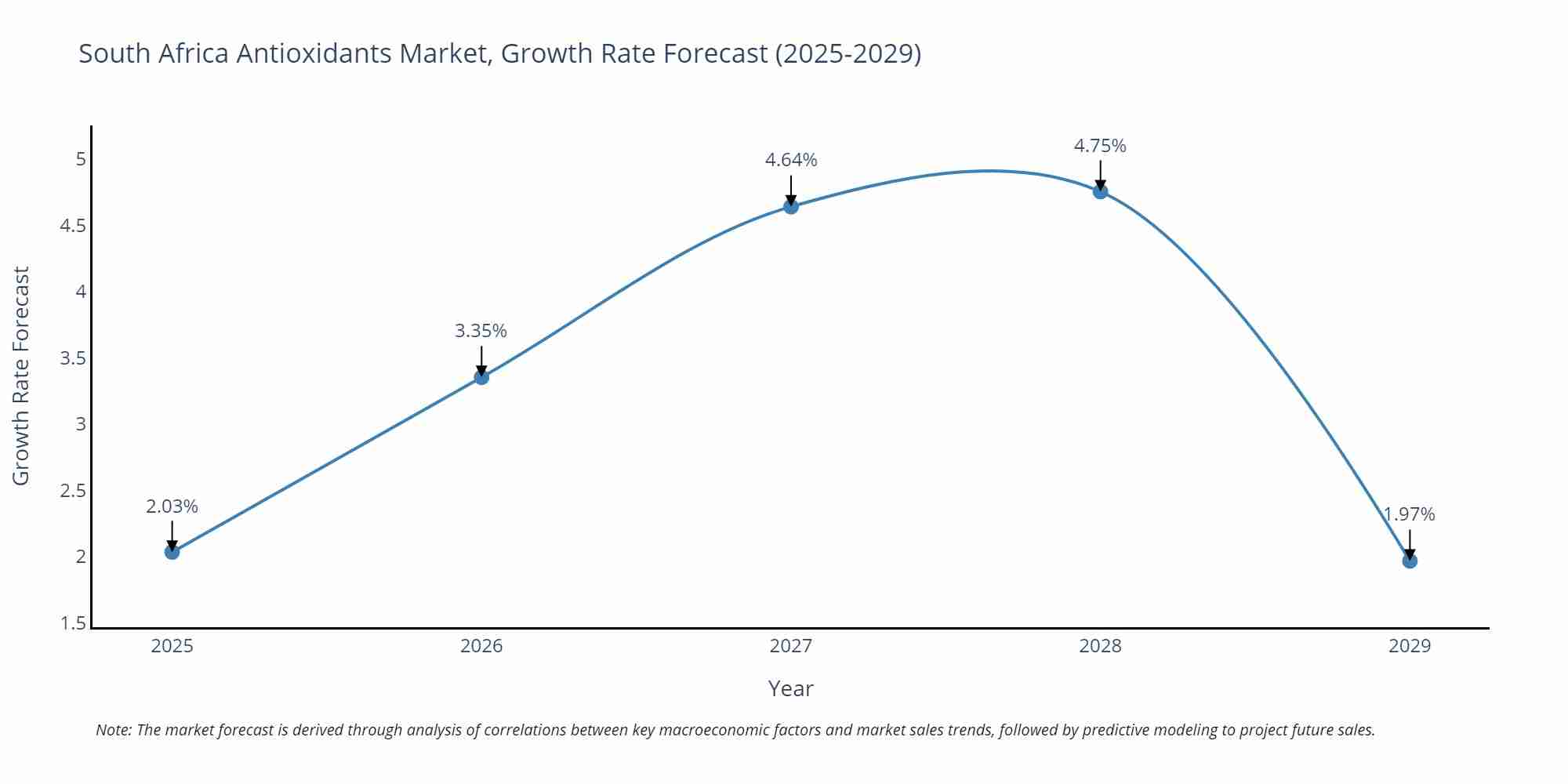
The South Africa Antioxidants Market is projected to witness mixed growth rate patterns during 2025 to 2029. Starting at 2.03% in 2025, the market peaks at 4.75% in 2028, and settles at 1.97% by 2029.
South Africa Antioxidants Market Synopsis
The South Africa antioxidants market is witnessing steady growth due to increasing awareness about the health benefits of antioxidants in preventing various diseases. The market is driven by factors such as a rising focus on preventive healthcare, growing disposable income, and a shift towards healthier lifestyles among consumers. Antioxidants are widely used in the food and beverage industry, cosmetics, pharmaceuticals, and animal feed sectors in South Africa. Key players in the market are investing in research and development to introduce innovative antioxidant products to cater to the evolving consumer preferences. The demand for natural antioxidants is also on the rise as consumers seek clean-label products. Overall, the South Africa antioxidants market is expected to continue its growth trajectory in the coming years.
South Africa Antioxidants Market Trends
The South Africa Antioxidants Market is witnessing a growing demand for natural antioxidants sourced from fruits, vegetables, and herbs due to the increasing consumer preference for clean label and natural products. Consumers are becoming more health-conscious and are seeking antioxidants to boost their immunity and overall well-being. There is also a rising awareness about the benefits of antioxidants in reducing the risk of chronic diseases such as cancer, cardiovascular diseases, and diabetes. Companies in the South Africa Antioxidants Market are focusing on launching innovative products with unique antioxidant blends to cater to the evolving consumer preferences. Additionally, the food and beverage industry is incorporating antioxidants in a variety of products such as functional foods, beverages, supplements, and personal care products to meet the growing demand for health and wellness products.
South Africa Antioxidants Market Challenges
In the South Africa Antioxidants Market, challenges include increasing competition from local and international manufacturers, fluctuating raw material prices, and stringent regulatory requirements. Local manufacturers often struggle to compete with imported products due to differences in production costs and quality standards. The volatility of raw material prices can impact profit margins and supply chain stability. Additionally, the regulatory environment in South Africa is complex, requiring compliance with various standards and certifications, which can be a barrier to entry for smaller companies. Overall, navigating these challenges requires market players to innovate, differentiate their products, and invest in quality control measures to maintain a competitive edge in the South Africa Antioxidants Market.
South Africa Antioxidants Market Investment Opportunities
In the South Africa antioxidants market, there are several promising investment opportunities across various sectors. The increasing consumer awareness about the health benefits of antioxidants has led to a growing demand for antioxidant-rich products in industries such as food and beverages, cosmetics, pharmaceuticals, and animal feed. Investing in companies that specialize in producing natural antioxidants from sources like fruits, vegetables, and herbs could be lucrative as the trend towards clean-label and natural products continues to rise. Additionally, there is potential in the research and development of new antioxidant formulations and applications to cater to evolving consumer preferences. Furthermore, with the focus on preventive healthcare, there is an opportunity for investment in antioxidant supplements and nutraceuticals. Overall, the South Africa antioxidants market offers diverse investment avenues with potential for growth and innovation.
Jordan Agar Market Government Policies
Government policies in South Africa related to the Antioxidants Market primarily focus on ensuring food safety and quality standards, as well as promoting domestic production and investment in the agriculture and food processing sectors. The Department of Agriculture, Forestry and Fisheries (DAFF) oversees regulations on the use of antioxidants in food products, with an emphasis on compliance with international standards to facilitate trade. Additionally, the government provides support for research and development in the antioxidant industry to enhance local innovation and competitiveness. In recent years, there has been a growing emphasis on sustainability and environmental protection, leading to initiatives promoting the use of natural antioxidants and organic farming practices. Overall, the government`s policies aim to foster a conducive environment for the growth of the South Africa Antioxidants Market while ensuring consumer safety and promoting sustainable practices.
South Africa Antioxidants Market Future Outlook
The South Africa antioxidants market is expected to witness steady growth in the coming years due to increasing awareness about the health benefits of antioxidants in preventing chronic diseases and promoting overall well-being. Factors such as rising disposable income, changing dietary habits, and a growing aging population are driving the demand for antioxidants in the country. The market is likely to see a surge in demand for natural antioxidants sourced from fruits, vegetables, and plant extracts, as consumers are becoming more conscious about the source and quality of the products they consume. Additionally, the food and beverage industry`s focus on incorporating antioxidants in various products to enhance their nutritional value is expected to further propel market growth in South Africa.
Key Highlights of the Report:
- South Africa Antioxidants Market Outlook
- Market Size of South Africa Antioxidants Market, 2021
- Forecast of South Africa Antioxidants Market, 2031
- Historical Data and Forecast of South Africa Antioxidants Revenues & Volume for the Period 2018 - 2031
- South Africa Antioxidants Market Trend Evolution
- South Africa Antioxidants Market Drivers and Challenges
- South Africa Antioxidants Price Trends
- South Africa Antioxidants Porter's Five Forces
- South Africa Antioxidants Industry Life Cycle
- Historical Data and Forecast of South Africa Antioxidants Market Revenues & Volume By Type for the Period 2018 - 2031
- Historical Data and Forecast of South Africa Antioxidants Market Revenues & Volume By Natural Antioxidants for the Period 2018 - 2031
- Historical Data and Forecast of South Africa Antioxidants Market Revenues & Volume By Synthetic Antioxidants for the Period 2018 - 2031
- Historical Data and Forecast of South Africa Antioxidants Market Revenues & Volume By Form for the Period 2018 - 2031
- Historical Data and Forecast of South Africa Antioxidants Market Revenues & Volume By Dry for the Period 2018 - 2031
- Historical Data and Forecast of South Africa Antioxidants Market Revenues & Volume By Liquid for the Period 2018 - 2031
- Historical Data and Forecast of South Africa Antioxidants Market Revenues & Volume By Application for the Period 2018 - 2031
- Historical Data and Forecast of South Africa Antioxidants Market Revenues & Volume By Food and Feed Additives for the Period 2018 - 2031
- Historical Data and Forecast of South Africa Antioxidants Market Revenues & Volume By Pharmaceuticals and Personal Care Products for the Period 2018 - 2031
- Historical Data and Forecast of South Africa Antioxidants Market Revenues & Volume By Fuel and Lubricant Additives for the Period 2018 - 2031
- Historical Data and Forecast of South Africa Antioxidants Market Revenues & Volume By Plastic for the Period 2018 - 2031
- Historical Data and Forecast of South Africa Antioxidants Market Revenues & Volume By Rubber for the Period 2018 - 2031
- Historical Data and Forecast of South Africa Antioxidants Market Revenues & Volume By Latex Additives for the Period 2018 - 2031
- South Africa Antioxidants Import Export Trade Statistics
- Market Opportunity Assessment By Type
- Market Opportunity Assessment By Form
- Market Opportunity Assessment By Application
- South Africa Antioxidants Top Companies Market Share
- South Africa Antioxidants Competitive Benchmarking By Technical and Operational Parameters
- South Africa Antioxidants Company Profiles
- South Africa Antioxidants Key Strategic Recommendations






































