Nigeria Coconut Products Market Size Growth Rate
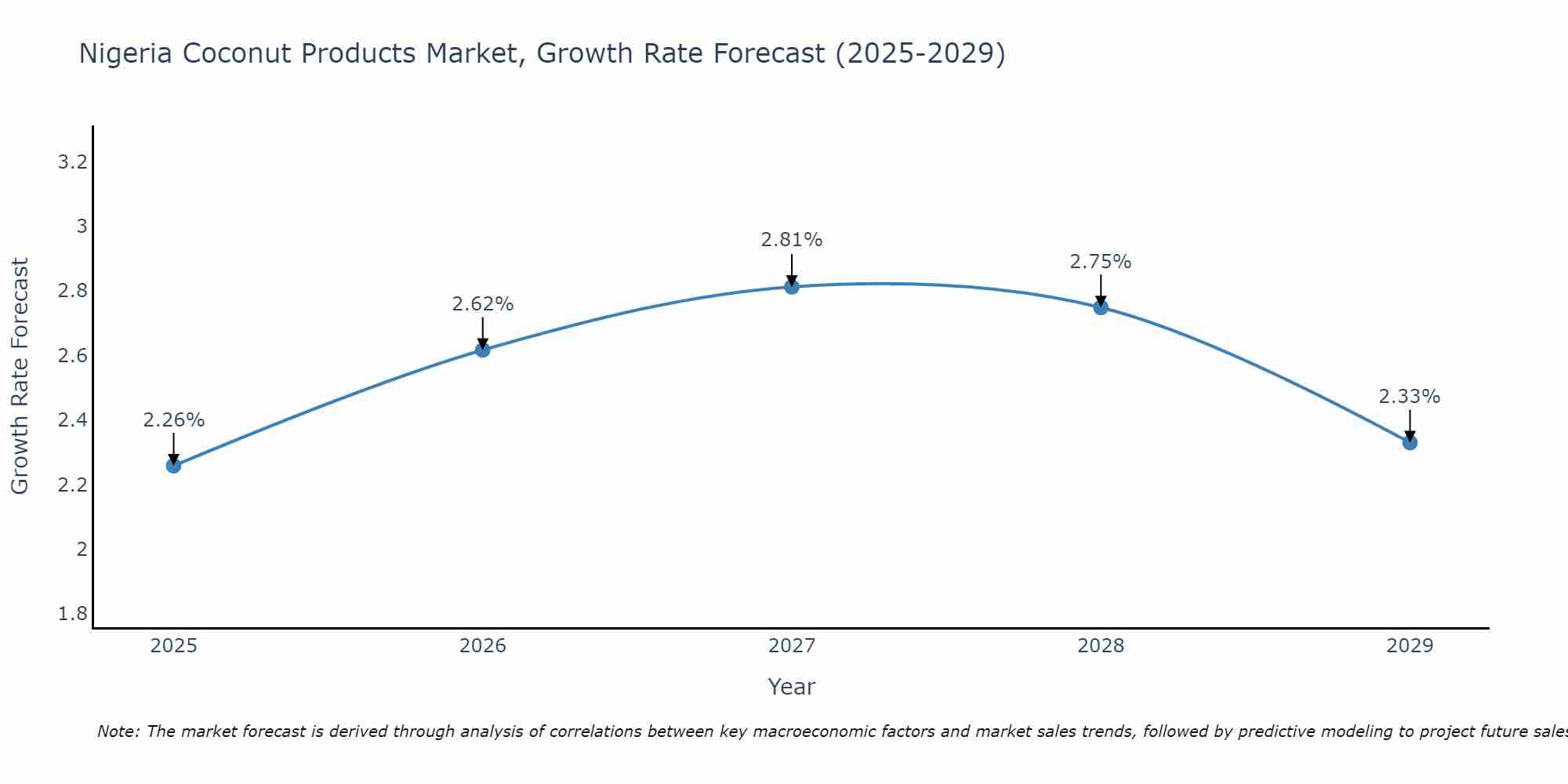
The Nigeria Coconut Products Market is projected to witness mixed growth rate patterns during 2025 to 2029. The growth rate begins at 2.26% in 2025, climbs to a high of 2.81% in 2027, and moderates to 2.33% by 2029.
Nigeria Coconut Products Market Overview
Nigeria coconut products market encompasses a variety of items such as coconut water, coconut milk, and desiccated coconut. With growing consumer interest in natural and healthy products, the market for coconut-based products is expanding across food, beverage, and personal care sectors.
Drivers of the market
The Nigeria Coconut Products Market is driven by the increasing use of coconut products in food and beverages, cosmetics, and personal care industries. The focus on the health benefits of coconut and the trend towards natural ingredients also fuel market growth.
Challenges of the market
Developing the coconut products market in Nigeria faces challenges such as limited processing infrastructure, ensuring product quality and safety, and addressing supply chain inefficiencies. Additionally, market access barriers, competition from imported products, and fluctuating coconut supply pose challenges for market players.
Government Policy of the market
Regulations focus on coconut product labeling, ingredient standards, and nutritional information, ensuring consumer transparency and product quality.
Key Highlights of the Report:
- Nigeria Coconut Products Market Outlook
- Market Size of Nigeria Coconut Products Market, 2024
- Forecast of Nigeria Coconut Products Market, 2031
- Historical Data and Forecast of Nigeria Coconut Products Revenues & Volume for the Period 2021-2031
- Nigeria Coconut Products Market Trend Evolution
- Nigeria Coconut Products Market Drivers and Challenges
- Nigeria Coconut Products Price Trends
- Nigeria Coconut Products Porter's Five Forces
- Nigeria Coconut Products Industry Life Cycle
- Historical Data and Forecast of Nigeria Coconut Products Market Revenues & Volume By Type for the Period 2021-2031
- Historical Data and Forecast of Nigeria Coconut Products Market Revenues & Volume By Coconut Water for the Period 2021-2031
- Historical Data and Forecast of Nigeria Coconut Products Market Revenues & Volume By Coconut Oil for the Period 2021-2031
- Historical Data and Forecast of Nigeria Coconut Products Market Revenues & Volume By Coconut Milk for the Period 2021-2031
- Historical Data and Forecast of Nigeria Coconut Products Market Revenues & Volume By Dried Coconut Products for the Period 2021-2031
- Historical Data and Forecast of Nigeria Coconut Products Market Revenues & Volume By Others for the Period 2021-2031
- Historical Data and Forecast of Nigeria Coconut Products Market Revenues & Volume By Application for the Period 2021-2031
- Historical Data and Forecast of Nigeria Coconut Products Market Revenues & Volume By Food for the Period 2021-2031
- Historical Data and Forecast of Nigeria Coconut Products Market Revenues & Volume By Beverage for the Period 2021-2031
- Historical Data and Forecast of Nigeria Coconut Products Market Revenues & Volume By Cosmetics for the Period 2021-2031
- Historical Data and Forecast of Nigeria Coconut Products Market Revenues & Volume By Others for the Period 2021-2031
- Historical Data and Forecast of Nigeria Coconut Products Market Revenues & Volume By Form for the Period 2021-2031
- Historical Data and Forecast of Nigeria Coconut Products Market Revenues & Volume By Solid for the Period 2021-2031
- Historical Data and Forecast of Nigeria Coconut Products Market Revenues & Volume By Liquid for the Period 2021-2031
- Nigeria Coconut Products Import Export Trade Statistics
- Market Opportunity Assessment By Type
- Market Opportunity Assessment By Application
- Market Opportunity Assessment By Form
- Nigeria Coconut Products Top Companies Market Share
- Nigeria Coconut Products Competitive Benchmarking By Technical and Operational Parameters
- Nigeria Coconut Products Company Profiles
- Nigeria Coconut Products Key Strategic Recommendations






































