Nigeria Data Protection Market Size & Growth Rate (2026-2032)
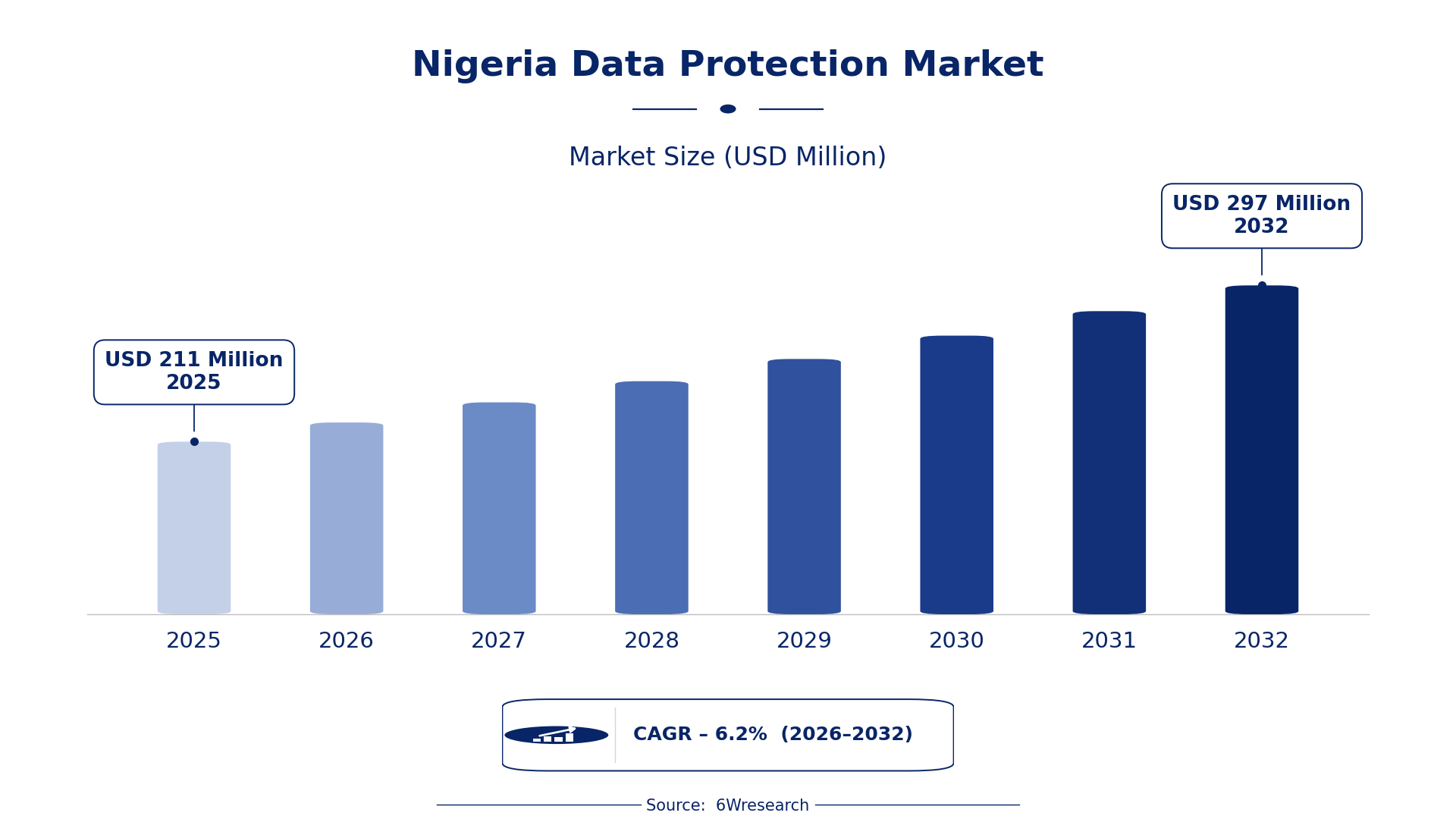
The Nigeria Data Protection Market was estimated at USD 211 Million in 2025 and is projected to reach USD 297 Million by 2032, growing at a CAGR of 6.2% from 2026 to 2032.
Nigeria Data Protection Market Synopsis
The increasing frequency of cyberattacks is the most powerful force shaping the Nigeria Data Protection Market today. Organizations across various sectors are prioritizing the implementation of robust data protection measures to shield their sensitive information from unauthorized access and breaches.
on top of that, heightened consumer awareness regarding data privacy rights has spurred organizations to adopt comprehensive data protection frameworks. These initiatives not only ensure compliance with regulations but also play a crucial role in building and maintaining customer trust in an increasingly digital economy.
Nigeria Data Protection Market Year-wise Growth Rate and Key Drivers
This graph illustrates the annual growth rates of the Nigeria Data Protection Market from 2021 to 2032, highlighting a steady upward trajectory and projected expansion over the forecast period.
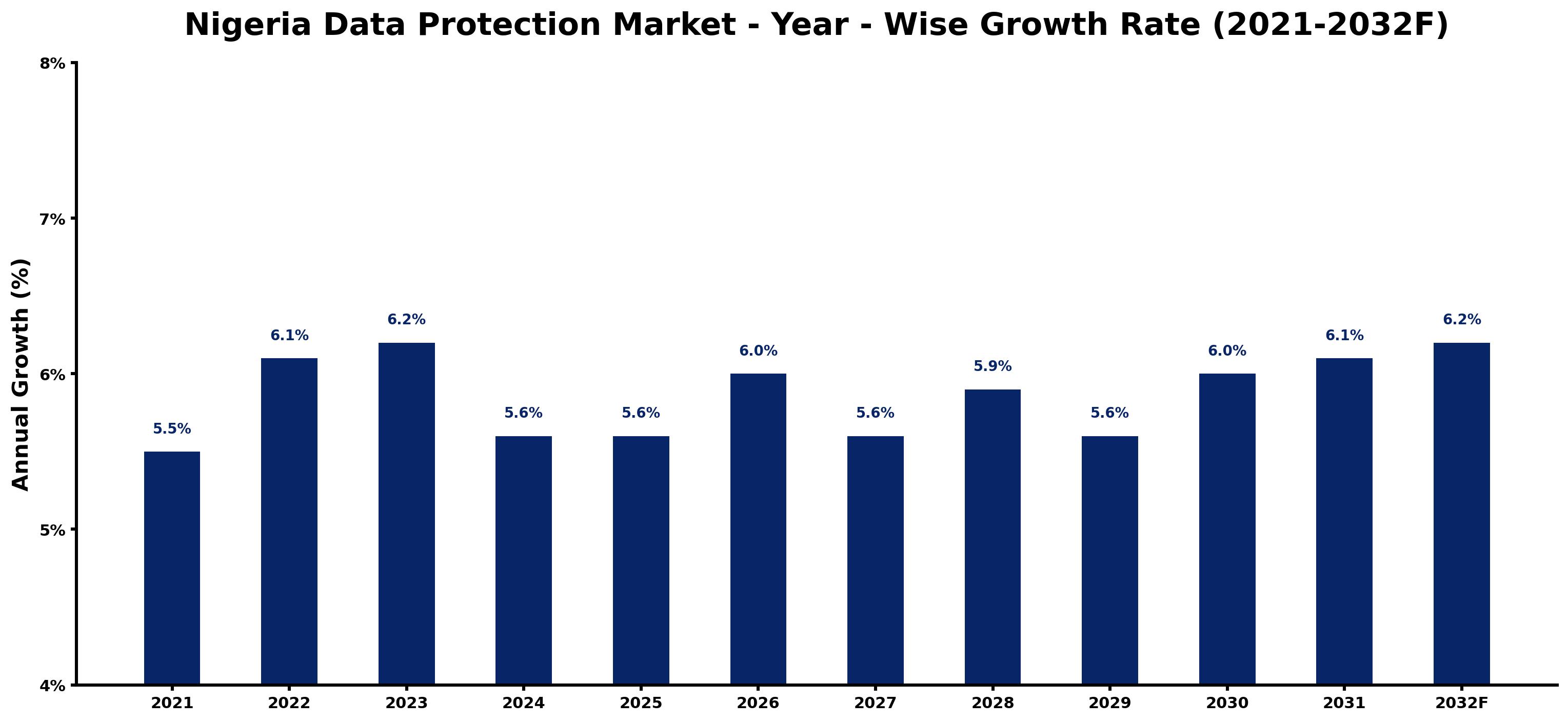
The table below presents the year‑wise growth rates along with the key drivers influencing the market
| Year | Growth Rate | Major Drivers |
| 2021 | 5.5% | Implementation of Nigeria's Data Protection Regulation (NDPR). |
| 2022 | 6.1% | Increased government enforcement of cybersecurity compliance mandates. |
| 2023 | 6.2% | Rising concerns over identity theft and data breaches. |
| 2024 | 5.6% | Growth of digital businesses requiring stringent data policies. |
| 2025 | 5.6% | Government initiatives promoting digital literacy and data security. |
| 2026 | 6.0% | Emergence of local data protection technology startups. |
| 2027 | 5.6% | Demand for GDPR compliance among international businesses. |
| 2028 | 5.9% | Increased funding for data protection education programs. |
| 2029 | 5.6% | Local data protection certifications gaining recognition and credibility. |
| 2030 | 6.0% | Collaboration between fintechs and data protection firms rising. |
| 2031 | 6.1% | Growing media coverage highlighting data privacy issues. |
| 2032 | 6.2% | Corporate sector prioritizing data governance and ethical practices. |
Note: Market size estimations and growth projections presented in this report are based on 6Wresearch's proprietary forecasting methodology, utilizing the latest available industry data, government publications, and primary research inputs.
Nigeria Data Protection Market Key Takeaways
Below are some of the specific key takeaways from the market, including:
- The market is driven by stringent regulatory frameworks and the imperative of customer trust.
- Data protection solutions encompass encryption, backup, recovery, and access controls.
- Rising instances of data breaches have pushed businesses to invest in protective measures.
- Organizations face challenges in navigating complex compliance requirements.
- Government initiatives aim to enhance awareness and institutional capacity in data protection.
Evaluation of Restraints in Nigeria Data Protection Market
Despite significant growth opportunities, several restraints hinder the Nigeria Data Protection Market. Regulatory compliance remains a complex maze for many organizations, often resulting in inconsistent implementation of data protection measures. The high cost associated with robust security solutions is another barrier, particularly for small and medium enterprises, which struggle to allocate adequate resources. Additionally, the general lack of awareness regarding effective data protection practices among businesses further complicates the market dynamics.
Nigeria Data Protection Market Trends
A notable trend in the Nigeria Data Protection Market is the increasing integration of artificial intelligence into data protection solutions. This technology enhances threat detection and response capabilities, making organizations more resilient against cyber threats. on top of that, the shift towards cloud-based services has prompted a growing demand for data protection solutions that can safeguard data across multiple platforms. As companies expand their digital footprint, the focus on personalized data privacy measures has also emerged as a key trend.
Nigeria Data Protection Market Opportunities
The Nigeria Data Protection Market presents multiple growth opportunities, particularly in the sectors of technology and finance. Investments in data protection infrastructure are expected to surge as organizations seek to comply with both local and international regulations. There is also potential for innovative startups to enter the market, offering specialized solutions tailored to specific industry needs. Additionally, public-private partnerships can pave the way for advancements in data security, thereby fostering a secure digital ecosystem.
Government Initiatives in the Nigeria Data Protection Market
Government policy is a driving force behind the Nigeria Data Protection Market, supported by various initiatives aimed at strengthening regulatory compliance and enhancing data privacy standards. The National Data Protection Regulation (NDPR) has established a framework mandating organizations to implement comprehensive data protection measures, underscoring the government's commitment to safeguarding personal information.
- A newly launched public awareness campaign initiated in early 2025 aims to educate citizens about their data protection rights.
- Current collaborations between the government and tech firms focus on developing secure digital platforms to enhance data protection practices.
- Ongoing efforts to refine regulatory frameworks are expected to be completed by late 2026, enhancing compliance mechanisms.
- Upcoming initiatives are planned to promote public-private partnerships, targeting investment in advanced data protection technologies by 2028.
Future Insights of the Nigeria Data Protection Market
Looking ahead to 2026-2032, the Nigeria Data Protection Market is likely to experience substantial evolution. As regulatory demands intensify, organizations will increasingly prioritize data protection not just as a compliance issue but as a core component of their operational strategy. The intersection of technology and regulation will guide innovations in data protection solutions, driving the market toward more sophisticated, user-centric offerings. With greater awareness and governmental backing, the market is positioned for steady growth.
Nigeria Data Protection Market Latest Developments
Recent developments in the Nigeria Data Protection Market illustrate a proactive approach toward enhancing cybersecurity and compliance. Organizations are rapidly adopting advanced solutions that not only meet regulatory requirements but also build consumer confidence. This trend indicates a market that is not just growing but evolving in response to emerging threats and regulatory changes.
- A prominent technology firm launched a comprehensive data protection solution in Q1 2025, aimed at small businesses looking to comply with the NDPR.
- In mid-2025, a financial services provider initiated a partnership with cybersecurity experts to bolster its data protection framework, ensuring enhanced consumer data security.
- Plans are underway for a nationwide cybersecurity awareness programme expected to roll out in late 2026, aiming to educate businesses on best practices.
- By early 2025, a series of workshops aimed at small and medium enterprises have been completed, providing them with essential data protection training.
Nigeria Data Protection Market - Key Attractiveness of the Report
- 10 Years of Market Numbers
- Historical Data Starting from 2022 to 2025
- Base Year: 2025
- Forecast Data until 2032
- Key Performance Indicators Impacting the Market
- Major Upcoming Developments and Projects
Key Highlights of the Report:
- Nigeria Data Protection Market Outlook
- Market Size of Nigeria Data Protection Market, 2025
- Forecast of Nigeria Data Protection Market, 2032
- Historical Data and Forecast of Nigeria Data Protection Revenues & Volume for the Period 2022-2032F
- Nigeria Data Protection Market Trend Evolution
- Nigeria Data Protection Market Drivers and Challenges
- Nigeria Data Protection Price Trends
- Nigeria Data Protection Porter's Five Forces
- Nigeria Data Protection Industry Life Cycle
- Historical Data and Forecast of Nigeria Data Protection Market Revenues & Volume By Component for the Period 2022-2032F
- Historical Data and Forecast of Nigeria Data Protection Market Revenues & Volume By Solutions for the Period 2022-2032F
- Historical Data and Forecast of Nigeria Data Protection Market Revenues & Volume By Services (Professional Services and Managed Services) for the Period 2022-2032F
- Historical Data and Forecast of Nigeria Data Protection Market Revenues & Volume By Deployment Mode for the Period 2022-2032F
- Historical Data and Forecast of Nigeria Data Protection Market Revenues & Volume By On-premises for the Period 2022-2032F
- Historical Data and Forecast of Nigeria Data Protection Market Revenues & Volume By Cloud for the Period 2022-2032F
- Historical Data and Forecast of Nigeria Data Protection Market Revenues & Volume By Industry Vertical for the Period 2022-2032F
- Historical Data and Forecast of Nigeria Data Protection Market Revenues & Volume By Government and defense for the Period 2022-2032F
- Historical Data and Forecast of Nigeria Data Protection Market Revenues & Volume By Banking, Financial Services, and Insurance (BFSI) for the Period 2022-2032F
- Historical Data and Forecast of Nigeria Data Protection Market Revenues & Volume By Healthcare for the Period 2022-2032F
- Historical Data and Forecast of Nigeria Data Protection Market Revenues & Volume By IT and telecom for the Period 2022-2032F
- Historical Data and Forecast of Nigeria Data Protection Market Revenues & Volume By Consumer goods and retail for the Period 2022-2032F
- Historical Data and Forecast of Nigeria Data Protection Market Revenues & Volume By Education for the Period 2022-2032F
- Historical Data and Forecast of Nigeria Data Protection Market Revenues & Volume By Media and entertainment for the Period 2022-2032F
- Historical Data and Forecast of Nigeria Data Protection Market Revenues & Volume By Organization Size Large Enterprises for the Period 2022-2032F
- Historical Data and Forecast of Nigeria Data Protection Market Revenues & Volume By SMEs for the Period 2022-2032F
- Historical Data and Forecast of Nigeria Data Protection Market Revenues & Volume By Large Enterprises for the Period 2022-2032F
- Nigeria Data Protection Import Export Trade Statistics
- Market Opportunity Assessment By Component
- Market Opportunity Assessment By Deployment Mode
- Market Opportunity Assessment By Industry Vertical
- Market Opportunity Assessment By Organization Size Large Enterprises
- Nigeria Data Protection Top Companies Market Share
- Nigeria Data Protection Competitive Benchmarking By Technical and Operational Parameters
- Nigeria Data Protection Company Profiles
- Nigeria Data Protection Key Strategic Recommendations






































