Kenya Data Protection Market Size & Growth Rate (2026-2032)
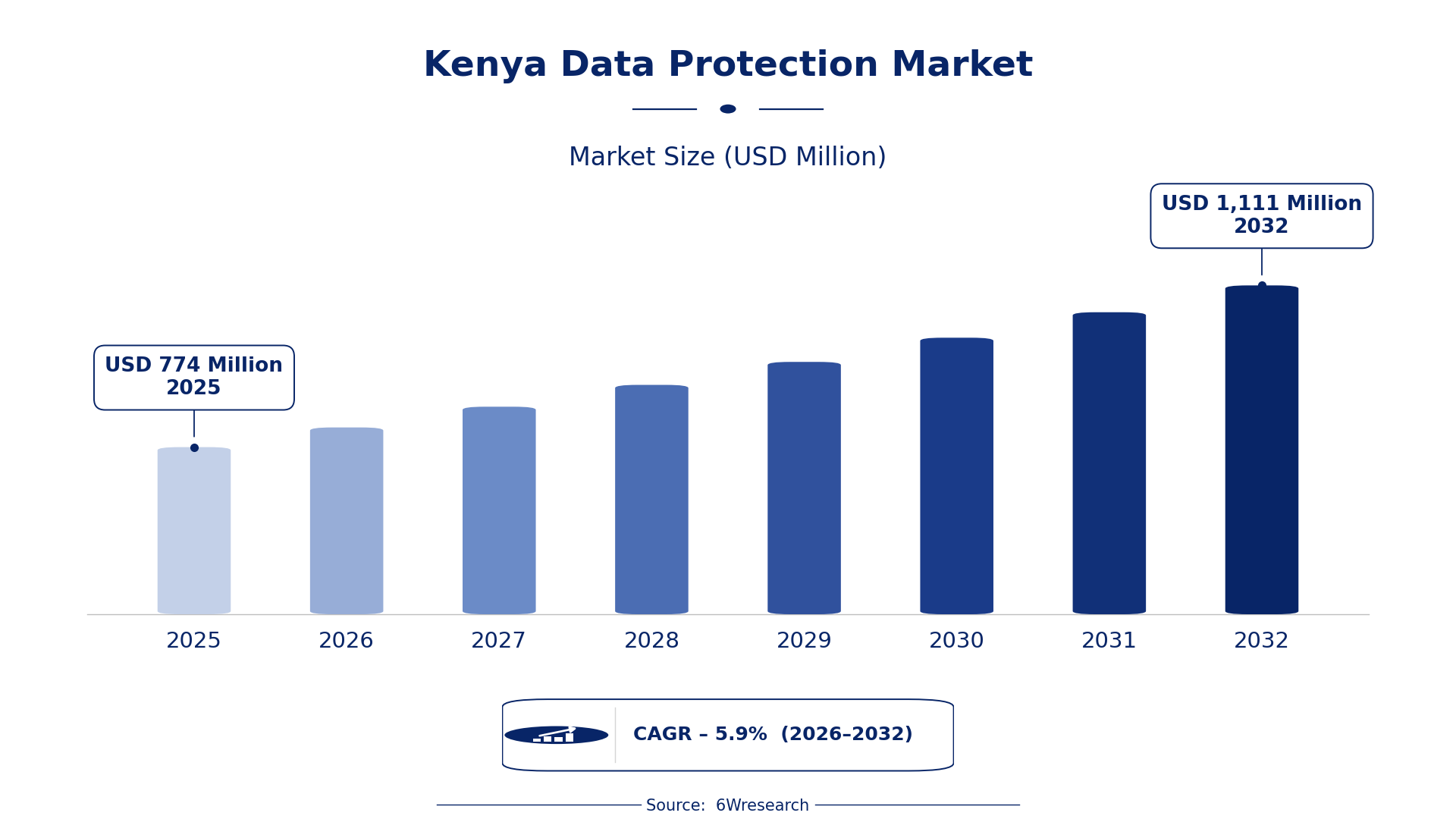
The Kenya Data Protection Market was estimated at USD 774 Million in 2025 and is projected to reach USD 1111 Million by 2032, growing at a CAGR of 5.9% from 2026 to 2032.
Kenya Data Protection Market Synopsis
The Kenya data protection market is witnessing a period of rapid growth, propelled by stringent regulatory requirements and heightened concerns surrounding data privacy. Organizations across the nation are actively investing in comprehensive data protection solutions to shield sensitive information from cyber threats and regulatory non-compliance.
With the implementation of the Kenya Data Protection Act, businesses are placing a greater emphasis on ensuring compliance. This legal framework has catalyzed the adoption of data protection measures such as encryption and access controls, reflecting a broader recognition of the necessity for robust security measures in the current digital economy.
Kenya Data Protection Market Year-wise Growth Rate and Key Drivers
This graph illustrates the annual growth rates of the Kenya Data Protection Market from 2021 to 2032, highlighting a steady upward trajectory and projected expansion over the forecast period.
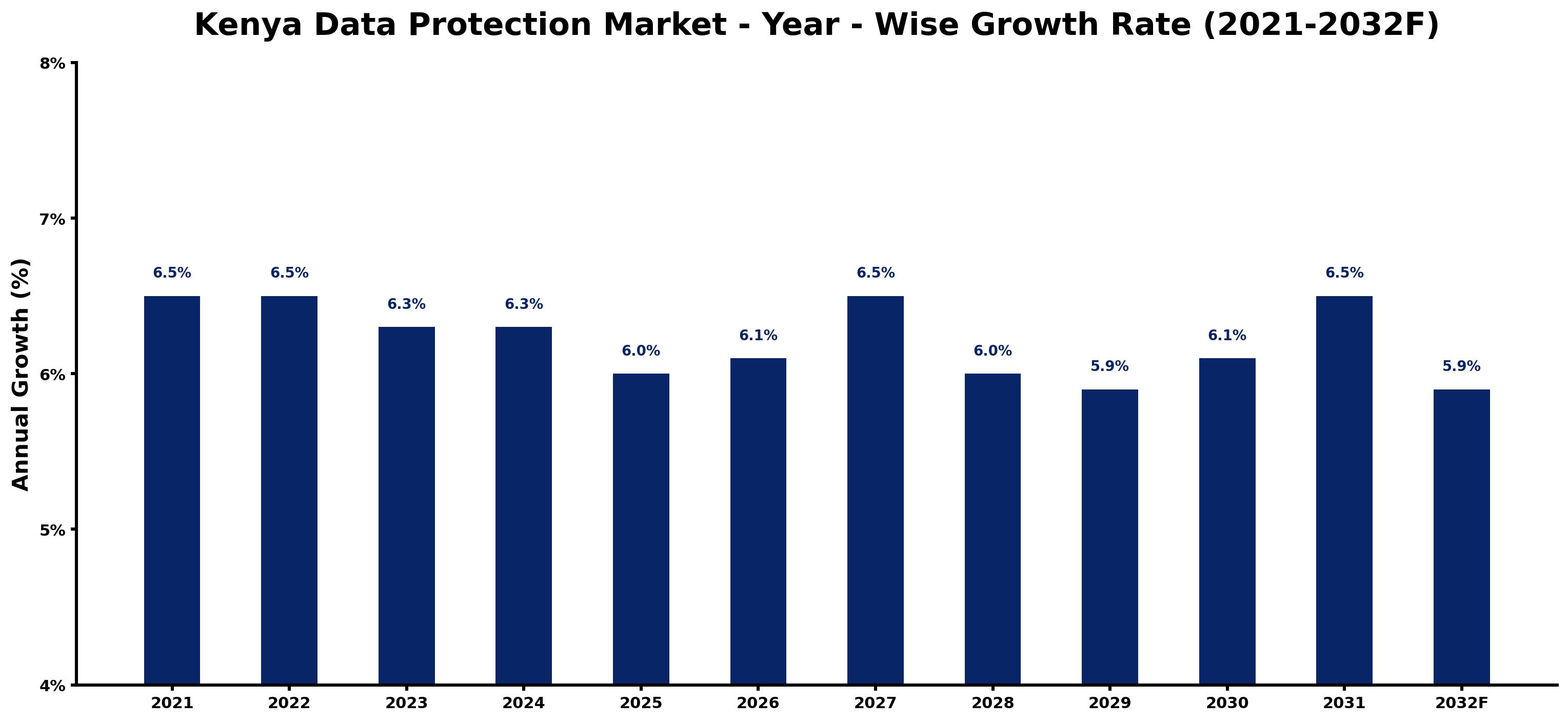
The table below presents the year‑wise growth rates along with the key drivers influencing the market
| Year | Growth Rate | Major Drivers |
| 2021 | 6.5% | Implementation of Kenya’s Data Protection Act 2019. |
| 2022 | 6.5% | Increased public awareness on data privacy rights. |
| 2023 | 6.3% | Growth in e-commerce driving data protection needs. |
| 2024 | 6.3% | Adoption of biometric systems enhancing personal data security. |
| 2025 | 6.0% | Support from Kenyan government on digital literacy programs. |
| 2026 | 6.1% | Emergence of local cybersecurity firms boosting compliance efforts. |
| 2027 | 6.5% | Ongoing updates in IT legislation promoting data privacy reforms. |
| 2028 | 6.0% | Stronger collaboration between industry and regulators for standards. |
| 2029 | 5.9% | Rising cyber threats leading to demand for protection solutions. |
| 2030 | 6.1% | Integration of cloud services necessitating robust data safeguards. |
| 2031 | 6.5% | Increased multinational investments necessitating local data governance. |
| 2032 | 5.9% | Growing mobile user base spurring data protection awareness. |
Note: Market size estimations and growth projections presented in this report are based on 6Wresearch's proprietary forecasting methodology, utilizing the latest available industry data, government publications, and primary research inputs.
Kenya Data Protection Market Key Takeaways
Below are some of the specific key takeaways from the market, including:
- The data protection market is primarily driven by regulatory compliance and increased cyber threat awareness.
- Organizations are prioritizing investments in encryption and access control solutions to secure sensitive data.
- Growing use of cloud computing and mobile devices is expanding the need for comprehensive security measures.
- Data breaches and cyber attacks are pushing companies to adopt robust data protection protocols.
- The implementation of the Data Protection Act significantly influences market growth dynamics.
Evaluation of Restraints in Kenya Data Protection Market
Despite its promising growth, the Kenya data protection market faces notable constraints. A significant challenge lies in the rapidly evolving nature of cybersecurity threats, which complicates efforts to safeguard sensitive data. Businesses are often caught off-guard, struggling to keep pace with the latest vulnerabilities and risks. Additionally, the regulatory environment requires constant attention, as compliance obligations can change frequently, creating hurdles for organizations aiming to implement effective security measures.
Kenya Data Protection Market Trends
Several key trends are shaping the demand for data protection solutions in Kenya. Increasing public awareness of data privacy issues has prompted organizations to re-evaluate their security strategies. on top of that, the shift toward digital transformation is driving an uptick in the adoption of sophisticated data protection technologies. Collaborative approaches, such as partnerships between private firms and government entities, are also emerging as vital strategies in bolstering the overall security posture across industries.
Kenya Data Protection Market Opportunities
Genuine growth opportunities are emerging within the Kenya data protection sector, particularly for companies that offer innovative solutions tailored to local compliance needs. The demand for cloud-based security solutions is surging, providing a fertile ground for service providers that can deliver scalable and adaptable security measures. Additionally, businesses that focus on educational initiatives surrounding data protection can tap into a market hungry for knowledge and best practices.
Government Initiatives in the Kenya Data Protection Market
The Kenyan government is actively shaping the data protection landscape through a series of important initiatives. With a clear focus on enhancing public trust in digital services, regulatory bodies are implementing frameworks that promote compliance with data protection standards. These efforts are crucial for fostering a secure environment for both businesses and consumers, as they navigate the complexities of data privacy in the digital age.
- A regulatory framework established in 2022 mandates organizations to adopt specific data protection measures to enhance compliance with international standards.
- The ongoing rollout of public education campaigns aims to raise awareness of data privacy issues among citizens and businesses alike.
- In 2023, a national initiative was launched to upgrade digital infrastructure, prioritizing security features to safeguard users' personal information.
- A planned collaboration between government agencies and private sector stakeholders aims to develop advanced data protection technologies by 2025.
Future Insights of the Kenya Data Protection Market
Looking ahead to 2026-2032, the Kenya data protection market is set for further expansion. The interplay between regulatory mandates and market demands will likely drive innovations in data security technologies. As more organizations recognize the financial and reputational repercussions of data breaches, investments in data protection are expected to increase. Consequently, businesses that stay ahead of regulatory changes and adopt agile security solutions will find themselves better positioned to thrive in this growing market.
Kenya Data Protection Market Latest Developments
Over the past year, the Kenya data protection market has been characterized by several noteworthy developments. There is a palpable shift towards more rigorous compliance practices among organizations, driven by new regulations and a growing awareness of data privacy issues. These trends have prompted both public and private sector players to explore innovative solutions that can help mitigate risks associated with data handling.
- A major technology vendor announced a new encryption solution tailored for local businesses, launched in early 2023, which focuses on affordability and compliance.
- A public-private partnership aimed at enhancing cybersecurity training programs for local businesses has been underway since mid-2023.
- In early 2023, a leading data protection firm began offering subscription-based services, focusing on small and medium-sized enterprises seeking cost-effective solutions.
- A planned industry conference scheduled for late 2024 will address emerging trends and best practices in data protection across the region.
Kenya Data Protection Market - Key Attractiveness of the Report
- 10 Years of Market Numbers
- Historical Data Starting from 2022 to 2025
- Base Year: 2025
- Forecast Data until 2032
- Key Performance Indicators Impacting the Market
- Major Upcoming Developments and Projects
Key Highlights of the Report:
- Kenya Data Protection Market Outlook
- Market Size of Kenya Data Protection Market, 2025
- Forecast of Kenya Data Protection Market, 2032
- Historical Data and Forecast of Kenya Data Protection Revenues & Volume for the Period 2022-2032F
- Kenya Data Protection Market Trend Evolution
- Kenya Data Protection Market Drivers and Challenges
- Kenya Data Protection Price Trends
- Kenya Data Protection Porter's Five Forces
- Kenya Data Protection Industry Life Cycle
- Historical Data and Forecast of Kenya Data Protection Market Revenues & Volume By Component for the Period 2022-2032F
- Historical Data and Forecast of Kenya Data Protection Market Revenues & Volume By Solutions for the Period 2022-2032F
- Historical Data and Forecast of Kenya Data Protection Market Revenues & Volume By Services (Professional Services and Managed Services) for the Period 2022-2032F
- Historical Data and Forecast of Kenya Data Protection Market Revenues & Volume By Deployment Mode for the Period 2022-2032F
- Historical Data and Forecast of Kenya Data Protection Market Revenues & Volume By On-premises for the Period 2022-2032F
- Historical Data and Forecast of Kenya Data Protection Market Revenues & Volume By Cloud for the Period 2022-2032F
- Historical Data and Forecast of Kenya Data Protection Market Revenues & Volume By Industry Vertical for the Period 2022-2032F
- Historical Data and Forecast of Kenya Data Protection Market Revenues & Volume By Government and defense for the Period 2022-2032F
- Historical Data and Forecast of Kenya Data Protection Market Revenues & Volume By Banking, Financial Services, and Insurance (BFSI) for the Period 2022-2032F
- Historical Data and Forecast of Kenya Data Protection Market Revenues & Volume By Healthcare for the Period 2022-2032F
- Historical Data and Forecast of Kenya Data Protection Market Revenues & Volume By IT and telecom for the Period 2022-2032F
- Historical Data and Forecast of Kenya Data Protection Market Revenues & Volume By Consumer goods and retail for the Period 2022-2032F
- Historical Data and Forecast of Kenya Data Protection Market Revenues & Volume By Education for the Period 2022-2032F
- Historical Data and Forecast of Kenya Data Protection Market Revenues & Volume By Media and entertainment for the Period 2022-2032F
- Historical Data and Forecast of Kenya Data Protection Market Revenues & Volume By Organization Size Large Enterprises for the Period 2022-2032F
- Historical Data and Forecast of Kenya Data Protection Market Revenues & Volume By SMEs for the Period 2022-2032F
- Historical Data and Forecast of Kenya Data Protection Market Revenues & Volume By Large Enterprises for the Period 2022-2032F
- Kenya Data Protection Import Export Trade Statistics
- Market Opportunity Assessment By Component
- Market Opportunity Assessment By Deployment Mode
- Market Opportunity Assessment By Industry Vertical
- Market Opportunity Assessment By Organization Size Large Enterprises
- Kenya Data Protection Top Companies Market Share
- Kenya Data Protection Competitive Benchmarking By Technical and Operational Parameters
- Kenya Data Protection Company Profiles
- Kenya Data Protection Key Strategic Recommendations






































