Nigeria Food Dehydrators Market Size, Share & Growth Rate
The Nigeria Food Dehydrators Market was estimated at USD 995 Million in 2025 and is projected to reach USD 1440 Million by 2032, growing at a CAGR of 5.4% from 2026 to 2032. This upward trajectory is fueled by rising consumer awareness of food preservation techniques, alongside an increasing preference for convenient food storage solutions. Moreover, the trend of home cooking and healthy eating continues to create demand for products that support food longevity and nutritional retention.
Nigeria Food Dehydrators Market Year-wise Growth Rate and Key Drivers
This graph highlights how the Nigeria Food Dehydrators Market has steadily grown over the years, supported by major growth factors.
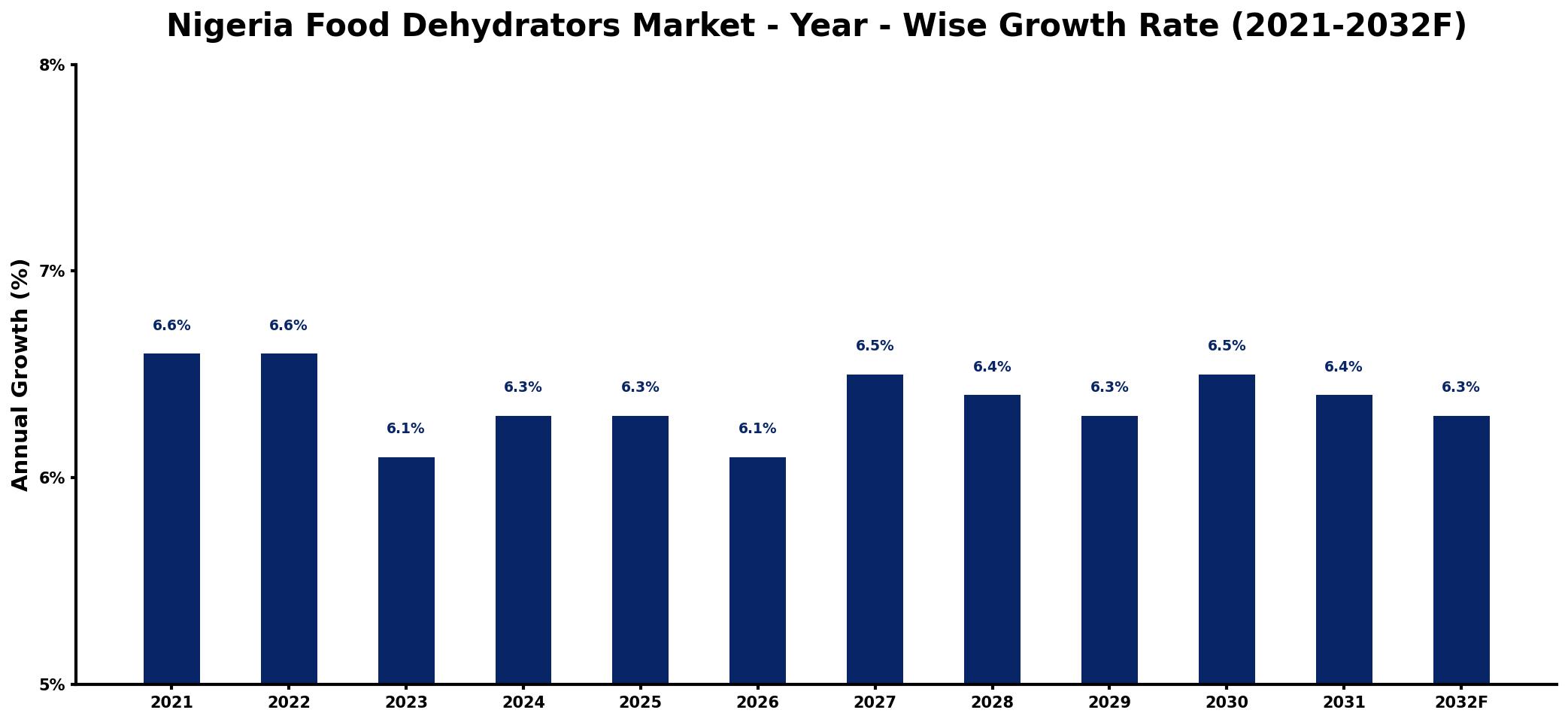
The table below presents the year‑wise growth rates along with the key drivers influencing the market
| Year | Growth Rate | Major Drivers |
| 2021 | 6.6% | Rising health consciousness among consumers |
| 2022 | 6.6% | Increased demand for preservation methods |
| 2023 | 6.1% | Growing popularity of home gardening |
| 2024 | 6.3% | Expansion of eco-friendly practices |
| 2025 | 6.3% | Surge in online shopping platforms |
| 2026 | 6.1% | growing regional consumption patterns |
| 2027 | 6.5% | Investment in sustainable packaging solutions |
| 2028 | 6.4% | Increase in culinary tourism experiences |
| 2029 | 6.3% | Development of innovative kitchen appliances |
| 2030 | 6.5% | Rise in DIY culinary projects |
| 2031 | 6.4% | rising end-use demand growth |
| 2032 | 6.3% | Strengthening of local agricultural markets |
Note: Market size estimations and growth projections presented in this report are based on 6Wresearch's proprietary forecasting methodology, utilizing the latest available industry data, government publications, and primary research inputs.
Nigeria Food Dehydrators Market Synopsis
In Nigeria, the food dehydrators market is rapidly evolving as consumers seek sustainable and effective ways to preserve food. The shift towards healthier eating habits is leading more households to adopt dehydrators, recognizing the benefits of extending shelf life without compromising nutritional value.
This market is characterized by an array of product innovations, with manufacturers introducing features such as energy efficiency and adjustable settings for different food types. The growing popularity of homemade snacks, combined with a rising interest in food preservation, is driving consumer engagement and market expansion.
Nigeria Food Dehydrators Market Key Takeaways
- The market is projected to grow significantly, reflecting increasing consumer interest in healthier, shelf-stable food options.
- Technological advancements in dehydrators are enhancing energy efficiency and user-friendliness.
- Small-scale food producers are increasingly adopting dehydrators as a viable means of food preservation.
- Government policies are supportive of initiatives aimed at reducing food waste and enhancing food security.
- There is a notable trend towards the customization of dehydrator models to meet specific local needs.
Evaluation of Restraints in Nigeria Food Dehydrators Market
Despite the positive growth trajectory, several restraints hinder the Nigeria food dehydrators market. Limited consumer awareness about the advantages of food dehydration remains a significant challenge, as many potential users are unfamiliar with the technology. Furthermore, inconsistent electricity supply complicates the effective usage of dehydrators, particularly in rural areas. The presence of counterfeit products can undermine consumer trust, deterring potential investments in quality dehydrators. Addressing these issues will require concerted marketing efforts and infrastructural investments.
Nigeria Food Dehydrators Market Trends
Current trends indicate a rising demand for compact and portable dehydrators that cater to smaller living spaces, making them appealing to urban consumers. There is also a notable shift towards more energy-efficient models, as consumers become increasingly eco-conscious. The focus on healthy snacking continues to drive innovation, with many dehydrator manufacturers responding by offering products tailored to making nutritious snacks at home.
Nigeria Food Dehydrators Market Opportunities
Opportunities for investment in the Nigeria food dehydrators market are significant. The growing consumer preference for health-focused food preservation methods presents a ripe market for new entrants and existing players alike. Manufacturers can explore creating affordable and user-friendly dehydrator models that appeal to the broader demographic, including low-income households. Additionally, there is potential for growth in the commercial sector, as small food producers seek efficient ways to extend the shelf life of their products.
Government Initiatives in the Nigeria Food Dehydrators Market
The Nigerian government has launched various initiatives aimed at promoting food security and reducing post-harvest losses. Support for the food dehydrators market includes the National Food Safety and Quality Policy, which aims to enhance processing standards. Financial incentives and technical support for investments in food dehydration technologies are also part of the strategy to boost infrastructure and foster a more robust market environment.
Future Insights of the Nigeria Food Dehydrators Market
Looking ahead to 2026-2032, the Nigeria food dehydrators market is expected to witness substantial advancements. The ongoing focus on sustainability and waste reduction will likely keep dehydrators in high demand. As technological innovations continue to evolve, manufacturers are poised to develop more efficient, user-friendly models, further driving consumer adoption. The increasing popularity of healthy, homemade snacks is also projected to fuel market growth, creating a vibrant landscape for manufacturers and investors alike.
Nigeria Food Dehydrators Market Latest Developments (2025 - 2026)
In recent months, the industry has seen a shift towards more energy-efficient dehydrators that cater to environmentally conscious consumers. New product launches featuring smart technology that allows remote operation and monitoring have emerged, appealing to tech-savvy buyers. Additionally, several collaborations aimed at enhancing distribution channels have begun, aimed at improving access to high-quality dehydrators in both urban and rural areas.
Nigeria Food Dehydrators Market - Key Attractiveness of the Report
- 10 Years of Market Numbers
- Historical Data Starting from 2022 to 2025
- Base Year: 2025
- Forecast Data until 2032
- Key Performance Indicators Impacting the Market
- Major Upcoming Developments and Projects
Key Highlights of the Report:
- Nigeria Food Dehydrators Market Outlook
- Market Size of Nigeria Food Dehydrators Market, 2025
- Forecast of Nigeria Food Dehydrators Market, 2032
- Historical Data and Forecast of Nigeria Food Dehydrators Revenues & Volume for the Period 2022-2032F
- Nigeria Food Dehydrators Market Trend Evolution
- Nigeria Food Dehydrators Market Drivers and Challenges
- Nigeria Food Dehydrators Price Trends
- Nigeria Food Dehydrators Porter's Five Forces
- Nigeria Food Dehydrators Industry Life Cycle
- Historical Data and Forecast of Nigeria Food Dehydrators Market Revenues & Volume By Technology for the Period 2022-2032F
- Historical Data and Forecast of Nigeria Food Dehydrators Market Revenues & Volume By Vertical Flow for the Period 2022-2032F
- Historical Data and Forecast of Nigeria Food Dehydrators Market Revenues & Volume By Horizontal Flow for the Period 2022-2032F
- Historical Data and Forecast of Nigeria Food Dehydrators Market Revenues & Volume By End-Use for the Period 2022-2032F
- Historical Data and Forecast of Nigeria Food Dehydrators Market Revenues & Volume By Industrial for the Period 2022-2032F
- Historical Data and Forecast of Nigeria Food Dehydrators Market Revenues & Volume By Commercial for the Period 2022-2032F
- Historical Data and Forecast of Nigeria Food Dehydrators Market Revenues & Volume By Residential for the Period 2022-2032F
- Historical Data and Forecast of Nigeria Food Dehydrators Market Revenues & Volume By Others for the Period 2022-2032F
- Historical Data and Forecast of Nigeria Food Dehydrators Market Revenues & Volume By Energy Source for the Period 2022-2032F
- Historical Data and Forecast of Nigeria Food Dehydrators Market Revenues & Volume By Electricity for the Period 2022-2032F
- Historical Data and Forecast of Nigeria Food Dehydrators Market Revenues & Volume By Biofuel for the Period 2022-2032F
- Historical Data and Forecast of Nigeria Food Dehydrators Market Revenues & Volume By Solar for the Period 2022-2032F
- Historical Data and Forecast of Nigeria Food Dehydrators Market Revenues & Volume By Others for the Period 2022-2032F
- Nigeria Food Dehydrators Import Export Trade Statistics
- Market Opportunity Assessment By Technology
- Market Opportunity Assessment By End-Use
- Market Opportunity Assessment By Energy Source
- Nigeria Food Dehydrators Top Companies Market Share
- Nigeria Food Dehydrators Competitive Benchmarking By Technical and Operational Parameters
- Nigeria Food Dehydrators Company Profiles
- Nigeria Food Dehydrators Key Strategic Recommendations






































