Nigeria Furniture Market Top 5 Importing Countries and Market Competition (HHI) Analysis
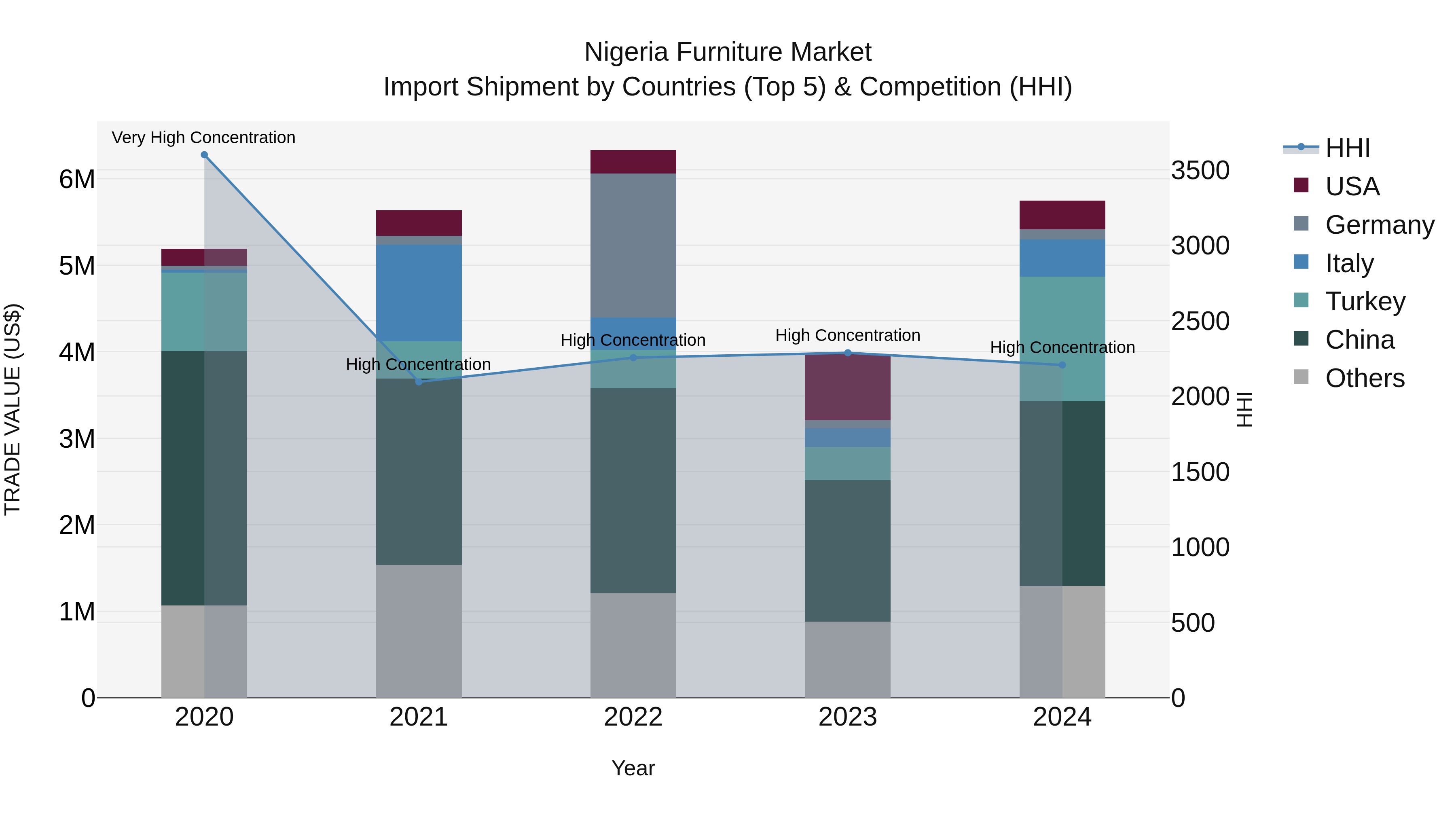
In 2024, Nigeria`s furniture import market continued to be dominated by key exporters such as China, Turkey, Vietnam, Italy, and the USA. The high concentration of the Herfindahl-Hirschman Index (HHI) indicates a market with significant barriers to entry. With a steady Compound Annual Growth Rate (CAGR) of 2.59% from 2020 to 2024 and an impressive growth rate of 44.75% in 2023-24, the furniture import industry in Nigeria shows promising growth potential. This data suggests a sustained demand for imported furniture in Nigeria, making it an attractive market for international exporters.
Nigeria Furniture Market Growth Rate
According to 6Wresearch internal database and industry insights, the Nigeria Furniture Market is growing at a compound annual growth rate (CAGR) of 8.5% during the forecast period (2026-2032).
Topics Covered in the Nigeria Furniture Market Report
Nigeria Furniture Market report thoroughly covers the market by material types and applications. The market report provides an unbiased and detailed analysis of ongoing market trends, opportunities/high growth areas, and market drivers, which would help stakeholders devise and align their market strategies according to the current and future market dynamics.
Nigeria Furniture Market Highlights
| Report Name | Nigeria Furniture Market |
| Forecast Period | 2026–2032 |
| CAGR | 8.5% |
| Growing Sector | Residential |
Nigeria Furniture Market Synopsis
The Nigeria Furniture Market will undergo substantial development according to market predictions. The market grows as residential and commercial furniture needs increase which urbanization and higher disposable incomes and expanding real estate markets create. The market experiences increasing demand for environmentally friendly sustainable furniture solutions which people prefer. Government support through local manufacturing initiatives and favorable industrial conditions for the furniture sector drives business expansion in the market.
Evaluation of Growth Drivers in the Nigeria Furniture Market
Below mentioned are some growth drivers and their impact on market dynamics:
| Drivers | Primary Segments Affected | Why It Matters |
| Urbanization & Rising Disposable Income | Residential, Commercial | Increases demand for home and office furniture due to higher living standards and modern styles. |
| Demand for Functional & Stylish Furniture | Residential | Drives growth in furniture sales by offering both aesthetics and utility. |
| Government Support & Local Manufacturing | Material Types (Wood, Metal, Plastic) | Lower import dependency and creates local jobs by boosting domestic production. |
| Sustainability in Furniture Production | Material Types (Wood, Metal) | Increases demand for eco-friendly products, catering to environmentally conscious consumer base. |
| Growth in E-commerce Platforms | Residential, Commercial | Increases furniture access, particularly in urban areas with more demand. |
The Nigeria Furniture Market is projected to grow significantly, with a CAGR of 8.5%during the forecast period of 2026-2032. The Nigeria Furniture Market develops through three main drivers which include rapid urbanization and rising disposable incomes and the expanding middle class. The market experiences growth as people want to purchase furniture which combines affordability with durability and modern design especially for their homes. The real estate industry growth together with urban development projects creates increased demand for furniture used in both residential spaces and commercial areas. The local manufacturing sector now produces better products for the market which combines modern production methods with better design technology to meet changing customer needs.
Evaluation of Restraints in the Nigeria Furniture Market
Below mentioned are some major restraints and their influence on market dynamics:
| Restraints | Primary Segments Affected | What This Means |
| High Production Costs | Material Types (Wood, Metal) | Increases the price of locally manufactured furniture, making it less competitive compared to imports. |
| Cultural Preferences | Residential | Lower the type of furniture demanded in certain regions, potentially not aligning with global trends. |
| Supply Chain Disruptions | Material Types, Distribution Channels | Decreases the availability of raw materials and finished products, causing delays and increasing costs. |
| Competition from Imported Furniture | Residential, Commercial | Decreases local manufacturers growth, as cheaper imported options dominate the market. |
| Regulatory Barriers | Material Types, Applications | Increases production costs and restricts market entry for new manufacturers. |
Nigeria Furniture Market Challenges
The Nigeria Furniture Market faces several challenges which arise from two primary issues. The first issue consists of expensive raw materials which drive up production costs and the second issue comes from the restricted ability of local factories to produce goods. Cultural preferences in certain regions may limit the variety of furniture demanded. Local production capabilities face three major obstacles which include supply chain disruptions and regulatory obstacles and competition from low-cost imported furniture. The market faces additional difficulties as small manufacturers lack financing options and currency exchange rates experience unpredictable fluctuations.
Nigeria Furniture Market Trends
Some major trends contributing to the Nigeria Furniture Market Growth are:
- Health-Conscious Furniture Products: There is a rising demand among customers for the ergonomic furniture and products designed to support healthier lifestyles.
- More Demand for Smart Furniture: The consumers are increasingly opting for technology based smart tables and chairs items as they are comfortable and attractive.
- E-commerce Growth: The online retail platforms are boosting the market expansion by providing ease of accessibility and wide range product offering to consumers.
Investment Opportunities in the Nigeria Furniture Market
Here are some investment opportunities in the Nigeria Furniture Industry:
- Local Manufacturing: Investing in local manufacturing facilities will allow businesses to reduce reliance on imports and cater to the growing demand for affordable, locally made furniture.
- Sustainable Furniture Production: The consumers are opting for eco-friendly materials and production processes due to increased awareness about environmental concerns.
- Customized & Modular Furniture: The investors can invest more in the making of fashionable and designer furniture due to its uniqueness and space efficient solutions.
Top 5 Leading Players in the Nigeria Furniture Market
Here are some top companies contributing to Nigeria Furniture Market Share:
1. MDS Furniture
| Company Name | MDS Furniture |
|---|---|
| Established Year | 1998 |
| Headquarters | Lagos, Nigeria |
| Official Website | - |
MDS Furniture is a leading player in the Nigeria furniture market, specializing in the design, manufacturing, and distribution of quality residential and commercial furniture. Their focus on innovation and quality has earned them a strong foothold in the market.
2. Lifestyle Furniture
| Company Name | Lifestyle Furniture |
|---|---|
| Established Year | 2000 |
| Headquarters | Lagos, Nigeria |
| Official Website | Click Here |
Lifestyle Furniture is a prominent furniture manufacturer offering a range of stylish and functional home furniture. The company places emphasis on modern designs and durability, catering to the diverse needs of Nigerian consumers.
3. Intercontinental Furniture
| Company Name | Intercontinental Furniture |
|---|---|
| Established Year | 1995 |
| Headquarters | Lagos, Nigeria |
| Official Website | - |
Intercontinental Furniture is one of the oldest and most reputable furniture companies in Nigeria, known for its luxurious and high-end furniture products. Their wide variety of designs caters to both residential and commercial sectors.
4. Vivid Furniture Nigeria
| Company Name | Vivid Furniture Nigeria |
|---|---|
| Established Year | 2010 |
| Headquarters | Abuja, Nigeria |
| Official Website | - |
Vivid Furniture: Established in 2010 and headquartered in Abuja, Vivid Furniture specializes in manufacturing high-quality, affordable home furniture and commercial fittings. They focus on providing stylish solutions for Nigeria's growing middle class, ensuring accessibility and comfort in every design.
5. Aero Furniture
| Company Name | Aero Furniture |
|---|---|
| Established Year | 2005 |
| Headquarters | Lagos, Nigeria |
| Official Website | - |
Aero Furniture: Founded in 2005 and based in Lagos, Aero Furniture is known for its premium wooden furniture. With a strong presence in residential homes and commercial spaces, they offer durable, elegantly designed pieces that cater to Nigeria’s diverse customer base.
Government Regulations Introduced in the Nigeria Furniture Market
According to Nigerian government data, the government regulations and initiatives create multiple impacts on the Nigeria Furniture Market according to its current market conditions. Also, the National Industrial Policy which the Nigerian government implemented establishes a framework that supports domestic furniture manufacturing while decreasing the need for imported goods. The Nigerian Standards Organization (SON) establishes safety and quality requirements which furniture products must meet to protect consumers and enhance the market's reputation.
Future Insights of the Nigeria Furniture Market
The Nigeria Furniture Market is expected to have positive growth. The market is driven by urbanization, increasing disposable income, and evolving consumer preferences. The market landscape is changing as consumers want affordable furniture that lasts and looks attractive. The market expansion is supported by two factors which are the rising middle class and the growing real estate market. Plastic furniture is expected to lead due to its affordability and durability, while residential applications will dominate due to increasing homeownership. The market development process receives assistance from design and production techniques which keep the industry competitive and its future dynamic.
Market Segmentation Analysis
The report offers a comprehensive study of the subsequent market segments and their fastest-growing categories.
Plastic to Dominate the Market – By Material Types
According to Guneet Kaur, Senior Research Analyst at 6Wresearch, the plastic furniture is dominating the market. This is mainly due to its cost-effectiveness, lightweight nature, and adaptability to different designs. Also, its resistance to wear and tear makes it ideal for commercial use, increasing the demand in Nigeria.
Residential to Dominate the Market – By Applications
The residential segment is leading the market. Mainly driven by an increasing demand for stylish, functional furniture in homes. High spending power of consumers and urbanization are fueling the growth of residential furniture, especially in urban areas.
Key attractiveness of the report
- 10 Years Market Numbers.
- Historical Data Starting from 2022 to 2025.
- Base Year: 2025
- Forecast Data until 2032.
- Key Performance Indicators Impacting the Market.
- Major Upcoming Developments and Projects
Key Highlights of the Report:
- Nigeria Furniture Market Outlook
- Market Size of Nigeria Furniture Market, 2025
- Forecast of Nigeria Furniture Market, 2032
- Historical Data and Forecast of Nigeria Furniture Revenues & Volume for the Period 2022-2032
- Nigeria Furniture Market Trend Evolution
- Nigeria Furniture Market Drivers and Challenges
- Nigeria Furniture Price Trends
- Nigeria Furniture Porter's Five Forces
- Nigeria Furniture Industry Life Cycle
- Historical Data and Forecast of Nigeria Furniture Market Revenues & Volume By Material Types for the Period 2022-2032
- Historical Data and Forecast of Nigeria Furniture Market Revenues & Volume By Plastic for the Period 2022-2032
- Historical Data and Forecast of Nigeria Furniture Market Revenues & Volume By Wood for the Period 2022-2032
- Historical Data and Forecast of Nigeria Furniture Market Revenues & Volume By Metal for the Period 2022-2032
- Historical Data and Forecast of Nigeria Furniture Market Revenues & Volume By Other for the Period 2022-2032
- Historical Data and Forecast of Nigeria Furniture Market Revenues & Volume By Applications for the Period 2022-2032
- Historical Data and Forecast of Nigeria Furniture Market Revenues & Volume By Residential for the Period 2022-2032
- Historical Data and Forecast of Nigeria Furniture Market Revenues & Volume By Commercial for the Period 2022-2032
- Nigeria Furniture Import Export Trade Statistics
- Market Opportunity Assessment By Material Types
- Market Opportunity Assessment By Applications
- Nigeria Furniture Top Companies Market Share
- Nigeria Furniture Competitive Benchmarking By Technical and Operational Parameters
- Nigeria Furniture Company Profiles
- Nigeria Furniture Key Strategic Recommendations
Market covered
The report subsequently covers the market by following segments and subsegments.
By Material Types
- Wood
- Plastic
- Metal
- Others
By Applications
- Residential
- Commercial






































