Nigeria Mobile Security Market Size & Growth Rate (2026-2032)
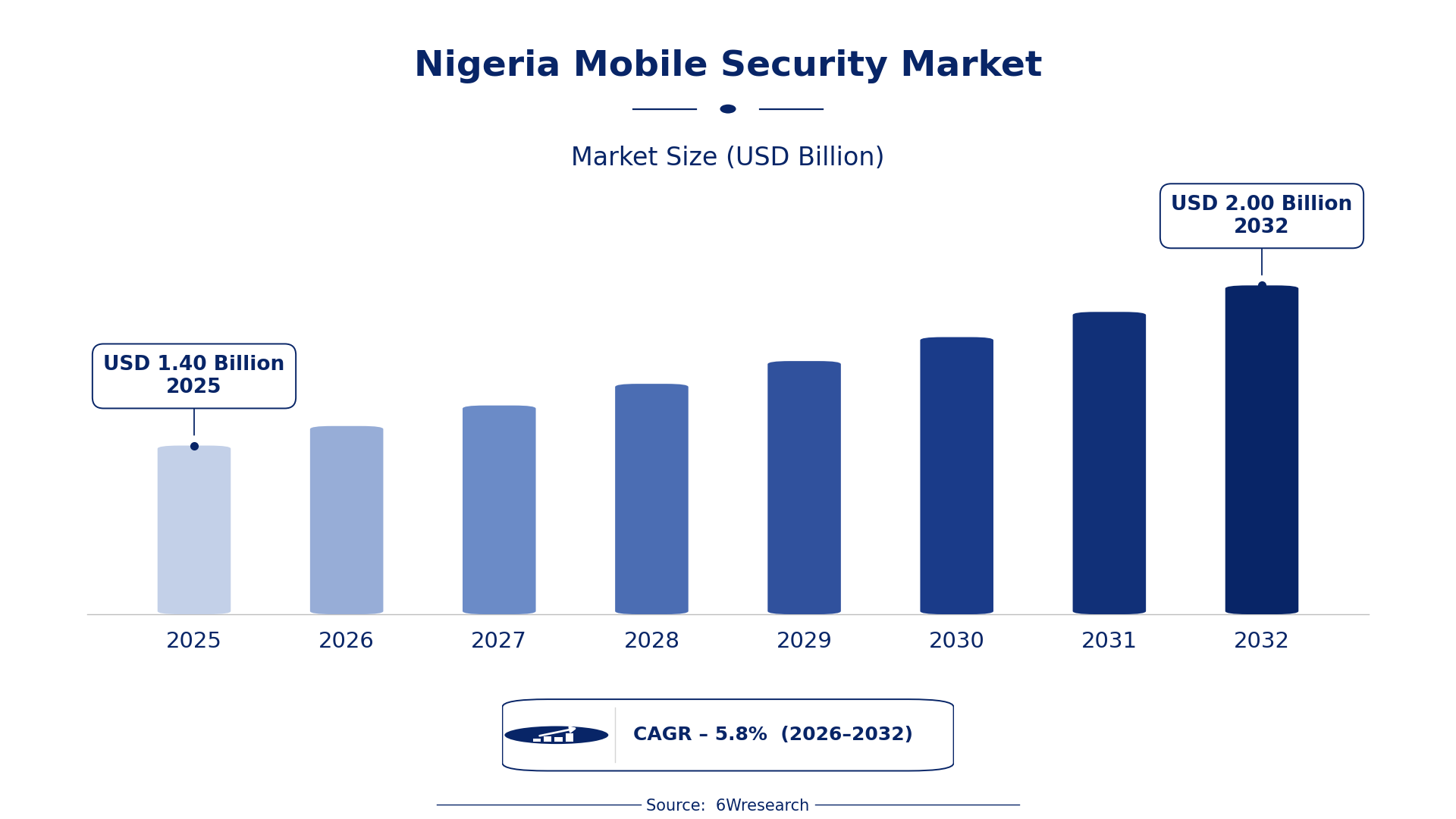
The Nigeria Mobile Security Market was estimated at USD 1402 Million in 2025 and is projected to reach USD 2001 Million by 2032, growing at a CAGR of 5.8% from 2026 to 2032.
Nigeria Mobile Security Market Synopsis
The increasing adoption of smartphones in Nigeria is the most influential factor driving the Mobile Security Market today. As users rely more on mobile devices for everyday transactions, the demand for robust security solutions is becoming paramount.
In parallel, the surge in remote work dynamics and the pressing need to protect sensitive data have compelled organizations to seek out advanced security measures. This dual impetus not only raises awareness but also fosters an environment ripe for investment in innovative mobile security technologies.
Nigeria Mobile Security Market Year-wise Growth Rate and Key Drivers
This graph illustrates the annual growth rates of the Nigeria Mobile Security Market from 2021 to 2032, highlighting a steady upward trajectory and projected expansion over the forecast period.
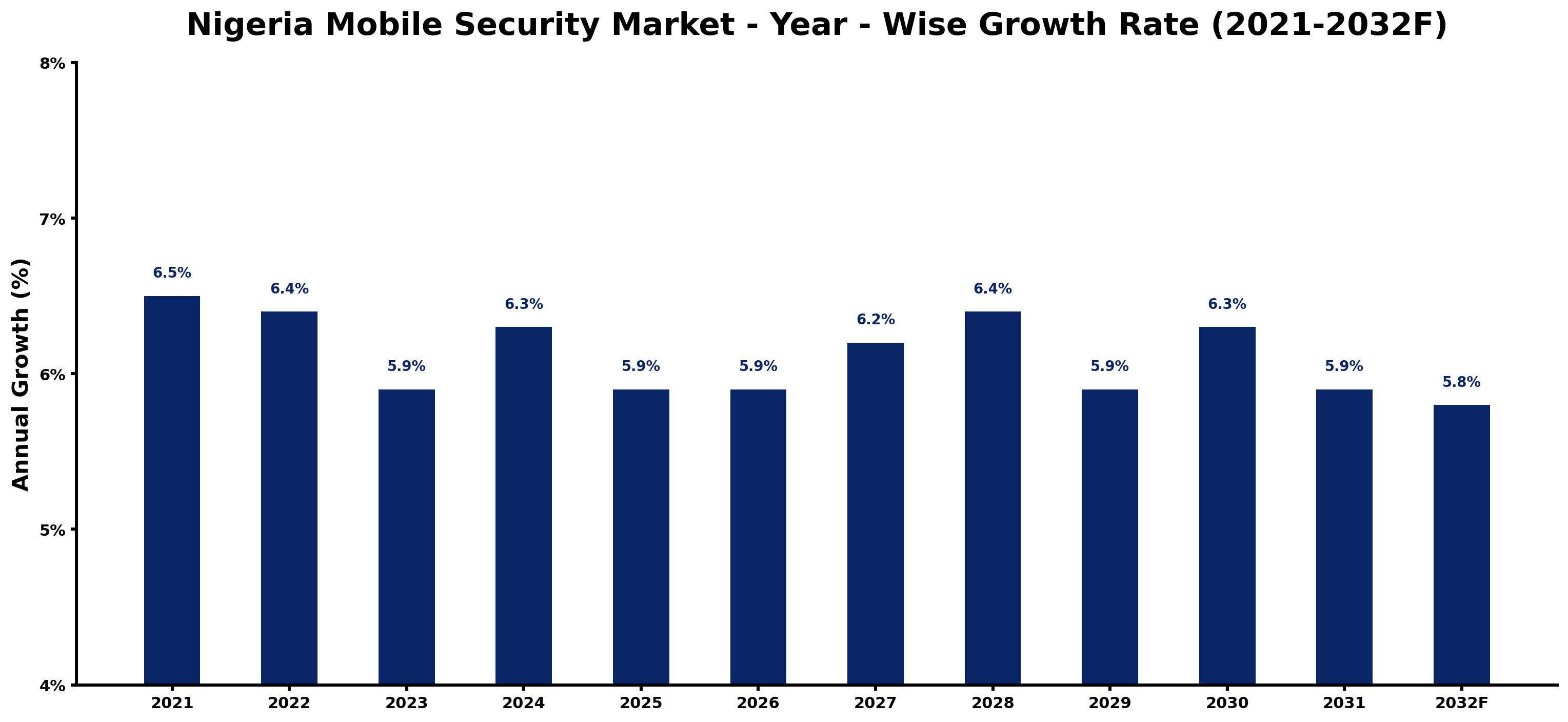
The table below presents the year‑wise growth rates along with the key drivers influencing the market
| Year | Growth Rate | Major Drivers |
| 2021 | 6.5% | Increased smartphone penetration among Nigerian youth market. |
| 2022 | 6.4% | Growing government regulations requiring higher mobile security standards. |
| 2023 | 5.9% | Increased cybercrime incidents prompting stronger mobile security measures. |
| 2024 | 6.3% | Launch of national cybersecurity policy enhancing mobile security focus. |
| 2025 | 5.9% | Adoption of biometric verification for mobile banking services. |
| 2026 | 5.9% | Investments in mobile security startups by local venture capital. |
| 2027 | 6.2% | Higher internet literacy rates encouraging secure mobile practices. |
| 2028 | 6.4% | Rising digital payments increasing mobile security risks awareness. |
| 2029 | 5.9% | Partnerships between telecoms and security firms for safer services. |
| 2030 | 6.3% | Government support for tech hubs driving mobile security innovations. |
| 2031 | 5.9% | Growing mobile workforce demanding secure communication tools. |
| 2032 | 5.8% | Corporate sector prioritizing mobile security in digital transformation. |
Note: Market size estimations and growth projections presented in this report are based on 6Wresearch's proprietary forecasting methodology, utilizing the latest available industry data, government publications, and primary research inputs.
Nigeria Mobile Security Market Key Takeaways
Below are some of the specific key takeaways from the market, including:
- Smartphone penetration is a key driver of mobile security solution adoption in Nigeria.
- The COVID-19 pandemic has accelerated the need for enhanced mobile security frameworks.
- Data privacy regulations, particularly the NDPR, are influencing corporate investments in mobile security.
- Integration of biometric and encryption technologies is enhancing mobile security measures.
- Ongoing cybersecurity threats necessitate the implementation of advanced protective strategies.
Evaluation of Restraints in Nigeria Mobile Security Market
Several factors hinder the growth of the Nigeria Mobile Security Market. A lack of comprehensive cybersecurity awareness among users continues to pose challenges, leading to vulnerability in mobile devices. Additionally, the rapid advancement of cyber threats means that mobile security solutions must continually evolve, placing a strain on resources and expertise. on top of that, economic constraints can restrict the budget allocations of organizations looking to enhance their mobile security infrastructure. These factors collectively contribute to a slow adoption rate of advanced security technologies, despite growing awareness.
Nigeria Mobile Security Market Trends
Several noteworthy trends are shaping the Nigeria Mobile Security Market. The increasing use of artificial intelligence and machine learning in mobile security applications is allowing for improved threat detection and response times. Organizations are prioritizing solutions that offer mobile device management capabilities, enabling better oversight of mobile assets. Also, the integration of secure payment solutions within mobile applications is driving the demand for enhanced security protocols to protect transaction integrity. Notably, user education initiatives are rising, focusing on building awareness of mobile security practices.
Nigeria Mobile Security Market Opportunities
The Nigeria Mobile Security Market holds several opportunities for growth and investment. With the projected rise in smartphone usage, businesses can capitalize on this trend by offering tailored mobile security solutions that cater to the specific needs of different sectors. on top of that, the increasing importance of regulatory compliance presents a significant opportunity for security solution providers to develop tools that help organizations meet these requirements efficiently. Additionally, partnerships between technology vendors and educational institutions can create valuable awareness programs and innovative solutions, expanding the market further.
Government Initiatives in the Nigeria Mobile Security Market
Government policies in Nigeria are increasingly focusing on enhancing cybersecurity measures within the digital economy. These initiatives underscore the importance of protecting mobile technologies as they become integral to various sectors. Strategic regulations and compliance mandates are being developed to ensure that organizations adopt necessary mobile security solutions to defend against growing cyber threats.
- A regulatory framework established in 2023 mandates enhanced mobile security measures for businesses handling sensitive data.
- An ongoing national cybersecurity awareness campaign aims to educate the public about mobile security risks, initiated in early 2024.
- Current efforts include partnerships with private sectors to fund mobile security infrastructure upgrades, in place since 2024.
- Future plans involve implementing a digital security certification program for mobile application developers expected by late 2025.
Future Insights of the Nigeria Mobile Security Market
Looking towards 2026-2032, the Nigeria Mobile Security Market is set to grow significantly as businesses increasingly recognize the necessity of cybersecurity. Companies will likely invest in integrated solutions that combine traditional security measures with advanced technologies, such as AI-driven analytics and real-time threat response capabilities. As regulatory pressures mount, compliance will remain a key area of focus, further stimulating demand. This evolution presents exciting prospects for innovation and collaboration across the sector.
Nigeria Mobile Security Market Latest Developments
Recent months have shown heightened activity in the Nigeria Mobile Security Market, driven by both technological advancements and a growing awareness of cyber threats. Businesses are increasingly adopting advanced security solutions to protect their mobile environments, reflecting a shift in priorities as remote work becomes more entrenched.
- A major technology vendor launched a new mobile security suite aimed at small to medium enterprises in Q1 2024.
- An initiative focused on upgrading cybersecurity infrastructure for government agencies is currently underway, expected to be completed by early 2025.
- A collaborative project involving NGOs and tech firms aimed at enhancing mobile security education began in late 2023 and remains ongoing.
- A rollout of biometric authentication features across popular mobile banking apps is set to begin in mid-2025.
Nigeria Mobile Security Market - Key Attractiveness of the Report
- 10 Years of Market Numbers
- Historical Data Starting from 2022 to 2025
- Base Year: 2025
- Forecast Data until 2032
- Key Performance Indicators Impacting the Market
- Major Upcoming Developments and Projects
Key Highlights of the Report:
- Nigeria Mobile Security Market Outlook
- Market Size of Nigeria Mobile Security Market, 2025
- Forecast of Nigeria Mobile Security Market, 2032
- Historical Data and Forecast of Nigeria Mobile Security Revenues & Volume for the Period 2022-2032F
- Nigeria Mobile Security Market Trend Evolution
- Nigeria Mobile Security Market Drivers and Challenges
- Nigeria Mobile Security Price Trends
- Nigeria Mobile Security Porter's Five Forces
- Nigeria Mobile Security Industry Life Cycle
- Historical Data and Forecast of Nigeria Mobile Security Market Revenues & Volume By End User for the Period 2022-2032F
- Historical Data and Forecast of Nigeria Mobile Security Market Revenues & Volume By Individual for the Period 2022-2032F
- Historical Data and Forecast of Nigeria Mobile Security Market Revenues & Volume By Enterprise (Solution (Authentication, Application Security, & Device Security), Service) for the Period 2022-2032F
- Historical Data and Forecast of Nigeria Mobile Security Market Revenues & Volume By Deployment Mode for the Period 2022-2032F
- Historical Data and Forecast of Nigeria Mobile Security Market Revenues & Volume By On-premises for the Period 2022-2032F
- Historical Data and Forecast of Nigeria Mobile Security Market Revenues & Volume By Cloud for the Period 2022-2032F
- Historical Data and Forecast of Nigeria Mobile Security Market Revenues & Volume By Organization Size for the Period 2022-2032F
- Historical Data and Forecast of Nigeria Mobile Security Market Revenues & Volume By Small and Medium-Sized Enterprises (SMEs) for the Period 2022-2032F
- Historical Data and Forecast of Nigeria Mobile Security Market Revenues & Volume By Large Enterprises for the Period 2022-2032F
- Historical Data and Forecast of Nigeria Mobile Security Market Revenues & Volume By Vertical for the Period 2022-2032F
- Historical Data and Forecast of Nigeria Mobile Security Market Revenues & Volume By BFSI for the Period 2022-2032F
- Historical Data and Forecast of Nigeria Mobile Security Market Revenues & Volume By Telecom & IT for the Period 2022-2032F
- Historical Data and Forecast of Nigeria Mobile Security Market Revenues & Volume By Retail for the Period 2022-2032F
- Historical Data and Forecast of Nigeria Mobile Security Market Revenues & Volume By Healthcare for the Period 2022-2032F
- Historical Data and Forecast of Nigeria Mobile Security Market Revenues & Volume By Government & Defense for the Period 2022-2032F
- Historical Data and Forecast of Nigeria Mobile Security Market Revenues & Volume By Manufacturing for the Period 2022-2032F
- Historical Data and Forecast of Nigeria Mobile Security Market Revenues & Volume By Others for the Period 2022-2032F
- Historical Data and Forecast of Nigeria Mobile Security Market Revenues & Volume By Operating System for the Period 2022-2032F
- Historical Data and Forecast of Nigeria Mobile Security Market Revenues & Volume By iOS for the Period 2022-2032F
- Historical Data and Forecast of Nigeria Mobile Security Market Revenues & Volume By Android for the Period 2022-2032F
- Nigeria Mobile Security Import Export Trade Statistics
- Market Opportunity Assessment By End User
- Market Opportunity Assessment By Deployment Mode
- Market Opportunity Assessment By Organization Size
- Market Opportunity Assessment By Vertical
- Market Opportunity Assessment By Operating System
- Nigeria Mobile Security Top Companies Market Share
- Nigeria Mobile Security Competitive Benchmarking By Technical and Operational Parameters
- Nigeria Mobile Security Company Profiles
- Nigeria Mobile Security Key Strategic Recommendations






































