Nigeria Peas Market Size, Share & Growth Rate
The Nigeria Peas Market was estimated at USD 1300 Million in 2025 and is projected to reach USD 1844 Million by 2032, growing at a CAGR of 5.1% from 2026 to 2032. This growth trajectory is primarily fueled by increasing consumer demand for plant-based protein options and the heightened awareness of the nutritional benefits associated with peas. Furthermore, the expanding vegetarian and vegan population in Nigeria, coupled with the rising culinary versatility of peas, is significantly contributing to market expansion.
Nigeria Peas Market Year-wise Growth Rate and Key Drivers
This graph highlights how the Nigeria Peas Market has steadily grown over the years, supported by major growth factors.
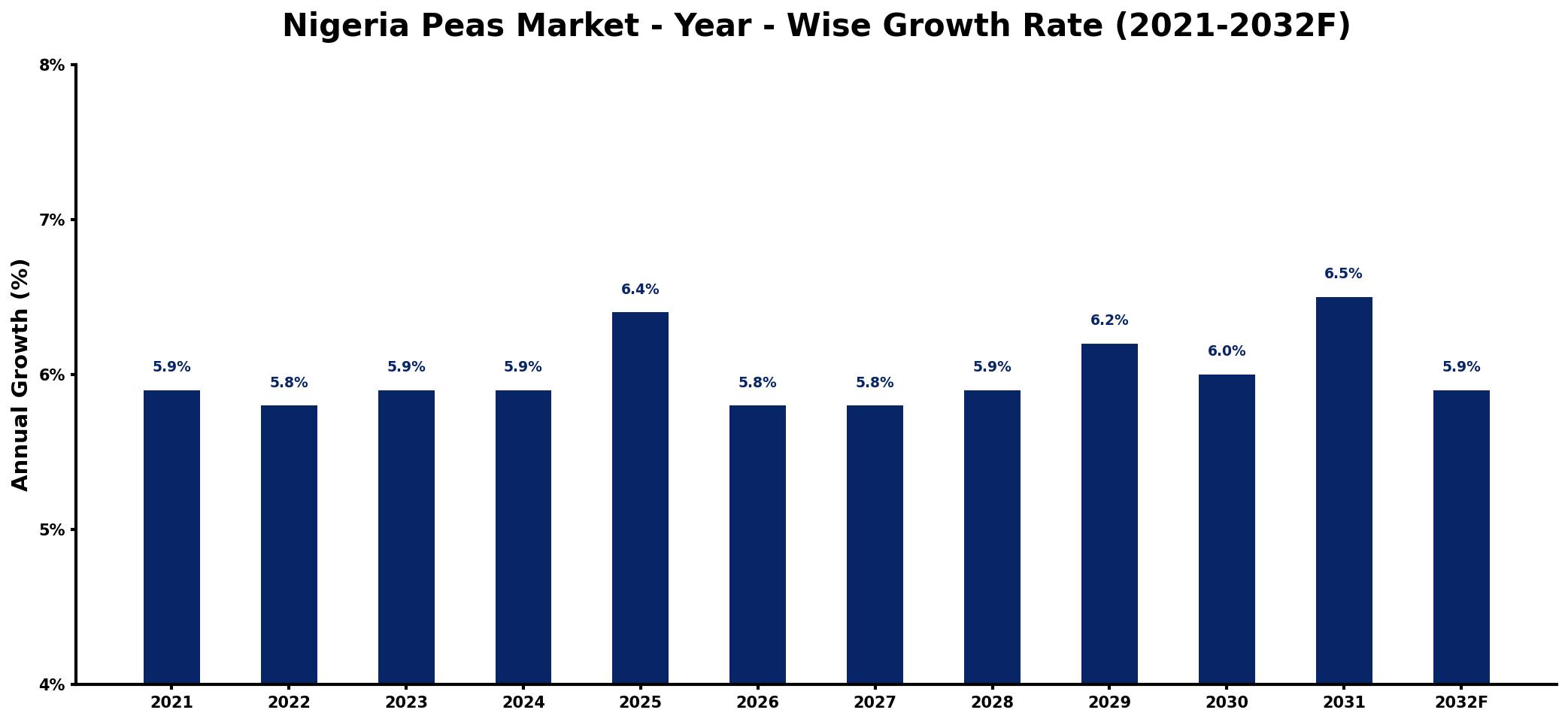
The table below presents the year‑wise growth rates along with the key drivers influencing the market
| Year | Growth Rate | Major Drivers |
| 2021 | 5.9% | Rising consumer health awareness |
| 2022 | 5.8% | growing regional consumption patterns |
| 2023 | 5.9% | Expansion of processing facilities |
| 2024 | 5.9% | expanding manufacturing base activity |
| 2025 | 6.4% | Innovative farming techniques adoption |
| 2026 | 5.8% | Strengthened supply chain networks |
| 2027 | 5.8% | Emerging market demand growth |
| 2028 | 5.9% | Enhanced distribution channels efficiency |
| 2029 | 6.2% | Consumer preference for plant-based |
| 2030 | 6.0% | Sustainable farming practices adoption |
| 2031 | 6.5% | Government support for agriculture |
| 2032 | 5.9% | Technological advancements in farming |
Note: Market size estimations and growth projections presented in this report are based on 6Wresearch's proprietary forecasting methodology, utilizing the latest available industry data, government publications, and primary research inputs.
Nigeria Peas Market Synopsis
In Nigeria, the consumption of peas is on the rise, driven by a growing population increasingly aware of health and nutrition. The versatility of peas allows them to be incorporated into various dishes, from traditional meals to modern recipes, enhancing their appeal among diverse consumer segments.
Moreover, the convenience of packaging options, such as frozen and canned peas, is attracting busy consumers seeking healthy meal solutions. The shift towards sustainable diets further amplifies the attractiveness of peas, positioning them as a favored ingredient in both home cooking and foodservice sectors.
Nigeria Peas Market Key Takeaways
- The market is benefiting from a shift towards healthier eating habits, particularly plant-based diets.
- Domestic production is set to increase as consumers prefer locally sourced products.
- Investment in modern farming techniques is essential to enhance productivity and sustainability.
- Government policies are promoting the cultivation of peas to ensure food security and support local farmers.
- Emerging pea-based products are gaining traction, creating a wider range of consumer choices.
Evaluation of Restraints in Nigeria Peas Market
Despite the promising prospects, the Nigeria Peas Market faces substantial restraints that hinder its growth. Key among these is the inadequate infrastructure for transportation and storage, which results in significant post-harvest losses and restricts market accessibility. Furthermore, inconsistent government policies can disrupt production and distribution efforts, affecting market stability. Competing imported peas, often priced lower, pose a significant threat to local farmers, while weather fluctuations can jeopardize yields, leading to price volatility. Such challenges require strategic interventions to foster a more resilient market environment.
Nigeria Peas Market Trends
The Nigeria Peas Market is witnessing several key trends that are shaping its landscape. The surge in demand for plant-based protein sources is notable, with more consumers looking to incorporate peas into their diets as sustainable alternatives to meat. Additionally, the rise of innovative pea-based products—ranging from meat substitutes to snacks and beverages—highlights the versatility of this legume. Convenience is another significant trend, as consumers increasingly favor ready-to-cook or easy-to-prepare meal options, which enhances the appeal of both fresh and processed peas.
Nigeria Peas Market Opportunities
Opportunities abound in the Nigeria Peas Market for stakeholders looking to capitalize on its growth. The expanding consumer base for plant-based diets presents a ripe avenue for investment in pea farming and processing facilities. Moreover, as awareness around the health benefits of peas continues to rise, theres a burgeoning market for innovative products that leverage this legume. Additionally, government support through agriculture-focused initiatives provides a favorable environment for investments aimed at enhancing production, processing, and distribution capabilities in the sector.
Government Initiatives in the Nigeria Peas Market
The Nigerian government has initiated various policies to bolster the peas market, focusing on local production and food security. Strategies include the provision of subsidies to farmers, promotion of quality standards, and support programs aimed at improving access to credit for agriculture. By establishing a conducive environment for cultivation and processing, these initiatives aim to strengthen the domestic peas industry, ensuring it remains competitive while meeting the growing consumer demand.
Future Insights of the Nigeria Peas Market
Looking ahead from 2026 to 2032, the Nigeria Peas Market is poised for continued growth. Increased awareness of health benefits associated with peas, alongside the global shift toward sustainable food practices, will further amplify demand. Consumers increasing reliance on plant-based proteins for health and environmental reasons signals a robust market trajectory. However, stakeholders must remain vigilant to navigate market competition and external environmental factors that may pose risks to supply and pricing. Overall, the outlook remains positive as the market adapts to evolving consumer preferences and industry dynamics.
Nigeria Peas Market Latest Developments (2025 - 2026)
Recent developments in the Nigeria Peas Market highlight a robust push towards enhancing production capabilities and increasing consumer engagement. There has been a noticeable uptick in promotional campaigns focused on the nutritional benefits of peas, alongside partnerships between local farmers and agricultural organizations aimed at improving farming practices. Additionally, the introduction of new, value-added pea products is paving the way for diverse market offerings, catering to the evolving tastes and preferences of Nigerian consumers.
Nigeria Peas Market - Key Attractiveness of the Report
- 10 Years of Market Numbers
- Historical Data Starting from 2022 to 2025
- Base Year: 2025
- Forecast Data until 2032
- Key Performance Indicators Impacting the Market
- Major Upcoming Developments and Projects
Key Highlights of the Report:
- Nigeria Peas Market Outlook
- Market Size of Nigeria Peas Market, 2025
- Forecast of Nigeria Peas Market, 2032
- Historical Data and Forecast of Nigeria Peas Revenues & Volume for the Period 2022-2032F
- Nigeria Peas Market Trend Evolution
- Nigeria Peas Market Drivers and Challenges
- Nigeria Peas Price Trends
- Nigeria Peas Porter's Five Forces
- Nigeria Peas Industry Life Cycle
- Historical Data and Forecast of Nigeria Peas Market Revenues & Volume By Type for the Period 2022-2032F
- Historical Data and Forecast of Nigeria Peas Market Revenues & Volume By Field Peas for the Period 2022-2032F
- Historical Data and Forecast of Nigeria Peas Market Revenues & Volume By Garden Peas for the Period 2022-2032F
- Historical Data and Forecast of Nigeria Peas Market Revenues & Volume By Others for the Period 2022-2032F
- Historical Data and Forecast of Nigeria Peas Market Revenues & Volume By Application for the Period 2022-2032F
- Historical Data and Forecast of Nigeria Peas Market Revenues & Volume By Food for the Period 2022-2032F
- Historical Data and Forecast of Nigeria Peas Market Revenues & Volume By Others for the Period 2022-2032F
- Historical Data and Forecast of Nigeria Peas Market Revenues & Volume By Distribution Channel for the Period 2022-2032F
- Historical Data and Forecast of Nigeria Peas Market Revenues & Volume By Online for the Period 2022-2032F
- Historical Data and Forecast of Nigeria Peas Market Revenues & Volume By Offline for the Period 2022-2032F
- Historical Data and Forecast of Nigeria Peas Market Revenues & Volume By Others for the Period 2022-2032F
- Nigeria Peas Import Export Trade Statistics
- Market Opportunity Assessment By Type
- Market Opportunity Assessment By Application
- Market Opportunity Assessment By Distribution Channel
- Nigeria Peas Top Companies Market Share
- Nigeria Peas Competitive Benchmarking By Technical and Operational Parameters
- Nigeria Peas Company Profiles
- Nigeria Peas Key Strategic Recommendations






































