Nigeria Plastic Furniture Market Top 5 Importing Countries and Market Competition (HHI) Analysis
The plastic furniture import market in Nigeria continues to thrive, with significant shipments coming from top exporters such as China, USA, Metropolitan France, South Africa, and Turkey. The high Herfindahl-Hirschman Index (HHI) indicates a concentrated market in 2024. The impressive compound annual growth rate (CAGR) of 59.0% from 2020 to 2024 underscores the sector`s rapid expansion. Furthermore, the remarkable growth rate of 420.84% from 2023 to 2024 suggests a surge in demand for plastic furniture in Nigeria, making it a lucrative market for international suppliers.
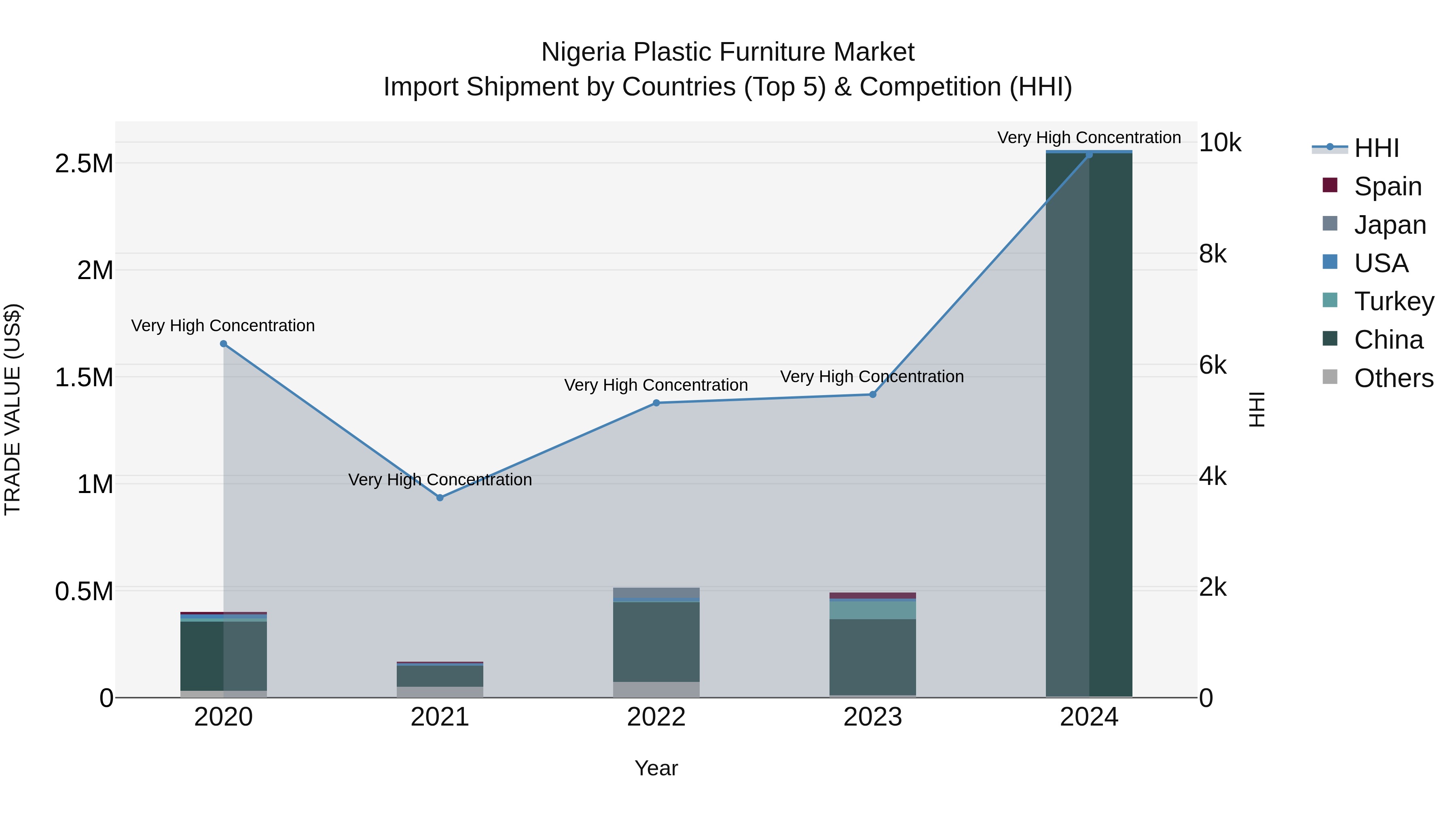
Nigeria Plastic Furniture Market Overview
In the Nigeria Plastic Furniture Market, there is a growing preference for affordable, durable, and lightweight furniture options. This market includes items like chairs, tables, and storage solutions made from plastic, appealing to both residential and commercial customers.
Drivers of the market
The Nigeria plastic furniture market is experiencing growth driven by several key factors. One primary driver is the increasing demand for lightweight, durable, and affordable furniture solutions in the country`s residential, commercial, and hospitality sectors. As Nigeria population grows and urbanizes, the need for space-saving and easy-to-maintain furniture options is rising. Additionally, advancements in plastic furniture design and manufacturing technologies are driving market expansion by offering innovative products that combine functionality, style, and comfort. Moreover, economic growth, rising disposable incomes, and changing consumer preferences are driving demand for modern and versatile furniture solutions, further fueling market growth. Overall, the Nigeria plastic furniture market presents significant opportunities for manufacturers and suppliers to cater to the evolving needs of consumers and businesses and contribute to the country`s urban development.
Challenges of the market
The Nigeria plastic furniture market faces challenges stemming from product quality and consumer perception. Ensuring the durability and aesthetic appeal of plastic furniture requires investment in advanced manufacturing technologies and design innovations. Moreover, competition from traditional wooden and metal furniture poses hurdles to market acceptance and growth.
Government Policy of the market
Recognizing the significance of the plastic furniture market in providing affordable and durable furniture solutions, the Nigeria government may implement policies to regulate and support its growth. These policies might include standards and guidelines for the manufacturing and safety of plastic furniture products to ensure quality and consumer protection. Additionally, the government may encourage the adoption of sustainable manufacturing practices and the use of recyclable materials to address environmental concerns. Furthermore, there may be initiatives to promote local production of plastic furniture through incentives, subsidies, and capacity-building programs to create employment opportunities and stimulate economic development.
Key Highlights of the Report:
- Nigeria Plastic Furniture Market Outlook
- Market Size of Nigeria Plastic Furniture Market, 2024
- Forecast of Nigeria Plastic Furniture Market, 2031
- Historical Data and Forecast of Nigeria Plastic Furniture Revenues & Volume for the Period 2021-2031
- Nigeria Plastic Furniture Market Trend Evolution
- Nigeria Plastic Furniture Market Drivers and Challenges
- Nigeria Plastic Furniture Price Trends
- Nigeria Plastic Furniture Porter's Five Forces
- Nigeria Plastic Furniture Industry Life Cycle
- Historical Data and Forecast of Nigeria Plastic Furniture Market Revenues & Volume By Distribution Channel for the Period 2021-2031
- Historical Data and Forecast of Nigeria Plastic Furniture Market Revenues & Volume By Online for the Period 2021-2031
- Historical Data and Forecast of Nigeria Plastic Furniture Market Revenues & Volume By Offline for the Period 2021-2031
- Historical Data and Forecast of Nigeria Plastic Furniture Market Revenues & Volume By Application for the Period 2021-2031
- Historical Data and Forecast of Nigeria Plastic Furniture Market Revenues & Volume By Residential for the Period 2021-2031
- Historical Data and Forecast of Nigeria Plastic Furniture Market Revenues & Volume By Commercial for the Period 2021-2031
- Nigeria Plastic Furniture Import Export Trade Statistics
- Market Opportunity Assessment By Distribution Channel
- Market Opportunity Assessment By Application
- Nigeria Plastic Furniture Top Companies Market Share
- Nigeria Plastic Furniture Competitive Benchmarking By Technical and Operational Parameters
- Nigeria Plastic Furniture Company Profiles
- Nigeria Plastic Furniture Key Strategic Recommendations






































