Iraq Plastic Furniture Market Size, Share & Growth Rate
The Iraq Plastic Furniture Market was estimated at USD 371 Million in 2025 and is projected to reach USD 516 Million by 2032, growing at a CAGR of 4.8% from 2026 to 2032. This growth trajectory is primarily fueled by urbanization trends and a burgeoning demand for lightweight, durable, and aesthetically pleasing furniture solutions. Additionally, the increasing investments in residential and commercial infrastructure projects further bolster the market's expansion as consumers actively seek modern, practical options for their living and working environments.
Iraq Plastic Furniture Market Year-wise Growth Rate and Key Drivers
This graph highlights how the Iraq Plastic Furniture Market has steadily grown over the years, supported by major growth factors.
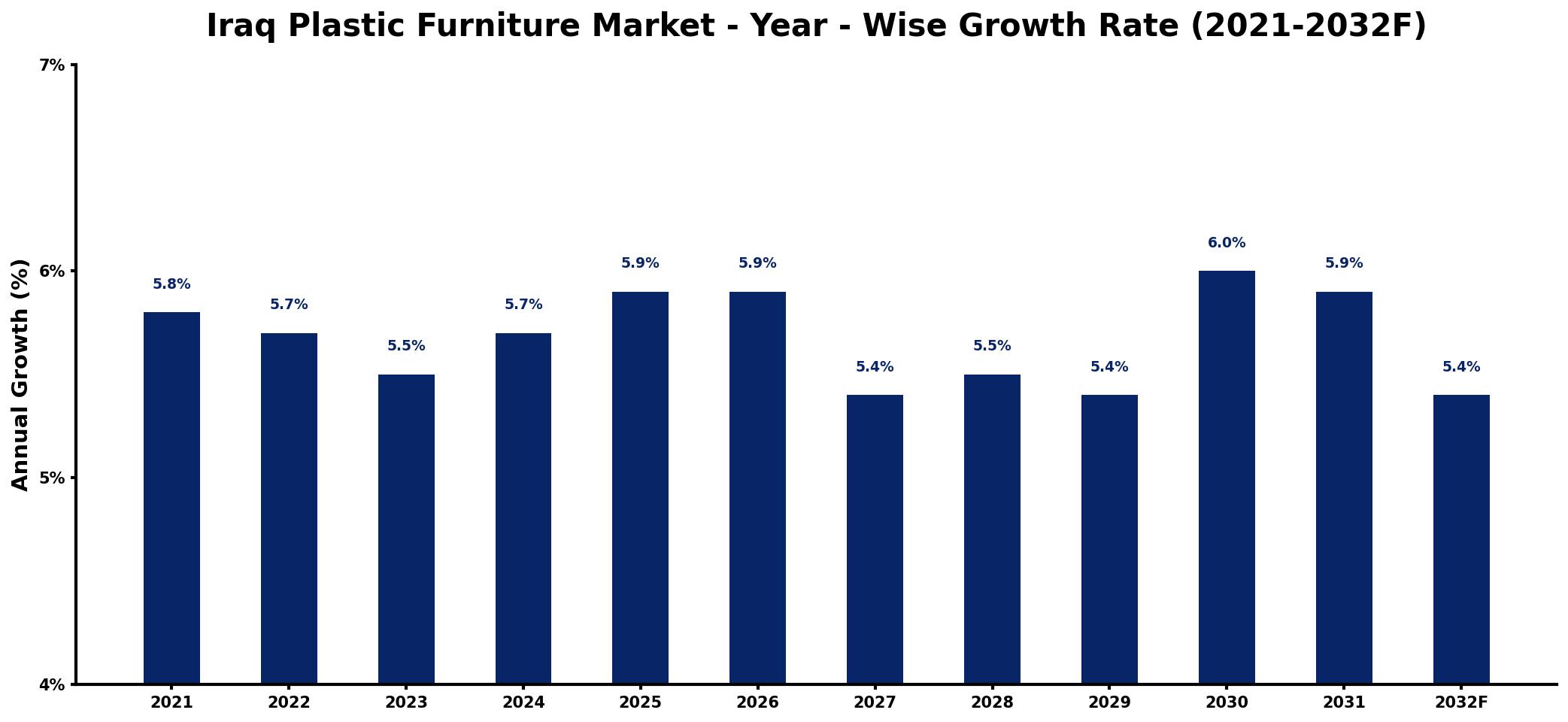
The table below presents the year‑wise growth rates along with the key drivers influencing the market
| Year | Growth Rate | Major Drivers |
| 2021 | 5.8% | Rising consumer spending habits |
| 2022 | 5.7% | Increased residential construction projects |
| 2023 | 5.5% | Growing demand for outdoor living |
| 2024 | 5.7% | Expansion of retail distribution channels |
| 2025 | 5.9% | Surge in home renovation activities |
| 2026 | 5.9% | Higher investment in hospitality sector |
| 2027 | 5.4% | Emergence of eco-friendly alternatives |
| 2028 | 5.5% | Boost in tourism and travel |
| 2029 | 5.4% | Enhanced urbanization and infrastructure |
| 2030 | 6.0% | Growing popularity of casual dining |
| 2031 | 5.9% | Increase in event hosting venues |
| 2032 | 5.4% | Rising awareness of design aesthetics |
Note: Market size estimations and growth projections presented in this report are based on 6Wresearch's proprietary forecasting methodology, utilizing the latest available industry data, government publications, and primary research inputs.
Iraq Plastic Furniture Market Synopsis
The most significant force currently shaping the Iraq Plastic Furniture Market is the rapid urbanization occurring across the nation. As more individuals and families migrate to urban areas, the need for affordable, space-saving furniture solutions has surged, driving the demand for plastic furniture that combines functionality with modern design. This growing urban populace is increasingly inclined toward furniture that is not only economical but also meets their lifestyle needs.
Another vital factor influencing the market is the evolving consumer preferences toward versatile and low-maintenance furniture. In a climate characterized by diverse weather conditions, plastic furniture's inherent resistance to moisture, pests, and fading is particularly appealing. This has led to a shift away from traditional wooden and metal options, as consumers seek practical yet stylish alternatives for both indoor and outdoor settings.
Iraq Plastic Furniture Market Key Takeaways
- The market is benefitting from significant urbanization trends leading to increased demand for innovative furniture solutions.
- Consumer preferences are shifting towards lightweight and weather-resistant options, reinforcing plastic furniture's appeal.
- Government initiatives are aimed at supporting local manufacturing and promoting sustainable practices within the industry.
- Challenges exist in changing consumer perceptions regarding product longevity and sustainability.
- The market is on a solid growth path, with projected revenues indicating a healthy CAGR of 4.8% through 2032.
Evaluation of Restraints in Iraq Plastic Furniture Market
Despite the robust growth potential, the Iraq Plastic Furniture Market faces notable restraints that impede its expansion. The prevalent consumer preference for traditional wooden and metal furniture represents a significant hurdle. Many consumers still associate quality and longevity with these materials, often questioning the durability of plastic options. Furthermore, the lack of widespread awareness regarding the recyclability and sustainability of plastic furniture can negatively influence purchasing decisions. To counter these challenges, manufacturers must invest in education campaigns that highlight the benefits and innovations surrounding plastic furniture.
Iraq Plastic Furniture Market Trends
Current trends indicate an increasing diversification in the design offerings of plastic furniture, with a focus on customization and aesthetic appeal. Consumers are gravitating towards options that allow for personal expression while remaining functional. Additionally, technology advancements are influencing the manufacturing processes, enabling the production of more durable and eco-friendly plastic furniture. Sustainability, in particular, is emerging as a key theme as consumers become more environmentally conscious, seeking products that reflect their values.
Iraq Plastic Furniture Market Opportunities
The market presents genuine growth opportunities, particularly in the realms of innovation and sustainability. As local manufacturers respond to consumer demands for eco-friendly furniture options, there is potential for developing new materials and designs that cater to these preferences. Additionally, as urban areas expand, there is an opportunity for plastic furniture to capture a larger share of public and commercial spaces, such as parks and recreational areas, where durability and weather resistance are essential.
Government Initiatives in the Iraq Plastic Furniture Market
The Iraqi government has undertaken various initiatives to bolster the plastic furniture market. Investment incentives for local manufacturers are in place to encourage innovation and production capacity. Furthermore, the government promotes sustainable material usage and product design, fostering a supportive environment for both established and emerging players in the market. Education programs aimed at increasing consumer awareness about the advantages of plastic furniture are also being implemented, paving the way for wider acceptance and adoption.
Future Insights of the Iraq Plastic Furniture Market
Looking ahead to 2026-2032, the Iraq Plastic Furniture Market is poised for continued expansion, driven by ongoing urbanization and shifting consumer preferences. As awareness about the benefits of plastic furniture grows, coupled with advancements in design and manufacturing, the market is likely to see a greater variety of product offerings. Furthermore, government support for local initiatives will enhance production capabilities and drive innovation, positioning the market for robust growth in the coming years.
Iraq Plastic Furniture Market Latest Developments (2025 - 2026)
In the recent months, the Iraq Plastic Furniture Market has witnessed a notable trend toward integrating technology into design processes. Manufacturers are adopting advanced techniques for producing plastic furniture that not only enhances durability but also aligns with contemporary aesthetics. Additionally, there has been an uptick in collaborations between local producers and design firms aimed at developing unique product lines that cater to both residential and commercial sectors, reflecting the evolving needs of consumers.
Iraq Plastic Furniture Market - Key Attractiveness of the Report
- 10 Years of Market Numbers
- Historical Data Starting from 2022 to 2025
- Base Year: 2025
- Forecast Data until 2032
- Key Performance Indicators Impacting the Market
- Major Upcoming Developments and Projects
Key Highlights of the Report:
- Iraq Plastic Furniture Market Outlook
- Market Size of Iraq Plastic Furniture Market, 2025
- Forecast of Iraq Plastic Furniture Market, 2032
- Historical Data and Forecast of Iraq Plastic Furniture Revenues & Volume for the Period 2022-2032F
- Iraq Plastic Furniture Market Trend Evolution
- Iraq Plastic Furniture Market Drivers and Challenges
- Iraq Plastic Furniture Price Trends
- Iraq Plastic Furniture Porter's Five Forces
- Iraq Plastic Furniture Industry Life Cycle
- Historical Data and Forecast of Iraq Plastic Furniture Market Revenues & Volume By Distribution Channel for the Period 2022-2032F
- Historical Data and Forecast of Iraq Plastic Furniture Market Revenues & Volume By Online for the Period 2022-2032F
- Historical Data and Forecast of Iraq Plastic Furniture Market Revenues & Volume By Offline for the Period 2022-2032F
- Historical Data and Forecast of Iraq Plastic Furniture Market Revenues & Volume By Application for the Period 2022-2032F
- Historical Data and Forecast of Iraq Plastic Furniture Market Revenues & Volume By Residential for the Period 2022-2032F
- Historical Data and Forecast of Iraq Plastic Furniture Market Revenues & Volume By Commercial for the Period 2022-2032F
- Iraq Plastic Furniture Import Export Trade Statistics
- Market Opportunity Assessment By Distribution Channel
- Market Opportunity Assessment By Application
- Iraq Plastic Furniture Top Companies Market Share
- Iraq Plastic Furniture Competitive Benchmarking By Technical and Operational Parameters
- Iraq Plastic Furniture Company Profiles
- Iraq Plastic Furniture Key Strategic Recommendations






































