South Korea Plastic Furniture Market Size Growth Rate
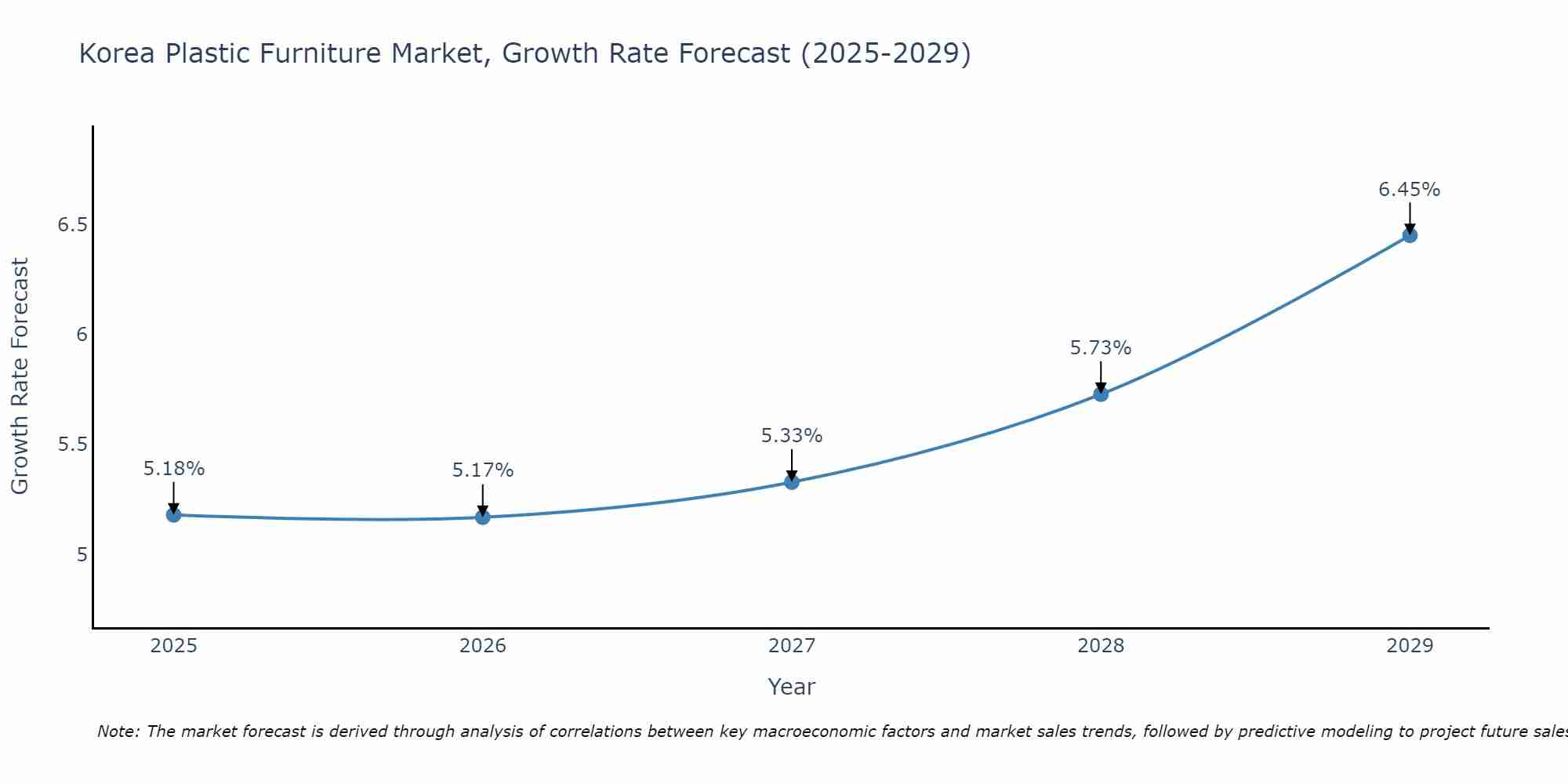
The South Korea Plastic Furniture Market is projected to witness mixed growth rate patterns during 2025 to 2029. Commencing at 5.18% in 2025, growth builds up to 6.45% by 2029.
South Korea Plastic Furniture Market Overview
The plastic furniture market in South Korea is growing due to urbanization, modern lifestyle trends, and advancements in material technology. Plastic furniture offers durability, design flexibility, and cost-effectiveness.
Drivers of the market
The plastic furniture market in South Korea is experiencing growth owing to changing consumer preferences towards lightweight, durable, and aesthetically pleasing furniture solutions. The market is driven by urbanization trends, rising disposable incomes, and a growing emphasis on outdoor and eco-friendly furniture options. Innovations in design, material durability, and sustainability are key factors influencing market trends.
Challenges of the market
Challenges in the South Korean plastic furniture market include addressing consumer preferences for sustainable materials and designs that offer both aesthetic appeal and durability. Balancing affordability with quality and exploring innovative recycling solutions to reduce environmental footprint are critical for market growth.
Government Policy of the market
Government policies in South Korea focus on promoting eco-friendly materials, ergonomic design, and safety standards for plastic furniture. Regulations address product durability, fire safety, and chemical emissions to protect consumer health and the environment.
Key Highlights of the Report:
- South Korea Plastic Furniture Market Outlook
- Market Size of South Korea Plastic Furniture Market, 2021
- Forecast of South Korea Plastic Furniture Market, 2028
- Historical Data and Forecast of South Korea Plastic Furniture Revenues & Volume for the Period 2018 - 2028
- South Korea Plastic Furniture Market Trend Evolution
- South Korea Plastic Furniture Market Drivers and Challenges
- South Korea Plastic Furniture Price Trends
- South Korea Plastic Furniture Porter's Five Forces
- South Korea Plastic Furniture Industry Life Cycle
- Historical Data and Forecast of South Korea Plastic Furniture Market Revenues & Volume By Distribution Channel for the Period 2018 - 2028
- Historical Data and Forecast of South Korea Plastic Furniture Market Revenues & Volume By Online for the Period 2018 - 2028
- Historical Data and Forecast of South Korea Plastic Furniture Market Revenues & Volume By Offline for the Period 2018 - 2028
- Historical Data and Forecast of South Korea Plastic Furniture Market Revenues & Volume By Application for the Period 2018 - 2028
- Historical Data and Forecast of South Korea Plastic Furniture Market Revenues & Volume By Residential for the Period 2018 - 2028
- Historical Data and Forecast of South Korea Plastic Furniture Market Revenues & Volume By Commercial for the Period 2018 - 2028
- South Korea Plastic Furniture Import Export Trade Statistics
- Market Opportunity Assessment By Distribution Channel
- Market Opportunity Assessment By Application
- South Korea Plastic Furniture Top Companies Market Share
- South Korea Plastic Furniture Competitive Benchmarking By Technical and Operational Parameters
- South Korea Plastic Furniture Company Profiles
- South Korea Plastic Furniture Key Strategic Recommendations






































