Nigeria RegTech Market Size & Growth Rate (2026-2032)
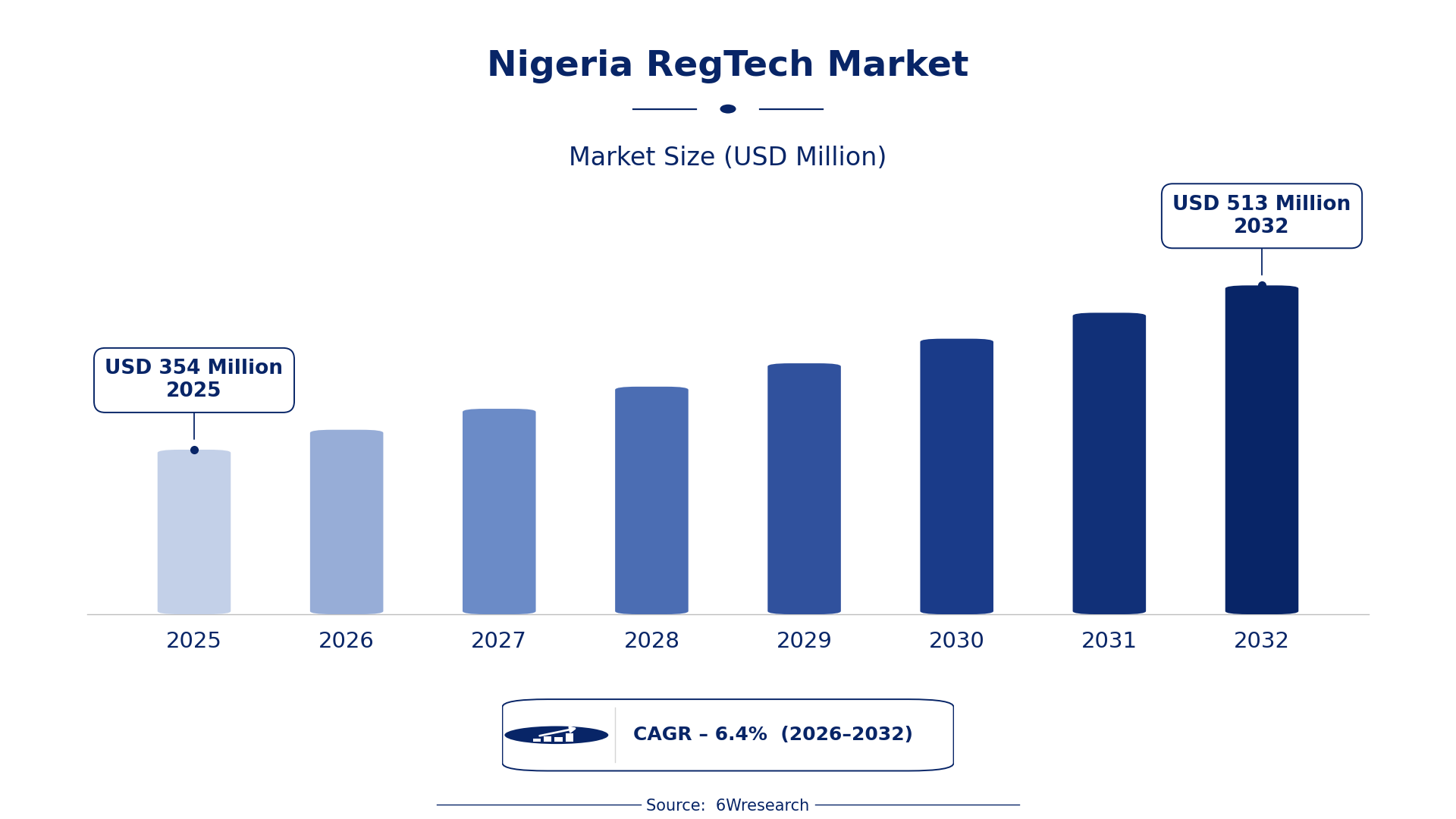
The Nigeria RegTech Market was estimated at USD 354 Million in 2025 and is projected to reach USD 513 Million by 2032, growing at a CAGR of 6.4% from 2026 to 2032.
Nigeria RegTech Market Synopsis
The surge in regulatory requirements is the primary force reshaping the Nigeria RegTech Market. As industries like banking and telecommunications face mounting compliance demands, RegTech solutions are becoming essential for automating processes and managing risks.
With the integration of advanced technologies such as artificial intelligence and machine learning, firms are now better equipped to enhance regulatory reporting. Partnerships between RegTech firms and financial institutions are fostering innovative solutions, addressing complex compliance challenges head-on.
Nigeria RegTech Market Year-wise Growth Rate and Key Drivers
This graph illustrates the annual growth rates of the Nigeria RegTech Market from 2021 to 2032, highlighting a steady upward trajectory and projected expansion over the forecast period.
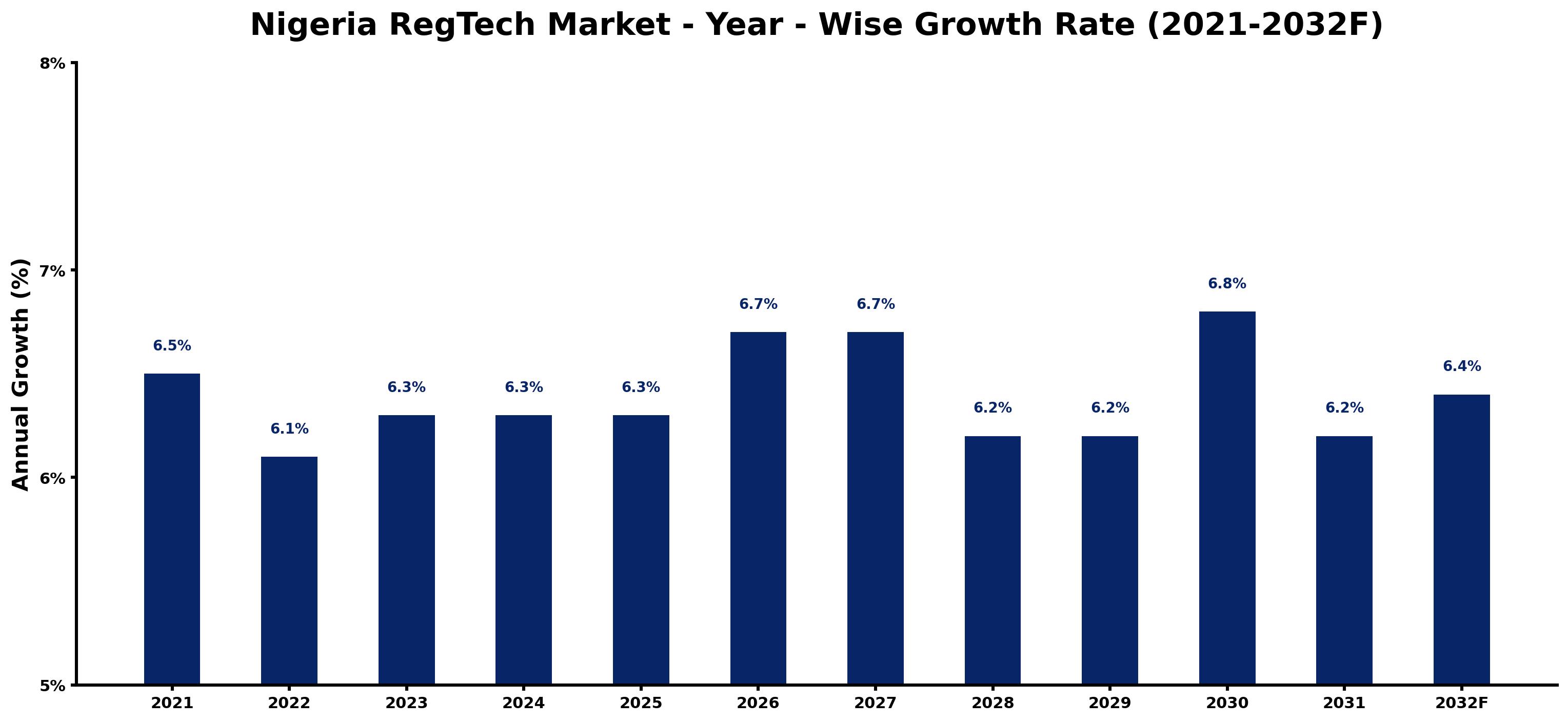
The table below presents the year‑wise growth rates along with the key drivers influencing the market
| Year | Growth Rate | Major Drivers |
| 2021 | 6.5% | Central Bank of Nigeria's fintech-friendly regulations boost adoption. |
| 2022 | 6.1% | Increased demand for KYC solutions amid fraud concerns. |
| 2023 | 6.3% | Growing digital banking adoption drives compliance technology needs. |
| 2024 | 6.3% | Nigerian Economic Sustainability Plan supports digital identity initiatives. |
| 2025 | 6.3% | Rise in mobile transactions bolsters regulatory technology requirements. |
| 2026 | 6.7% | Strengthened anti-money laundering regulations enhance market potential. |
| 2027 | 6.7% | Emergence of startups fostering innovation in regulatory compliance. |
| 2028 | 6.2% | Partnerships between banks and RegTech firms expand services. |
| 2029 | 6.2% | Heightened focus on data protection amplifies compliance tools demand. |
| 2030 | 6.8% | Government stimulus for digital solutions accelerates technology uptake. |
| 2031 | 6.2% | Youth population driving continuous digital financial service growth. |
| 2032 | 6.4% | Regulatory updates demand agile solutions for evolving compliance. |
Note: Market size estimations and growth projections presented in this report are based on 6Wresearch's proprietary forecasting methodology, utilizing the latest available industry data, government publications, and primary research inputs.
Nigeria RegTech Market Key Takeaways
Below are some of the specific key takeaways from the market, including:
- The Nigeria RegTech market is driven by increasing compliance requirements across various sectors.
- Adoption of technologies like AI and blockchain is transforming regulatory compliance processes.
- There is a strong demand for tailored solutions in the banking, insurance, and telecommunications sectors.
- Collaborations between RegTech firms and financial institutions are on the rise to tackle compliance challenges.
- Awareness and education about RegTech benefits remain crucial for market growth.
Evaluation of Restraints in Nigeria RegTech Market
Several factors hinder the growth of the Nigeria RegTech Market. The regulatory environment is often marked by complexity and ambiguity, making it challenging for businesses to remain compliant. Additionally, inadequate technological infrastructure limits the adoption of advanced RegTech solutions. A significant portion of businesses still lacks awareness of how these technologies can streamline compliance and reduce risks. Addressing these limitations will require a concerted effort among regulators, technology providers, and businesses.
Nigeria RegTech Market Trends
The trend towards automation in compliance processes is gaining momentum. Companies are increasingly investing in artificial intelligence and blockchain technologies to enhance their regulatory frameworks. A focus on data privacy and cybersecurity is also influencing the adoption of RegTech solutions. As fintech innovations continue to reshape the market, businesses are looking for ways to improve transparency and streamline operations through RegTech.
Nigeria RegTech Market Opportunities
There are significant growth opportunities in tailoring RegTech solutions to fit Nigeria's unique regulatory environment. As the demand for more efficient compliance tools rises, sectors like banking and insurance are ripe for innovation. Companies that can offer customized solutions addressing the specific challenges faced by Nigerian businesses will likely see substantial returns on investment.
Government Initiatives in the Nigeria RegTech Market
Government policies are crucial for shaping the Nigeria RegTech Market. The Nigerian government has been proactive in implementing regulations that promote the adoption of regulatory technology. This regulatory posture is aimed at enhancing efficiency, fostering innovation, and ensuring that businesses remain compliant in an increasingly digital landscape.
- A recently completed initiative involved the introduction of the Cybersecurity Guidelines for Deposit Money Banks, enhancing data protection protocols in the financial sector.
- Currently underway is the implementation of technology guidelines by the Securities and Exchange Commission, aimed at ensuring compliance in capital market operations.
- A planned public-private initiative aims to enhance digital infrastructure access across the country by 2028.
- The Central Bank of Nigeria is focusing on regulations that encourage transparency and accountability in financial transactions.
- A national awareness campaign is expected to launch soon, aimed at educating businesses about the benefits of RegTech solutions.
Future Insights of the Nigeria RegTech Market
The outlook for the Nigeria RegTech Market from 2026 to 2032 is promising. As compliance demands grow more complex, the reliance on advanced regulatory technology will increase. The continuous rise of digital transformation and fintech innovations will further drive this market. Companies that recognize the significance of efficient compliance processes and risk management will find themselves at a competitive advantage in the evolving landscape.
Nigeria RegTech Market Latest Developments
Recent developments in the Nigeria RegTech Market indicate a surge in innovation and partnership activity. Over the last 12-14 months, there has been a noticeable increase in the adoption of technology solutions designed to address regulatory challenges.
- A major technology vendor launched a new AI-driven compliance tool in early 2025, aimed at streamlining reporting processes for financial institutions.
- An ongoing initiative, which began in mid-2025, focuses on collaboration between RegTech firms and banks to enhance risk management capabilities.
- Plans are underway for a comprehensive training program aimed at educating businesses about RegTech solutions, expected to kick off by early 2026.
- A new partnership between a leading regional operator and a fintech company is currently developing a blockchain-based solution for regulatory compliance, which remains in the pilot phase.
Nigeria RegTech Market - Key Attractiveness of the Report
- 10 Years of Market Numbers
- Historical Data Starting from 2022 to 2025
- Base Year: 2025
- Forecast Data until 2032
- Key Performance Indicators Impacting the Market
- Major Upcoming Developments and Projects
Key Highlights of the Report:
- Nigeria RegTech Market Outlook
- Market Size of Nigeria RegTech Market, 2025
- Forecast of Nigeria RegTech Market, 2032
- Historical Data and Forecast of Nigeria RegTech Revenues & Volume for the Period 2022-2032F
- Nigeria RegTech Market Trend Evolution
- Nigeria RegTech Market Drivers and Challenges
- Nigeria RegTech Price Trends
- Nigeria RegTech Porter's Five Forces
- Nigeria RegTech Industry Life Cycle
- Historical Data and Forecast of Nigeria RegTech Market Revenues & Volume By Component for the Period 2022-2032F
- Historical Data and Forecast of Nigeria RegTech Market Revenues & Volume By Solutions for the Period 2022-2032F
- Historical Data and Forecast of Nigeria RegTech Market Revenues & Volume By Services for the Period 2022-2032F
- Historical Data and Forecast of Nigeria RegTech Market Revenues & Volume By Application for the Period 2022-2032F
- Historical Data and Forecast of Nigeria RegTech Market Revenues & Volume By Risk & Compliance Management for the Period 2022-2032F
- Historical Data and Forecast of Nigeria RegTech Market Revenues & Volume By Identity Management for the Period 2022-2032F
- Historical Data and Forecast of Nigeria RegTech Market Revenues & Volume By Regulatory Reporting for the Period 2022-2032F
- Historical Data and Forecast of Nigeria RegTech Market Revenues & Volume By AML and Fraud Management for the Period 2022-2032F
- Historical Data and Forecast of Nigeria RegTech Market Revenues & Volume By Regulatory Intelligence for the Period 2022-2032F
- Historical Data and Forecast of Nigeria RegTech Market Revenues & Volume By Organization Size for the Period 2022-2032F
- Historical Data and Forecast of Nigeria RegTech Market Revenues & Volume By SMEs for the Period 2022-2032F
- Historical Data and Forecast of Nigeria RegTech Market Revenues & Volume By Large Enterprises for the Period 2022-2032F
- Historical Data and Forecast of Nigeria RegTech Market Revenues & Volume By Deployment Mode for the Period 2022-2032F
- Historical Data and Forecast of Nigeria RegTech Market Revenues & Volume By On-Premises for the Period 2022-2032F
- Historical Data and Forecast of Nigeria RegTech Market Revenues & Volume By Cloud for the Period 2022-2032F
- Historical Data and Forecast of Nigeria RegTech Market Revenues & Volume By Vertical for the Period 2022-2032F
- Historical Data and Forecast of Nigeria RegTech Market Revenues & Volume By Banking for the Period 2022-2032F
- Historical Data and Forecast of Nigeria RegTech Market Revenues & Volume By Insurance for the Period 2022-2032F
- Historical Data and Forecast of Nigeria RegTech Market Revenues & Volume By Non-Financial for the Period 2022-2032F
- Nigeria RegTech Import Export Trade Statistics
- Market Opportunity Assessment By Component
- Market Opportunity Assessment By Application
- Market Opportunity Assessment By Organization Size
- Market Opportunity Assessment By Deployment Mode
- Market Opportunity Assessment By Vertical
- Nigeria RegTech Top Companies Market Share
- Nigeria RegTech Competitive Benchmarking By Technical and Operational Parameters
- Nigeria RegTech Company Profiles
- Nigeria RegTech Key Strategic Recommendations






































