Norway Fitness Equipment Market Growth Rate Analysis (2025 - 2031)
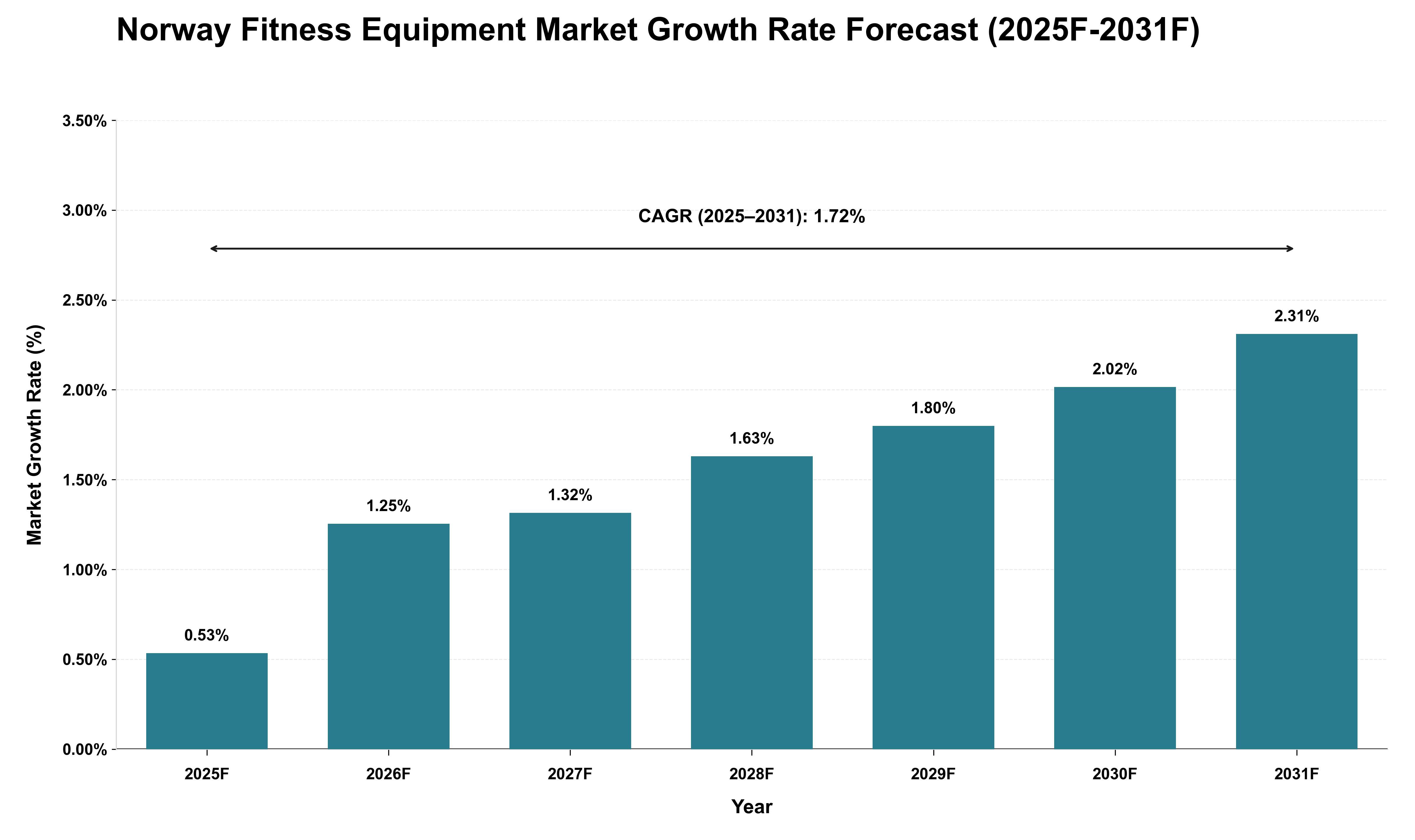
The projected compound annual growth rate of 1.72% for the Norway fitness equipment market from 2025 to 2031 indicates a gradual increase in demand, influenced by regulatory and trade policy factors. As Norway continues to prioritize health and wellness through supportive government initiatives, the fitness equipment sector is likely to benefit from increased consumer spending on health-related products. Import dependencies will play a crucial role, as fluctuations in global supply chains and tariffs could impact pricing and availability of equipment. The annual growth rates suggest a cyclical trend where initial modest increases in 2025 (0.53%) will gradually accelerate, reaching 2.31% by 2031. This trajectory reflects an anticipated rise in disposable income and a growing emphasis on personal fitness, alongside potential regulatory incentives aimed at promoting physical activity among the population, thereby fostering a conducive environment for sustained growth in this market segment.
Key Highlights of the Report:
- Norway Fitness Equipment Market Outlook
- Market Size of Norway Fitness Equipment Market, 2025
- Forecast of Norway Fitness Equipment Market, 2032
- Historical Data and Forecast of Norway Fitness Equipment Revenues & Volume for the Period 2022 - 2032F
- Norway Fitness Equipment Market Trend Evolution
- Norway Fitness Equipment Market Drivers and Challenges
- Norway Fitness Equipment Price Trends
- Norway Fitness Equipment Porter`s Five Forces
- Norway Fitness Equipment Industry Life Cycle
- Historical Data and Forecast of Norway Fitness Equipment Market Revenues & Volume By Type for the Period 2022 - 2032F
- Historical Data and Forecast of Norway Fitness Equipment Market Revenues & Volume By Cardiovascular Training Equipment for the Period 2022 - 2032F
- Historical Data and Forecast of Norway Fitness Equipment Market Revenues & Volume By Strength Training Equipment for the Period 2022 - 2032F
- Historical Data and Forecast of Norway Fitness Equipment Market Revenues & Volume By Other Equipment for the Period 2022 - 2032F
- Historical Data and Forecast of Norway Fitness Equipment Market Revenues & Volume By End-users for the Period 2022 - 2032F
- Historical Data and Forecast of Norway Fitness Equipment Market Revenues & Volume By Home consumer for the Period 2022 - 2032F
- Historical Data and Forecast of Norway Fitness Equipment Market Revenues & Volume By Health club/gym for the Period 2022 - 2032F
- Historical Data and Forecast of Norway Fitness Equipment Market Revenues & Volume By Other commercial user for the Period 2022 - 2032F
- Norway Fitness Equipment Import Export Trade Statistics
- Market Opportunity Assessment By Type
- Market Opportunity Assessment By End-users
- Norway Fitness Equipment Top Companies Market Share
- Norway Fitness Equipment Competitive Benchmarking By Technical and Operational Parameters
- Norway Fitness Equipment Company Profiles
- Norway Fitness Equipment Key Strategic Recommendations






































