Oman Antidiabetics Market Size, Share & Growth Rate
The Oman Antidiabetics Market was estimated at USD 309 Million in 2025 and is projected to reach USD 423 Million by 2032, growing at a CAGR of 4.6% from 2026 to 2032. This growth trajectory is significantly driven by the rising prevalence of diabetes, particularly among the aging population, and the escalating demand for effective diabetes management solutions. With increased awareness about the disease and advancements in treatment options, both oral medications and insulin therapies are playing crucial roles in addressing this health crisis.
Oman Antidiabetics Market Year-wise Growth Rate and Key Drivers
This graph highlights how the Oman Antidiabetics Market has steadily grown over the years, supported by major growth factors.
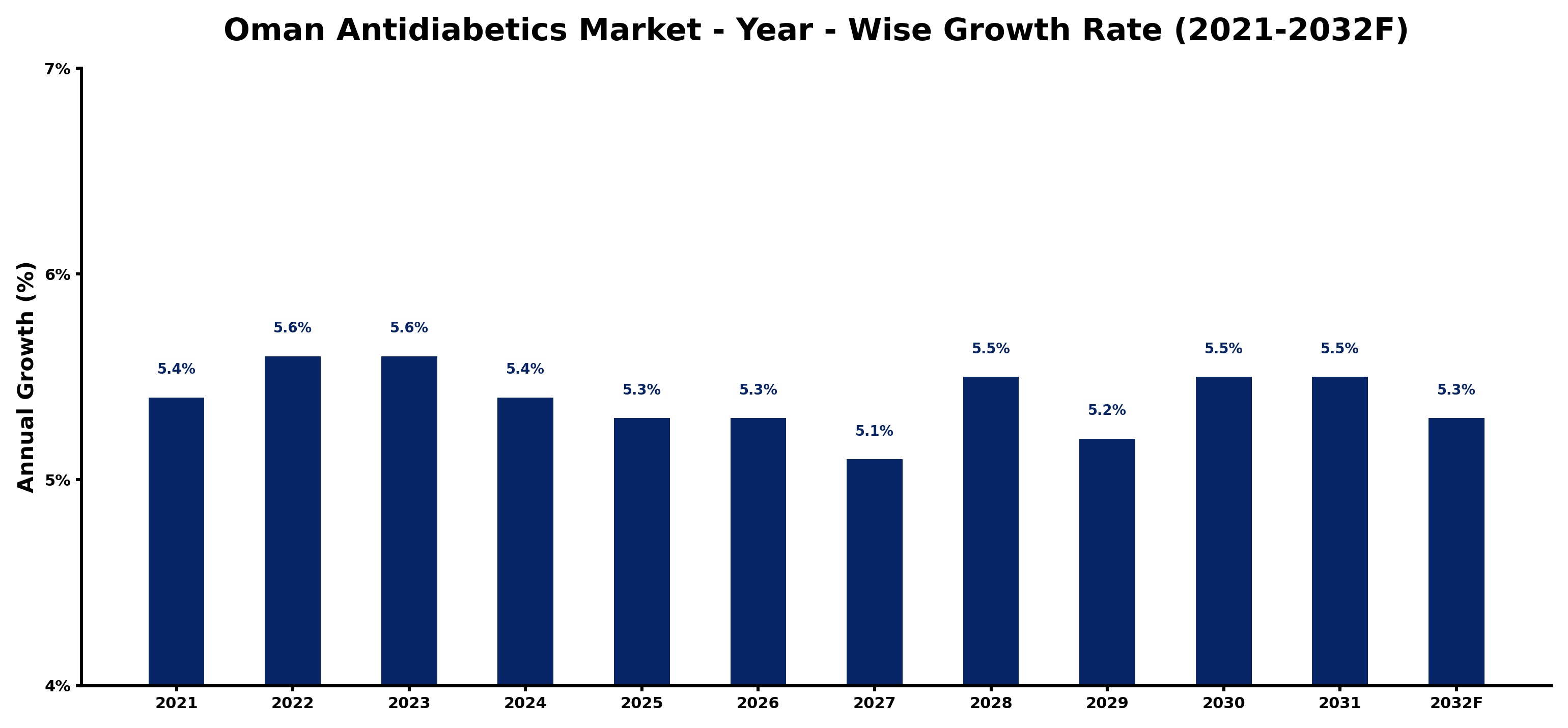
The table below presents the year‑wise growth rates along with the key drivers influencing the market
| Year | Growth Rate | Major Drivers |
| 2021 | 5.4% | Increasing adoption of advanced technologies |
| 2022 | 5.6% | Growing urbanization and commercial development |
| 2023 | 5.6% | Increasing adoption of advanced technologies |
| 2024 | 5.4% | Expansion of manufacturing activities |
| 2025 | 5.3% | Government infrastructure modernization initiatives |
| 2026 | 5.3% | Rising electricity demand across industries |
| 2027 | 5.1% | Growing renewable energy integration projects |
| 2028 | 5.5% | Growing urbanization and commercial development |
| 2029 | 5.2% | Increasing industrial infrastructure investments |
| 2030 | 5.5% | Increasing industrial infrastructure investments |
| 2031 | 5.5% | Increasing industrial infrastructure investments |
| 2032 | 5.3% | Government infrastructure modernization initiatives |
Note - Market size estimations and growth projections presented in this report are based on 6Wresearch’s advanced forecasting approach, validated with industry datasets as of June 2026.
Oman Antidiabetics Market Synopsis
In recent years, the Oman antidiabetics market has gained momentum due to heightened awareness regarding diabetes management and the availability of innovative treatments. As lifestyle-related risk factors continue to rise, the market is expected to evolve, incorporating advanced technologies and therapies that promise improved patient outcomes.
While the market has seen significant growth, there remains a crucial need for enhanced healthcare infrastructure and increased public education on diabetes. As Oman continues to combat the diabetes epidemic, the focus is shifting toward comprehensive strategies that facilitate better access to care and medications, fostering a healthier population.
Oman Antidiabetics Market Key Takeaways
- The market is predominantly driven by a growing aging population and changing lifestyle habits.
- Innovative products, particularly new generation oral antidiabetic drugs and insulin analogs, are reshaping treatment paradigms.
- Combination therapies are becoming increasingly popular due to their enhanced efficacy and safety profiles.
- Government initiatives aimed at improving healthcare access are bolstering market growth.
- The rising cost of medications and regional disparities in healthcare access remain significant challenges.
Evaluation of Restraints in Oman Antidiabetics Market
Despite the positive growth indicators, the Oman Antidiabetics Market faces notable restraints. A significant barrier includes limited public awareness about effective diabetes management strategies, which hampers early diagnosis and treatment. Additionally, the cost of antidiabetic medications can be prohibitive for many patients, particularly in remote areas where access to healthcare services is limited. Furthermore, lifestyle-related risk factors, such as unhealthy diets and sedentary lifestyles, are contributing to the increasing prevalence of diabetes, adding further strain on an already challenged healthcare infrastructure.
Oman Antidiabetics Market Trends
The landscape of the Oman Antidiabetics Market is increasingly influenced by several emerging trends. There is a notable shift towards advanced treatment options, including innovative oral antidiabetic drugs and insulin formulations that provide enhanced glycemic control. The growth of combination therapies reflects a commitment to personalized medicine, ensuring patients receive tailored treatment options that minimize side effects while maximizing effectiveness. Technology is also making its mark, with the advent of wearable glucose monitoring devices and insulin delivery systems, which facilitate real-time patient management and foster engagement in diabetes care.
Oman Antidiabetics Market Opportunities
As the demand for effective diabetes management solutions escalates, there are ample investment opportunities within the Oman Antidiabetics Market. Companies specializing in the production of antidiabetic medications and innovative medical devices are well-positioned for growth. Additionally, there is potential for developing healthcare facilities dedicated to diabetes care, including specialized clinics that focus on comprehensive treatment approaches. With supportive government policies aimed at improving healthcare infrastructure, investors are likely to find a conducive environment for fostering growth in this critical sector.
Government Initiatives in the Oman Antidiabetics Market
The government of Oman has implemented various initiatives aimed at combating the growing diabetes crisis within the nation. Policies promoting healthy lifestyles are complemented by programs designed to enhance public awareness about diabetes prevention and management. Access to affordable antidiabetic medications has also been prioritized, alongside regulations to ensure the quality and safety of available treatments. Furthermore, ongoing education and support services for individuals living with diabetes underscore the government's commitment to improving health outcomes and alleviating the burden of the disease on the healthcare system.
Future Insights of the Oman Antidiabetics Market
Looking ahead to the period from 2026 to 2032, the Oman Antidiabetics Market is poised for continued growth fueled by an increasing prevalence of diabetes. Factors contributing to this trajectory include an expanding geriatric demographic, coupled with unhealthy lifestyle choices that perpetuate the cycle of diabetes. Improvements in healthcare infrastructure and a concerted push for greater awareness around diabetes management will likely boost market dynamics. However, industry stakeholders must navigate challenges such as regulatory hurdles and growing competition from generics as they innovate to meet the evolving needs of patients.
Oman Antidiabetics Market Latest Developments (May 2025 - June 2026)
Recent developments in the Oman antidiabetics landscape have emphasized the importance of integrating advanced treatment options and innovative technologies into diabetes care. The market has observed an increase in partnerships between local manufacturers and multinational pharmaceutical companies, aimed at enhancing the availability of cutting-edge therapies. Additionally, public health campaigns focusing on diabetes awareness and prevention are gaining momentum, with a particular emphasis on lifestyle modifications that can mitigate risk factors. The introduction of new diagnostic tools and treatment modalities is also on the rise, further shaping the future of diabetes management in Oman.
Oman Antidiabetics Market - Key Attractiveness of the Report
- 10 Years of Market Numbers
- Historical Data Starting from 2022 to 2025
- Base Year: 2025
- Forecast Data until 2032
- Key Performance Indicators Impacting the Market
- Major Upcoming Developments and Projects
Key Highlights of the Report:
- Oman Antidiabetics Market Outlook
- Market Size of Oman Antidiabetics Market, 2025
- Forecast of Oman Antidiabetics Market, 2032
- Historical Data and Forecast of Oman Antidiabetics Revenues & Volume for the Period 2022-2032F
- Oman Antidiabetics Market Trend Evolution
- Oman Antidiabetics Market Drivers and Challenges
- Oman Antidiabetics Price Trends
- Oman Antidiabetics Porter's Five Forces
- Oman Antidiabetics Industry Life Cycle
- Historical Data and Forecast of Oman Antidiabetics Market Revenues & Volume By Product for the Period 2022-2032F
- Historical Data and Forecast of Oman Antidiabetics Market Revenues & Volume By Insulin for the Period 2022-2032F
- Historical Data and Forecast of Oman Antidiabetics Market Revenues & Volume By Drug Class for the Period 2022-2032F
- Historical Data and Forecast of Oman Antidiabetics Market Revenues & Volume By Patient Population for the Period 2022-2032F
- Historical Data and Forecast of Oman Antidiabetics Market Revenues & Volume By Paediatric for the Period 2022-2032F
- Historical Data and Forecast of Oman Antidiabetics Market Revenues & Volume By Adult for the Period 2022-2032F
- Historical Data and Forecast of Oman Antidiabetics Market Revenues & Volume By Geriatric for the Period 2022-2032F
- Historical Data and Forecast of Oman Antidiabetics Market Revenues & Volume By Route of Administration for the Period 2022-2032F
- Historical Data and Forecast of Oman Antidiabetics Market Revenues & Volume By Insulin syringe/ Insulin pen for the Period 2022-2032F
- Historical Data and Forecast of Oman Antidiabetics Market Revenues & Volume By Insulin pump for the Period 2022-2032F
- Historical Data and Forecast of Oman Antidiabetics Market Revenues & Volume By Intravenous infusion for the Period 2022-2032F
- Historical Data and Forecast of Oman Antidiabetics Market Revenues & Volume By Oral for the Period 2022-2032F
- Historical Data and Forecast of Oman Antidiabetics Market Revenues & Volume By Others for the Period 2022-2032F
- Oman Antidiabetics Import Export Trade Statistics
- Market Opportunity Assessment By Product
- Market Opportunity Assessment By Patient Population
- Market Opportunity Assessment By Route of Administration
- Oman Antidiabetics Top Companies Market Share
- Oman Antidiabetics Competitive Benchmarking By Technical and Operational Parameters
- Oman Antidiabetics Company Profiles
- Oman Antidiabetics Key Strategic Recommendations






































