Oman Energy Security Market Size & Growth Rate (2026-2032)
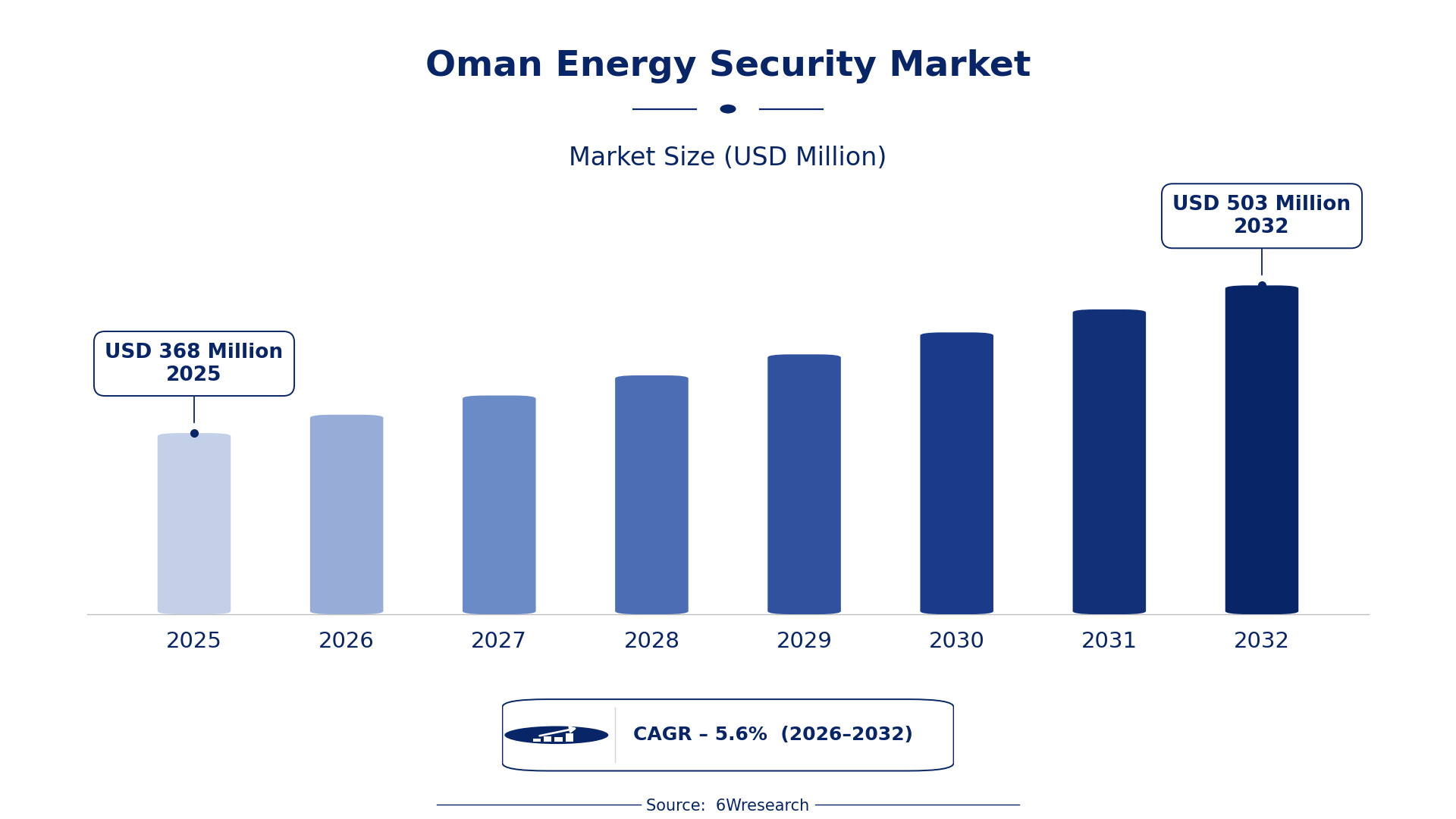
The Oman Energy Security Market was estimated at USD 368 Million in 2025 and is projected to reach USD 503 Million by 2032, growing at a CAGR of 5.6% from 2026 to 2032.
Oman Energy Security Market Synopsis
The increasing push towards renewable energy sources is the most influential factor currently reshaping the Oman Energy Security Market. With a clear strategy focused on diversifying its energy portfolio, Oman is steadily moving away from its reliance on traditional fossil fuels.
Government initiatives aimed at enhancing energy efficiency and promoting sustainability are fueling investments in modern energy infrastructure. This strategic shift not only addresses the growing energy demands but also positions Oman as a leader in energy security within the region.
Oman Energy Security Market Year-wise Growth Rate and Key Drivers
This graph illustrates the annual growth rates of the Oman Energy Security Market from 2021 to 2032, highlighting a steady upward trajectory and projected expansion over the forecast period.
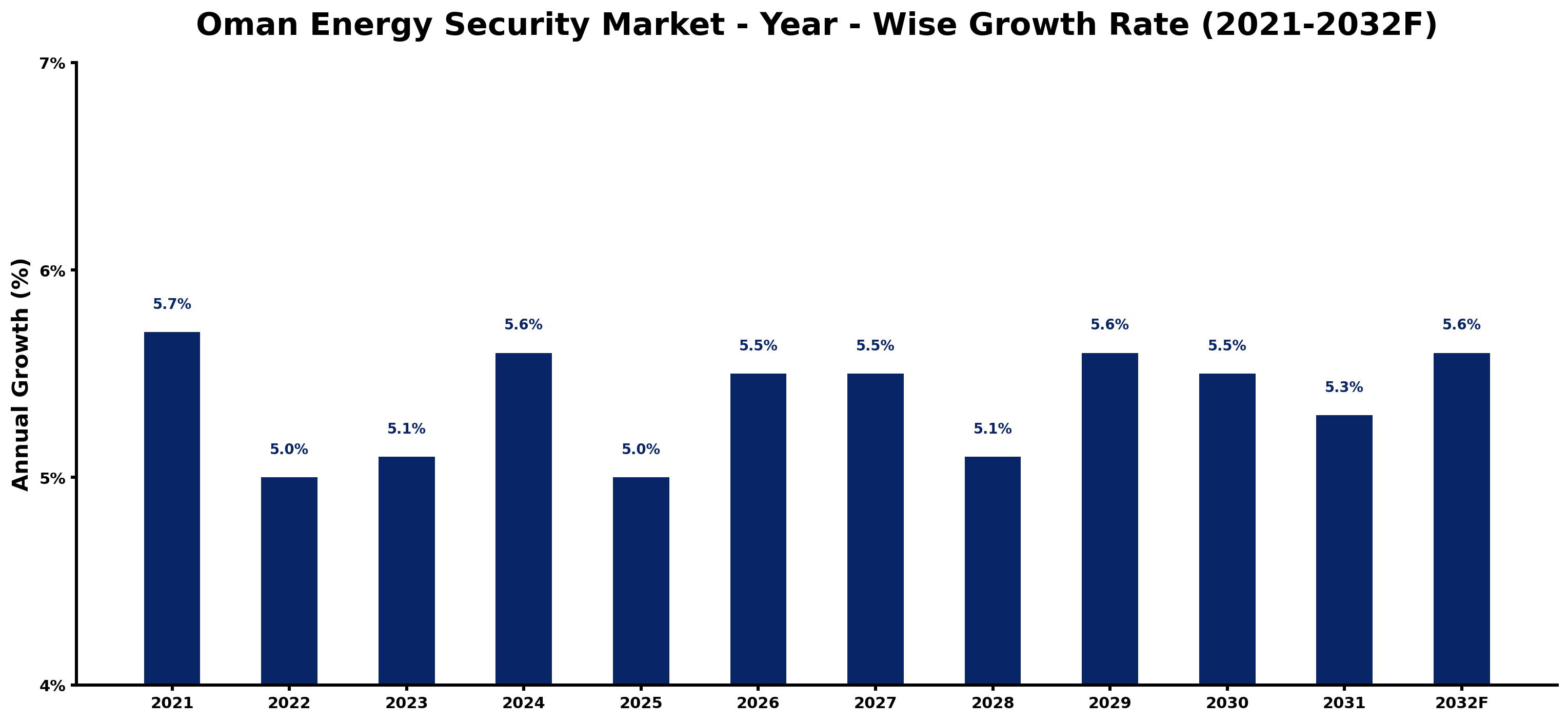
The table below presents the year‑wise growth rates along with the key drivers influencing the market
| Year | Growth Rate | Major Drivers |
| 2021 | 5.7% | Increased investments in renewable energy regulatory frameworks. |
| 2022 | 5.0% | Government initiatives promoting energy efficiency and conservation. |
| 2023 | 5.1% | Enhanced cybersecurity measures for energy infrastructure protection. |
| 2024 | 5.6% | Boost in public-private partnerships for sustainable energy projects. |
| 2025 | 5.0% | Growing adoption of smart grid technologies nationwide. |
| 2026 | 5.5% | Increased foreign investment following regulatory reform incentives. |
| 2027 | 5.5% | Strengthening energy trade agreements with neighboring countries. |
| 2028 | 5.1% | Rising awareness of climate change impacts on energy policy. |
| 2029 | 5.6% | Development of localized energy solutions for remote areas. |
| 2030 | 5.5% | Government funding for research in energy innovation technologies. |
| 2031 | 5.3% | Expanding public campaigns to promote energy conservation practices. |
| 2032 | 5.6% | Commitment to net-zero targets enhancing energy sector investments. |
Note: Market size estimations and growth projections presented in this report are based on 6Wresearch's proprietary forecasting methodology, utilizing the latest available industry data, government publications, and primary research inputs.
Oman Energy Security Market Key Takeaways
Below are some of the specific key takeaways from the market, including:
- A strong commitment from the government to expand renewable energy sources, particularly solar and wind.
- Investment opportunities in energy storage and smart grid technologies are on the rise.
- Geopolitical factors and volatile oil prices remain critical challenges for energy security.
- Growing emphasis on digitalization and cybersecurity measures to protect energy infrastructure.
- Collaboration between the public and private sectors is essential for advancing energy security initiatives.
Evaluation of Restraints in Oman Energy Security Market
The Oman Energy Security Market faces several pressing restraints. A primary concern is the slow pace of transitioning from traditional fossil fuels to renewable sources. Infrastructure limitations also hinder effective energy distribution and consumption. on top of that, geopolitical tensions add an unpredictable layer of risk, as do fluctuating oil prices that can destabilize investment and operational budgets.
To tackle these restraints, a coordinated response from various stakeholders will be crucial. It requires not just a commitment from the government but also active engagement from private entities, technology providers, and international partners.
Oman Energy Security Market Trends
Current trends reflect a decisive move towards incorporating renewable energy into Oman's energy mix. Solar and wind projects are gaining traction, propelled by government policy favoring sustainability. Another noteworthy trend is the adoption of smart grid technologies, which enhance energy efficiency and reliability.
The emphasis on digitalization is also notable, as operators seek to integrate advanced technologies to safeguard infrastructure and improve energy management. This trend aligns with broader global efforts to secure energy systems against emerging cyber threats.
Oman Energy Security Market Opportunities
Investors in the Oman Energy Security Market will find ample opportunities, especially in renewable energy projects. The government’s vision to diversify energy sources opens doors for solar farms and wind energy developments. Energy storage solutions also represent a vital investment avenue as demand for efficiency grows.
Additionally, enhancing energy efficiency through new technologies and infrastructure improvements can yield significant returns. The commitment to sustainability paves the way for long-term investments that promise stability and growth.
Government Initiatives in the Oman Energy Security Market
The Omani government plays a critical role in shaping the Energy Security Market through various policies and initiatives aimed at strengthening the country’s energy landscape. Public-sector priorities focus on increasing domestic production and promoting renewable energy sources to enhance sustainability. Regulatory frameworks are evolving, reflecting a commitment to a secure energy future.
- A recently completed solar energy project that contributes significantly to national power generation, completed in late 2025.
- A currently ongoing initiative focused on improving grid resilience through smart technology upgrades, expected to conclude by mid-2026.
- A planned public-private partnership aimed at enhancing energy efficiency, slated for launch in early 2027.
- Regulatory reforms introduced to streamline the permitting process for renewable energy projects, enacted in early 2025.
- A national strategy to promote energy conservation measures set to roll out in late 2026.
Future Insights of the Oman Energy Security Market
From 2026 to 2032, the Oman Energy Security Market is expected to evolve significantly. The focus on diversification will not just reshape energy production but also enhance the reliability of supply. As Oman continues to invest in infrastructure and technology, opportunities for regional cooperation in energy trading may arise.
With increasing energy demands and an unwavering commitment to sustainability, the trajectory for growth appears strong. Partnerships with international players will likely be essential in achieving strategic goals, particularly in the renewable sector.
Oman Energy Security Market Latest Developments
Recent developments in the Oman Energy Security Market indicate a vigorous push towards sustainable practices and infrastructure enhancements. The last 12 to 14 months have seen a flurry of activity, particularly in renewable energy initiatives and policy reforms aimed at boosting energy security.
- A major initiative focused on solar panel deployment launched in early 2025, aiming for completion in late 2026.
- Collaboration between regional power entities to enhance energy trading capabilities, currently in the negotiation phase.
- A new cybersecurity framework for energy infrastructure was rolled out in Q1 2026 to protect against digital threats.
- Ongoing upgrades to distribution networks that began in mid-2025 are anticipated to enhance energy delivery efficiency.
- An upcoming conference scheduled for early 2027 to promote renewable energy solutions, which will engage stakeholders across the sector.
Oman Energy Security Market - Key Attractiveness of the Report
- 10 Years of Market Numbers
- Historical Data Starting from 2022 to 2025
- Base Year: 2025
- Forecast Data until 2032
- Key Performance Indicators Impacting the Market
- Major Upcoming Developments and Projects
Key Highlights of the Report:
- Oman Energy Security Market Outlook
- Market Size of Oman Energy Security Market, 2025
- Forecast of Oman Energy Security Market, 2032
- Historical Data and Forecast of Oman Energy Security Revenues & Volume for the Period 2022-2032F
- Oman Energy Security Market Trend Evolution
- Oman Energy Security Market Drivers and Challenges
- Oman Energy Security Price Trends
- Oman Energy Security Porter's Five Forces
- Oman Energy Security Industry Life Cycle
- Historical Data and Forecast of Oman Energy Security Market Revenues & Volume By Power Plants for the Period 2022-2032F
- Historical Data and Forecast of Oman Energy Security Market Revenues & Volume By Nuclear for the Period 2022-2032F
- Historical Data and Forecast of Oman Energy Security Market Revenues & Volume By Thermal for the Period 2022-2032F
- Historical Data and Forecast of Oman Energy Security Market Revenues & Volume By Hydro for the Period 2022-2032F
- Historical Data and Forecast of Oman Energy Security Market Revenues & Volume By Oil for the Period 2022-2032F
- Historical Data and Forecast of Oman Energy Security Market Revenues & Volume By Gas for the Period 2022-2032F
- Historical Data and Forecast of Oman Energy Security Market Revenues & Volume By Renewable Energy for the Period 2022-2032F
- Historical Data and Forecast of Oman Energy Security Market Revenues & Volume By Technologies for the Period 2022-2032F
- Historical Data and Forecast of Oman Energy Security Market Revenues & Volume By Physical for the Period 2022-2032F
- Historical Data and Forecast of Oman Energy Security Market Revenues & Volume By Network Security for the Period 2022-2032F
- Oman Energy Security Import Export Trade Statistics
- Market Opportunity Assessment By Power Plants
- Market Opportunity Assessment By Technologies
- Oman Energy Security Top Companies Market Share
- Oman Energy Security Competitive Benchmarking By Technical and Operational Parameters
- Oman Energy Security Company Profiles
- Oman Energy Security Key Strategic Recommendations






































