Oman Managed Mobility Services Market Size & Growth Rate (2026-2032)
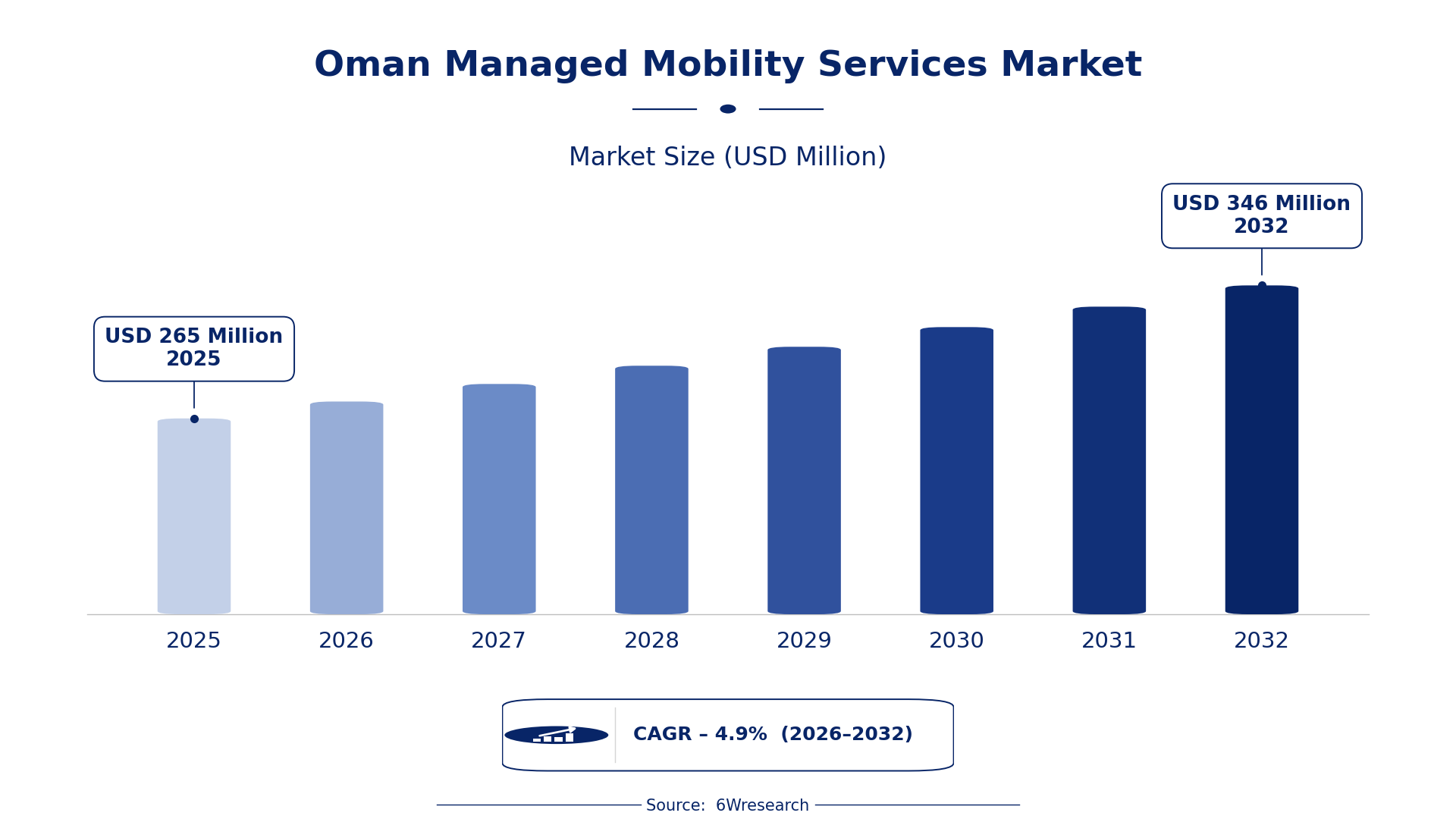
The Oman Managed Mobility Services Market was estimated at USD 265 Million in 2025 and is projected to reach USD 346 Million by 2032, growing at a CAGR of 4.9% from 2026 to 2032.
Oman Managed Mobility Services Market Synopsis
In recent years, the managed mobility services market in Oman has witnessed notable growth, driven largely by increased mobile device adoption and a push for efficient management strategies. As businesses seek to streamline operations and enhance productivity, the demand for these comprehensive services has surged.
Looking ahead, the Oman Managed Mobility Services Market is on a trajectory of expansion, influenced by ongoing technological advancements and supportive government policies. Enterprises are prioritizing secure mobile solutions, positioning themselves to adapt to a competitive landscape that increasingly relies on mobile technologies.
Oman Managed Mobility Services Market Year-wise Growth Rate and Key Drivers
This graph illustrates the annual growth rates of the Oman Managed Mobility Services Market from 2021 to 2032, highlighting a steady upward trajectory and projected expansion over the forecast period.
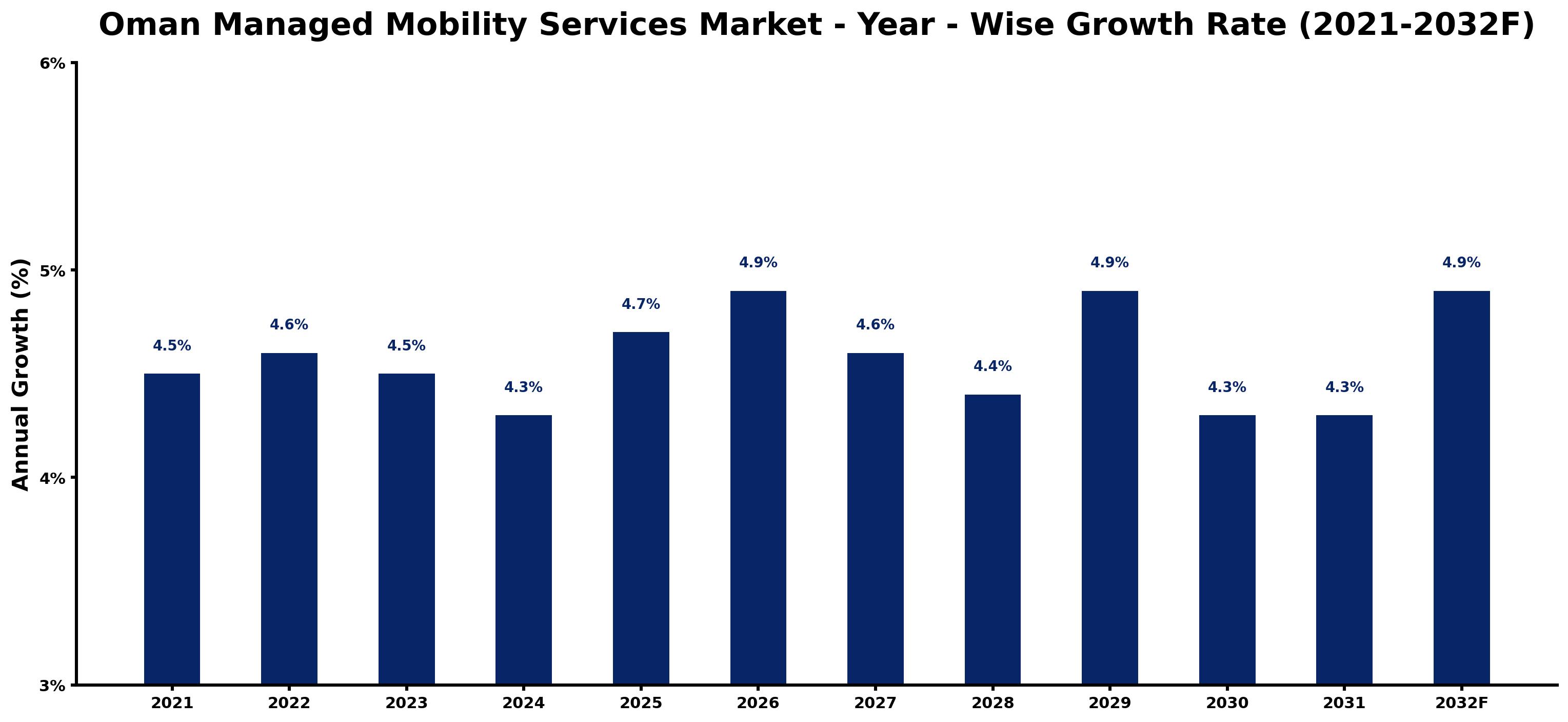
The table below presents the year‑wise growth rates along with the key drivers influencing the market
| Year | Growth Rate | Major Drivers |
| 2021 | 4.5% | Oman’s Vision 2040 driving digitalization initiatives. |
| 2022 | 4.6% | Increased enterprise demand for remote work solutions. |
| 2023 | 4.5% | Omani government’s push for mobile connectivity enhancements. |
| 2024 | 4.3% | Growth in local app development startups boosting mobility needs. |
| 2025 | 4.7% | Rising smartphone penetration among Omani youth demographics. |
| 2026 | 4.9% | Introduction of 5G networks enhancing managed mobility services. |
| 2027 | 4.6% | Government incentives for adopting smart technology solutions. |
| 2028 | 4.4% | Higher consumer preference for personalized mobile services. |
| 2029 | 4.9% | Partnerships between telecoms and businesses for mobility solutions. |
| 2030 | 4.3% | Regulatory support for mobile cybersecurity measures growing. |
| 2031 | 4.3% | Continued investment in digital infrastructure by Omani firms. |
| 2032 | 4.9% | Increasing focus on IoT integrations in mobility services. |
Note: Market size estimations and growth projections presented in this report are based on 6Wresearch's proprietary forecasting methodology, utilizing the latest available industry data, government publications, and primary research inputs.
Oman Managed Mobility Services Market Key Takeaways
Below are some of the specific key takeaways from the market, including:
- The growing necessity for efficient mobile device management is driving service adoption.
- Government policies are actively supporting the integration of mobile technologies in various sectors.
- Data security remains a pressing concern, shaping the demand for managed solutions.
- Advancements in technology are creating new opportunities for service innovation.
- Skilled IT professionals are essential for successful implementation and management.
Evaluation of Restraints in Oman Managed Mobility Services Market
Despite the promising growth trajectory, the Oman Managed Mobility Services Market faces several obstacles. Chief among these are data security concerns, which create hesitation among potential adopters. The rapid pace of technological evolution also poses a challenge; businesses must stay ahead, continually adapting their strategies and tools. Furthermore, the shortage of skilled IT professionals can hinder effective management and integration of mobile solutions within existing enterprise frameworks.
Oman Managed Mobility Services Market Trends
Several trends are emerging in the Oman Managed Mobility Services Market. Firstly, there’s an increasing emphasis on cloud-based solutions, which offer scalability and flexibility that on-premise options cannot match. Secondly, artificial intelligence and machine learning are being integrated into managed services for better analytics and automation. Thirdly, there's a rising focus on data privacy and compliance, prompting businesses to seek solutions that ensure adherence to regulations while managing mobile technologies.
Oman Managed Mobility Services Market Opportunities
Genuine growth opportunities lie in the expanding digital transformation initiatives across various sectors in Oman. Industries like healthcare, finance, and retail are increasingly investing in managed mobility services to optimize their operations. The government's push for modernization and technological infrastructure also opens avenues for investment in mobile solutions. Companies can capitalize on the need for enhanced data security services, creating tailored offerings that cater to sector-specific requirements.
Government Initiatives in the Oman Managed Mobility Services Market
Government policy plays a crucial role in shaping the Oman Managed Mobility Services Market. By fostering an environment conducive to mobile technology adoption, authorities are signaling their commitment to enhancing the digital economy. Regulatory frameworks are being established to promote fair competition and protect consumer interests, which are vital for market confidence and growth.
- A recently completed initiative aimed at upgrading the national telecommunications infrastructure, enhancing mobile connectivity across urban and rural areas.
- An ongoing program to provide tax incentives for businesses investing in digital transformation and managed mobility services.
- A planned public-private partnership set to launch in 2026, focusing on expanding mobile network access in underserved regions.
- A regulatory framework introduced in early 2025 mandating improved data privacy measures for mobile service providers.
- An initiative to develop a national strategy for IT workforce training, ensuring a steady supply of skilled professionals in mobile technology management.
Future Insights of the Oman Managed Mobility Services Market
As we move towards 2032, the Oman Managed Mobility Services Market is expected to flourish, driven by continuous advancements in mobile technology and increasing business demands for efficiency. Companies that prioritize security and adaptability in their mobile strategies will thrive. The interplay between government support and private sector innovation will be instrumental in fostering a vibrant environment for managed services, allowing organizations to fully harness the potential of mobile solutions.
Oman Managed Mobility Services Market Latest Developments
In the past year, the Oman Managed Mobility Services Market has seen a flurry of activity as companies scramble to enhance their mobile capabilities. Key developments include partnerships, service upgrades, and investments in technology that reflect the market's dynamic nature. Organizations are not just responding to current demands; they’re also preparing for future challenges.
- A major technology vendor announced a service upgrade in early 2025 that integrates AI for enhanced analytics in mobile management.
- An ongoing initiative by a leading regional operator to roll out 5G infrastructure, expected to significantly boost mobile service capabilities by mid-2026.
- A strategic partnership between multiple companies was formed in late 2025 to address the growing demand for secure mobile applications in the financial sector.
- An upcoming project scheduled for late 2026 aims to introduce a national app to streamline mobile device management for businesses.
- A pilot program initiated in early 2025 is testing new mobile device management solutions for government agencies to improve operational efficiency.
Oman Managed Mobility Services Market - Key Attractiveness of the Report
- 10 Years of Market Numbers
- Historical Data Starting from 2022 to 2025
- Base Year: 2025
- Forecast Data until 2032
- Key Performance Indicators Impacting the Market
- Major Upcoming Developments and Projects
Key Highlights of the Report:
- Oman Managed Mobility Services Market Outlook
- Market Size of Oman Managed Mobility Services Market, 2025
- Forecast of Oman Managed Mobility Services Market, 2032
- Historical Data and Forecast of Oman Managed Mobility Services Revenues & Volume for the Period 2022-2032F
- Oman Managed Mobility Services Market Trend Evolution
- Oman Managed Mobility Services Market Drivers and Challenges
- Oman Managed Mobility Services Price Trends
- Oman Managed Mobility Services Porter's Five Forces
- Oman Managed Mobility Services Industry Life Cycle
- Historical Data and Forecast of Oman Managed Mobility Services Market Revenues & Volume By Function for the Period 2022-2032F
- Historical Data and Forecast of Oman Managed Mobility Services Market Revenues & Volume By Device Management for the Period 2022-2032F
- Historical Data and Forecast of Oman Managed Mobility Services Market Revenues & Volume By Application Management for the Period 2022-2032F
- Historical Data and Forecast of Oman Managed Mobility Services Market Revenues & Volume By Security Management for the Period 2022-2032F
- Historical Data and Forecast of Oman Managed Mobility Services Market Revenues & Volume By Maintenance & Support for the Period 2022-2032F
- Historical Data and Forecast of Oman Managed Mobility Services Market Revenues & Volume By Organization Size for the Period 2022-2032F
- Historical Data and Forecast of Oman Managed Mobility Services Market Revenues & Volume By SMEs for the Period 2022-2032F
- Historical Data and Forecast of Oman Managed Mobility Services Market Revenues & Volume By Large Enterprises for the Period 2022-2032F
- Historical Data and Forecast of Oman Managed Mobility Services Market Revenues & Volume By Industry Vertical for the Period 2022-2032F
- Historical Data and Forecast of Oman Managed Mobility Services Market Revenues & Volume By Healthcare for the Period 2022-2032F
- Historical Data and Forecast of Oman Managed Mobility Services Market Revenues & Volume By Manufacturing for the Period 2022-2032F
- Historical Data and Forecast of Oman Managed Mobility Services Market Revenues & Volume By Logistics and Transportation for the Period 2022-2032F
- Historical Data and Forecast of Oman Managed Mobility Services Market Revenues & Volume By Retail for the Period 2022-2032F
- Historical Data and Forecast of Oman Managed Mobility Services Market Revenues & Volume By Financial Services for the Period 2022-2032F
- Historical Data and Forecast of Oman Managed Mobility Services Market Revenues & Volume By Telecom and IT for the Period 2022-2032F
- Historical Data and Forecast of Oman Managed Mobility Services Market Revenues & Volume By Media and Entertainment for the Period 2022-2032F
- Historical Data and Forecast of Oman Managed Mobility Services Market Revenues & Volume By Travel and Hospitality for the Period 2022-2032F
- Oman Managed Mobility Services Import Export Trade Statistics
- Market Opportunity Assessment By Function
- Market Opportunity Assessment By Organization Size
- Market Opportunity Assessment By Industry Vertical
- Oman Managed Mobility Services Top Companies Market Share
- Oman Managed Mobility Services Competitive Benchmarking By Technical and Operational Parameters
- Oman Managed Mobility Services Company Profiles
- Oman Managed Mobility Services Key Strategic Recommendations






































