Oman Maternity Wear Market Summary
The oman maternity wear market was estimated at USD 292 Million in 2025 and is projected to reach USD 411 Million by 2032, growing at a CAGR of 6.1% from 2026 to 2032.
Oman Maternity Wear Market Year-wise Growth Rate and Key Drivers
This graph highlights how the Oman Maternity Wear Market has steadily grown over the past five years, supported by major growth factors.
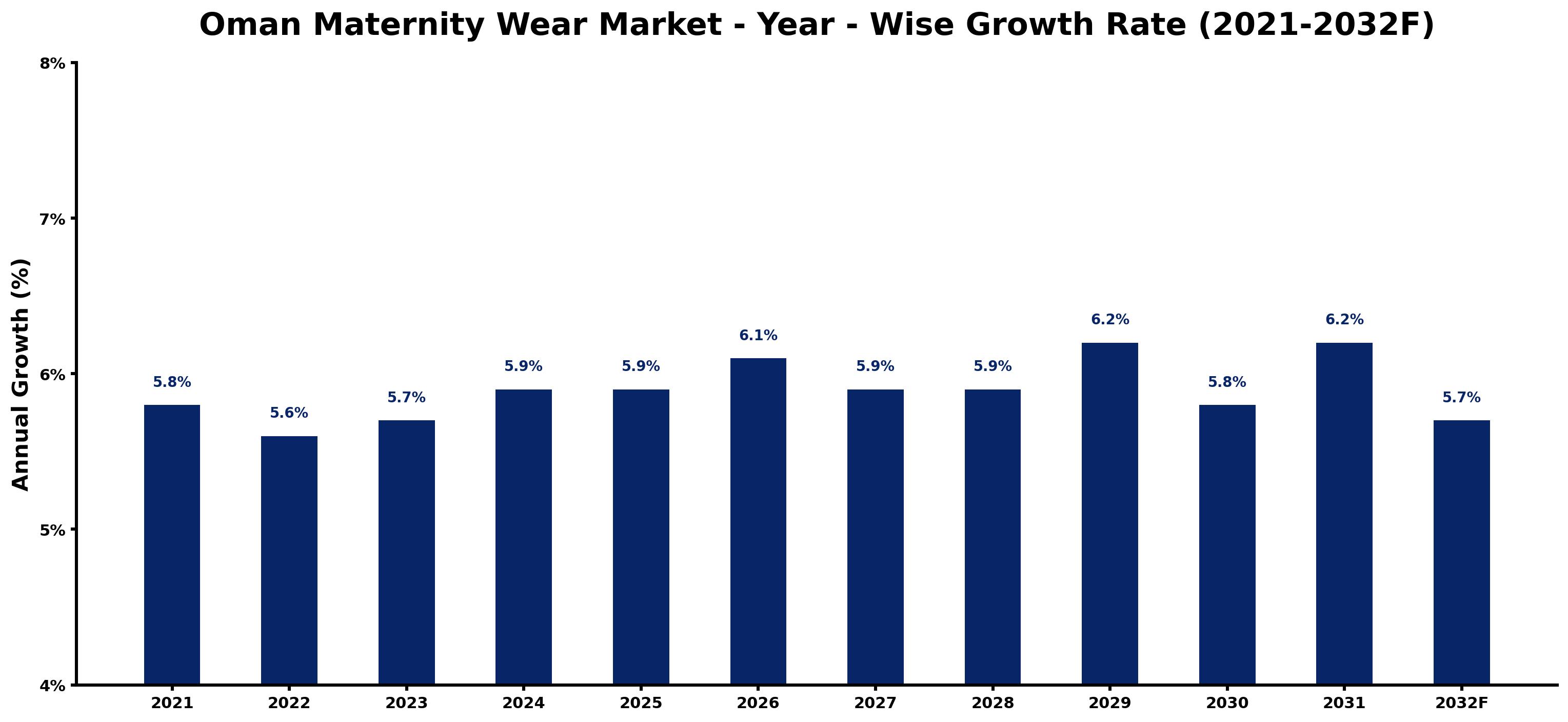
The table below presents the year wise growth rates along with the key drivers influencing the market
| Year | Growth Rate | Major Drivers |
| 2021 | 5.8% | Oman's maternity wear market reflects a unique blend of tradition and modernity. |
| 2022 | 5.6% | Consumer awareness about the importance of comfortable maternity apparel has increased significantly. |
| 2023 | 5.7% | Local designers are gaining popularity, emphasizing cultural relevance and comfort in maternity wear. |
| 2024 | 5.9% | E-commerce platforms are expanding, making maternity wear more accessible to remote areas. |
| 2025 | 5.9% | Health-conscious mothers are seeking functional clothing with breathable fabrics for comfort. |
| 2026 | 6.1% | Seasonal fashion trends are increasingly influencing the variety of maternity options available. |
| 2027 | 5.9% | Oman's economic diversification efforts support a wider range of retail sectors, including maternity. |
| 2028 | 5.9% | Sustainability concerns are prompting brands to offer eco-friendly maternity clothing lines. |
| 2029 | 6.2% | Social media influencers are shaping consumer preferences, promoting trendy maternity styles. |
| 2030 | 5.8% | Growing expatriate populations contribute to diverse demand for various maternity wear styles. |
| 2031 | 6.2% | Technological advancements in textile manufacturing improve product quality and reduce costs. |
| 2032 | 5.7% | Collaborations between local and global brands create exciting new maternity apparel collections. |
Note - Market size estimations and growth projections presented in this report are based on 6Wresearch's advanced forecasting approach, validated with industry datasets as of June 2026.
Oman Maternity Wear Market Synopsis
The Oman Maternity Wear Market is projected to reach 6.1% and witness significant growth during the forecast period (2026-2032). The expansion of this market is primarily influenced by various factors, including rising disposable incomes, shifts in fashion preferences, and an increasing awareness of the importance of maternity clothing. Expectant mothers in Oman now have access to a diverse array of stylish and comfortable clothing designed to accommodate their changing body shapes during pregnancy, fostering both functional and fashionable wardrobe choices.
Oman Maternity Wear Market Growth Drivers
Several key factors are driving the growth of the Oman maternity wear market, including:
- Increasing disposable income among women is allowing more expectant mothers to invest in quality maternity wear that combines comfort and style.
- Changing fashion trends are encouraging women to seek out more versatile and fashionable options, moving away from conventional maternity apparel.
- The growing awareness regarding maternity fashion is leading to heightened interest in clothing that supports both physical comfort and aesthetic appeal during pregnancy.
- The emergence of e-commerce platforms facilitates easier access for expectant mothers to browse and purchase a wide range of maternity wear options.
- Increased focus on sustainable and ethically-produced garments is resonating with consumers, pushing brands to incorporate eco-friendly materials into their maternity wear collections.
Oman Maternity Wear Market Trends and Opportunities
The Oman maternity wear market is witnessing notable trends that present lucrative opportunities for expansion:
- There is a significant shift toward fashionable and multifunctional maternity clothing, which accommodates the dynamic lifestyle of modern mothers.
- Sustainable fashion is gaining traction, with expectant mothers increasingly opting for eco-conscious materials in their maternity wardrobes.
- The rise of online shopping is revolutionizing the way maternity wear is marketed and sold, enabling brands to reach a broader audience.
- Maternity wear subscription services are emerging as a practical solution for those who wish to regularly update their wardrobe without significant investment.
- The market is enhancing inclusivity by expanding available sizes and styles, catering to a more diverse customer base with varying needs.
Oman Maternity Wear Market Challenges and Restraints
Despite its growth potential, the Oman maternity wear market faces a series of challenges:
- Limited availability of stylish and affordable maternity options can hinder the market's expansion, as many pregnant women still struggle to find suitable clothing.
- The absence of specialized retail outlets dedicated exclusively to maternity wear may restrict access for consumers seeking quality products.
- Lack of awareness regarding the benefits of well-fitted maternity clothing can lead to discomfort and dissatisfaction among expectant mothers.
- Conservative cultural norms may pose difficulties in marketing maternity clothing as an essential rather than a luxury, affecting consumer perception.
- There is a need for more diversity in sizes and styles within the maternity clothing sector to address the unique needs of various body types.
Oman Maternity Wear Market Government Investment and Initiatives
Government policies in Oman play a crucial role in the development of the maternity wear market. The focus is primarily on ensuring the safety and quality of textiles, especially related to maternity clothing. The Ministry of Commerce, Industry, and Investment Promotion has implemented regulations to monitor the quality of garments, including those designed for expectant mothers, ensuring consumers are protected from substandard products. Public spending initiatives are aimed at bolstering local production and supporting small and medium-sized enterprises within the textile sector. Additionally, various incentives are in place to encourage local businesses to innovate and expand their offerings in maternity clothing. Import regulations also enforce stringent safety and quality standards for foreign products, contributing to consumer protection in the Omani market.
Oman Maternity Wear Market Latest Developments (May 2025 - June 2026)
Recent developments in the Oman maternity wear market indicate a notable evolution in consumer preferences and industry direction. There has been a marked increase in the variety of maternity wear available, particularly in online platforms, enhancing accessibility for expectant mothers. The growing trend toward sustainable fashion has led to more brands integrating eco-friendly materials into their collections. Moreover, there has been an uptick in marketing efforts that highlight the significance of comfortable maternity wear, reflecting changing consumer attitudes. Events promoting awareness about maternity fashion are becoming more common, contributing positively to the market landscape. Overall, these developments suggest a vibrant future for maternity wear in Oman, with opportunities for innovation and diversification.
Oman Maternity Wear Market - Key Attractiveness of the Report
- 10 Years of Market Numbers
- Historical Data Starting from 2022 to 2025
- Base Year: 2025
- Forecast Data until 2032
- Key Performance Indicators Impacting the Market
- Major Upcoming Developments and Projects
Key Highlights of the Report:
- Oman Maternity Wear Market Outlook
- Market Size of Oman Maternity Wear Market, 2025
- Forecast of Oman Maternity Wear Market, 2032F
- Historical Data and Forecast of Oman Maternity Wear Revenues & Volume for the Period 2022-2032F
- Oman Maternity Wear Market Trend Evolution
- Oman Maternity Wear Market Drivers and Challenges
- Oman Maternity Wear Price Trends
- Oman Maternity Wear Porter's Five Forces
- Oman Maternity Wear Industry Life Cycle
- Historical Data and Forecast of Oman Maternity Wear Market Revenues & Volume By Product for the Period 2022-2032F
- Historical Data and Forecast of Oman Maternity Wear Market Revenues & Volume By Outerwear for the Period 2022-2032F
- Historical Data and Forecast of Oman Maternity Wear Market Revenues & Volume By Innerwear for the Period 2022-2032F
- Historical Data and Forecast of Oman Maternity Wear Market Revenues & Volume By Nightwear for the Period 2022-2032F
- Historical Data and Forecast of Oman Maternity Wear Market Revenues & Volume By Distribution Channel for the Period 2022-2032F
- Historical Data and Forecast of Oman Maternity Wear Market Revenues & Volume By Store-based for the Period 2022-2032F
- Historical Data and Forecast of Oman Maternity Wear Market Revenues & Volume By Online for the Period 2022-2032F
- Oman Maternity Wear Import Export Trade Statistics
- Market Opportunity Assessment By Product
- Market Opportunity Assessment By Distribution Channel
- Oman Maternity Wear Top Companies Market Share
- Oman Maternity Wear Competitive Benchmarking By Technical and Operational Parameters
- Oman Maternity Wear Company Profiles
- Oman Maternity Wear Key Strategic Recommendations






































