Oman Ornamental Fish Market Size, Share & Growth Rate
The Oman Ornamental Fish Market was estimated at USD 367 Million in 2025 and is projected to reach USD 495 Million by 2032, growing at a CAGR of 4.4% from 2026 to 2032. This steady growth trajectory is primarily fueled by the increasing disposable incomes of consumers and an expanding urban population, leading to a burgeoning interest in home aquariums. Furthermore, the rising popularity of aquascaping is enhancing demand for both unique fish species and aquarium accessories.
Oman Ornamental Fish Market Year-wise Growth Rate and Key Drivers
This graph highlights how the Oman Ornamental Fish Market has steadily grown over the years, supported by major growth factors.
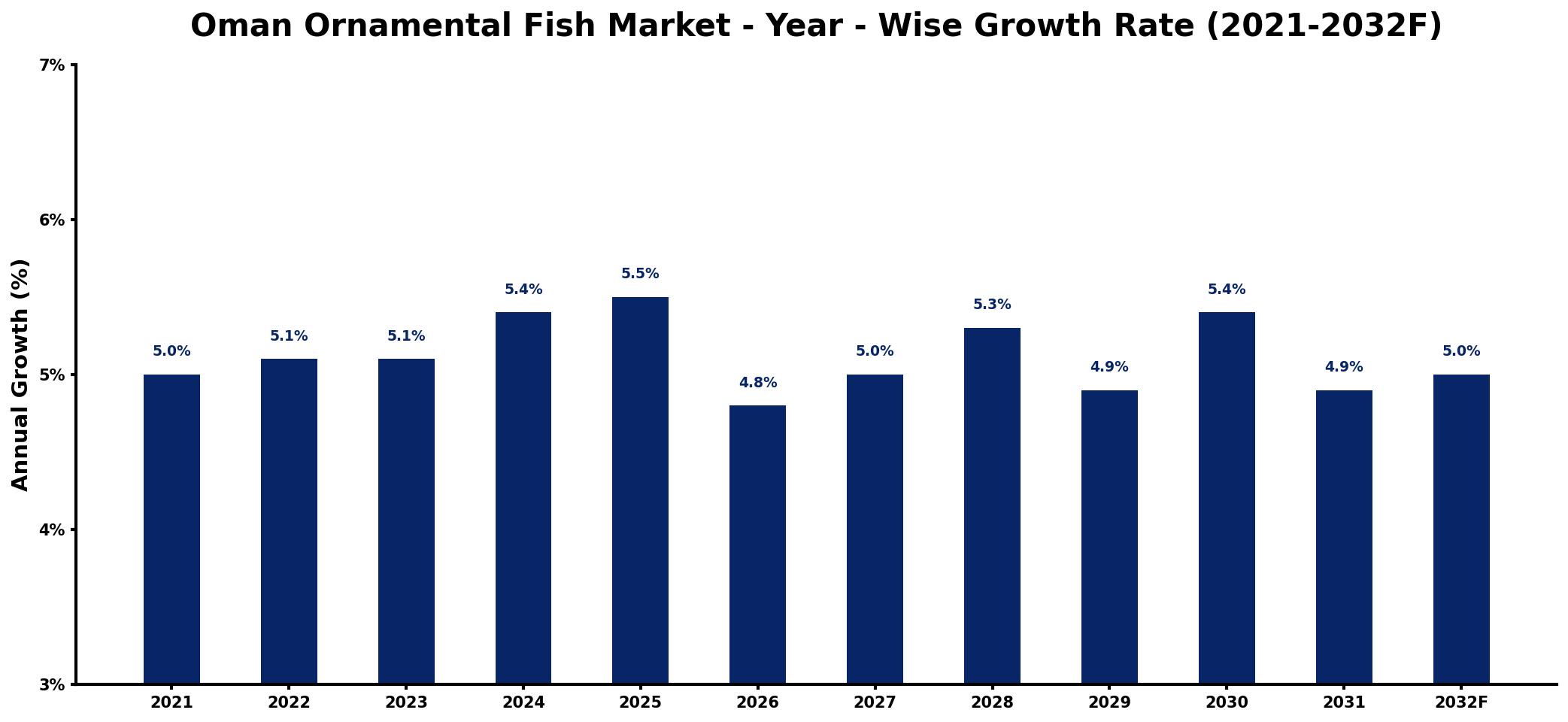
The table below presents the year‑wise growth rates along with the key drivers influencing the market
| Year | Growth Rate | Major Drivers |
| 2021 | 5.0% | Rising interest in aquaculture hobbies |
| 2022 | 5.1% | Increase in home aquarium setups |
| 2023 | 5.1% | Growth in eco-friendly practices |
| 2024 | 5.4% | Expansion of local breeding facilities |
| 2025 | 5.5% | Surge in online retail platforms |
| 2026 | 4.8% | Diversification of aquatic ecosystems |
| 2027 | 5.0% | Rising demand for decorative aquariums |
| 2028 | 5.3% | Increased investment in aquatic tourism |
| 2029 | 4.9% | enhanced product quality standards |
| 2030 | 5.4% | Emergence of sustainable sourcing standards |
| 2031 | 4.9% | strengthening underlying market demand |
| 2032 | 5.0% | expanding industrial usage applications |
Note: Market size estimations and growth projections presented in this report are based on 6Wresearch's proprietary forecasting methodology, utilizing the latest available industry data, government publications, and primary research inputs.
Oman Ornamental Fish Market Synopsis
The primary force currently shaping the Oman Ornamental Fish Market is the growing demand for exotic and unique fish species, especially among hobbyists and collectors. This trend is supported by a vibrant community of aquarium enthusiasts who are increasingly interested in diversifying their collections with rare species.
Additionally, there is a noticeable shift toward sustainability in the market, as consumers and businesses alike prioritize eco-friendly practices such as captive breeding and responsible sourcing. This alignment with environmental consciousness not only appeals to the modern consumer but also positions local businesses favorably in a competitive market.
Oman Ornamental Fish Market Key Takeaways
- The market is driven by increasing disposable incomes and interest in exotic species.
- Growing urbanization enhances the appeal of home aquariums and aquascaping.
- Sustainable practices are becoming a key focus, influencing consumer preferences.
- Online platforms are expanding market reach, facilitating easier transactions.
- Investment opportunities are prevalent, especially in breeding and specialty retail.
Evaluation of Restraints in Oman Ornamental Fish Market
Despite the optimistic outlook for the Oman Ornamental Fish Market, several challenges hinder its full potential. The market is grappling with high import costs for exotic species, which can limit the availability of certain fish. Furthermore, strict regulations concerning the import and export of live fish add layers of complexity for stakeholders. There is also a general lack of awareness about proper fish care and maintenance among consumers, which can lead to increased mortality rates in ornamental fish, subsequently impacting overall market growth. As a result, efforts must be directed towards improving education and infrastructure to nurture this market effectively.
Oman Ornamental Fish Market Trends
Several trends are currently shaping the Oman Ornamental Fish Market. The rise of aquascaping has ignited creativity among enthusiasts, resulting in increased sales of aquarium décor and accessories. Additionally, a shift toward sustainable practices is evident, with a growing emphasis on local breeding to reduce dependency on imports. The role of online platforms and social media is also pivotal, facilitating connections between buyers and sellers, thereby enhancing market accessibility. Overall, these trends indicate a vibrant and evolving market landscape.
Oman Ornamental Fish Market Opportunities
The Oman Ornamental Fish Market presents significant investment opportunities, particularly in the realms of breeding exotic fish and establishing specialized retail stores. As the number of affluent consumers rises, demand for unique ornamental fish is set to increase. Moreover, local breeding initiatives can pave the way for reducing import reliance, offering potential cost advantages. The strategic location of Oman enhances its position as a potential hub for exporting ornamental fish to neighboring Gulf countries, further amplifying investment prospects.
Government Initiatives in the Oman Ornamental Fish Market
The Omani government has instituted various policies aimed at fostering a sustainable ornamental fish market. These initiatives include implementing licensing requirements for breeders and traders to ensure adherence to quality standards and conservation efforts. Restrictions on the import and export of specific fish species serve to protect biodiversity and combat illegal trade. Furthermore, the government encourages research and development efforts within the ornamental fish sector, focusing on enhancing local production capabilities and reducing import dependencies.
Future Insights of the Oman Ornamental Fish Market
Looking ahead to 2026-2032, the future of the Oman Ornamental Fish Market appears bright. The anticipated increase in disposable income levels, coupled with a sustained interest in aquarium hobbyism, will likely drive market growth. Innovations in aquaculture are expected to improve local breeding capabilities, broadening the variety of available species. Additionally, the flourishing tourism sector, particularly related to leisure activities, may further contribute to the market's expansion. Stakeholders should be proactive in aligning with consumer trends towards sustainability and diversity to capitalize on this evolving landscape.
Oman Ornamental Fish Market Latest Developments (2025 - 2026)
Recent industry trends indicate a growing focus on local breeding initiatives, aimed at reducing the importation of exotic fish species. Pet stores and online retailers are enhancing their offerings, emphasizing sustainable practices and eco-friendly products. Additionally, community engagement through workshops and social media campaigns is fostering a deeper understanding of responsible fish ownership. These developments signal a robust direction for the market, encouraging a culture of care and sustainability among consumers.
Oman Ornamental Fish Market - Key Attractiveness of the Report
- 10 Years of Market Numbers
- Historical Data Starting from 2022 to 2025
- Base Year: 2025
- Forecast Data until 2032
- Key Performance Indicators Impacting the Market
- Major Upcoming Developments and Projects
Key Highlights of the Report:
- Oman Ornamental Fish Market Outlook
- Market Size of Oman Ornamental Fish Market, 2025
- Forecast of Oman Ornamental Fish Market, 2032
- Historical Data and Forecast of Oman Ornamental Fish Revenues & Volume for the Period 2022-2032F
- Oman Ornamental Fish Market Trend Evolution
- Oman Ornamental Fish Market Drivers and Challenges
- Oman Ornamental Fish Price Trends
- Oman Ornamental Fish Porter's Five Forces
- Oman Ornamental Fish Industry Life Cycle
- Historical Data and Forecast of Oman Ornamental Fish Market Revenues & Volume By Product for the Period 2022-2032F
- Historical Data and Forecast of Oman Ornamental Fish Market Revenues & Volume By Tropical Freshwater for the Period 2022-2032F
- Historical Data and Forecast of Oman Ornamental Fish Market Revenues & Volume By Temperate for the Period 2022-2032F
- Historical Data and Forecast of Oman Ornamental Fish Market Revenues & Volume By Marine for the Period 2022-2032F
- Historical Data and Forecast of Oman Ornamental Fish Market Revenues & Volume By Application for the Period 2022-2032F
- Historical Data and Forecast of Oman Ornamental Fish Market Revenues & Volume By Commercial for the Period 2022-2032F
- Historical Data and Forecast of Oman Ornamental Fish Market Revenues & Volume By Household for the Period 2022-2032F
- Oman Ornamental Fish Import Export Trade Statistics
- Market Opportunity Assessment By Product
- Market Opportunity Assessment By Application
- Oman Ornamental Fish Top Companies Market Share
- Oman Ornamental Fish Competitive Benchmarking By Technical and Operational Parameters
- Oman Ornamental Fish Company Profiles
- Oman Ornamental Fish Key Strategic Recommendations






































