Germany Ornamental Fish Market Size, Share & Growth Rate
The Germany Ornamental Fish Market was estimated at USD 196 Million in 2025 and is projected to reach USD 211 Million by 2032, growing at a CAGR of 1.1% from 2026 to 2032. This modest growth is primarily driven by an increasing interest in aquascaping and home aquariums, as well as a rise in disposable incomes among German consumers. Furthermore, the demand for sustainably sourced and ethically bred fish continues to strengthen, influencing purchasing decisions and shaping market dynamics.
Germany Ornamental Fish Market Year-wise Growth Rate and Key Drivers
This graph highlights how the Germany Ornamental Fish Market has steadily grown over the years, supported by major growth factors.
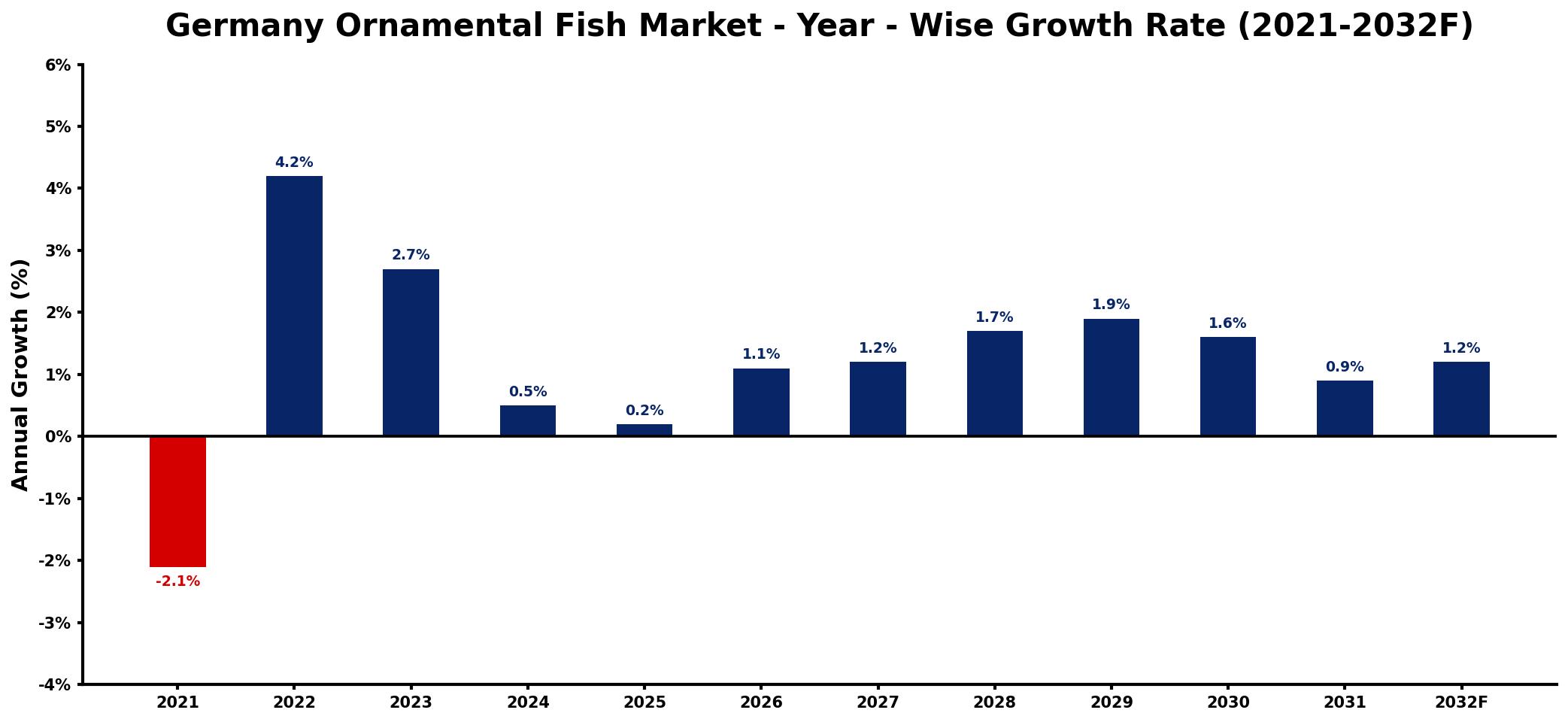
The table below presents the year‑wise growth rates along with the key drivers influencing the market
| Year | Growth Rate | Major Drivers |
| 2021 | -2.1% | Supply chain disruptions impact availability |
| 2022 | 4.2% | Increased interest in home aquariums |
| 2023 | 2.7% | Rising disposable income for hobbies |
| 2024 | 0.5% | Growth in online retail platforms |
| 2025 | 0.2% | Expansion of sustainable breeding practices |
| 2026 | 1.1% | Emergence of innovative aquarium technologies |
| 2027 | 1.2% | Increased consumer awareness on aesthetics |
| 2028 | 1.7% | increased overall sector activity |
| 2029 | 1.9% | Rising popularity of aquascaping competitions |
| 2030 | 1.6% | expanding healthcare application demand |
| 2031 | 0.9% | Increased investments in aquaculture startups |
| 2032 | 1.2% | Diversification of aquarium accessory offerings |
Note: Market size estimations and growth projections presented in this report are based on 6Wresearch's proprietary forecasting methodology, utilizing the latest available industry data, government publications, and primary research inputs.
Germany Ornamental Fish Market Synopsis
The unique cultural affinity for aquarium keeping in Germany has led to a flourishing demand for a variety of ornamental fish species. Popular choices such as Tetras, Guppies, and Goldfish are at the forefront, reflecting not only aesthetic preferences but also the growing trend of personalized home aquariums.
Germany's well-established network of breeders, wholesalers, and retailers caters to both hobbyists and commercial entities. This collaborative ecosystem is adapting to consumer preferences, particularly in sustainability, leading to an increase in responsibly bred and sourced ornamental fish that contribute positively to biodiversity.
Germany Ornamental Fish Market Key Takeaways
- The market is shifting towards sustainable and ethically sourced fish, driven by consumer demand for responsible aquaculture practices.
- Advancements in aquarium technology and equipment have enhanced fish care, supporting market expansion.
- Unique and exotic species are increasingly sought after, leading to diversification within the market.
- Government regulations focusing on animal welfare and conservation are shaping supply chain practices.
- Investment opportunities are emerging in online retail platforms, aquascaping supplies, and eco-friendly breeding practices.
Evaluation of Restraints in Germany Ornamental Fish Market
Despite the positive outlook, the Germany ornamental fish market faces several restraints. Stringent regulations regarding fish imports can restrict the availability of certain species, thereby increasing costs for suppliers and consumers alike. Additionally, the focus on sustainability has shifted demand towards captive-bred fish, limiting options for retailers who may rely on wild-caught species. The competitive pressure from online retailers also challenges traditional brick-and-mortar establishments, further complicating market dynamics. Lastly, economic fluctuations may influence consumer spending habits, potentially impacting demand for ornamental fish.
Germany Ornamental Fish Market Trends
The trend towards sustainability is paramount in the Germany ornamental fish market, with consumers increasingly advocating for ethically sourced and bred fish. Retailers are enhancing their offerings of unique and exotic species to meet this demand, while also focusing on educating customers about responsible fishkeeping practices. Moreover, the rise of technology has led to innovations in aquarium maintenance, such as automated feeding systems and advanced filtration solutions, making fish care more accessible for hobbyists.
Germany Ornamental Fish Market Opportunities
The market presents numerous investment opportunities, particularly for those interested in breeding facilities and importing rare species. The growing popularity of aquascaping has spurred demand for specialized aquarium equipment and accessories, creating a niche for entrepreneurs. E-commerce platforms are also on the rise, offering a streamlined avenue for consumers to purchase ornamental fish and supplies. Furthermore, aligning business practices with sustainable and eco-friendly initiatives can differentiate companies in an increasingly competitive landscape.
Government Initiatives in the Germany Ornamental Fish Market
The German government actively promotes animal welfare and environmental conservation through regulations pertaining to the ornamental fish market. Policies ensure that ornamental fish are ethically sourced and maintained in humane conditions, aiming to prevent animal cruelty. Import restrictions are in place to protect endangered species, while guidelines for sustainable aquaculture practices are encouraged to minimize ecological impact. These initiatives reflect a commitment to balancing economic interests with the need to protect biodiversity and foster responsible consumption.
Future Insights of the Germany Ornamental Fish Market
Looking ahead to 2026-2032, the Germany ornamental fish market is expected to sustain a positive growth trajectory. The increasing consumer interest in unique ornamental fish and advancements in aquaculture technologies are likely to spur market development. Additionally, as sustainability and ethical practices continue to influence consumer preferences, businesses that adapt to these trends will be well-positioned for success. Overall, the combination of rising disposable incomes and a growing appreciation for aquarium aesthetics promises to sustain demand within the sector.
Germany Ornamental Fish Market Latest Developments (2025 - 2026)
Recently, the ornamental fish market in Germany has seen a notable shift towards online retail channels, with many consumers preferring the convenience of purchasing fish and supplies online. Moreover, initiatives aimed at increasing consumer awareness around sustainable fishkeeping practices are becoming more prevalent, with retailers hosting educational events and workshops. Additionally, innovations in aquarium technology are emerging, contributing to enhanced fish care and maintenance capabilities. This evolving landscape reflects the market's adaptability and commitment to meeting consumer demands.
Germany Ornamental Fish Market - Key Attractiveness of the Report
- 10 Years of Market Numbers
- Historical Data Starting from 2022 to 2025
- Base Year: 2025
- Forecast Data until 2032
- Key Performance Indicators Impacting the Market
- Major Upcoming Developments and Projects
Key Highlights of the Report:
- Germany Ornamental Fish Market Outlook
- Market Size of Germany Ornamental Fish Market, 2025
- Forecast of Germany Ornamental Fish Market, 2032
- Historical Data and Forecast of Germany Ornamental Fish Revenues & Volume for the Period 2022-2032F
- Germany Ornamental Fish Market Trend Evolution
- Germany Ornamental Fish Market Drivers and Challenges
- Germany Ornamental Fish Price Trends
- Germany Ornamental Fish Porter's Five Forces
- Germany Ornamental Fish Industry Life Cycle
- Historical Data and Forecast of Germany Ornamental Fish Market Revenues & Volume By Product for the Period 2022-2032F
- Historical Data and Forecast of Germany Ornamental Fish Market Revenues & Volume By Tropical Freshwater for the Period 2022-2032F
- Historical Data and Forecast of Germany Ornamental Fish Market Revenues & Volume By Temperate for the Period 2022-2032F
- Historical Data and Forecast of Germany Ornamental Fish Market Revenues & Volume By Marine for the Period 2022-2032F
- Historical Data and Forecast of Germany Ornamental Fish Market Revenues & Volume By Application for the Period 2022-2032F
- Historical Data and Forecast of Germany Ornamental Fish Market Revenues & Volume By Commercial for the Period 2022-2032F
- Historical Data and Forecast of Germany Ornamental Fish Market Revenues & Volume By Household for the Period 2022-2032F
- Germany Ornamental Fish Import Export Trade Statistics
- Market Opportunity Assessment By Product
- Market Opportunity Assessment By Application
- Germany Ornamental Fish Top Companies Market Share
- Germany Ornamental Fish Competitive Benchmarking By Technical and Operational Parameters
- Germany Ornamental Fish Company Profiles
- Germany Ornamental Fish Key Strategic Recommendations






































