Kenya Ornamental Fish Market Size, Share & Growth Rate
The Kenya Ornamental Fish Market was estimated at USD 477 Million in 2025 and is projected to reach USD 643 Million by 2032, growing at a CAGR of 4.4% from 2026 to 2032. This growth trajectory is primarily fueled by increasing disposable incomes and a burgeoning interest in aquaculture among the Kenyan population. Additionally, the rising trend of keeping fish as exotic pets has further enhanced demand for ornamental fish species.
Kenya Ornamental Fish Market Year-wise Growth Rate and Key Drivers
This graph highlights how the Kenya Ornamental Fish Market has steadily grown over the years, supported by major growth factors.
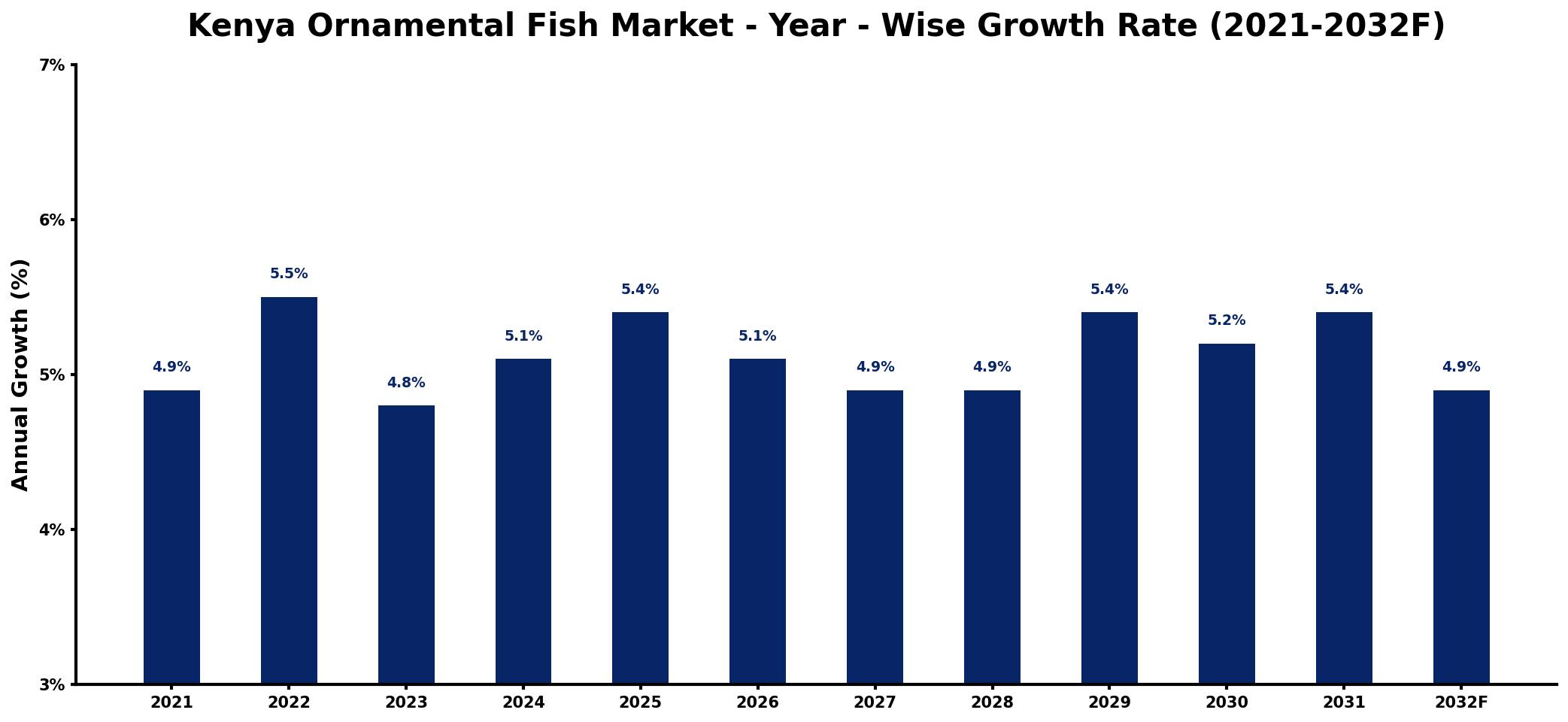
The table below presents the year‑wise growth rates along with the key drivers influencing the market
| Year | Growth Rate | Major Drivers |
| 2021 | 4.9% | Rising interest in aquaculture practices |
| 2022 | 5.5% | Increased investments in aquatic habitats |
| 2023 | 4.8% | Growing popularity of home aquariums |
| 2024 | 5.1% | Expansion of retail aquarium stores |
| 2025 | 5.4% | improved raw material availability |
| 2026 | 5.1% | Development of sustainable breeding techniques |
| 2027 | 4.9% | Enhanced awareness of aquatic ecosystems |
| 2028 | 4.9% | Growing community of hobbyist enthusiasts |
| 2029 | 5.4% | Strengthened partnerships with local suppliers |
| 2030 | 5.2% | Increased focus on eco-friendly practices |
| 2031 | 5.4% | Rise in educational aquarium programs |
| 2032 | 4.9% | growing automotive sector requirements |
Note: Market size estimations and growth projections presented in this report are based on 6Wresearch's proprietary forecasting methodology, utilizing the latest available industry data, government publications, and primary research inputs.
Kenya Ornamental Fish Market Synopsis
The Kenya Ornamental Fish Market has seen recent momentum, driven by a rising fascination with aquariums in homes and offices. However, despite the promising outlook, several challenges persist that could temper growth. The market is on the verge of evolving into a more sustainable and diverse entity.
As local breeders gain ground, the reliance on imports is diminishing. This shift not only supports the local economy but also aligns with the growing consumer preference for ethically sourced and locally bred fish. With innovations in aquarium design and setup gaining traction, the market is well-positioned for an exciting transformation.
Kenya Ornamental Fish Market Key Takeaways
- The market is projected to reach USD 643 Million by 2032, demonstrating a significant growth potential.
- Local breeders are increasingly supplying high-quality ornamental fish, enhancing market self-sufficiency.
- Consumer interest is shifting towards sustainable and ethically sourced fish species, particularly native varieties.
- Online sales channels are becoming more prominent, offering convenience and broader access to diverse fish species.
- Investment opportunities abound in fish farming, retail, and aquarium-related services.
Evaluation of Restraints in Kenya Ornamental Fish Market
The Kenya Ornamental Fish Market grapples with several key constraints that hamper its full potential. Primarily, inadequate infrastructure for the transportation and storage of live fish remains a pressing issue, leading to losses and inefficiencies. Additionally, limited access to quality fish feed and health products poses a significant barrier for local breeders, who are striving to meet the rising demand. Moreover, a lack of standardized industry regulations often results in inconsistent product quality, further complicating the market dynamics. Addressing these issues will be critical for unlocking sustainable growth within the sector.
Kenya Ornamental Fish Market Trends
There are several exciting trends emerging in the Kenya Ornamental Fish Market. Notably, a strong shift towards sustainability is influencing consumer preferences, with an increasing demand for ethically sourced and locally bred fish. Additionally, customized aquarium designs are gaining popularity, emphasizing the creation of natural habitats that prioritize fish well-being. The rise of online shopping channels is revolutionizing how consumers purchase ornamental fish, enabling them to explore a wider array of options from the comfort of their homes. This blend of sustainability, innovation, and convenience is reshaping the market landscape.
Kenya Ornamental Fish Market Opportunities
The Kenya Ornamental Fish Market is ripe with investment opportunities as interest in aquaculture and ornamental fishkeeping continues to surge. Entrepreneurs can explore the establishment of ornamental fish farms to meet the growing demand for unique species. Furthermore, retail shops focusing on exotic fish sales can tap into the rising market of hobbyists. Online platforms for the sale and distribution of fish offer an innovative avenue to reach customers nationwide. Additionally, value-added services such as fish breeding and aquarium maintenance can provide lucrative business prospects, catering to a more diverse consumer base.
Government Initiatives in the Kenya Ornamental Fish Market
The Kenyan government has implemented various policies aimed at regulating and promoting sustainable practices within the ornamental fish market. These initiatives include licensing requirements for dealers and breeders, import and export regulations designed to protect native fish species, and quality control measures to ensure the welfare of fish. Furthermore, there is a concerted effort to encourage the development of local breeding facilities, thereby reducing the reliance on imports and enhancing the overall health of the domestic ornamental fish sector.
Future Insights of the Kenya Ornamental Fish Market
Looking ahead to 2026-2032, the future of the Kenya Ornamental Fish Market appears optimistic. The expanding middle class, coupled with increasing disposable income, is expected to drive demand for ornamental fish as a hobby and decorative element in homes. Additionally, the tourism sector is poised to play a crucial role in facilitating the sale of ornamental fish to hotels and resorts. Improvements in distribution channels and advancements in breeding techniques will likely lead to a wider variety of species available in the market. However, it will be essential to address environmental concerns and regulatory challenges to sustain growth in the years to come.
Kenya Ornamental Fish Market Latest Developments (2025 - 2026)
In recent months, the Kenya Ornamental Fish Market has witnessed a notable shift towards online sales channels, with various retailers enhancing their digital presence to attract a broader customer base. Additionally, local fish farms are increasingly adopting sustainable practices, promoting ethically sourced fish to align with consumer preferences. There has also been a surge in initiatives aimed at educating the public on proper fish care, which is expected to enhance the overall health of fish populations in the market.
Kenya Ornamental Fish Market - Key Attractiveness of the Report
- 10 Years of Market Numbers
- Historical Data Starting from 2022 to 2025
- Base Year: 2025
- Forecast Data until 2032
- Key Performance Indicators Impacting the Market
- Major Upcoming Developments and Projects
Key Highlights of the Report:
- Kenya Ornamental Fish Market Outlook
- Market Size of Kenya Ornamental Fish Market, 2025
- Forecast of Kenya Ornamental Fish Market, 2032
- Historical Data and Forecast of Kenya Ornamental Fish Revenues & Volume for the Period 2022-2032F
- Kenya Ornamental Fish Market Trend Evolution
- Kenya Ornamental Fish Market Drivers and Challenges
- Kenya Ornamental Fish Price Trends
- Kenya Ornamental Fish Porter's Five Forces
- Kenya Ornamental Fish Industry Life Cycle
- Historical Data and Forecast of Kenya Ornamental Fish Market Revenues & Volume By Product for the Period 2022-2032F
- Historical Data and Forecast of Kenya Ornamental Fish Market Revenues & Volume By Tropical Freshwater for the Period 2022-2032F
- Historical Data and Forecast of Kenya Ornamental Fish Market Revenues & Volume By Temperate for the Period 2022-2032F
- Historical Data and Forecast of Kenya Ornamental Fish Market Revenues & Volume By Marine for the Period 2022-2032F
- Historical Data and Forecast of Kenya Ornamental Fish Market Revenues & Volume By Application for the Period 2022-2032F
- Historical Data and Forecast of Kenya Ornamental Fish Market Revenues & Volume By Commercial for the Period 2022-2032F
- Historical Data and Forecast of Kenya Ornamental Fish Market Revenues & Volume By Household for the Period 2022-2032F
- Kenya Ornamental Fish Import Export Trade Statistics
- Market Opportunity Assessment By Product
- Market Opportunity Assessment By Application
- Kenya Ornamental Fish Top Companies Market Share
- Kenya Ornamental Fish Competitive Benchmarking By Technical and Operational Parameters
- Kenya Ornamental Fish Company Profiles
- Kenya Ornamental Fish Key Strategic Recommendations






































