Egypt Ornamental Fish Market Size, Share & Growth Rate
The Egypt Ornamental Fish Market was estimated at USD 386 Million in 2025 and is projected to reach USD 506 Million by 2032, growing at a CAGR of 3.9% from 2026 to 2032. This growth trajectory is supported by increasing disposable incomes and urbanization, which have fostered a burgeoning interest in aquariums as both a hobby and a decorative element in homes and businesses. Furthermore, the demand for exotic and sustainably sourced fish is driving innovation and diversification within the market.
Egypt Ornamental Fish Market Year-wise Growth Rate and Key Drivers
This graph highlights how the Egypt Ornamental Fish Market has steadily grown over the years, supported by major growth factors.
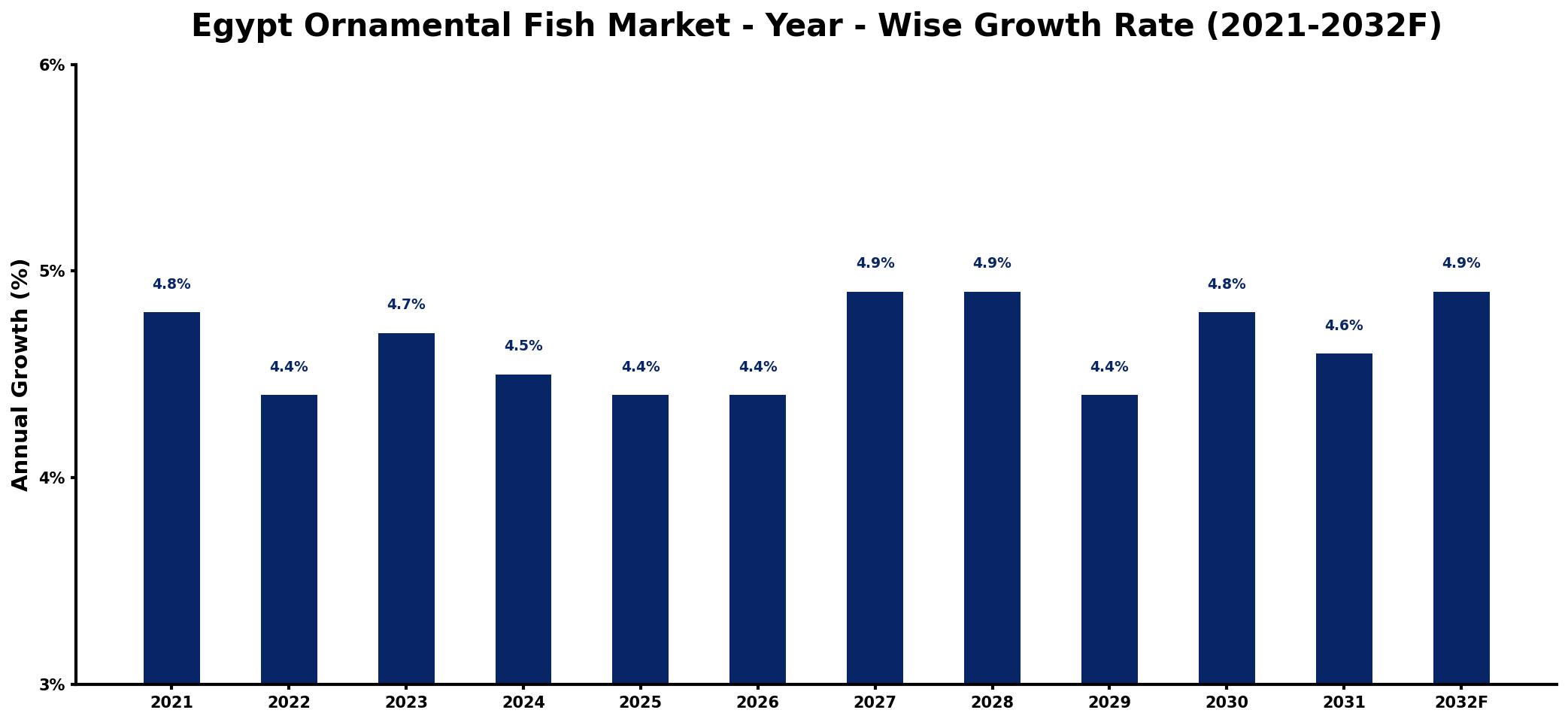
The table below presents the year‑wise growth rates along with the key drivers influencing the market
| Year | Growth Rate | Major Drivers |
| 2021 | 4.8% | Growing interest in aquaculture practices |
| 2022 | 4.4% | Increased investment in aquatic facilities |
| 2023 | 4.7% | Rising popularity of home aquariums |
| 2024 | 4.5% | Expansion of retail distribution networks |
| 2025 | 4.4% | Enhanced awareness of aquatic ecosystems |
| 2026 | 4.4% | Diversification of aquatic species offerings |
| 2027 | 4.9% | Strengthening of online sales platforms |
| 2028 | 4.9% | Emergence of sustainable farming methods |
| 2029 | 4.4% | Development of local breeding programs |
| 2030 | 4.8% | Improved quality of aquarium supplies |
| 2031 | 4.6% | Growth of eco-friendly packaging solutions |
| 2032 | 4.9% | Increase in educational outreach initiatives |
Note: Market size estimations and growth projections presented in this report are based on 6Wresearch's proprietary forecasting methodology, utilizing the latest available industry data, government publications, and primary research inputs.
Egypt Ornamental Fish Market Synopsis
In recent years, the Egypt Ornamental Fish Market has experienced notable growth, fueled by a rising culture of fishkeeping among enthusiasts and collectors. As more consumers adopt aquariums as a lifestyle choice, the variety of freshwater and marine species available has expanded significantly, catering to the unique preferences of both hobbyists and commercial buyers.
Sustainability has become a pivotal theme in this market, with increasing consumer preference for locally bred and captive-bred species. Additionally, advancements in technology related to aquarium setup and maintenance are shaping the landscape, making it easier for individuals to care for their aquatic companions.
Egypt Ornamental Fish Market Key Takeaways
- The market is shifting towards sustainable and eco-friendly practices, with growing demand for locally bred fish.
- Online sales channels are becoming increasingly popular, providing consumers with broader access to diverse species.
- Technological advancements in aquaculture are enhancing fish health and quality, positively impacting consumer satisfaction.
- Customization of aquarium setups is gaining traction, reflecting individual preferences in fishkeeping.
- A rising awareness of proper care and maintenance is fostering demand for related products and services.
Evaluation of Restraints in Egypt Ornamental Fish Market
Despite the promising growth potential, the Egypt Ornamental Fish Market faces significant challenges. Poor infrastructure and logistics can severely impact the quality of fish during transportation, leading to increased mortality rates. Additionally, the market suffers from fragmentation, with inconsistent breeding practices and quality control hampering overall product reliability. Limited technological access and fluctuating currency rates add further complexities, creating an environment where market players must navigate uncertainties while striving for growth.
Egypt Ornamental Fish Market Trends
The trend towards sustainability is not just a passing phase; it's a fundamental shift in consumer preferences. Increased awareness of environmental issues has led to a preference for exotic species that are bred locally or under controlled conditions. Moreover, the expansion of e-commerce has transformed how consumers purchase ornamental fish, allowing for greater convenience and a wider selection. On the technological front, innovations in filtration and water treatment systems are further enhancing the aquarium experience, promoting healthier environments for aquatic life.
Egypt Ornamental Fish Market Opportunities
Investment opportunities abound in the Egypt Ornamental Fish Market, particularly in breeding and farming operations that can provide diverse and locally bred species. Retail avenues, including physical and online stores, are ripe for exploration, catering to the increasing number of hobbyists. Furthermore, there is considerable potential for suppliers of aquarium equipment and accessories, along with specialized services like maintenance and consultancy, enhancing the overall fishkeeping experience. Collaboration with local farms for sustainable sourcing could further broaden market reach and elevate brand credibility.
Government Initiatives in the Egypt Ornamental Fish Market
The Egyptian government has introduced several policies aimed at regulating the ornamental fish industry, focusing on biodiversity protection and the prevention of invasive species. Licensing and operational guidelines for fish farms are enforced to ensure compliance with environmental and welfare standards. Furthermore, there is a growing emphasis on promoting sustainable aquaculture practices, with initiatives that support research and development to improve the overall quality of the market.
Future Insights of the Egypt Ornamental Fish Market
Looking ahead to 2026-2032, the Egypt Ornamental Fish Market is expected to continue its growth trajectory, supported by rising disposable incomes and a flourishing tourism industry. The rich biodiversity of Egypts aquatic life presents vast opportunities for both local and international markets. Technological advancements and increasing interest in aquaculture will further stimulate market expansion. However, stakeholders must remain vigilant about regulatory challenges and environmental concerns that may influence future growth dynamics.
Egypt Ornamental Fish Market Latest Developments (2025 - 2026)
Recent developments in the Egypt Ornamental Fish Market indicate a growing focus on sustainability and local sourcing. There has been a surge in initiatives aimed at improving fish farming practices, with various stakeholders collaborating to enhance breeding techniques. Online retail platforms are expanding their offerings, catering to an increasingly digital-savvy customer base. Additionally, educational programs about proper fish care and aquarium maintenance are gaining popularity among new enthusiasts.
Egypt Ornamental Fish Market - Key Attractiveness of the Report
- 10 Years of Market Numbers
- Historical Data Starting from 2022 to 2025
- Base Year: 2025
- Forecast Data until 2032
- Key Performance Indicators Impacting the Market
- Major Upcoming Developments and Projects
Key Highlights of the Report:
- Egypt Ornamental Fish Market Outlook
- Market Size of Egypt Ornamental Fish Market, 2025
- Forecast of Egypt Ornamental Fish Market, 2032
- Historical Data and Forecast of Egypt Ornamental Fish Revenues & Volume for the Period 2022-2032F
- Egypt Ornamental Fish Market Trend Evolution
- Egypt Ornamental Fish Market Drivers and Challenges
- Egypt Ornamental Fish Price Trends
- Egypt Ornamental Fish Porter's Five Forces
- Egypt Ornamental Fish Industry Life Cycle
- Historical Data and Forecast of Egypt Ornamental Fish Market Revenues & Volume By Product for the Period 2022-2032F
- Historical Data and Forecast of Egypt Ornamental Fish Market Revenues & Volume By Tropical Freshwater for the Period 2022-2032F
- Historical Data and Forecast of Egypt Ornamental Fish Market Revenues & Volume By Temperate for the Period 2022-2032F
- Historical Data and Forecast of Egypt Ornamental Fish Market Revenues & Volume By Marine for the Period 2022-2032F
- Historical Data and Forecast of Egypt Ornamental Fish Market Revenues & Volume By Application for the Period 2022-2032F
- Historical Data and Forecast of Egypt Ornamental Fish Market Revenues & Volume By Commercial for the Period 2022-2032F
- Historical Data and Forecast of Egypt Ornamental Fish Market Revenues & Volume By Household for the Period 2022-2032F
- Egypt Ornamental Fish Import Export Trade Statistics
- Market Opportunity Assessment By Product
- Market Opportunity Assessment By Application
- Egypt Ornamental Fish Top Companies Market Share
- Egypt Ornamental Fish Competitive Benchmarking By Technical and Operational Parameters
- Egypt Ornamental Fish Company Profiles
- Egypt Ornamental Fish Key Strategic Recommendations






































