Oman Used Car Market Summary
The oman used car market was estimated at USD 145 Million in 2025 and is projected to reach USD 158 Million by 2032, growing at a CAGR of 0.8% from 2026 to 2032.
Oman Used Car Market Year-wise Growth Rate and Key Drivers
This graph highlights how the Oman Used Car Market has steadily grown over the past five years, supported by major growth factors.
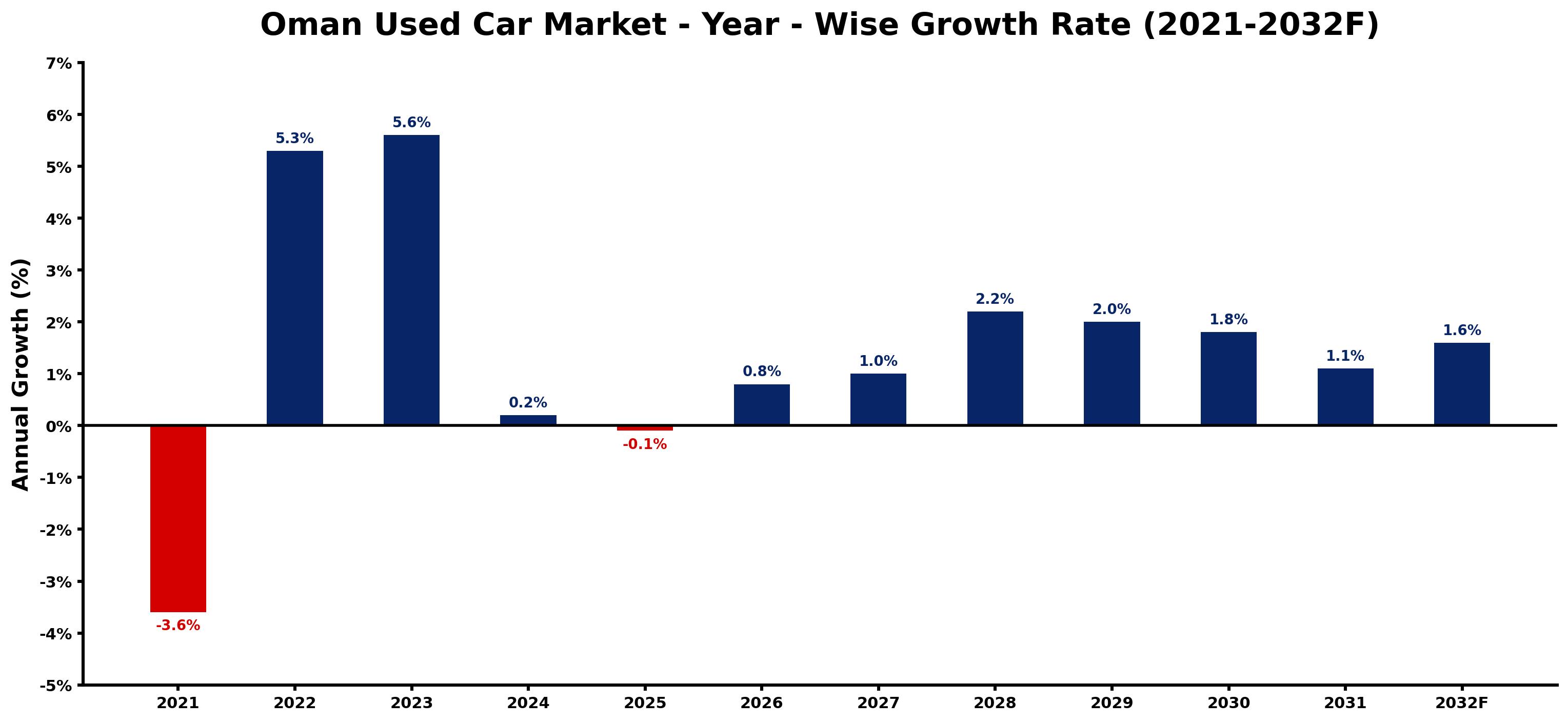
The table below presents the year wise growth rates along with the key drivers influencing the market
| Year | Growth Rate | Major Drivers |
| 2021 | -3.6% | Increased digital marketplace competition led to price wars, diminishing profit margins for used car dealers. |
| 2022 | 5.3% | Increased urbanization in Muscat drives demand for affordable transportation options. |
| 2023 | 5.6% | Rising fuel prices push consumers towards more fuel-efficient used vehicles. |
| 2024 | 0.2% | Oman's robust tourism sector supports demand for rental and used cars. |
| 2025 | -0.1% | Increased import tariffs on used vehicles diminished affordability, leading to a decline in consumer purchases. |
| 2026 | 0.8% | Technology enhancements in pre-owned vehicles increase buyer confidence in purchases. |
| 2027 | 1.0% | Trade agreements within GCC foster a competitive used car market landscape. |
| 2028 | 2.2% | Digital platforms simplify the buying process, enhancing the customer experience. |
| 2029 | 2.0% | Environmental consciousness encourages buyers to opt for fuel-efficient used models. |
| 2030 | 1.8% | Long-term financing options become more accessible, making used cars affordable. |
| 2031 | 1.1% | Increased expatriate population boosts demand for reliable used transportation. |
| 2032 | 1.6% | Emergence of electric vehicles in the used market attracts environmentally-conscious buyers. |
Note - Market size estimations and growth projections presented in this report are based on 6Wresearch's advanced forecasting approach, validated with industry datasets as of June 2026.
Oman Used Car Market Synopsis
The Oman Used Car Market is projected to reach 0.8% and witness significant growth during the forecast period (2026-2032). The market's expansion is prominently supported by the rising disposable income of consumers, which facilitates a shift towards affordable transportation options. As the demand for pre-owned vehicles continues to grow, buyers are increasingly considering a variety of models, including sedans, SUVs, and hatchbacks. Japanese brands are notably favored in this landscape, recognized for their reliability and strong resale value, creating a robust marketplace for used vehicles.
Oman Used Car Market Growth Drivers
Several key factors are driving the growth of the Oman Used Car Market. Firstly, the increasing disposable income among the populace empowers more individuals to invest in pre-owned vehicles, thus enhancing their access to personal transport. Secondly, the preference for economical transportation options, coupled with the depreciation rates of new cars, makes used vehicles an attractive choice. Additionally, the growing trend of digital transformation has led to a rise in online platforms for buying and selling cars, simplifying the process and improving accessibility for both buyers and sellers. The heightened awareness of the environmental benefits associated with fuel-efficient vehicles is another factor influencing consumer choices, leading to a demand for greener pre-owned vehicle options. Lastly, favorable financing options are emerging, providing consumers with greater flexibility in their purchasing decisions.
Oman Used Car Market Trends and Opportunities
There are several notable trends shaping the Oman Used Car Market. A significant trend is the increasing demand for environmentally friendly and fuel-efficient vehicles, largely driven by escalating fuel prices and a growing public consciousness regarding sustainability. The shift towards online transactions continues to gain momentum, as customers favor the convenience and transparency these digital platforms offer. Furthermore, consumers are showing a pronounced interest in certified pre-owned vehicles, which provide assurance regarding their quality and condition. The rising popularity of SUVs and crossovers indicates changing consumer preferences, reflecting a move toward versatility and comfort within the automotive sector. These trends present ample opportunities for savvy investors to cater to the evolving tastes and preferences of the Omani market.
Oman Used Car Market Challenges and Restraints
Despite its growth potential, the Oman Used Car Market faces several challenges that may hinder its development. One major issue is the lack of transparency and standardization in vehicle pricing, which creates confusion and can lead to consumer exploitation. The fragmented nature of the market, characterized by numerous individual sellers, complicates the comparison of options, making it difficult for buyers to make informed decisions. Concerns regarding counterfeit parts and odometer tampering contribute to distrust in used car quality and reliability. Additionally, limited financing options and stringent government regulations on importing vehicles present obstacles to market growth. Addressing these challenges through improved regulation and consumer education is key to fostering a sustainable used car market in Oman.
Oman Used Car Market Investment Opportunities
Investment opportunities within the Oman Used Car Market are expanding as demand for affordable transportation options rises. Investors may find lucrative prospects in establishing certified pre-owned car dealerships, which can capitalize on consumer preference for quality assurance. Additionally, venturing into financing solutions tailored for used car purchases can attract customers seeking flexibility. Offering extended warranties, vehicle inspections, and maintenance packages can also provide competitive advantages and enhance customer trust. With the right marketing strategies and a commitment to customer satisfaction, there exists a significant potential for profitability in this evolving market.
Oman Used Car Market Government Investment and Initiatives
The Omani government has implemented various initiatives to regulate the used car market and promote consumer protection. Policies such as mandatory vehicle inspections and strict emissions standards are aimed at ensuring the safety and quality of used vehicles. Furthermore, regulations governing the importation of used cars are in place to ensure compliance with safety and environmental standards. The government has also initiated programs to stimulate the market for eco-friendly and fuel-efficient used cars, aligning with broader sustainability goals. Through these regulations and initiatives, the government seeks to enhance road safety while reducing the environmental impact of the automotive sector, ultimately fostering a more responsible vehicle ownership culture.
Oman Used Car Market Latest Developments (May 2025 - June 2026)
Recent developments in the Oman Used Car Market from May 2025 to June 2026 demonstrate a clear trajectory toward innovation and modernization. The rise of digital platforms has become increasingly prominent, with more consumers opting for online marketplaces for their vehicle transactions. Dealers and private sellers alike are adapting to this trend, enhancing their online presence to meet consumer demand. Additionally, there is a growing focus on certified pre-owned programs, offering warranties and quality assurances to buyers. Environmental initiatives are also taking precedence, aligning with global sustainability trends and encouraging the sale of fuel-efficient vehicles.
Oman Used Car Market - Key Attractiveness of the Report
- 10 Years of Market Numbers
- Historical Data Starting from 2022 to 2025
- Base Year: 2025
- Forecast Data until 2032
- Key Performance Indicators Impacting the Market
- Major Upcoming Developments and Projects
Key Highlights of the Report:
- Oman Used Car Market Outlook
- Market Size of Oman Used Car Market, 2025
- Forecast of Oman Used Car Market, 2032F
- Historical Data and Forecast of Oman Used Car Revenues & Volume for the Period 2022-2032F
- Oman Used Car Market Trend Evolution
- Oman Used Car Market Drivers and Challenges
- Oman Used Car Price Trends
- Oman Used Car Porter's Five Forces
- Oman Used Car Industry Life Cycle
- Historical Data and Forecast of Oman Used Car Market Revenues & Volume By Vehicle Type for the Period 2022-2032F
- Historical Data and Forecast of Oman Used Car Market Revenues & Volume By Hatchbacks for the Period 2022-2032F
- Historical Data and Forecast of Oman Used Car Market Revenues & Volume By Sedan for the Period 2022-2032F
- Historical Data and Forecast of Oman Used Car Market Revenues & Volume By Sports Utility Vehicle for the Period 2022-2032F
- Historical Data and Forecast of Oman Used Car Market Revenues & Volume By Others for the Period 2022-2032F
- Historical Data and Forecast of Oman Used Car Market Revenues & Volume By Vendor for the Period 2022-2032F
- Historical Data and Forecast of Oman Used Car Market Revenues & Volume By Organized for the Period 2022-2032F
- Historical Data and Forecast of Oman Used Car Market Revenues & Volume By Unorganized for the Period 2022-2032F
- Historical Data and Forecast of Oman Used Car Market Revenues & Volume By Fuel Type for the Period 2022-2032F
- Historical Data and Forecast of Oman Used Car Market Revenues & Volume By Gasoline for the Period 2022-2032F
- Historical Data and Forecast of Oman Used Car Market Revenues & Volume By Diesel for the Period 2022-2032F
- Historical Data and Forecast of Oman Used Car Market Revenues & Volume By Alternative Fuel Vehicles for the Period 2022-2032F
- Oman Used Car Import Export Trade Statistics
- Market Opportunity Assessment By Vehicle Type
- Market Opportunity Assessment By Vendor
- Market Opportunity Assessment By Fuel Type
- Oman Used Car Top Companies Market Share
- Oman Used Car Competitive Benchmarking By Technical and Operational Parameters
- Oman Used Car Company Profiles
- Oman Used Car Key Strategic Recommendations






































