Pakistan Bicycles Market Size Growth Rate
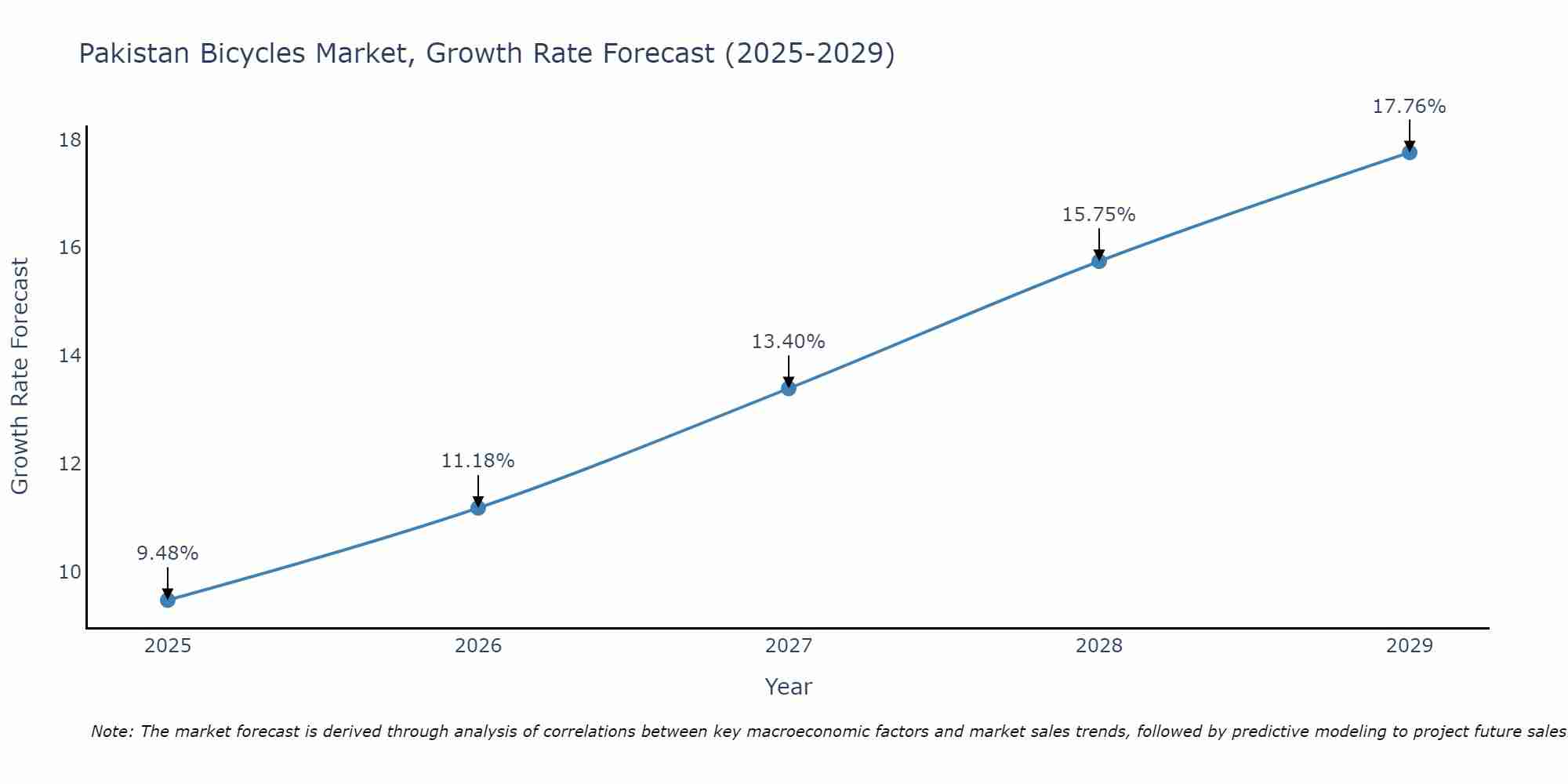
The Pakistan Bicycles Market is poised for steady growth rate improvements from 2025 to 2029. Commencing at 9.48% in 2025, growth builds up to 17.76% by 2029.
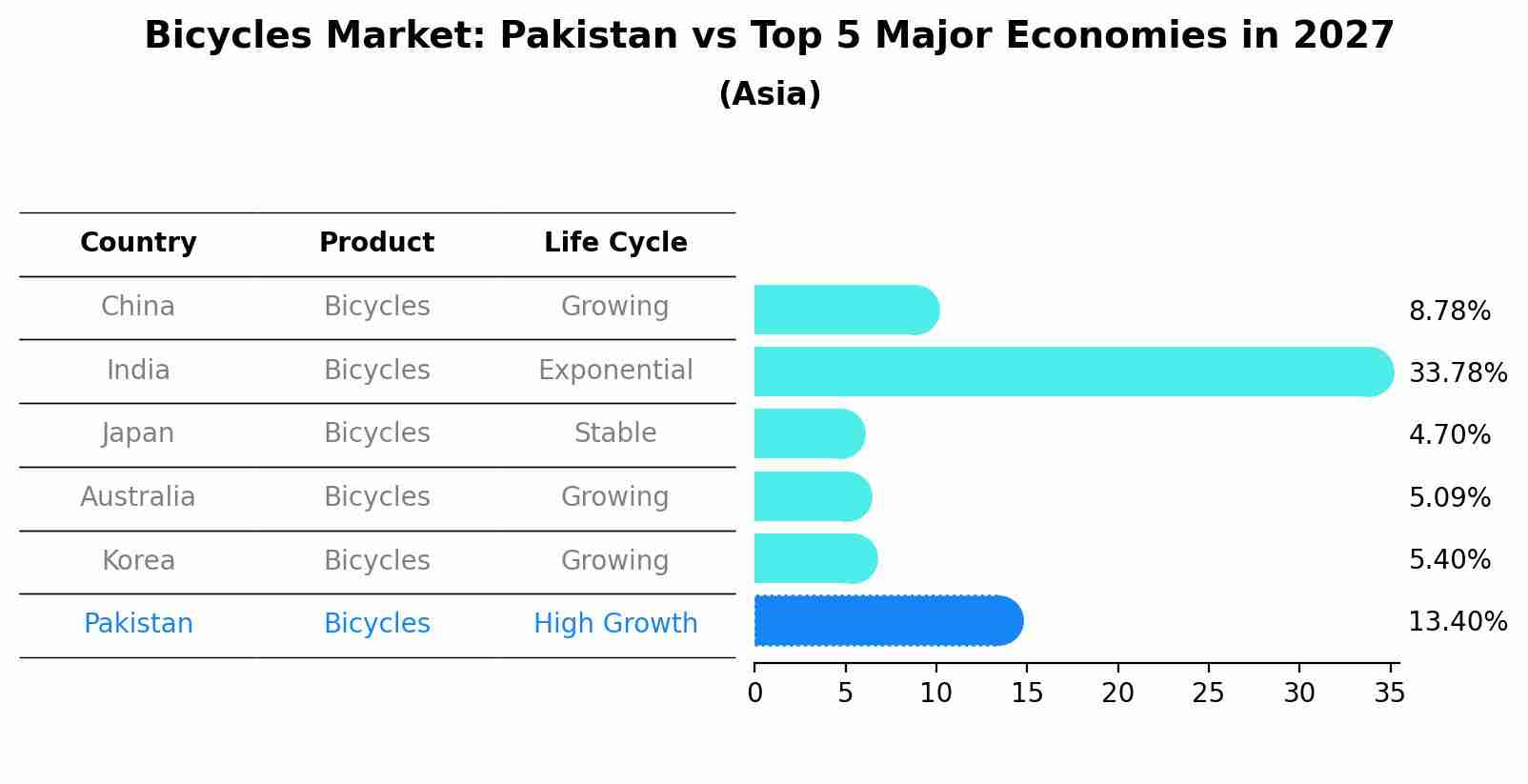
Bicycles Market: Pakistan vs Top 5 Major Economies in 2027 (Asia)
The Bicycles market in Pakistan is projected to grow at a high growth rate of 13.40% by 2027, highlighting the country's increasing focus on advanced technologies within the Asia region, where China holds the dominant position, followed closely by India, Japan, Australia and South Korea, shaping overall regional demand.
Key Highlights of the Report:
- Pakistan Bicycles Market Outlook
- Market Size of Pakistan Bicycles Market, 2024
- Forecast of Pakistan Bicycles Market, 2031
- Historical Data and Forecast of Pakistan Bicycles Revenues & Volume for the Period 2021 - 2031
- Pakistan Bicycles Market Trend Evolution
- Pakistan Bicycles Market Drivers and Challenges
- Pakistan Bicycles Price Trends
- Pakistan Bicycles Porter's Five Forces
- Pakistan Bicycles Industry Life Cycle
- Historical Data and Forecast of Pakistan Bicycles Market Revenues & Volume By Product for the Period 2021 - 2031
- Historical Data and Forecast of Pakistan Bicycles Market Revenues & Volume By Mountain for the Period 2021 - 2031
- Historical Data and Forecast of Pakistan Bicycles Market Revenues & Volume By Hybrid for the Period 2021 - 2031
- Historical Data and Forecast of Pakistan Bicycles Market Revenues & Volume By Road for the Period 2021 - 2031
- Historical Data and Forecast of Pakistan Bicycles Market Revenues & Volume By Others for the Period 2021 - 2031
- Historical Data and Forecast of Pakistan Bicycles Market Revenues & Volume By Technology for the Period 2021 - 2031
- Historical Data and Forecast of Pakistan Bicycles Market Revenues & Volume By Electric for the Period 2021 - 2031
- Historical Data and Forecast of Pakistan Bicycles Market Revenues & Volume By Conventional for the Period 2021 - 2031
- Historical Data and Forecast of Pakistan Bicycles Market Revenues & Volume By End-users for the Period 2021 - 2031
- Historical Data and Forecast of Pakistan Bicycles Market Revenues & Volume By Men for the Period 2021 - 2031
- Historical Data and Forecast of Pakistan Bicycles Market Revenues & Volume By Women for the Period 2021 - 2031
- Historical Data and Forecast of Pakistan Bicycles Market Revenues & Volume By Kids for the Period 2021 - 2031
- Pakistan Bicycles Import Export Trade Statistics
- Market Opportunity Assessment By Product
- Market Opportunity Assessment By Technology
- Market Opportunity Assessment By End-users
- Pakistan Bicycles Top Companies Market Share
- Pakistan Bicycles Competitive Benchmarking By Technical and Operational Parameters
- Pakistan Bicycles Company Profiles
- Pakistan Bicycles Key Strategic Recommendations






































