Pakistan Digital Camera Market Size Growth Rate
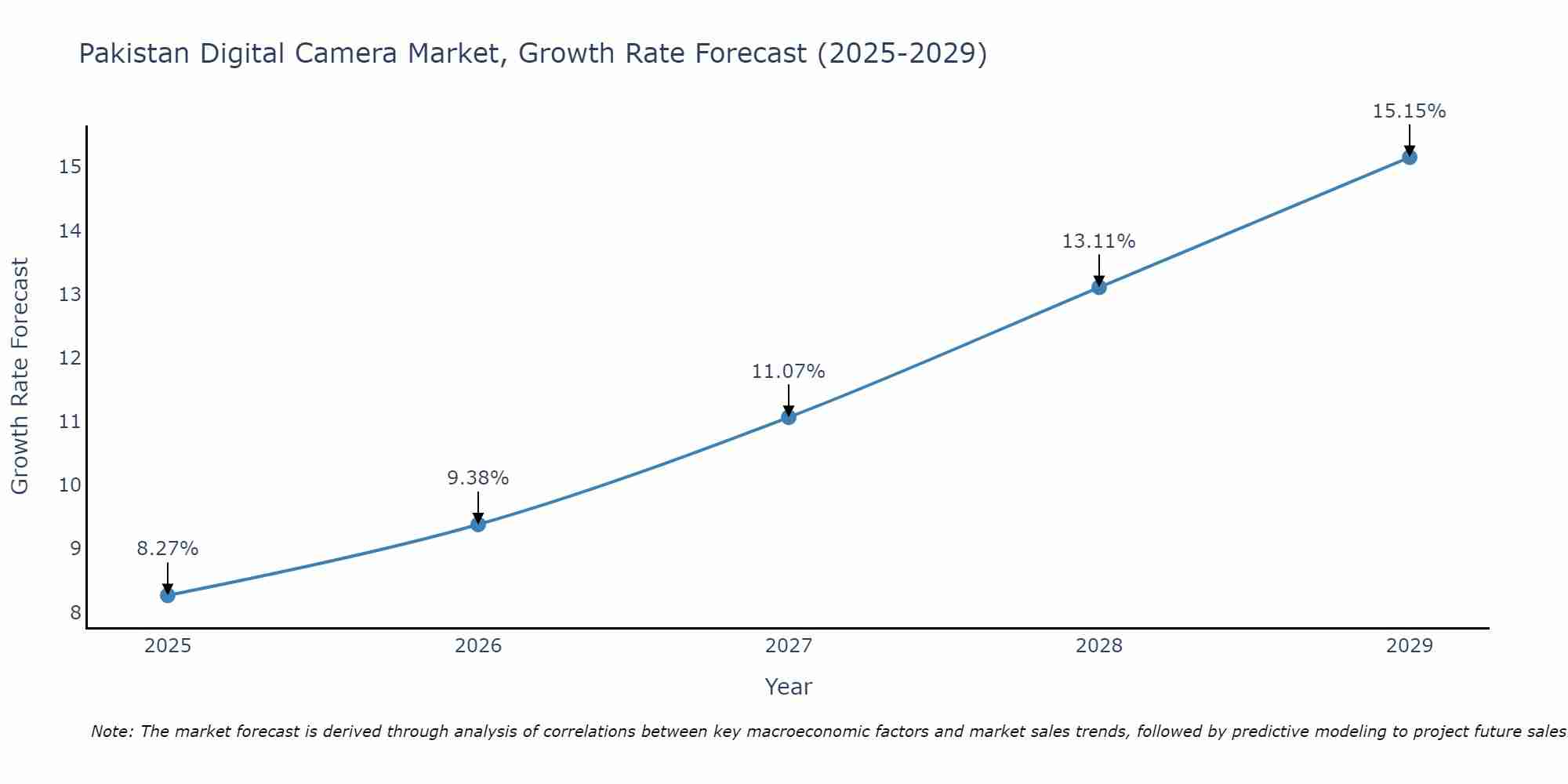
The Pakistan Digital Camera Market is likely to experience consistent growth rate gains over the period 2025 to 2029. The growth rate starts at 8.27% in 2025 and reaches 15.15% by 2029.
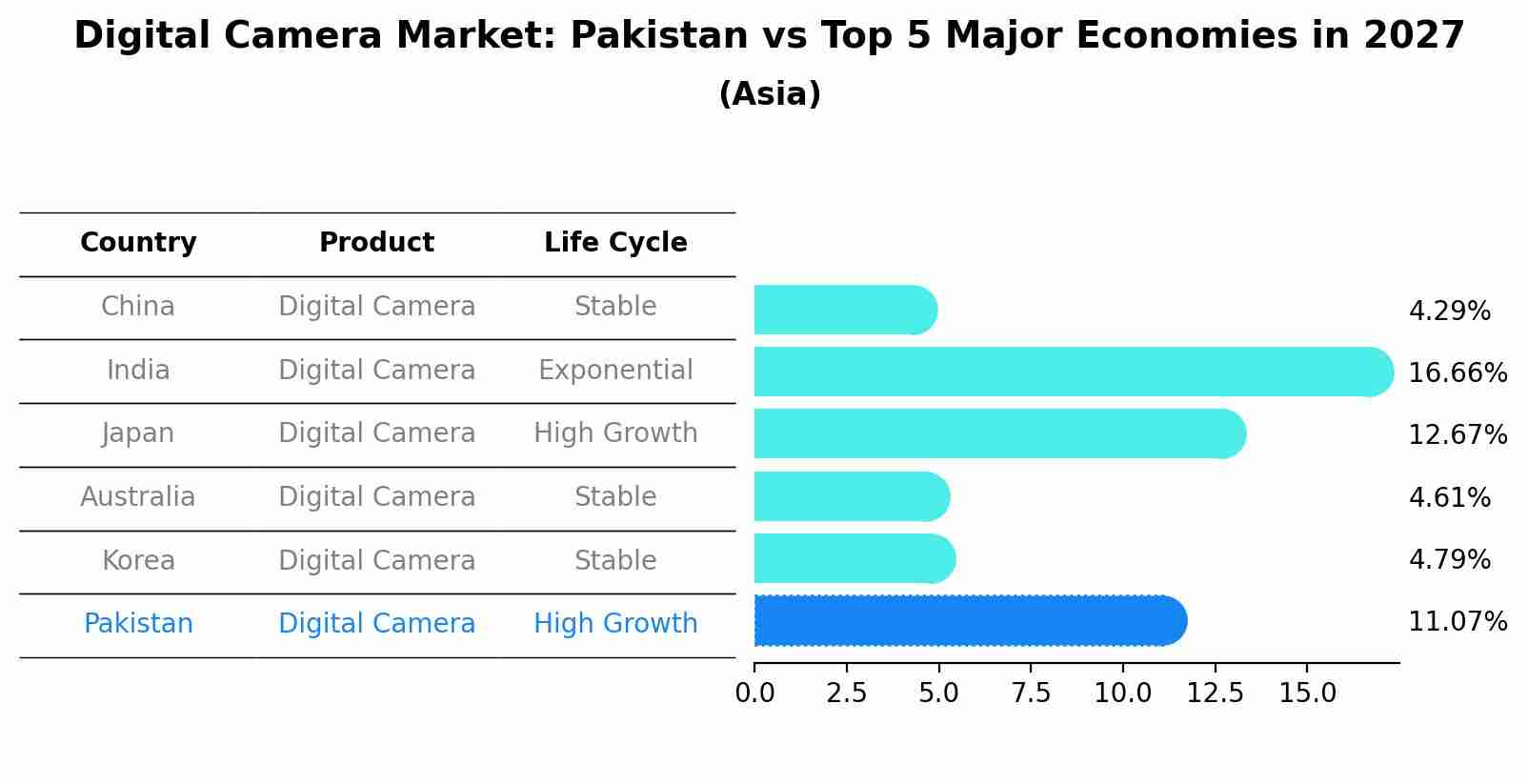
Digital Camera Market: Pakistan vs Top 5 Major Economies in 2027 (Asia)
In the Asia region, the Digital Camera market in Pakistan is projected to expand at a high growth rate of 11.07% by 2027. The largest economy is China, followed by India, Japan, Australia and South Korea.
Pakistan Digital Camera Market Overview
The digital camera market in Pakistan is evolving as consumers and professionals seek high-quality imaging solutions. Digital cameras are used for photography, videography, and surveillance. The market is driven by the increasing demand for advanced camera technologies, the growth of social media and content creation, and the expanding surveillance market.
Drivers of the market
The digital camera market in Pakistan is driven by technological advancements, including higher resolution, enhanced features, and connectivity options. Digital cameras offer superior image quality, versatility, and ease of use, catering to photography enthusiasts and professionals. The growing popularity of social media and digital content creation fuels market demand.
Challenges of the market
The Digital Camera Market in Pakistan is facing intense competition from smartphones with advanced camera capabilities. As smartphone cameras continue to improve, consumers increasingly prefer the convenience of using their phones for photography, which reduces the demand for standalone digital cameras. This trend forces digital camera manufacturers to innovate and offer unique features that differentiate their products, which can be costly and challenging.
Government Policy of the market
The government encourages the growth of the digital camera market through subsidies for local manufacturers, tax incentives for imports, and public campaigns to promote the use of digital photography in various sectors such as media, education, and tourism.
Key Highlights of the Report:
- Pakistan Digital Camera Market Outlook
- Market Size of Pakistan Digital Camera Market, 2024
- Forecast of Pakistan Digital Camera Market, 2031
- Historical Data and Forecast of Pakistan Digital Camera Revenues & Volume for the Period 2018 - 2031
- Pakistan Digital Camera Market Trend Evolution
- Pakistan Digital Camera Market Drivers and Challenges
- Pakistan Digital Camera Price Trends
- Pakistan Digital Camera Porter's Five Forces
- Pakistan Digital Camera Industry Life Cycle
- Historical Data and Forecast of Pakistan Digital Camera Market Revenues & Volume By Product for the Period 2018 - 2031
- Historical Data and Forecast of Pakistan Digital Camera Market Revenues & Volume By Built-in Lens Camera for the Period 2018 - 2031
- Historical Data and Forecast of Pakistan Digital Camera Market Revenues & Volume By Interchangeable Lens Camera for the Period 2018 - 2031
- Historical Data and Forecast of Pakistan Digital Camera Market Revenues & Volume By DSLR for the Period 2018 - 2031
- Historical Data and Forecast of Pakistan Digital Camera Market Revenues & Volume By Non-reflex for the Period 2018 - 2031
- Pakistan Digital Camera Import Export Trade Statistics
- Market Opportunity Assessment By Product
- Pakistan Digital Camera Top Companies Market Share
- Pakistan Digital Camera Competitive Benchmarking By Technical and Operational Parameters
- Pakistan Digital Camera Company Profiles
- Pakistan Digital Camera Key Strategic Recommendations






































