Pakistan Energy Bar Market: Import Trend Analysis
Pakistan import trend for the energy bar market showed a notable growth rate of 64.25% from 2023 to 2024, following a compound annual growth rate (CAGR) of -11.44% from 2020 to 2024. This shift in momentum can be attributed to evolving consumer preferences towards healthier snack options, potentially influenced by changing dietary habits or increased awareness of fitness and wellness trends.
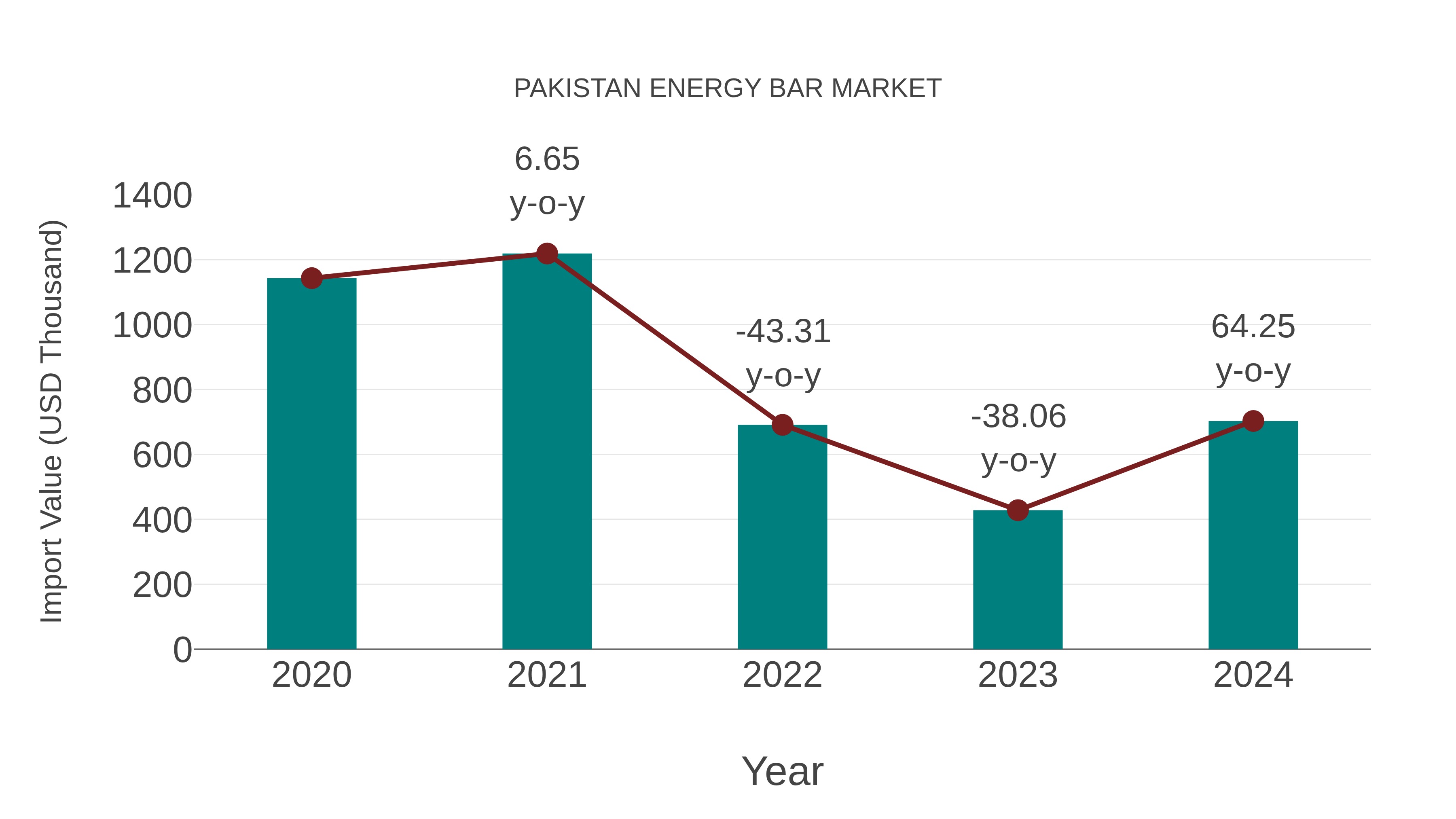
Pakistan Energy Bar Market Overview
The Pakistan Energy Bar Market is experiencing steady growth due to increasing health consciousness among consumers and a growing fitness trend in the country. Energy bars are becoming popular among individuals looking for convenient and nutritious snack options to fuel their active lifestyles. Key players in the market are focusing on introducing innovative flavors and ingredients to cater to diverse consumer preferences. The market is also witnessing the entry of new local and international brands, leading to heightened competition and product offerings. With rising disposable incomes and a shift towards healthier eating habits, the Pakistan Energy Bar Market is poised for further expansion in the coming years, presenting opportunities for manufacturers to capitalize on the growing demand for convenient and nutritious on-the-go snack options.
Pakistan Energy Bar Market Trends and Opportunities
The Pakistan Energy Bar Market is experiencing significant growth due to the increasing consumer focus on health and wellness. Consumers are looking for convenient and nutritious snack options, driving the demand for energy bars that offer protein, fiber, and natural ingredients. There is a growing trend towards plant-based and gluten-free energy bars to cater to specific dietary preferences and requirements. Opportunities exist for companies to innovate and differentiate their products by incorporating unique flavors, functional ingredients like superfoods or probiotics, and sustainable packaging. With the rise of e-commerce and online retail platforms, reaching a wider consumer base has become easier, presenting an opportunity for energy bar manufacturers to expand their distribution channels and increase brand visibility in the Pakistan market.
Pakistan Energy Bar Market Challenges
In the Pakistan Energy Bar Market, several challenges are faced, including limited consumer awareness and understanding of the benefits of energy bars, competition from traditional snacks and local food options, distribution challenges in reaching remote areas, and the high cost of production due to imported raw materials. Additionally, there is a lack of regulatory framework specific to energy bars, which can lead to quality control issues and consumer skepticism. Furthermore, fluctuations in raw material prices and currency exchange rates can impact pricing and profitability for energy bar manufacturers. To succeed in this market, companies need to invest in marketing campaigns to educate consumers, develop cost-effective sourcing strategies, and establish strong distribution networks to overcome these challenges and capitalize on the growing demand for healthier snack options in Pakistan.
Pakistan Energy Bar Market Drivers
The Pakistan Energy Bar Market is primarily driven by the rising health and wellness trend among consumers, leading to a growing demand for convenient and nutritious snack options. With increasing awareness about the importance of maintaining a healthy lifestyle, consumers are seeking on-the-go energy solutions that provide a quick boost of nutrition. Additionally, the busy urban lifestyles and changing dietary preferences are also contributing to the popularity of energy bars as a convenient and portable snack choice. The market is further fueled by the availability of a variety of flavors, ingredients, and packaging options, catering to different consumer preferences. As a result, manufacturers are focusing on product innovation and marketing strategies to capitalize on the expanding market opportunities in Pakistan.
Pakistan Energy Bar Market Government Policy
The Pakistan Energy Bar Market is influenced by various government policies aimed at promoting healthy eating habits and supporting local industries. The government has implemented regulations requiring energy bar manufacturers to comply with food safety standards and labeling requirements to ensure consumer safety. Additionally, there are initiatives to incentivize the use of locally sourced ingredients in energy bars to support domestic agriculture and boost the economy. Tax incentives and subsidies may also be available to energy bar producers who meet certain criteria, such as using organic ingredients or operating in designated special economic zones. Overall, the government`s policies in Pakistan aim to encourage the growth of the energy bar market while ensuring the quality and sustainability of products.
Pakistan Energy Bar Market Future Outlook
The Pakistan Energy Bar Market is poised for significant growth in the coming years as consumer awareness about health and wellness continues to rise. With an increasing focus on fitness and nutrition, there is a growing demand for convenient and nutritious snack options, making energy bars a popular choice among consumers. The market is expected to benefit from innovations in product formulations to cater to various dietary preferences and requirements, as well as the expansion of distribution channels to reach a wider audience. Additionally, collaborations between manufacturers and fitness influencers or athletes are likely to further drive market growth by enhancing product visibility and credibility. Overall, the Pakistan Energy Bar Market is anticipated to experience steady expansion and diversification in the foreseeable future.
Key Highlights of the Report:
- Pakistan Energy Bar Market Outlook
- Market Size of Pakistan Energy Bar Market, 2025
- Forecast of Pakistan Energy Bar Market, 2032
- Historical Data and Forecast of Pakistan Energy Bar Revenues & Volume for the Period 2022 - 2032F
- Pakistan Energy Bar Market Trend Evolution
- Pakistan Energy Bar Market Drivers and Challenges
- Pakistan Energy Bar Price Trends
- Pakistan Energy Bar Porter's Five Forces
- Pakistan Energy Bar Industry Life Cycle
- Historical Data and Forecast of Pakistan Energy Bar Market Revenues & Volume By Distribution Channel for the Period 2022 - 2032F
- Historical Data and Forecast of Pakistan Energy Bar Market Revenues & Volume By Supermarkets/Hypermarkets for the Period 2022 - 2032F
- Historical Data and Forecast of Pakistan Energy Bar Market Revenues & Volume By Convenience Stores for the Period 2022 - 2032F
- Historical Data and Forecast of Pakistan Energy Bar Market Revenues & Volume By Specialty Stores for the Period 2022 - 2032F
- Historical Data and Forecast of Pakistan Energy Bar Market Revenues & Volume By Online Retail Stores for the Period 2022 - 2032F
- Historical Data and Forecast of Pakistan Energy Bar Market Revenues & Volume By Other for the Period 2022 - 2032F
- Pakistan Energy Bar Import Export Trade Statistics
- Market Opportunity Assessment By Distribution Channel
- Pakistan Energy Bar Top Companies Market Share
- Pakistan Energy Bar Competitive Benchmarking By Technical and Operational Parameters
- Pakistan Energy Bar Company Profiles
- Pakistan Energy Bar Key Strategic Recommendations






































