Pakistan Luxury Leather Goods Market: Import Trend Analysis
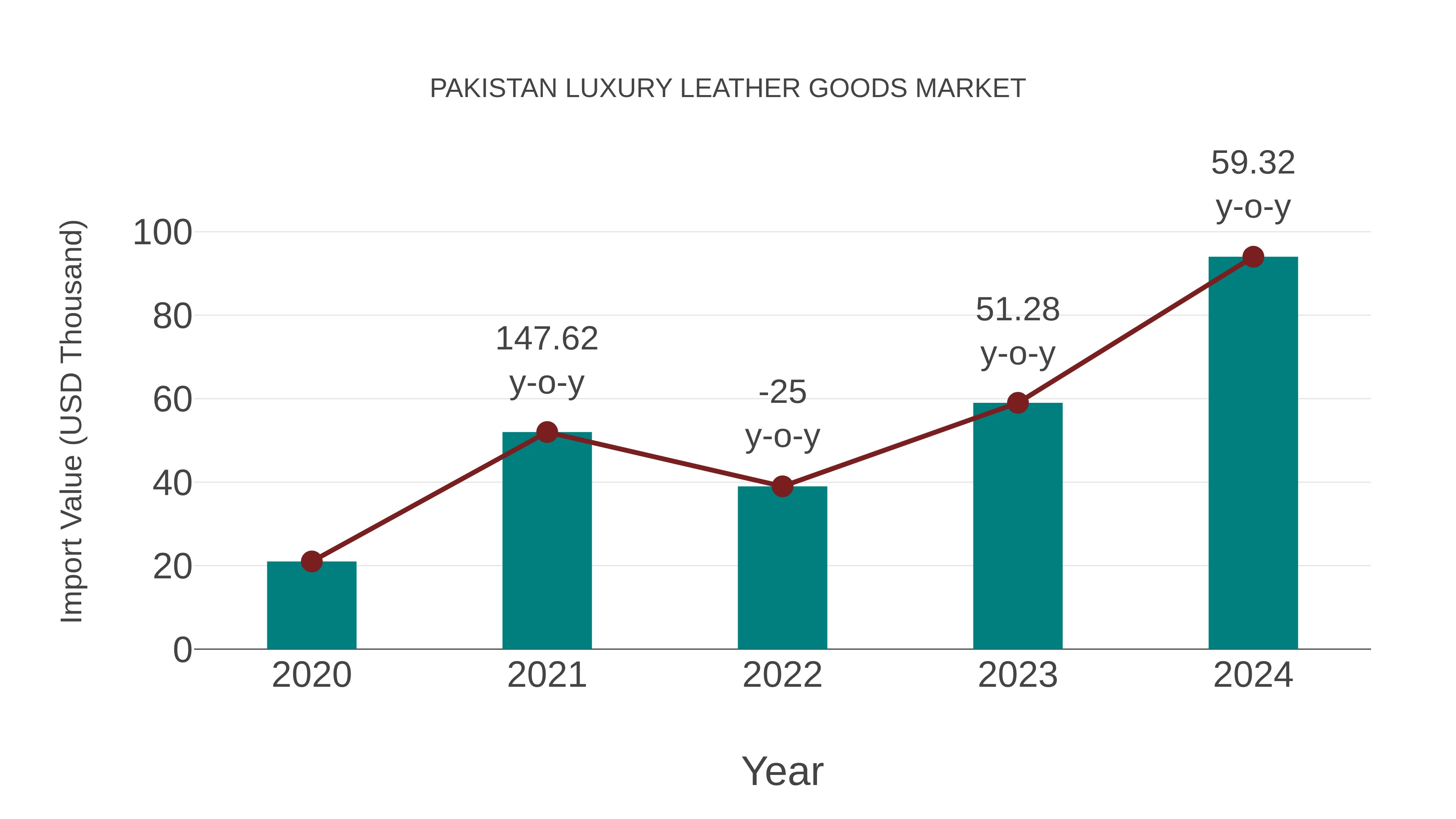
In the Pakistan luxury leather goods market, the import trend exhibited strong growth from 2023 to 2024, with a notable 59.32% increase. The compound annual growth rate (CAGR) for the period of 2020-2024 stood at 45.45%. This surge in imports can be attributed to a significant demand shift towards high-quality leather products, indicating a favorable market stability and consumer preference for luxury goods during this period.
Pakistan Luxury Leather Goods Market Synopsis
The Pakistan Luxury Leather Goods Market is experiencing steady growth due to increasing disposable incomes, changing consumer preferences, and a growing awareness of high-quality leather products. The market offers a wide range of luxury leather goods such as handbags, wallets, belts, shoes, and accessories, catering to the demands of fashion-conscious consumers. Key players in the market are focusing on product innovation, craftsmanship, and unique designs to attract customers. Additionally, the rising trend of online shopping platforms has further boosted the accessibility of luxury leather goods to a wider audience. With a strong heritage in leather craftsmanship and a growing demand for luxury products, the Pakistan Luxury Leather Goods Market is poised for continuous expansion in the coming years.
Pakistan Luxury Leather Goods Market Trends
The Pakistan Luxury Leather Goods Market is experiencing growth driven by increasing disposable income, changing consumer preferences, and the rise of e-commerce platforms. Consumers are increasingly seeking high-quality, stylish leather products such as handbags, wallets, and shoes, driving demand for luxury leather goods in the country. The market presents opportunities for both domestic and international luxury brands to expand their presence and cater to the growing demand for premium leather products. With a growing focus on sustainability and ethical sourcing, there is also a rising demand for environmentally friendly leather goods in Pakistan. E-commerce platforms have made luxury leather goods more accessible to a wider consumer base, providing a convenient and efficient way for consumers to purchase high-end leather products. Overall, the Pakistan Luxury Leather Goods Market is poised for continued growth and offers lucrative opportunities for brands that can tap into the evolving consumer preferences and market trends.
Pakistan Luxury Leather Goods Market Challenges
The Pakistan Luxury Leather Goods Market faces several challenges, including a lack of awareness and appreciation for locally-made luxury products, stiff competition from international luxury brands, inconsistent quality control standards, and limited access to high-quality raw materials. Additionally, the industry struggles with issues related to counterfeiting and intellectual property rights, which undermine the credibility of genuine luxury leather goods. Economic instability and fluctuating exchange rates also impact consumer spending on luxury items. Furthermore, the lack of specialized training programs for artisans and designers hinders the development of innovative and competitive products in the market. Overall, addressing these challenges will be crucial for the growth and sustainability of the luxury leather goods industry in Pakistan.
Pakistan Luxury Leather Goods Market Investment Opportunities
The Pakistan Luxury Leather Goods Market is primarily driven by an increasing disposable income among the affluent population, a growing preference for high-quality and fashionable products, and a rise in urbanization and western influence. Consumers are increasingly valuing luxury items as a status symbol and are willing to invest in premium leather goods that offer superior craftsmanship and exclusivity. Additionally, the rise of e-commerce platforms has made luxury leather goods more accessible to a wider audience, further fueling market growth. The demand for luxury leather goods in Pakistan is also being propelled by a shift towards sustainable and ethically sourced products, as consumers become more conscious of environmental and social issues. Overall, these drivers are contributing to the expansion and evolution of the luxury leather goods market in Pakistan.
Pakistan Luxury Leather Goods Market Government Polices
The Pakistan Luxury Leather Goods Market is impacted by various government policies, including taxation, trade regulations, and incentives. The government of Pakistan has implemented policies aimed at promoting the growth of the local leather industry, which includes the luxury leather goods segment. These policies may include tariff reductions on imported raw materials, financial assistance programs for local manufacturers, and export incentives to boost the competitiveness of Pakistani leather goods in international markets. Additionally, the government may also enforce quality standards and regulations to ensure the products meet international standards, thereby enhancing the reputation of Pakistani luxury leather goods globally. Overall, government policies play a significant role in shaping the environment for the Pakistan Luxury Leather Goods Market, influencing factors such as production costs, market access, and competitiveness.
Pakistan Luxury Leather Goods Market Future Outlook
The future outlook for the Pakistan Luxury Leather Goods Market appears promising, driven by increasing disposable income, growing urbanization, and a rising trend of luxury consumption among the population. The market is expected to witness steady growth as more consumers prioritize quality and luxury in their purchases. Additionally, the emphasis on traditional craftsmanship and the rising demand for unique, handcrafted leather products are likely to further boost the market`s expansion. With evolving consumer preferences and a growing awareness of sustainable and ethical practices, luxury leather goods brands in Pakistan are expected to focus on innovation, design, and sustainability to cater to the changing market dynamics and maintain a competitive edge in the industry.
Key Highlights of the Report:
- Pakistan Luxury Leather Goods Market Outlook
- Market Size of Pakistan Luxury Leather Goods Market, 2025
- Forecast of Pakistan Luxury Leather Goods Market, 2032
- Historical Data and Forecast of Pakistan Luxury Leather Goods Revenues & Volume for the Period 2022 - 2032F
- Pakistan Luxury Leather Goods Market Trend Evolution
- Pakistan Luxury Leather Goods Market Drivers and Challenges
- Pakistan Luxury Leather Goods Price Trends
- Pakistan Luxury Leather Goods Porter's Five Forces
- Pakistan Luxury Leather Goods Industry Life Cycle
- Historical Data and Forecast of Pakistan Luxury Leather Goods Market Revenues & Volume By Product for the Period 2022 - 2032F
- Historical Data and Forecast of Pakistan Luxury Leather Goods Market Revenues & Volume By High- Grade for the Period 2022 - 2032F
- Historical Data and Forecast of Pakistan Luxury Leather Goods Market Revenues & Volume By Low-Grade for the Period 2022 - 2032F
- Historical Data and Forecast of Pakistan Luxury Leather Goods Market Revenues & Volume By Mid-Grade for the Period 2022 - 2032F
- Historical Data and Forecast of Pakistan Luxury Leather Goods Market Revenues & Volume By Application for the Period 2022 - 2032F
- Historical Data and Forecast of Pakistan Luxury Leather Goods Market Revenues & Volume By Men for the Period 2022 - 2032F
- Historical Data and Forecast of Pakistan Luxury Leather Goods Market Revenues & Volume By Women for the Period 2022 - 2032F
- Historical Data and Forecast of Pakistan Luxury Leather Goods Market Revenues & Volume By Distribution Channel for the Period 2022 - 2032F
- Historical Data and Forecast of Pakistan Luxury Leather Goods Market Revenues & Volume By Offline Retail Stores for the Period 2022 - 2032F
- Historical Data and Forecast of Pakistan Luxury Leather Goods Market Revenues & Volume By Online Retail Stores for the Period 2022 - 2032F
- Pakistan Luxury Leather Goods Import Export Trade Statistics
- Market Opportunity Assessment By Product
- Market Opportunity Assessment By Application
- Market Opportunity Assessment By Distribution Channel
- Pakistan Luxury Leather Goods Top Companies Market Share
- Pakistan Luxury Leather Goods Competitive Benchmarking By Technical and Operational Parameters
- Pakistan Luxury Leather Goods Company Profiles
- Pakistan Luxury Leather Goods Key Strategic Recommendations






































