Pakistan Motorcycle Market Growth Rate Analysis (2025 - 2031)
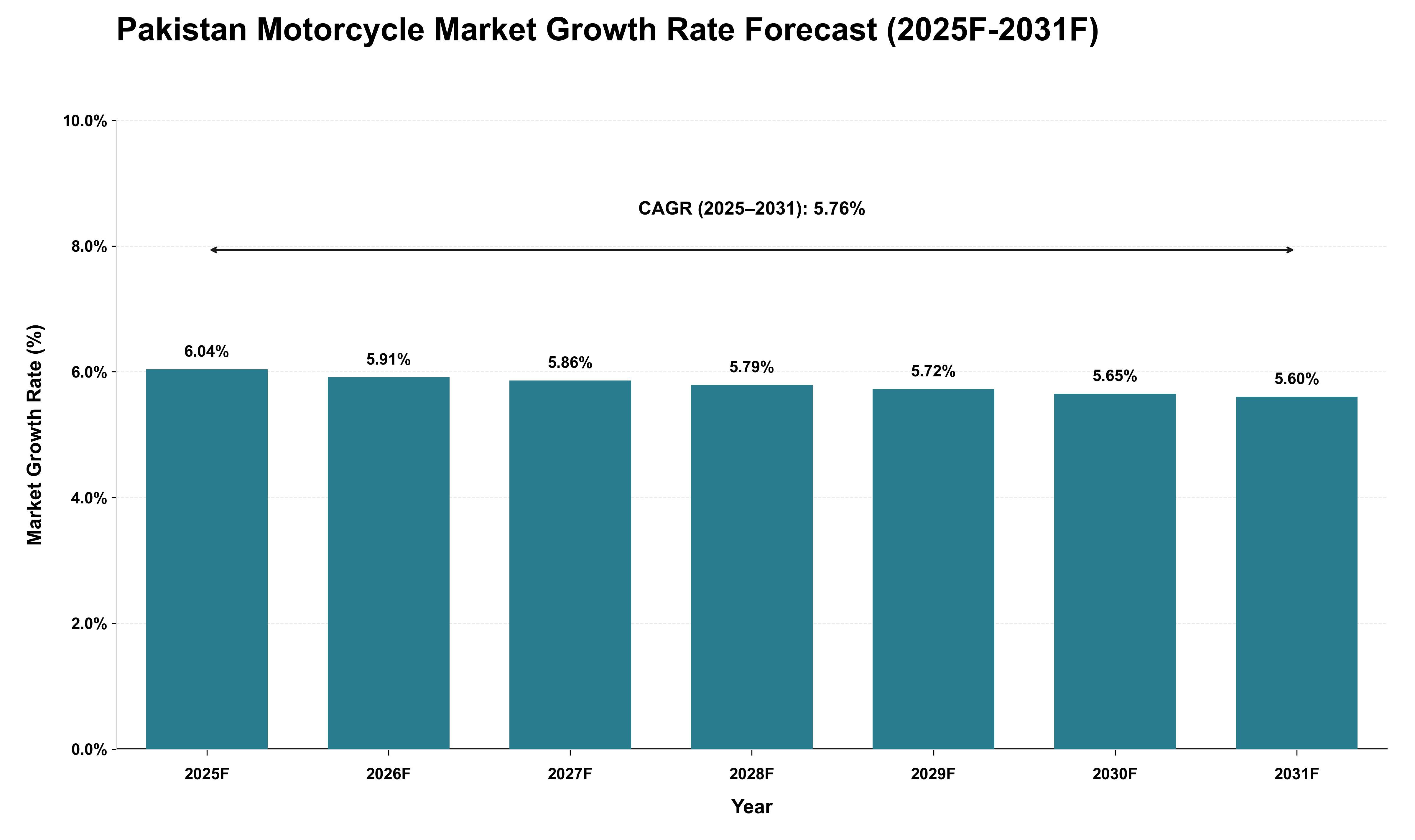
The projected compound annual growth rate of 5.76% for the Pakistan motorcycle market from 2025 to 2031 indicates a robust trajectory driven by evolving end-use demand dynamics. As urbanization accelerates and disposable incomes rise, the preference for two-wheelers as a cost-effective and efficient mode of transportation will intensify, particularly in densely populated areas. The annual growth rates, starting at 6.04% in 2025 and gradually tapering to 5.60% by 2031, reflect an anticipated stabilization in demand as the market adjusts to economic conditions and consumer preferences. Additionally, fluctuations in import dependencies for motorcycle components may influence pricing strategies and availability, impacting overall market performance. Cyclical trends related to fuel prices and economic activity will further shape consumer purchasing behavior, ensuring that the motorcycle segment remains responsive to broader macroeconomic shifts throughout this forecast period.
Key Highlights of the Report:
- Pakistan Motorcycle Market Outlook
- Market Size of Pakistan Motorcycle Market, 2025
- Forecast of Pakistan Motorcycle Market, 2032
- Historical Data and Forecast of Pakistan Motorcycle Revenues & Volume for the Period 2022 - 2032F
- Pakistan Motorcycle Market Trend Evolution
- Pakistan Motorcycle Market Drivers and Challenges
- Pakistan Motorcycle Price Trends
- Pakistan Motorcycle Porter's Five Forces
- Pakistan Motorcycle Industry Life Cycle
- Historical Data and Forecast of Pakistan Motorcycle Market Revenues & Volume By Type for the Period 2022 - 2032F
- Historical Data and Forecast of Pakistan Motorcycle Market Revenues & Volume By Adventure for the Period 2022 - 2032F
- Historical Data and Forecast of Pakistan Motorcycle Market Revenues & Volume By Cruiser for the Period 2022 - 2032F
- Historical Data and Forecast of Pakistan Motorcycle Market Revenues & Volume By Mopeds for the Period 2022 - 2032F
- Historical Data and Forecast of Pakistan Motorcycle Market Revenues & Volume By Sports for the Period 2022 - 2032F
- Historical Data and Forecast of Pakistan Motorcycle Market Revenues & Volume By Standard for the Period 2022 - 2032F
- Historical Data and Forecast of Pakistan Motorcycle Market Revenues & Volume By Touring for the Period 2022 - 2032F
- Historical Data and Forecast of Pakistan Motorcycle Market Revenues & Volume By Engine Capacity for the Period 2022 - 2032F
- Historical Data and Forecast of Pakistan Motorcycle Market Revenues & Volume By 151-300 CC for the Period 2022 - 2032F
- Historical Data and Forecast of Pakistan Motorcycle Market Revenues & Volume By 301-500 CC for the Period 2022 - 2032F
- Historical Data and Forecast of Pakistan Motorcycle Market Revenues & Volume By 501-800 CC for the Period 2022 - 2032F
- Historical Data and Forecast of Pakistan Motorcycle Market Revenues & Volume By 801-1000 CC for the Period 2022 - 2032F
- Historical Data and Forecast of Pakistan Motorcycle Market Revenues & Volume By 1001-1600 CC for the Period 2022 - 2032F
- Historical Data and Forecast of Pakistan Motorcycle Market Revenues & Volume By Above 1600 CC for the Period 2022 - 2032F
- Pakistan Motorcycle Import Export Trade Statistics
- Market Opportunity Assessment By Type
- Market Opportunity Assessment By Engine Capacity
- Pakistan Motorcycle Top Companies Market Share
- Pakistan Motorcycle Competitive Benchmarking By Technical and Operational Parameters
- Pakistan Motorcycle Company Profiles
- Pakistan Motorcycle Key Strategic Recommendations






































