Pakistan Office Chair Market: Import Trend Analysis
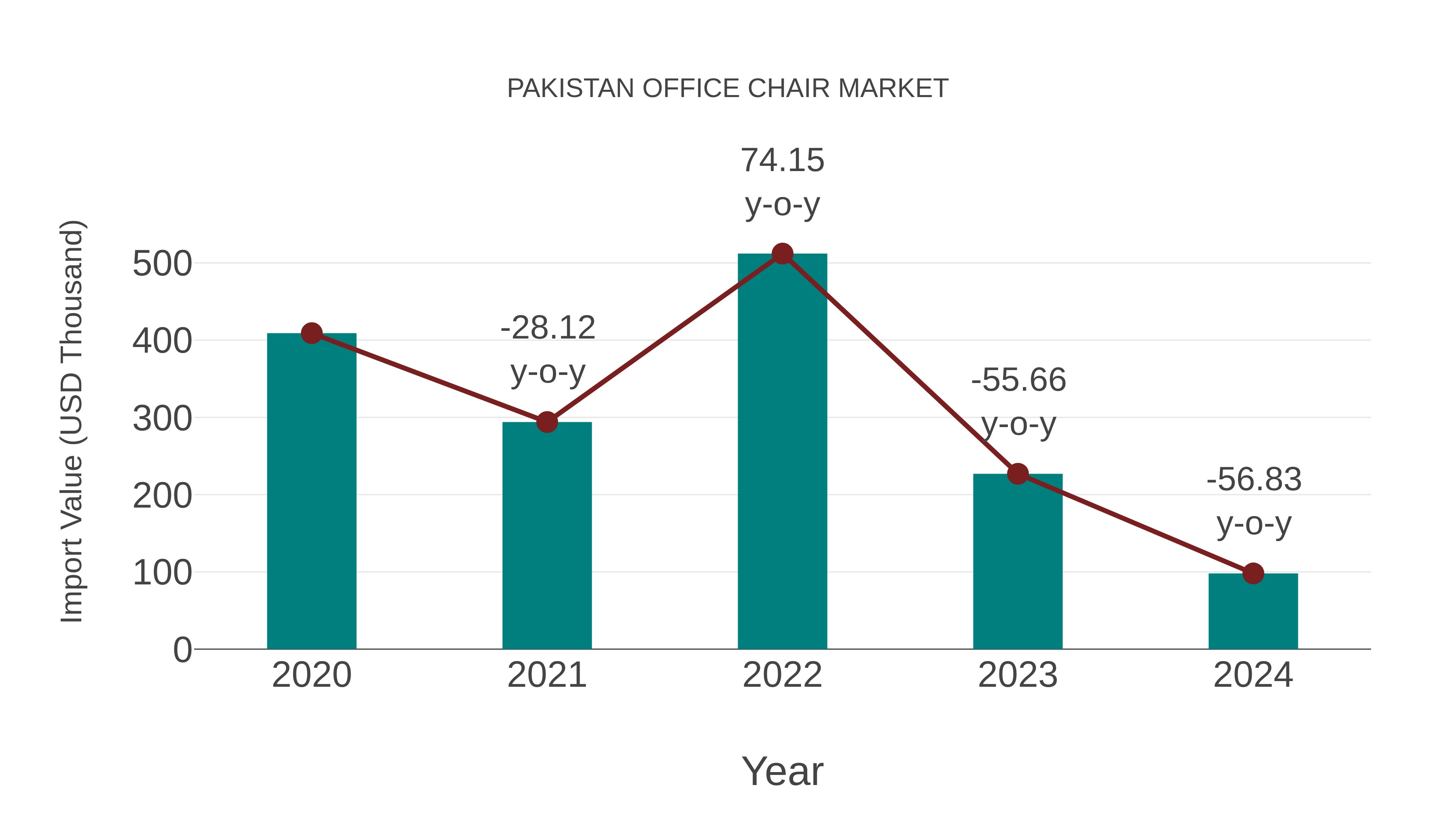
Pakistan import trend for the office chair market saw a significant decline from 2023 to 2024, with a growth rate of -56.83%. The compound annual growth rate (CAGR) for 2020-2024 stood at -30.04%. This decline may be attributed to shifting consumer preferences or disruptions in the supply chain.
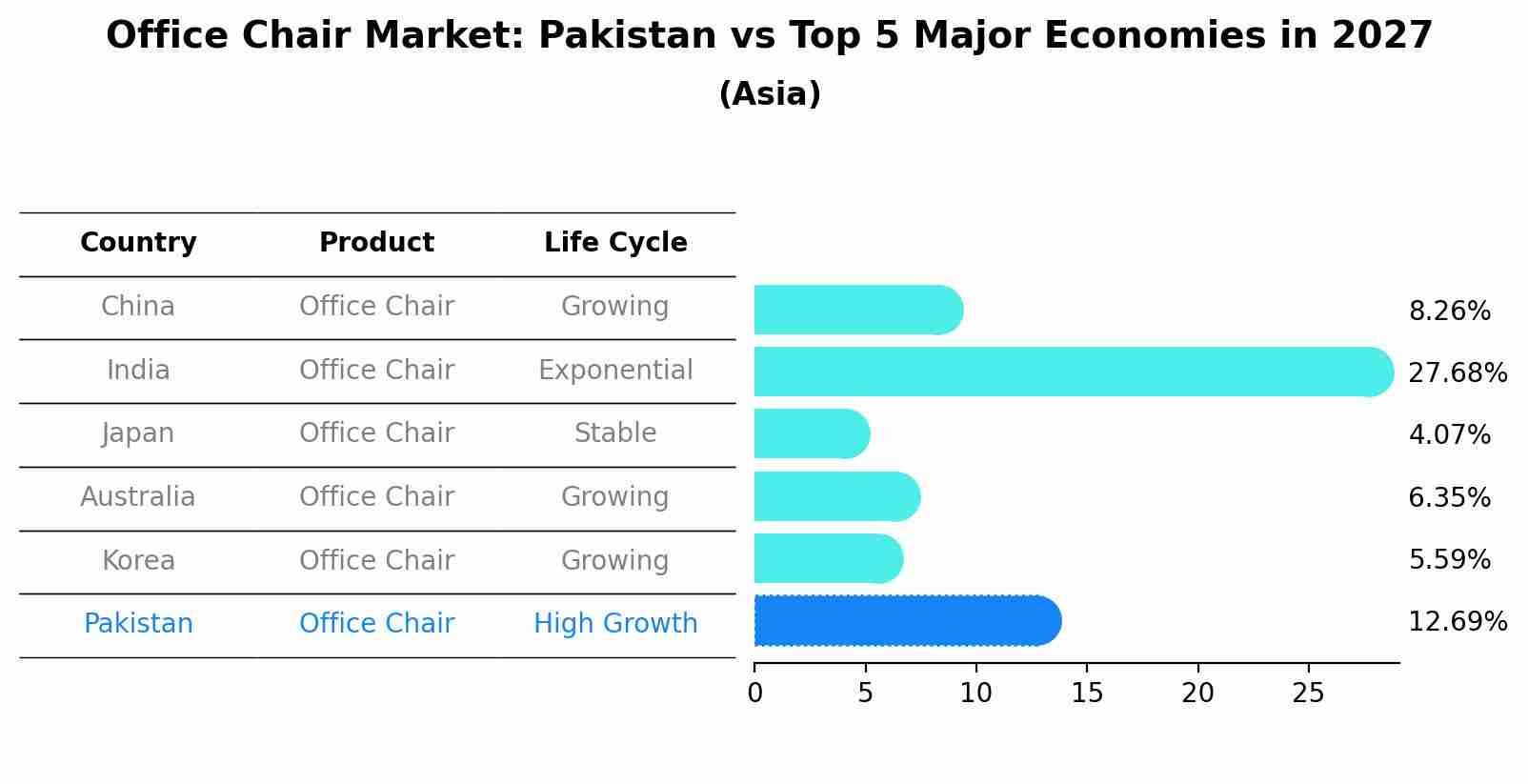
Office Chair Market: Pakistan vs Top 5 Major Economies in 2027 (Asia)
In the Asia region, the Office Chair market in Pakistan is projected to expand at a high growth rate of 12.69% by 2027. The largest economy is China, followed by India, Japan, Australia and South Korea.
Pakistan Office Chair Market Synopsis
The Pakistan office chair market is experiencing steady growth driven by an expanding corporate sector and increasing demand for ergonomic and functional seating solutions. With a rising number of offices, co-working spaces, and home-based businesses, the demand for office chairs is on the rise. The market offers a wide range of products including executive chairs, task chairs, ergonomic chairs, and visitor chairs to cater to diverse customer needs. Key players in the market are focusing on innovative designs, durability, and affordability to stay competitive. Online retail channels are gaining popularity, offering convenience and a wide variety of options to consumers. As awareness about the importance of ergonomics in workplaces grows, the demand for adjustable and comfortable office chairs is expected to further drive market growth in Pakistan.
Pakistan Office Chair Market Trends
The Pakistan Office Chair Market is currently experiencing a shift towards ergonomic designs and sustainable materials. With a growing awareness of the importance of employee health and well-being, there is a rising demand for office chairs that provide proper support and comfort for long hours of sitting. Companies are also increasingly opting for chairs made from eco-friendly materials such as recycled plastics and sustainable wood to reduce their environmental impact. Additionally, there is a trend towards customizable and modular office chairs that allow users to adjust the chair according to their specific needs and preferences. Overall, the market is moving towards offering functional, stylish, and environmentally conscious office chair options to cater to the evolving needs of modern workplaces in Pakistan.
Pakistan Office Chair Market Challenges
In the Pakistan office chair market, some of the key challenges include intense competition from both domestic and international manufacturers, fluctuating raw material prices impacting profit margins, and the presence of counterfeit products affecting brand reputation and consumer trust. Additionally, economic instability and political uncertainties in the region can lead to fluctuations in consumer spending and business investments, impacting overall demand for office furniture including chairs. Furthermore, a lack of standardized quality control measures and regulations in the market can result in inconsistent product quality and safety concerns for consumers. To succeed in the Pakistan office chair market, companies need to navigate these challenges by focusing on product innovation, building strong distribution networks, and establishing a reputable brand presence to differentiate themselves in a competitive landscape.
Pakistan Office Chair Market Investment Opportunities
In the Pakistan office chair market, there are several investment opportunities worth considering. With the growing number of businesses and office spaces in the country, the demand for ergonomic and stylish office chairs is on the rise. Investing in the manufacturing or distribution of high-quality, affordable office chairs tailored to the local preferences and needs could be a lucrative opportunity. Additionally, there is a shift towards more sustainable and environmentally friendly products, so investing in eco-friendly office chairs made from recycled materials or using sustainable production methods could also be a competitive advantage in the market. Furthermore, offering innovative features such as smart chairs with ergonomic technology or adjustable height options could attract a niche market segment. Overall, the Pakistan office chair market presents opportunities for investors to capitalize on the evolving demands of businesses for comfortable and functional seating solutions.
Jordan Agar Market Government Policies
Government policies in Pakistan related to the office chair market primarily revolve around import regulations and taxation. The government imposes tariffs and duties on imported office chairs to protect local manufacturers and promote domestic production. Additionally, there are quality control regulations in place to ensure that office chairs meet safety standards and specifications. The government also encourages sustainability practices in the manufacturing process by offering incentives and subsidies to businesses that adopt eco-friendly practices. Overall, the government`s policies aim to support the growth of the domestic office chair industry, protect consumers from substandard products, and promote environmental sustainability in the market.
Pakistan Office Chair Market Future Outlook
The Pakistan Office Chair Market is expected to witness steady growth in the coming years due to factors such as increasing commercial real estate developments, rising demand for ergonomic office furniture, and the growing trend of remote work setups. With a focus on employee comfort and productivity, businesses are likely to invest in high-quality office chairs that offer ergonomic features and modern designs. Additionally, the shift towards sustainable and eco-friendly furniture options is anticipated to drive innovation in the market. As the economy continues to stabilize and businesses expand, the demand for office chairs in Pakistan is projected to increase, presenting opportunities for both domestic manufacturers and international players looking to enter the market.
Key Highlights of the Report:
- Pakistan Office Chair Market Outlook
- Market Size of Pakistan Office Chair Market, 2021
- Forecast of Pakistan Office Chair Market, 2031
- Historical Data and Forecast of Pakistan Office Chair Revenues & Volume for the Period 2018 - 2031
- Pakistan Office Chair Market Trend Evolution
- Pakistan Office Chair Market Drivers and Challenges
- Pakistan Office Chair Price Trends
- Pakistan Office Chair Porter's Five Forces
- Pakistan Office Chair Industry Life Cycle
- Historical Data and Forecast of Pakistan Office Chair Market Revenues & Volume By Product Type for the Period 2018 - 2031
- Historical Data and Forecast of Pakistan Office Chair Market Revenues & Volume By Executive Office for the Period 2018 - 2031
- Historical Data and Forecast of Pakistan Office Chair Market Revenues & Volume By Ergonomic for the Period 2018 - 2031
- Historical Data and Forecast of Pakistan Office Chair Market Revenues & Volume By Conference for the Period 2018 - 2031
- Historical Data and Forecast of Pakistan Office Chair Market Revenues & Volume By Material for the Period 2018 - 2031
- Historical Data and Forecast of Pakistan Office Chair Market Revenues & Volume By Mesh for the Period 2018 - 2031
- Historical Data and Forecast of Pakistan Office Chair Market Revenues & Volume By Lather for the Period 2018 - 2031
- Historical Data and Forecast of Pakistan Office Chair Market Revenues & Volume By Plastic for the Period 2018 - 2031
- Historical Data and Forecast of Pakistan Office Chair Market Revenues & Volume By Fabric for the Period 2018 - 2031
- Historical Data and Forecast of Pakistan Office Chair Market Revenues & Volume By Sales Channel for the Period 2018 - 2031
- Historical Data and Forecast of Pakistan Office Chair Market Revenues & Volume By Offline for the Period 2018 - 2031
- Historical Data and Forecast of Pakistan Office Chair Market Revenues & Volume By Online for the Period 2018 - 2031
- Pakistan Office Chair Import Export Trade Statistics
- Market Opportunity Assessment By Product Type
- Market Opportunity Assessment By Material
- Market Opportunity Assessment By Sales Channel
- Pakistan Office Chair Top Companies Market Share
- Pakistan Office Chair Competitive Benchmarking By Technical and Operational Parameters
- Pakistan Office Chair Company Profiles
- Pakistan Office Chair Key Strategic Recommendations






































