Pakistan Outdoor Led Lighting Market: Import Trend Analysis
From 2020 to 2024, Pakistan import trend for the outdoor LED lighting market experienced a compound annual growth rate (CAGR) of -9.44%. This decline could be attributed to shifts in consumer preferences towards energy-efficient lighting solutions or changes in trade policies affecting imports of LED products.
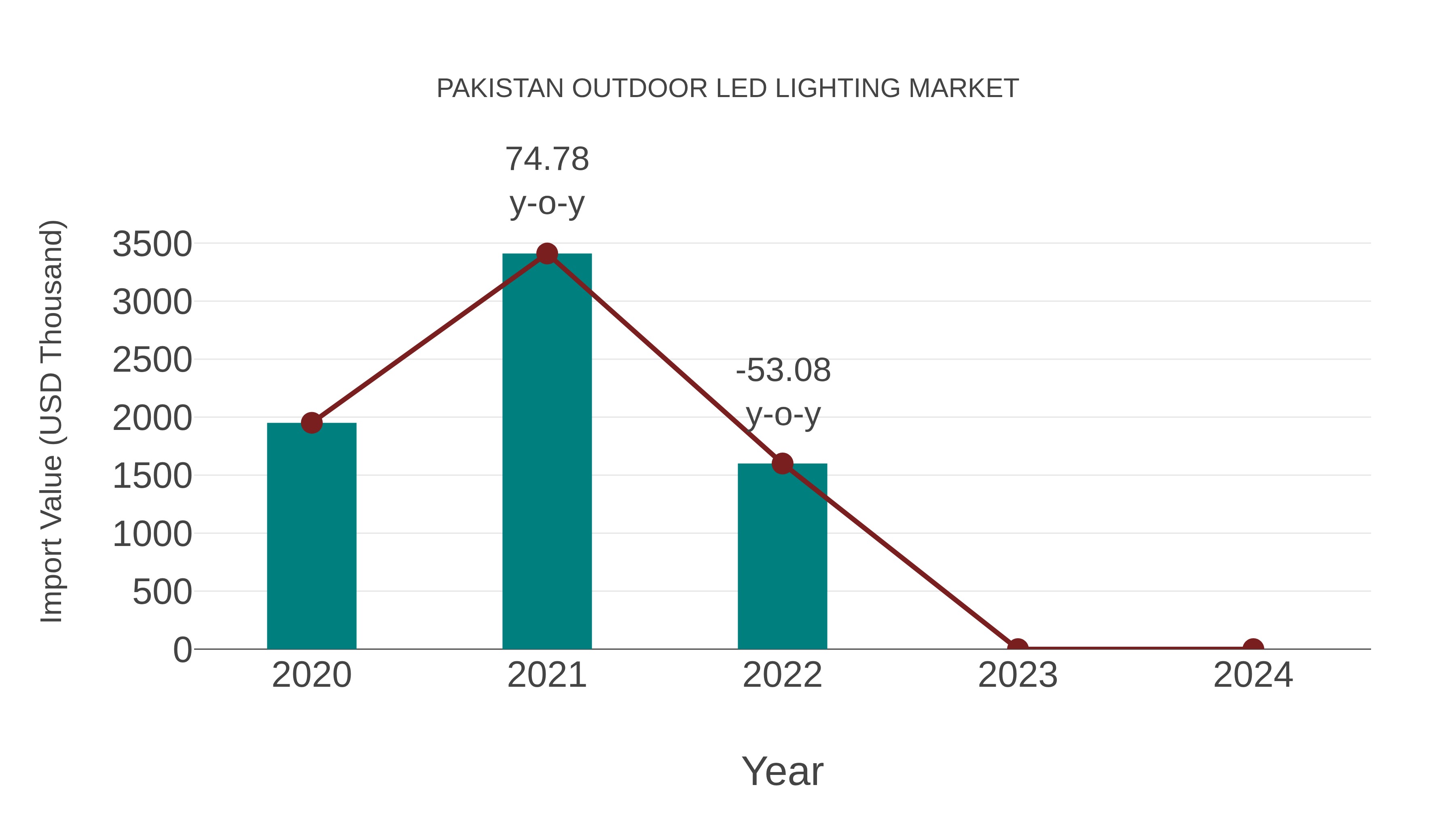
Pakistan Export Potential Assessment For Outdoor LED Lighting Market (Values in USD Thousand)
Pakistan Outdoor Led Lighting Market Synopsis
The Pakistan outdoor LED lighting market is expected to reach a CAGR of approximately 6.7% during the forecast period 2020-2026. The increasing need to reduce energy consumption and carbon emissions in the country, along with stringent government regulations are driving the growth of this market. In addition, rising demand for eco-friendly lighting solutions, improved illumination quality, technological advancements such as wireless control and motion sensing capabilities are also contributing to the growth of this market in Pakistan. Moreover, rising disposable incomes and increased focus on urban infrastructure development will further boost the demand for outdoor LED lighting solutions across Pakistan.
However, high installation costs associated with LED lights may restrain the overall market growth over the forecast period 2020-2026. Furthermore, availability of low quality products at cheaper prices can hinder higher adoption rate of these advanced systems among customers in some cases.
Key Highlights of the Report:
- Pakistan Outdoor LED Lighting Market Outlook
- Market Size of Pakistan Outdoor LED Lighting Market, 2019
- Forecast of Pakistan Outdoor LED Lighting Market, 2026
- Historical Data and Forecast of Pakistan Outdoor LED Lighting Revenues & Volume for the Period 2016 - 2026
- Pakistan Outdoor LED Lighting Market Trend Evolution
- Pakistan Outdoor LED Lighting Market Drivers and Challenges
- Pakistan Outdoor LED Lighting Price Trends
- Pakistan Outdoor LED Lighting Porter's Five Forces
- Pakistan Outdoor LED Lighting Industry Life Cycle
- Historical Data and Forecast of Pakistan Outdoor LED Lighting Market Revenues & Volume By Installation Type for the Period 2016 - 2026
- Historical Data and Forecast of Pakistan Outdoor LED Lighting Market Revenues & Volume By New for the Period 2016 - 2026
- Historical Data and Forecast of Pakistan Outdoor LED Lighting Market Revenues & Volume By Retrofit for the Period 2016 - 2026
- Historical Data and Forecast of Pakistan Outdoor LED Lighting Market Revenues & Volume By Wattage Type for the Period 2016 - 2026
- Historical Data and Forecast of Pakistan Outdoor LED Lighting Market Revenues & Volume By Less than 50W for the Period 2016 - 2026
- Historical Data and Forecast of Pakistan Outdoor LED Lighting Market Revenues & Volume By 50W to 100W for the Period 2016 - 2026
- Historical Data and Forecast of Pakistan Outdoor LED Lighting Market Revenues & Volume By More than 100W for the Period 2016 - 2026
- Pakistan Outdoor LED Lighting Import Export Trade Statistics
- Market Opportunity Assessment By Installation Type
- Market Opportunity Assessment By Wattage Type
- Pakistan Outdoor LED Lighting Top Companies Market Share
- Pakistan Outdoor LED Lighting Competitive Benchmarking By Technical and Operational Parameters
- Pakistan Outdoor LED Lighting Company Profiles
- Pakistan Outdoor LED Lighting Key Strategic Recommendations






































