Pakistan Oyster Market Size, Share & Growth Rate
The Pakistan Oyster Market was estimated at USD 212 Million in 2025 and is projected to reach USD 298 Million by 2032, growing at a CAGR of 5.0% from 2026 to 2032. This growth trajectory is primarily driven by increasing consumer awareness of oysters as a nutritious seafood choice, alongside the burgeoning trend of gourmet dining. As more people seek health-conscious options and unique culinary experiences, the demand for oysters continues to rise significantly.
Pakistan Oyster Market Year-wise Growth Rate and Key Drivers
This graph highlights how the Pakistan Oyster Market has steadily grown over the years, supported by major growth factors.
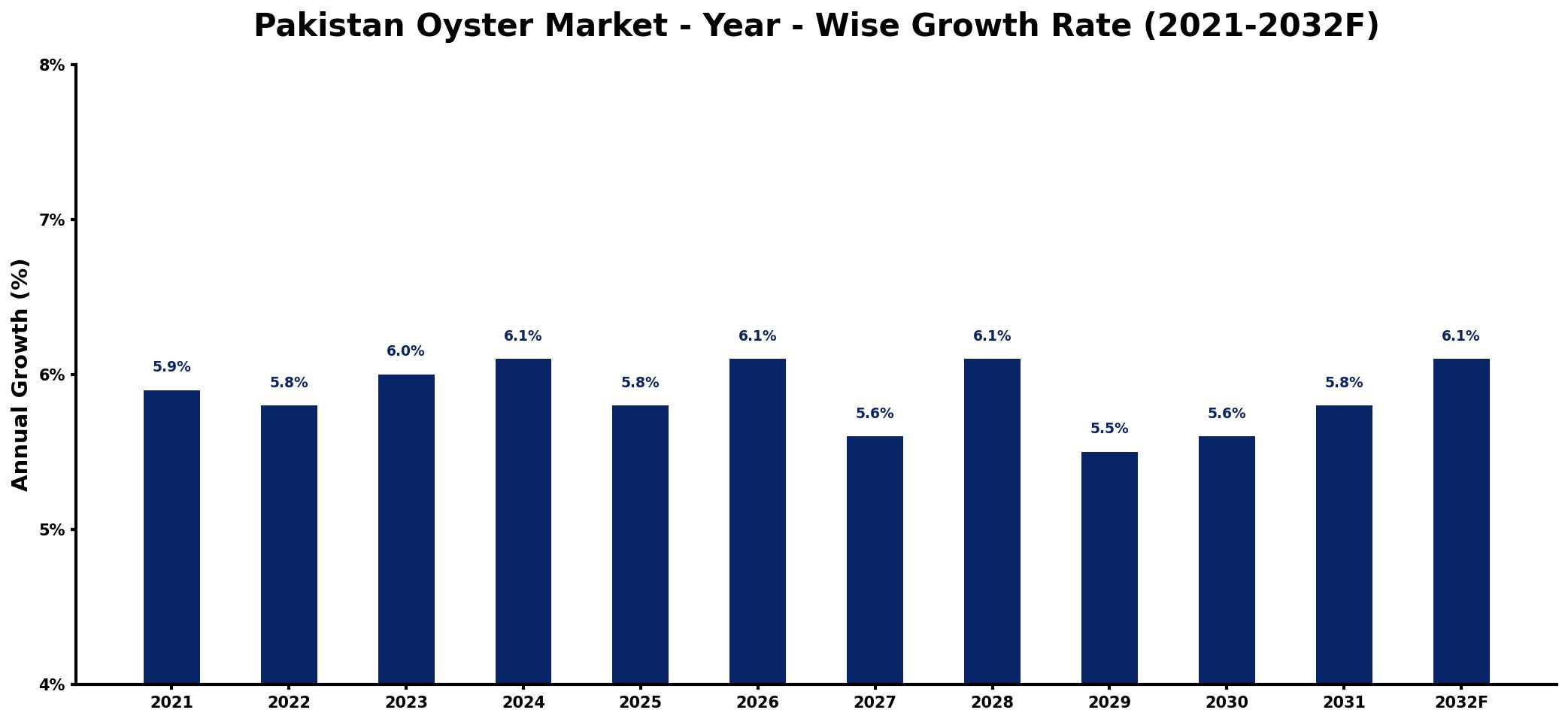
The table below presents the year‑wise growth rates along with the key drivers influencing the market
| Year | Growth Rate | Major Drivers |
| 2021 | 5.9% | Rising consumer health awareness |
| 2022 | 5.8% | Increased seafood culinary trends |
| 2023 | 6.0% | Expansion of aquaculture investments |
| 2024 | 6.1% | Growth in local tourism industry |
| 2025 | 5.8% | Development of export markets |
| 2026 | 6.1% | Surge in restaurant openings |
| 2027 | 5.6% | Enhanced distribution networks established |
| 2028 | 6.1% | Increasing popularity of cuisines |
| 2029 | 5.5% | Emergence of sustainable practices |
| 2030 | 5.6% | Growing interest in gourmet foods |
| 2031 | 5.8% | Boost in culinary education programs |
| 2032 | 6.1% | Strengthening of international partnerships |
Note: Market size estimations and growth projections presented in this report are based on 6Wresearch's proprietary forecasting methodology, utilizing the latest available industry data, government publications, and primary research inputs.
Pakistan Oyster Market Synopsis
The strongest force shaping the Pakistan Oyster Market right now is the surging consumer demand for health-oriented food options. As awareness of the health benefits of oysters grows, they are increasingly being recognized as a rich source of protein, vitamins, and minerals, appealing to a wide demographic.
The expansion of gourmet dining experiences is another crucial factor. More restaurants are featuring oysters on their menus, attracting seafood enthusiasts, health-conscious consumers, and foodies eager to explore new flavors. This evolving culinary landscape is creating a dynamic market for local oyster producers.
Pakistan Oyster Market Key Takeaways
- The market is set to grow significantly due to rising consumer awareness about the health benefits of oysters.
- Increasing demand for gourmet dining experiences is driving oyster consumption.
- Local oyster farming initiatives are expanding to meet consumer needs, with a focus on sustainability.
- Online food delivery services are enhancing accessibility and boosting market growth.
- The government's support through favorable policies is creating a conducive environment for market expansion.
Evaluation of Restraints in Pakistan Oyster Market
Despite the optimistic outlook, the Pakistan Oyster Market faces several real restraints that hinder its growth. One significant limitation is the limited consumer knowledge and awareness regarding oysters, as many Pakistanis are unfamiliar with the culinary uses and nutritional advantages of this seafood. Furthermore, the existing infrastructure and technology for oyster farming and processing are inadequate, resulting in inconsistent production quality. Environmental factors, such as water pollution, also pose threats to oyster farming sustainability. To overcome these challenges, coordinated efforts from industry stakeholders and policymakers are essential.
Pakistan Oyster Market Trends
Current trends in the Pakistan Oyster Market indicate a shift towards alternative protein sources, with oysters being embraced for their unique taste and health benefits. Moreover, the perceived aphrodisiac properties of oysters are becoming more widely recognized, enhancing their appeal among consumers. The rise of online platforms for food delivery is further amplifying the accessibility of oysters, attracting a broader audience. Additionally, the growth of sustainable food practices is leading to an increased focus on eco-friendly oyster farming methods, reflecting changing consumer preferences for sustainable options.
Pakistan Oyster Market Opportunities
The Pakistan Oyster Market holds promising investment opportunities driven by the growing seafood demand and a rising interest in premium culinary experiences. Oysters, recognized as a luxury seafood item, present potential for high-profit margins and premium pricing. Given Pakistan's extensive coastline along the Arabian Sea, there are substantial natural resources available for sustainable oyster farming. Investors can tap into various segments, including oyster farming, processing, and upscale dining collaborations, to leverage the escalating demand for this delicacy.
Government Initiatives in the Pakistan Oyster Market
The Pakistani government has enacted several supportive policies to bolster the growth of the oyster market. These initiatives include promoting sustainable aquaculture practices and providing financial assistance to local oyster farmers. The government is also investing in research and development to enhance oyster farming techniques. Infrastructure improvements, such as cold storage and transportation networks, are being prioritized to facilitate the efficient distribution of oysters, ensuring they reach consumers promptly while maintaining quality standards.
Future Insights of the Pakistan Oyster Market
Looking ahead to 2026-2032, the future of the Pakistan Oyster Market appears bright. As awareness of the nutritional benefits of oysters continues to spread and consumer preferences increasingly shift towards healthier food options, demand is expected to rise steadily. Technological advancements in aquaculture are likely to improve production efficiency and sustainability, further supporting market growth. With ongoing government focus on enhancing the seafood sector's infrastructure, both domestic and international market opportunities for oysters will expand significantly.
Pakistan Oyster Market Latest Developments (2025 - 2026)
In recent months, the Pakistan oyster industry has seen notable advancements. There has been a significant uptick in initiatives aimed at enhancing consumer awareness through educational campaigns about the benefits of oysters. Additionally, several local farmers have begun adopting innovative aquaculture technologies, which are promising to elevate production standards. The growing trend of gourmet seafood dining is also leading to an increase in collaborative efforts between local farms and high-end restaurants, aiming to provide fresh, local oysters to consumers.
Pakistan Oyster Market - Key Attractiveness of the Report
- 10 Years of Market Numbers
- Historical Data Starting from 2022 to 2025
- Base Year: 2025
- Forecast Data until 2032
- Key Performance Indicators Impacting the Market
- Major Upcoming Developments and Projects
Key Highlights of the Report:
- Pakistan Oyster Market Outlook
- Market Size of Pakistan Oyster Market, 2025
- Forecast of Pakistan Oyster Market, 2032
- Historical Data and Forecast of Pakistan Oyster Revenues & Volume for the Period 2022-2032F
- Pakistan Oyster Market Trend Evolution
- Pakistan Oyster Market Drivers and Challenges
- Pakistan Oyster Price Trends
- Pakistan Oyster Porter's Five Forces
- Pakistan Oyster Industry Life Cycle
- Historical Data and Forecast of Pakistan Oyster Market Revenues & Volume By Oyster Type for the Period 2022-2032F
- Historical Data and Forecast of Pakistan Oyster Market Revenues & Volume By Cupped Oyster for the Period 2022-2032F
- Historical Data and Forecast of Pakistan Oyster Market Revenues & Volume By Pacific Cupped Oyster for the Period 2022-2032F
- Historical Data and Forecast of Pakistan Oyster Market Revenues & Volume By American Cupped Oyster for the Period 2022-2032F
- Historical Data and Forecast of Pakistan Oyster Market Revenues & Volume By Penguin Wing Oyster for the Period 2022-2032F
- Historical Data and Forecast of Pakistan Oyster Market Revenues & Volume By Others for the Period 2022-2032F
- Historical Data and Forecast of Pakistan Oyster Market Revenues & Volume By End User for the Period 2022-2032F
- Historical Data and Forecast of Pakistan Oyster Market Revenues & Volume By Foodservice for the Period 2022-2032F
- Historical Data and Forecast of Pakistan Oyster Market Revenues & Volume By Retail for the Period 2022-2032F
- Historical Data and Forecast of Pakistan Oyster Market Revenues & Volume By Packaging Form for the Period 2022-2032F
- Historical Data and Forecast of Pakistan Oyster Market Revenues & Volume By Fresh for the Period 2022-2032F
- Historical Data and Forecast of Pakistan Oyster Market Revenues & Volume By Frozen for the Period 2022-2032F
- Historical Data and Forecast of Pakistan Oyster Market Revenues & Volume By Canned for the Period 2022-2032F
- Historical Data and Forecast of Pakistan Oyster Market Revenues & Volume By Others for the Period 2022-2032F
- Pakistan Oyster Import Export Trade Statistics
- Market Opportunity Assessment By Oyster Type
- Market Opportunity Assessment By End User
- Market Opportunity Assessment By Packaging Form
- Pakistan Oyster Top Companies Market Share
- Pakistan Oyster Competitive Benchmarking By Technical and Operational Parameters
- Pakistan Oyster Company Profiles
- Pakistan Oyster Key Strategic Recommendations






































