Pakistan Polypropylene Market: Import Trend Analysis
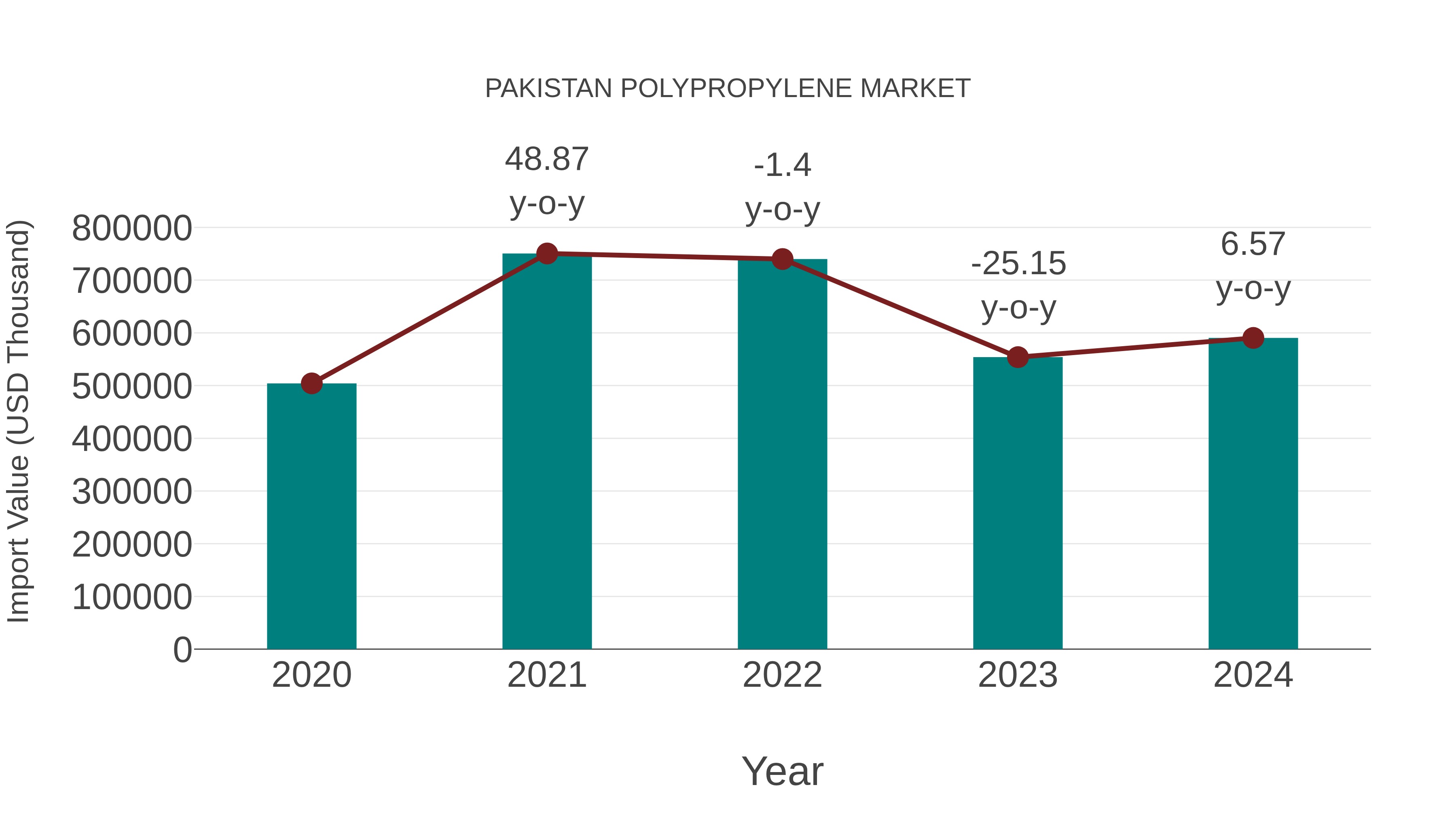
Pakistan import trend for the polypropylene market showed a growth rate of 6.57% from 2023 to 2024, with a compound annual growth rate (CAGR) of 4.02% from 2020 to 2024. This increase can be attributed to the country`s expanding industrial sector and rising demand for polypropylene products.
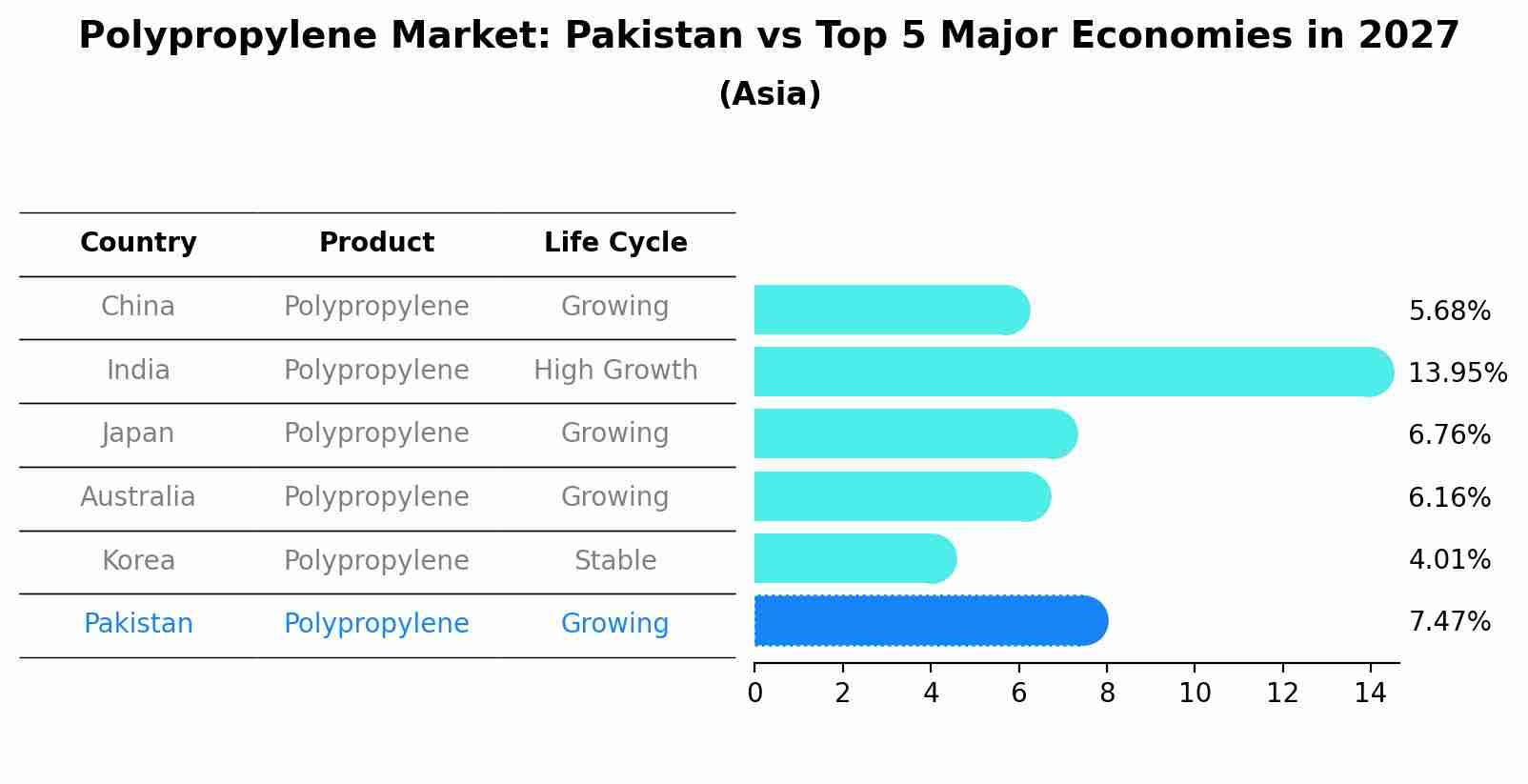
Polypropylene Market: Pakistan vs Top 5 Major Economies in 2027 (Asia)
The Polypropylene market in Pakistan is projected to grow at a growing growth rate of 7.47% by 2027, highlighting the country's increasing focus on advanced technologies within the Asia region, where China holds the dominant position, followed closely by India, Japan, Australia and South Korea, shaping overall regional demand.
Pakistan Polypropylene Market Overview
The Polypropylene Market in Pakistan is significant for the plastic industry, with applications spanning packaging, automotive, textiles, and consumer goods. Polypropylene is valued for its versatility, durability, and chemical resistance, making it a preferred material for various products.
Drivers of the market
The Pakistan polypropylene market is experiencing growth due to the increasing demand from packaging, automotive, construction, and consumer goods industries. Polypropylene is a versatile thermoplastic polymer known for its excellent chemical resistance, durability, and cost-effectiveness, making it a preferred material in various applications. The growing population, urbanization, and rising disposable incomes in Pakistan are driving the demand for packaged goods, automobiles, and construction materials, thereby fueling the growth of the polypropylene market in the country. Moreover, technological advancements in polypropylene production processes and the development of new application areas are further boosting market expansion.
Challenges of the market
The polypropylene market in Pakistan is challenged by the high cost of raw materials and production, with a heavy reliance on imports. This dependency makes the market vulnerable to international price fluctuations and supply chain disruptions. Additionally, local manufacturers face stiff competition from well-established international companies that can offer more cost-effective and technologically advanced products. There is also a need for continuous innovation and development to meet the diverse demands of various end-use industries, requiring significant investment in research and development.
Government Policy of the market
In Pakistan, the government has implemented policies to support the polypropylene market, which is vital for various industries such as packaging, textiles, and automotive. These policies include investment promotion initiatives, infrastructure development projects, and trade facilitation measures to enhance the competitiveness of the domestic polypropylene industry. Moreover, the government has introduced regulations to ensure product quality, environmental sustainability, and safety standards in the production and usage of polypropylene materials.
Key Highlights of the Report:
- Pakistan Polypropylene Market Outlook
- Market Size of Pakistan Polypropylene Market, 2024
- Forecast of Pakistan Polypropylene Market, 2031
- Historical Data and Forecast of Pakistan Polypropylene Revenues & Volume for the Period 2018 - 2031
- Pakistan Polypropylene Market Trend Evolution
- Pakistan Polypropylene Market Drivers and Challenges
- Pakistan Polypropylene Price Trends
- Pakistan Polypropylene Porter's Five Forces
- Pakistan Polypropylene Industry Life Cycle
- Historical Data and Forecast of Pakistan Polypropylene Market Revenues & Volume By Type for the Period 2018 - 2031
- Historical Data and Forecast of Pakistan Polypropylene Market Revenues & Volume By Homopolymer for the Period 2018 - 2031
- Historical Data and Forecast of Pakistan Polypropylene Market Revenues & Volume By Copolymer for the Period 2018 - 2031
- Historical Data and Forecast of Pakistan Polypropylene Market Revenues & Volume By Application for the Period 2018 - 2031
- Historical Data and Forecast of Pakistan Polypropylene Market Revenues & Volume By Injection Molding for the Period 2018 - 2031
- Historical Data and Forecast of Pakistan Polypropylene Market Revenues & Volume By Fiber & Raffia for the Period 2018 - 2031
- Historical Data and Forecast of Pakistan Polypropylene Market Revenues & Volume By Film & Sheet for the Period 2018 - 2031
- Historical Data and Forecast of Pakistan Polypropylene Market Revenues & Volume By Blow Molding for the Period 2018 - 2031
- Historical Data and Forecast of Pakistan Polypropylene Market Revenues & Volume By End-use Industry for the Period 2018 - 2031
- Historical Data and Forecast of Pakistan Polypropylene Market Revenues & Volume By Packaging for the Period 2018 - 2031
- Historical Data and Forecast of Pakistan Polypropylene Market Revenues & Volume By Automotive for the Period 2018 - 2031
- Historical Data and Forecast of Pakistan Polypropylene Market Revenues & Volume By Building & Construction for the Period 2018 - 2031
- Historical Data and Forecast of Pakistan Polypropylene Market Revenues & Volume By Electrical & Electronics for the Period 2018 - 2031
- Historical Data and Forecast of Pakistan Polypropylene Market Revenues & Volume By Medical for the Period 2018 - 2031
- Pakistan Polypropylene Import Export Trade Statistics
- Market Opportunity Assessment By Type
- Market Opportunity Assessment By Application
- Market Opportunity Assessment By End-use Industry
- Pakistan Polypropylene Top Companies Market Share
- Pakistan Polypropylene Competitive Benchmarking By Technical and Operational Parameters
- Pakistan Polypropylene Company Profiles
- Pakistan Polypropylene Key Strategic Recommendations






































