Pakistan Razor Blade Market Size Growth Rate
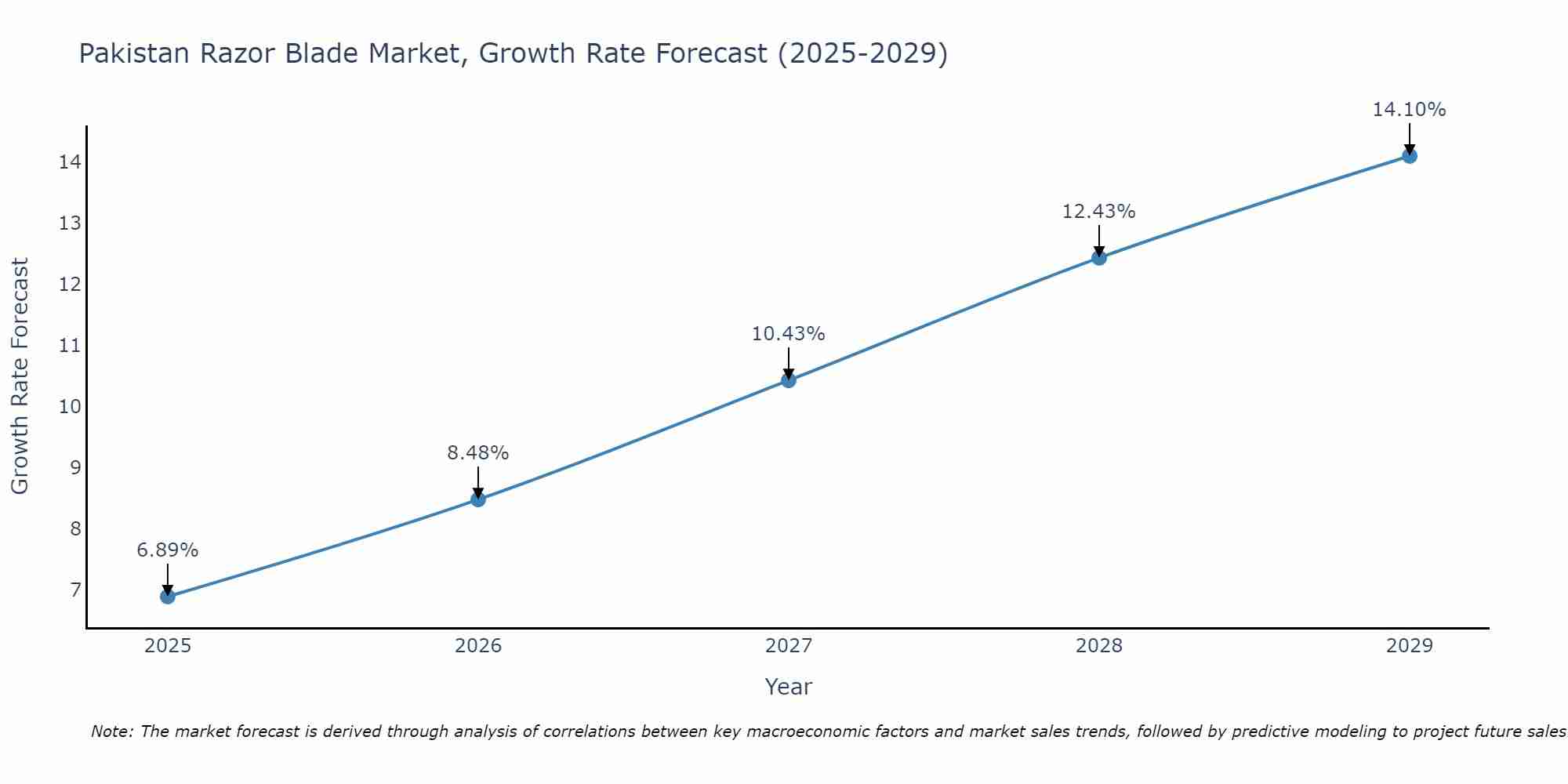
The Pakistan Razor Blade Market is likely to experience consistent growth rate gains over the period 2025 to 2029. From 6.89% in 2025, the growth rate steadily ascends to 14.10% in 2029.
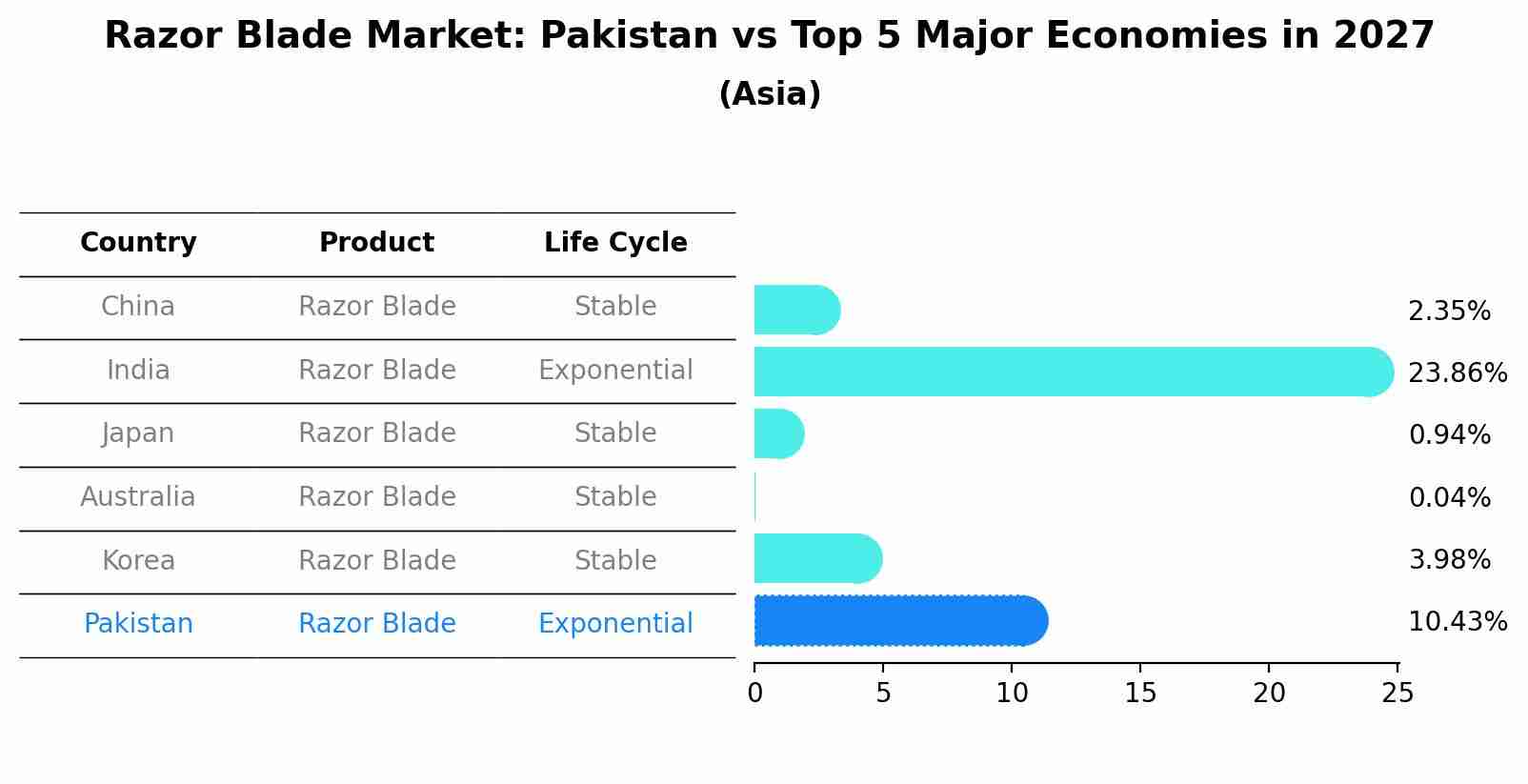
Razor Blade Market: Pakistan vs Top 5 Major Economies in 2027 (Asia)
In the Asia region, the Razor Blade market in Pakistan is projected to expand at a high growth rate of 10.43% by 2027. The largest economy is China, followed by India, Japan, Australia and South Korea.
Pakistan Razor Blade Market Overview
Pakistan`s razor blade market is witnessing robust growth owing to the country`s large population, rising disposable income, and grooming trends. With an increasing number of men and women opting for shaving and grooming products, the demand for razor blades is steadily increasing in Pakistan.
Drivers of the market
The Razor Blade Market in Pakistan is witnessing growth with the increasing focus on personal grooming and hygiene among consumers. Razor blades are essential grooming products used for shaving and hair removal purposes. The market is driven by changing grooming trends, the growing influence of social media and advertising, and the rising disposable incomes in urban areas. Additionally, innovations in blade technology, such as multi-blade cartridges and advanced coatings, contribute to market growth by offering enhanced shaving experiences and performance.
Challenges of the market
The razor blade market in Pakistan faces challenges associated with competition from international brands, counterfeit products, and shifting consumer preferences. While Pakistan has a thriving local industry for manufacturing razor blades, it struggles to compete with established foreign brands that offer a wide range of products at competitive prices. Moreover, the prevalence of counterfeit razor blades in the market poses risks to consumer safety and undermines the reputation of legitimate manufacturers. Additionally, changing grooming trends and the rising popularity of electric shavers further impact the demand for traditional razor blades in Pakistan.
Government Policy of the market
In Pakistan, the razor blade market is influenced by government regulations on import tariffs, quality standards, and consumer safety. Government policies aim to ensure the availability of safe and affordable shaving products while protecting local manufacturers from unfair competition. Tariff structures may encourage domestic production or restrict imports to safeguard local industries. Additionally, quality control measures and certification requirements are enforced to maintain product safety and meet international standards. Government initiatives also focus on consumer education regarding razor blade hygiene and disposal practices to promote public health and environmental sustainability.
Key Highlights of the Report:
- Pakistan Razor Blade Market Outlook
- Market Size of Pakistan Razor Blade Market, 2024
- Forecast of Pakistan Razor Blade Market, 2031
- Historical Data and Forecast of Pakistan Razor Blade Revenues & Volume for the Period 2018 - 2031
- Pakistan Razor Blade Market Trend Evolution
- Pakistan Razor Blade Market Drivers and Challenges
- Pakistan Razor Blade Price Trends
- Pakistan Razor Blade Porter's Five Forces
- Pakistan Razor Blade Industry Life Cycle
- Historical Data and Forecast of Pakistan Razor Blade Market Revenues & Volume By Type for the Period 2018 - 2031
- Historical Data and Forecast of Pakistan Razor Blade Market Revenues & Volume By Single Edge for the Period 2018 - 2031
- Historical Data and Forecast of Pakistan Razor Blade Market Revenues & Volume By Double Edge for the Period 2018 - 2031
- Historical Data and Forecast of Pakistan Razor Blade Market Revenues & Volume By Blade Material for the Period 2018 - 2031
- Historical Data and Forecast of Pakistan Razor Blade Market Revenues & Volume By Carbon Steel for the Period 2018 - 2031
- Historical Data and Forecast of Pakistan Razor Blade Market Revenues & Volume By Stainless Steel for the Period 2018 - 2031
- Historical Data and Forecast of Pakistan Razor Blade Market Revenues & Volume By End User for the Period 2018 - 2031
- Historical Data and Forecast of Pakistan Razor Blade Market Revenues & Volume By Men for the Period 2018 - 2031
- Historical Data and Forecast of Pakistan Razor Blade Market Revenues & Volume By Women for the Period 2018 - 2031
- Historical Data and Forecast of Pakistan Razor Blade Market Revenues & Volume By Distribution Channel for the Period 2018 - 2031
- Historical Data and Forecast of Pakistan Razor Blade Market Revenues & Volume By Supermarkets/Hypermarkets for the Period 2018 - 2031
- Historical Data and Forecast of Pakistan Razor Blade Market Revenues & Volume By Departmental Stores for the Period 2018 - 2031
- Historical Data and Forecast of Pakistan Razor Blade Market Revenues & Volume By Convenience Stores for the Period 2018 - 2031
- Historical Data and Forecast of Pakistan Razor Blade Market Revenues & Volume By Online for the Period 2018 - 2031
- Pakistan Razor Blade Import Export Trade Statistics
- Market Opportunity Assessment By Type
- Market Opportunity Assessment By Blade Material
- Market Opportunity Assessment By End User
- Market Opportunity Assessment By Distribution Channel
- Pakistan Razor Blade Top Companies Market Share
- Pakistan Razor Blade Competitive Benchmarking By Technical and Operational Parameters
- Pakistan Razor Blade Company Profiles
- Pakistan Razor Blade Key Strategic Recommendations






































